
- Catalogs
- Romberger Josef Maschinenfabrik GmbH
- Heat use for biogas plants

- Company
- Products
- Catalogs
- News & Trends
- Exhibitions
Heat use for biogas plants
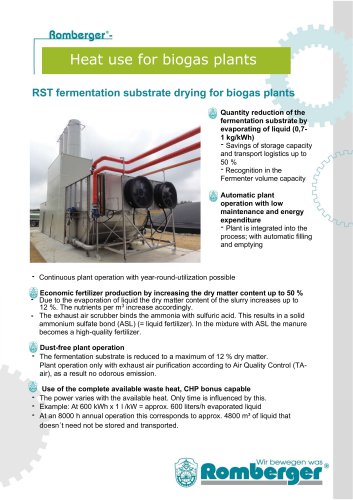
Heat use for biogas plants
Catalog excerpts
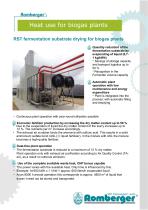
RST fermentation substrate drying for biogas plants Quantity reduction of the fermentation substrate by evaporating of liquid (0,71 kg/kWh) - Savings of storage capacity and transport logistics up to 50 % - Recognition in the Fermenter volume capacity Automatic plant operation with low maintenance and energy expenditure - Plant is integrated into the process; with automatic filling and emptying - Continuous plant operation with year-round-utilization possible Economic fertilizer production by increasing the dry matter content up to 50 % Due to the evaporation of liquid the dry matter content of the slurry increases up to 12 %. The nutrients per m3 increase accordingly. - The exhaust air scrubber binds the ammonia with sulfuric acid. This results in a solid ammonium sulfate bond (ASL) (= liquid fertilizer). In the mixture with ASL the manure becomes a high-quality fertilizer. ^ Dust-free plant operation - The fermentation substrate is reduced to a maximum of 12 % dry matter. Plant operation only with exhaust air purification according to Air Quality Control (TA-air), as a result no odorous emission. - ^The power varies with the available heat. Only time is influenced by this. - Example: At 600 kWh x 1 l /kW = approx. 600 liters/h evaporated liquid - At an 8000 h annual operation this corresponds to approx. 4800 m3 of liquid that doesn't need not be stored and transported.
Open the catalog to page 1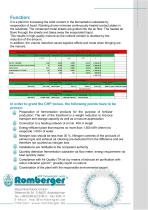
Function: It is a plant for increasing the solid content in the fermentation substrate by evaporation of liquid. Rotating drums immerse continuously heated contact plates in the substrate. The moistened metal sheets are guided into the air flow. The heated air flows through the sheets and takes away the evaporated liquid. This results in high-quality manure as the nutrient content is doubled by the reduction of the amount. In addition, the volume reduction saves logistics efforts and costs when bringing out the manure. In order to grant the CHP bonus, the following points have to be proven: Preparation...
Open the catalog to page 2All Romberger Josef Maschinenfabrik GmbH catalogs and technical brochures
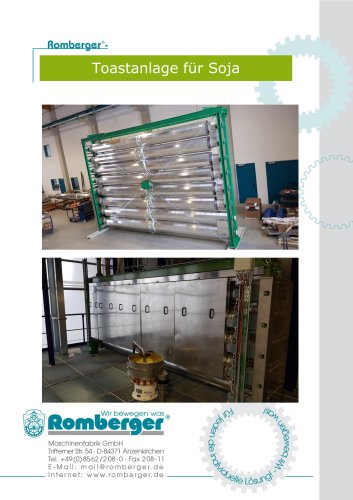 Toastanlage für Soja
4 Pages
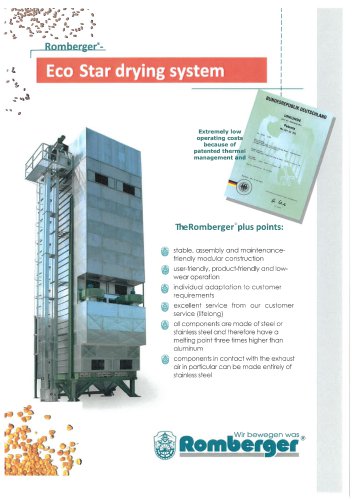 Eco Star dring system
6 Pages
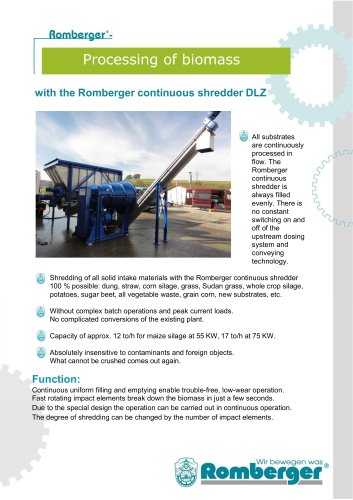 Processing of biomass
2 Pages
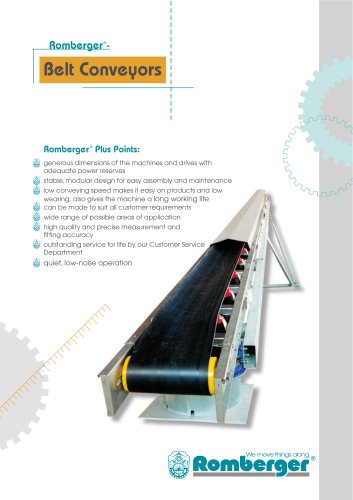 Belt Conveyors
4 Pages
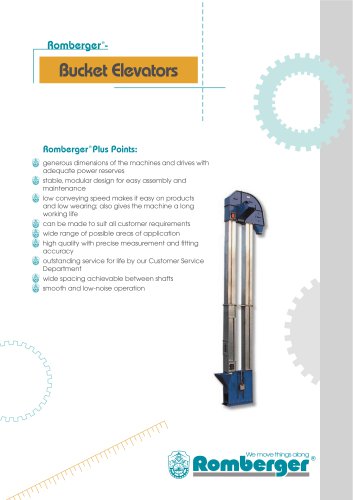 Bucket Elevators
4 Pages
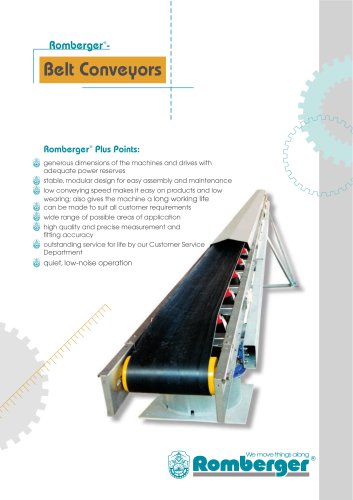 Bandförderer
4 Pages
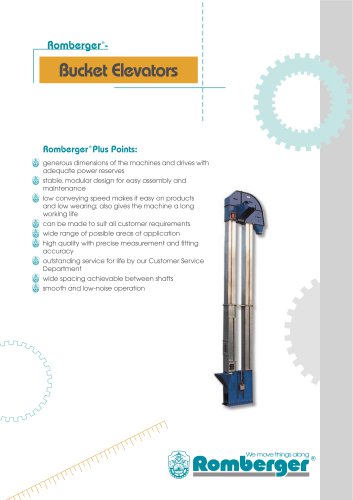 Becherwerke
4 Pages
 Metering feeders for biogas
2 Pages
 ECO STAR DRYING SYSTEM
6 Pages
 Chain Conveyors
2 Pages
 Screw Conveyors
4 Pages
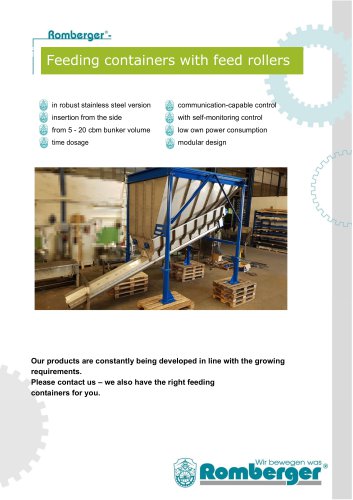
- Rail conveyor
- Transport rail conveyor
- Belt conveyor
- Horizontal conveyor
- Conveyor for the food industry
- Waste shredder
- Electric drive conveyor
- Inclined conveyor
- Chain conveyor
- Work conveyor
- Stainless steel conveyor
- Food conveyor
- Single shaft shredder machine
- Modular conveyor
- Bulk material conveyor
- Screw conveyor
- Feed conveyor
- Unloading conveyor
- Rugged shredder
- Conveyor for the pharmaceutical industry