


Overload Clutches 2023/2024
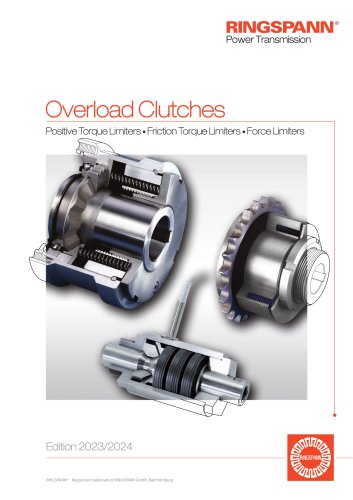
Overload Clutches 2023/2024
RINGSPANN Overload Clutches are mechanical safety devices that protect machinery from damage due to overloads by disconnecting the output from the input when a preset limit is reached. These devices are essential for maintaining operational efficiency and minimizing downtime in automated systems.
SIKUMAT® Torque Limiters are precision safety devices available in various designs to suit specific needs:
- Screw Faces: Suitable for heavy-duty conditions.
- Double Rollers: Provide consistent torque over time.
- Balls: Offer high response accuracy and backlash-free transmission.
- Single Rollers: Suitable for universal applications.
Available in two designs:
- RIMOSTAT® Torque Limiters: Ensure high torque consistency even during frequent slipping.
- Belleville Spring Torque Limiters: Offer cost-effective solutions.
Designed to transmit forces up to a certain size in both directions without play. They automatically re-engage after an overload is cleared and can be equipped with proximity switches for early warning.
Various SIKUMAT® series are detailed, each with specific features and applications:
- SC Series: Basic version with flange connection.
- SCE Series: With flexible shaft coupling.
- SCL Series: With torsionally rigid shaft coupling.
Used with SIKUMAT® devices to indicate overloads. They are non-contact and provide early warnings, allowing for immediate response to prevent damage.
Includes detailed technical data for each product series, including torque limits, speed ranges, and dimensions. Guidelines for ordering and installation emphasize the importance of adhering to specified settings to ensure optimal performance.
- PNP-Transistor: Max. switching current of 200 mA, internal power consumption of 10 mA, protection type IP 67, and operational temperature range from -25° to +75° C. Dimensions are 23 x 35 x 14 mm.
- SIKUMAT® Models: Various models including SG, SGR, SGG, SGE, and ST series, each with specific torque limits and speed ratings. Torque settings range from 2.5 Nm to 2000 Nm depending on the model.
- The torque is transmitted via balls pressed into detents by Belleville springs. When the preset limit is reached, the balls disengage, allowing the system to ratchet until the overload is resolved.
- Automatic re-engagement occurs after the overload is eliminated, and proximity switches can indicate overloads for immediate system response.
- High response accuracy due to the ball principle.
- Backlash-free operation in both rotational directions for certain models.
- Compact design with integrated bearings for component support.
- Calibrated micro-adjustment of torque settings is possible post-installation.
- SG Series: Basic version with flange connection, available in various torque settings.
- SGR Series: Features a short hub and integral needle bearing for narrow components.
- SGG Series: Long hub for wide components, requiring customer-provided bearings.
- SGE Series: Flexible shaft coupling for connecting two shafts.
- ST Series: Backlash-free design with integral cone clamping element for shaft fastening.
Technical specifications, installation guidelines, and ordering information for RIMOSTAT® Torque Limiters, including the RS, RSC, RSHD, and RT series, are provided. These torque limiters are designed for various applications, offering different features and capabilities to suit specific needs.
Catalog excerpts
Overload Clutches Positive Torque Limiters • Friction Torque Limiters • Force Limiters Edition 2023/2024 RINGSPANN® Registered trademark of RINGSPANN GmbH, Bad Hombu
Open the catalog to page 1
Issue 05/2023 • Technical details subject to change without notice. SIKUMAT® Registered Trademarks of RINGSPANN GmbH, Bad Homburg
Open the catalog to page 3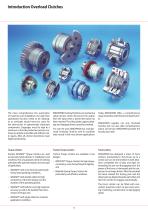
The more comprehensive the automation of machines and installations, the safer their operational function needs to be. Blockages or overloads should never be cause for the destruction of operationally important components. Stoppages must be kept to a minimum so that the production process continues as quickly as possible and without costly repairs. After all, shorter downtimes mean higher productivity. RINGSPANN Overload Clutches are mechanical safety devices which disconnect the output from the input when a preset limit value has been reached. Thus they protect against damage and stoppage times...
Open the catalog to page 4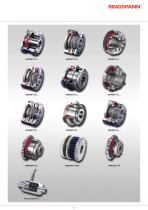
RIMOSTAT® RSHD
Open the catalog to page 5
* When the preset limit torque has been reached, a limit sensor indicates the overload. There is no interruption of the torque transmission.
Open the catalog to page 6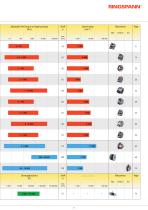
Adjustable limit torque or slipping torque [Nm] Robustness high Robustness high
Open the catalog to page 7
Ratcheting SIKUMAT® SC … with screw faces Advantages • Excellent robustness through surface contact during the disengaging process – therefore maximum life • Fully enclosed with integral bearing – therefore maintenance-free • Adjustment of limit torque setting according to the number of active springs – not through modification of spring pressure The Screw Face Principle Torque transmission is effected through screwshaped radial serrations in the input and output part, which are pressed together by spring force. Like the thread sides of a screw have edge contact with the nut during turning, so...
Open the catalog to page 8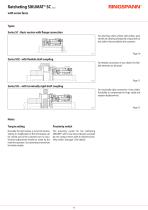
Ratcheting SIKUMAT® SC … with screw faces Types Series SC - Basic version with flange connection For attaching chain wheels, belt pulleys, gear wheels etc. Bearing of attached component on the shaft to be provided by the customer. Series SCE - with flexible shaft coupling For flexible connection of two shafts. The flex ible elements are oil-proof. Series SCL - with torsionally rigid shaft coupling For torsionally rigid connection of two shafts. Possibility to compensate for large radial and angular displacements. Notes Torque setting Proximity switch Normally the limit torque is set at the factory....
Open the catalog to page 9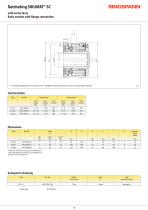
Ratcheting SIKUMAT® SC with screw faces Basic version with flange connection Z = number of tapped holes G on pitch circle T · Installation must be shut down as soon as torque limiter responds Technical Data Type Dimensions Type Engagement travel 1) Max. bore diameter for keyways as per DIN 6885, p. 1 2) Max. bore diameter for keyways as per DIN 6885, p. 3 Tolerance of keyway width P9 Example for Ordering Type Preset limit torque with proximity switch Torque type
Open the catalog to page 10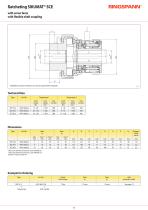
Ratcheting SIKUMAT® SCEwith screw faceswith flexible shaft coupling Technical Data Torque type End number
Open the catalog to page 11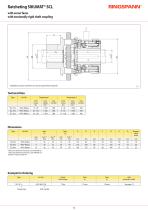
Ratcheting SIKUMAT® SCLwith screw faceswith torsionally rigid shaft coupling 12-1 Installation must be shut down as soon as torque limiter responds Technical Data Torque type End number
Open the catalog to page 12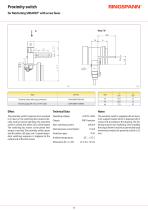
Effect The proximity switch's response to an overload is to react on the switching disc located internally. During normal operation the proximity switch is closed, the yellow LED is illuminated. The switching disc moves as the preset limit torque is reached. The proximity switch opens and the yellow LED goes out. A speed-dependent switching sequence is triggered at the output end of the limit sensor. Output: PNP-Transistor Internal power consumption: 10 mA The proximity switch is supplied with an aluminum support bracket which is fastened with 2 screws M 6 according to the drawing. The fastening...
Open the catalog to page 13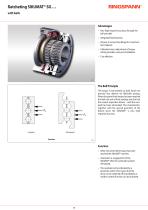
Advantages • Very high response accuracy through the ball principle • Integrated fixed bearing • Keyway in connecting flange for maximum load capacity • Calibrated micro adjustment of torque setting possible, even post-installation • Cost effective The torque is transmitted via balls which are pressed into detents via Belleville springs. When the preset limit torque has been reached the balls rise out of their seatings and slot into the nearest respective detent - until the overload has been eliminated. This characteristic, together with the special geometry of the detent gives the SIKUMAT® a...
Open the catalog to page 14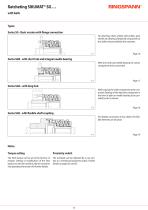
Ratcheting SIKUMAT® SG … with balls Types Series SG - Basic version with flange connection For attaching chain wheels, belt pulleys, gear wheels etc. Bearing of attached component on the shaft to be provided by the customer. Series SGR - with short hub and integral needle bearing With short hub and needle bearing for narrow components to be connected Series SGG - with long hub With long hub for wide components to be connected. Bearing of the attached component in the form of plain or needle bearing to be provided by the customer. Series SGE - with flexible shaft coupling For flexible connection...
Open the catalog to page 15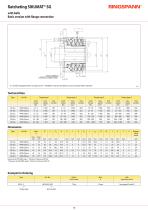
Ratcheting SIKUMAT® SGwith ballsBasic version with flange connection Technical Data Torque type
Open the catalog to page 16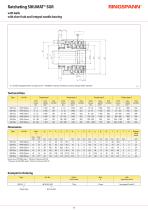
Ratcheting SIKUMAT® SGRwith ballswith short hub and integral needle bearing Technical Data Torque type
Open the catalog to page 17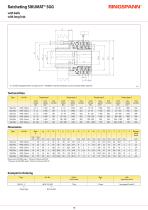
Ratcheting SIKUMAT® SGGwith balls with long hub Technical Data Torque type
Open the catalog to page 18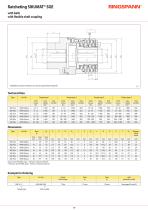
Ratcheting SIKUMAT® SGEwith ballswith flexible shaft coupling Technical Data Torque type End number
Open the catalog to page 19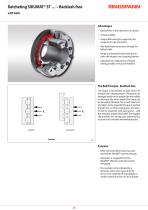
Advantages • Backlash free in both directions of rotation • Compact design • Integral ball bearing for supporting the component to be connected • Very high response accuracy through the ball principle • Simple and backlash free fastening onto shaft with integral cone clamping element • Calibrated micro adjustment of torque setting possible, even post-installation The Ball Principle - Backlash free The torque is transmitted via balls which are pressed into V-shaped grooves. The grooves are arranged axially on the output side and radially on the input side, which means that torque can be transmitted...
Open the catalog to page 20All RINGSPANN catalogs and technical brochures
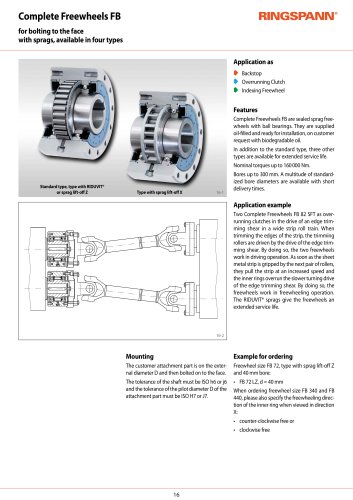 FB Series EN
2 Pages
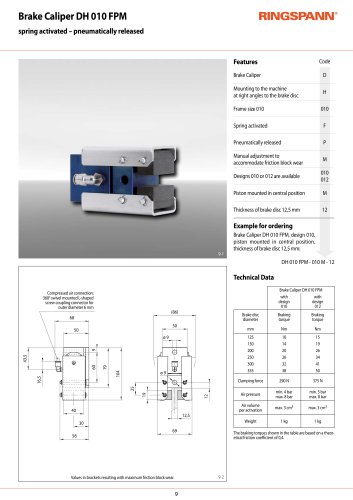 DH 010 FPM
1 Page
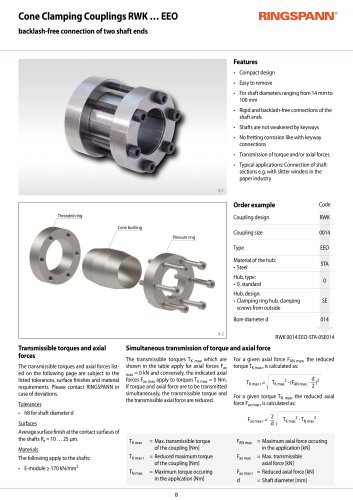 Datasheet RWK … EEO
2 Pages
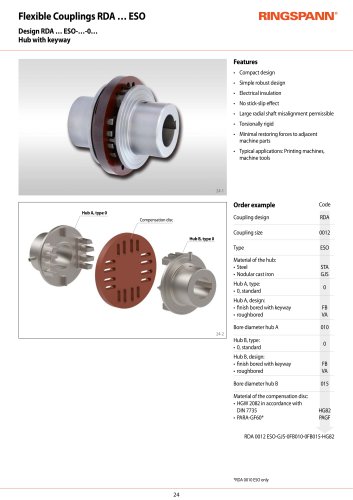 Datasheet RDA … ESO
2 Pages
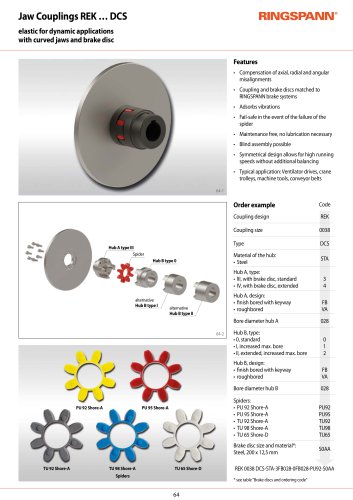 Datasheet REK … DCS
5 Pages
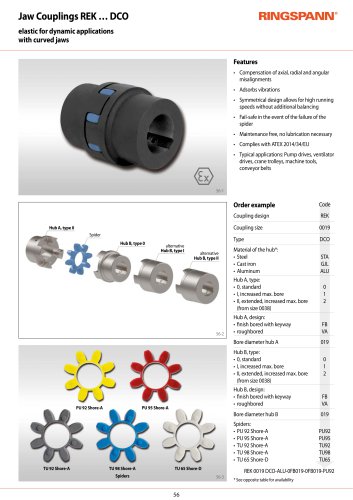 Datasheet REK … DCO
8 Pages
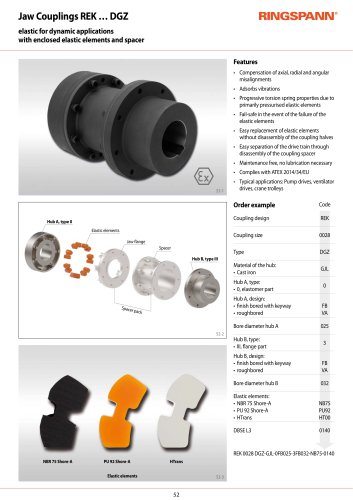 Datasheet REK … DGZ
4 Pages
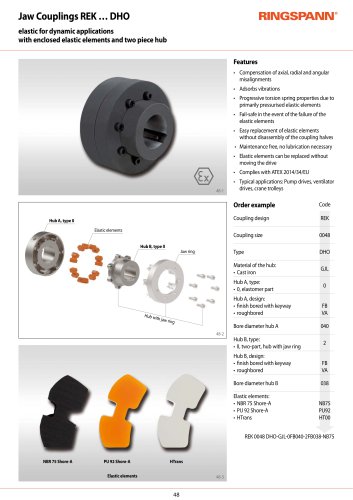 Datasheet REK … DHO
4 Pages
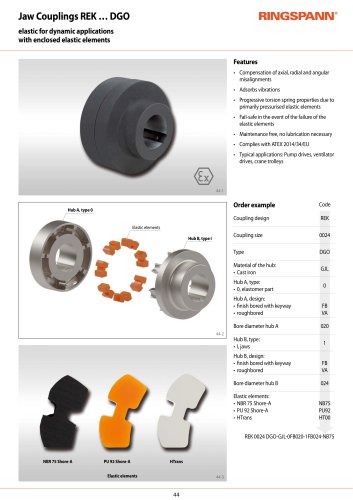 Datasheet REK … DGO
4 Pages
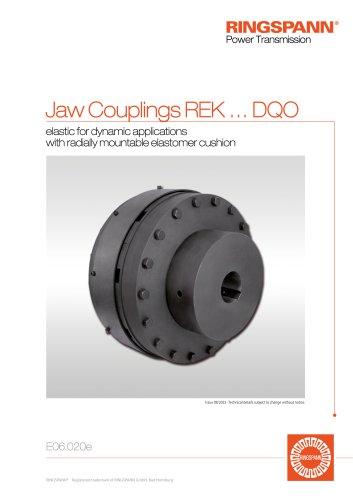 Datasheet REK … DQO
6 Pages
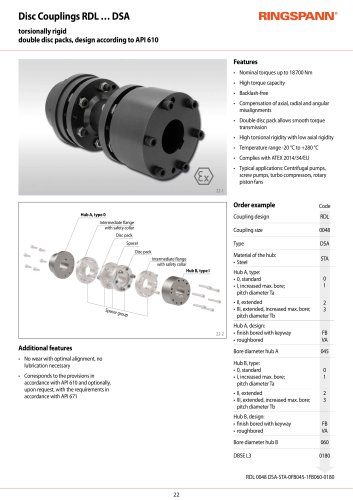 Datasheet RDL … DSA
2 Pages
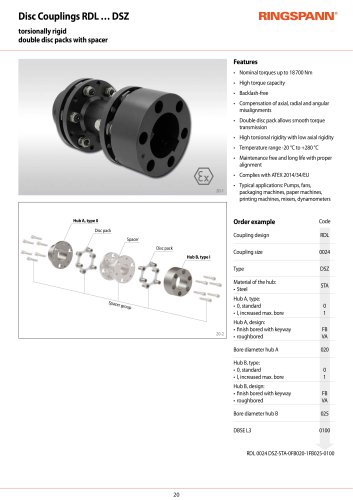 Datasheet RDL … DSZ
2 Pages
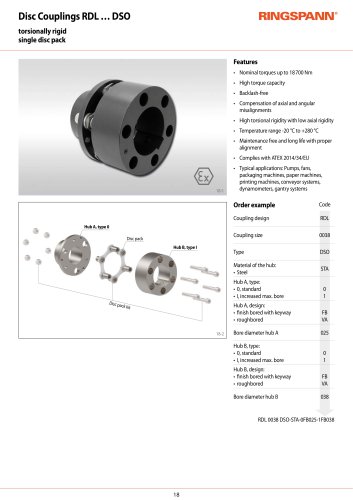 Datasheet RDL … DSO
2 Pages
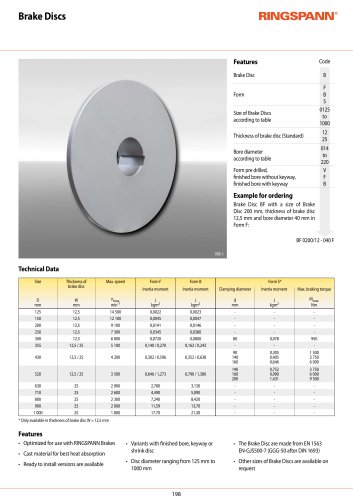 Datasheet Brake Discs
4 Pages
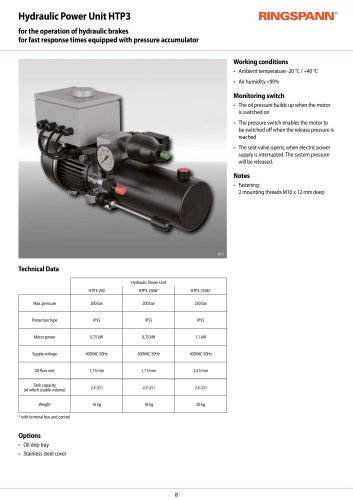 Datasheet HTP3
2 Pages
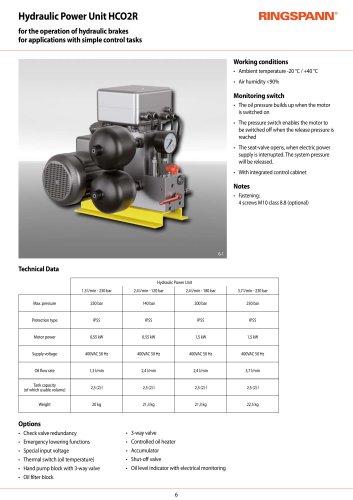 Datasheet HCO2R
2 Pages
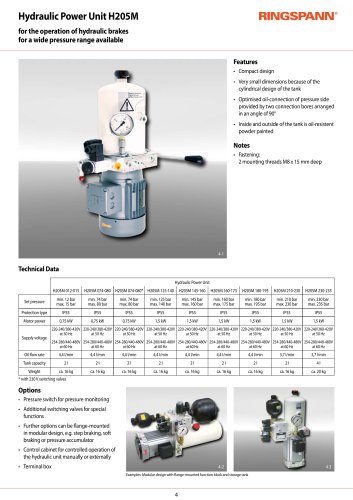 Datasheet H205M
2 Pages
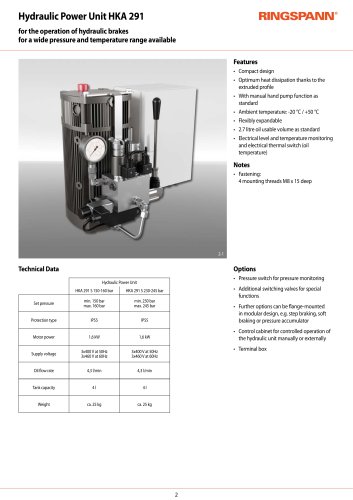 Datasheet HKA 291
2 Pages
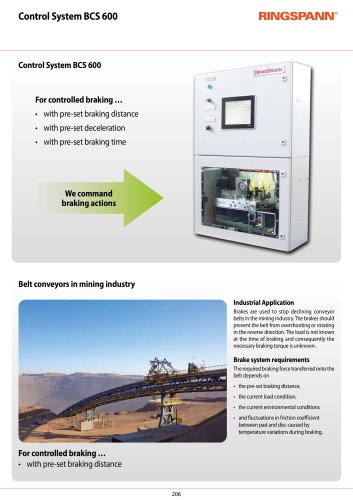 Datasheet BCS 600
4 Pages
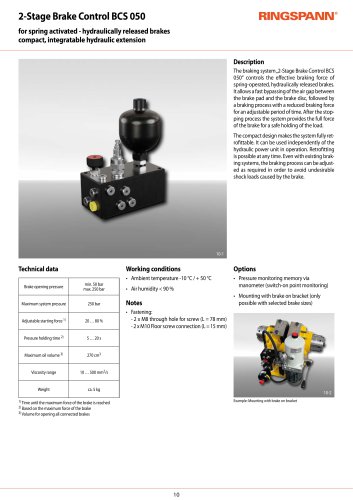 Datasheet BCS 050
2 Pages
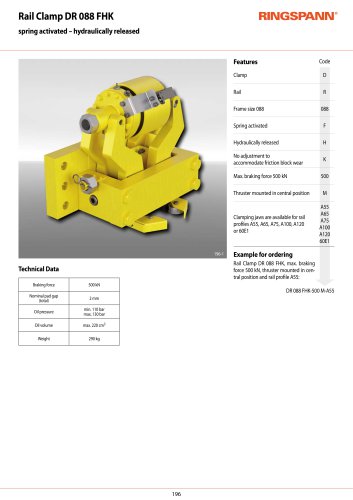 Datasheet DR 088 FHK
2 Pages
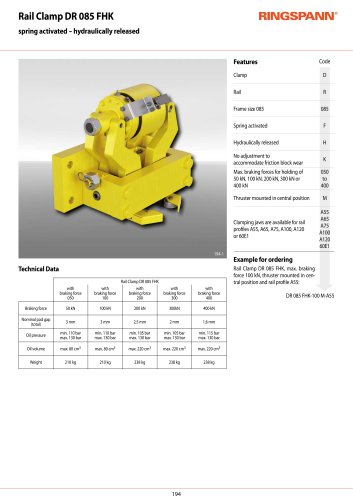 Datasheet DR 085 FHK
2 Pages
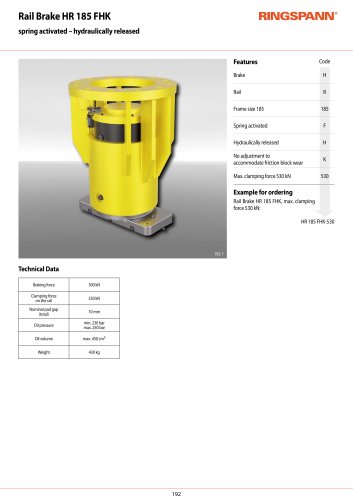 Datasheet HR 185 FHK
2 Pages
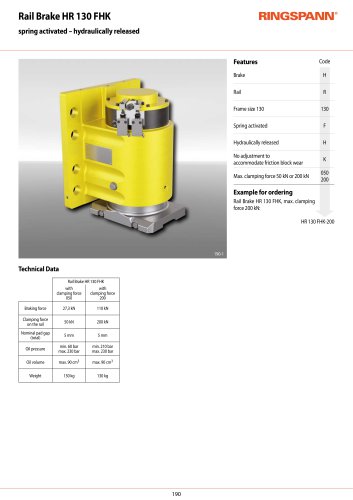 HR 130 FHK
2 Pages
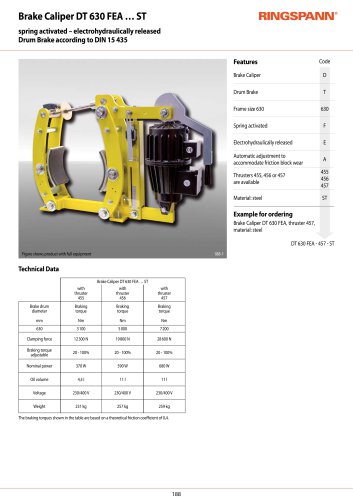 Datasheet DT 630 FEA … ST
2 Pages
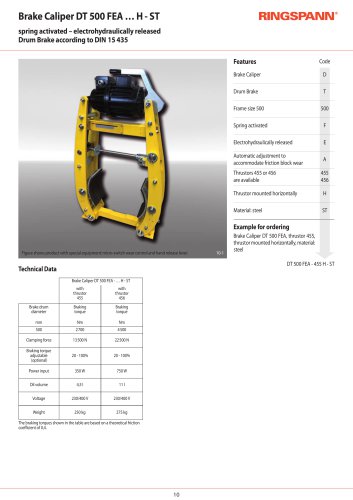 Datasheet DT 500 FEA H-ST
2 Pages
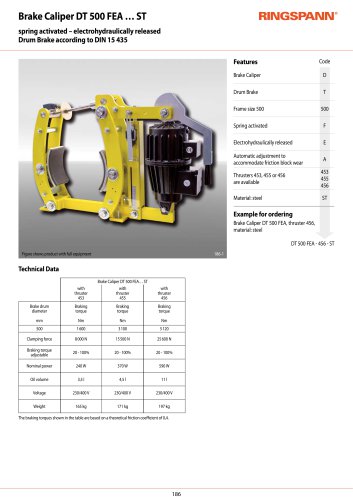 Datasheet DT 500 FEA … ST
2 Pages
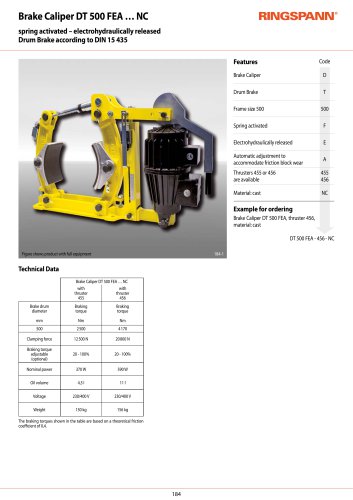 Datasheet DT 500 FEA … NC
2 Pages
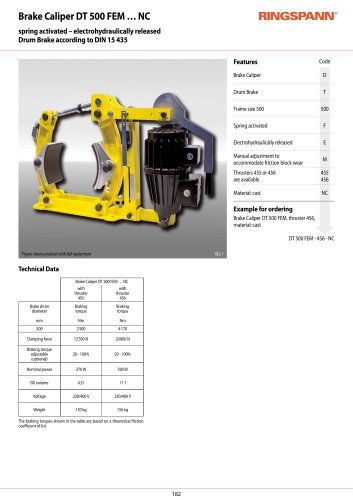 Datasheet DT 500 FEM … NC
2 Pages
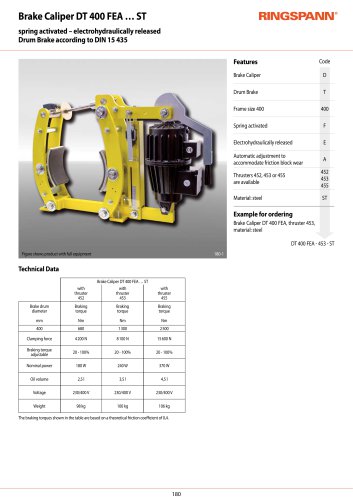 Datasheet DT 400 FEA … ST
2 Pages
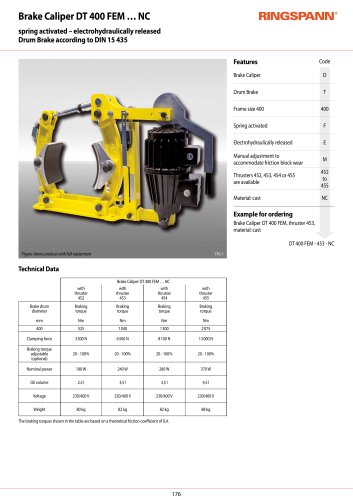 Datasheet DT 400 FEA … NC
2 Pages
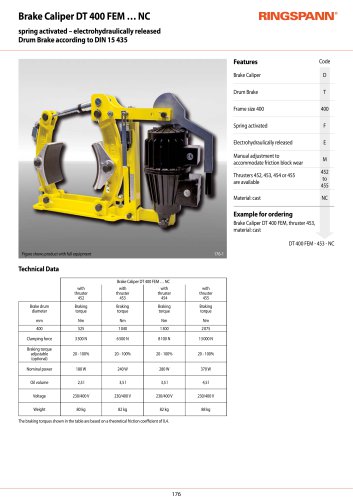 Datasheet DT 400 FEM … NC
2 Pages
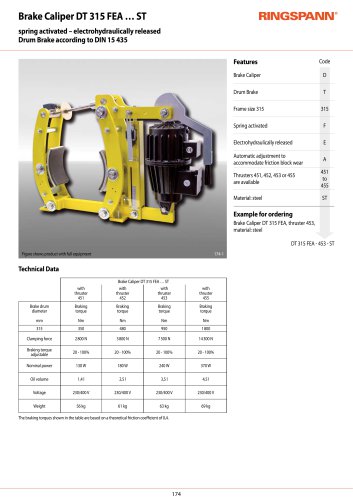 Datasheet DT 315 FEA … ST
2 Pages
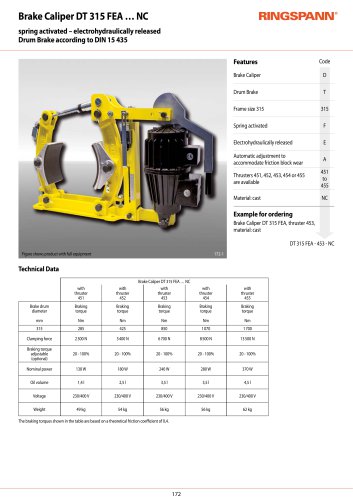 Datasheet DT 315 FEA … NC
2 Pages
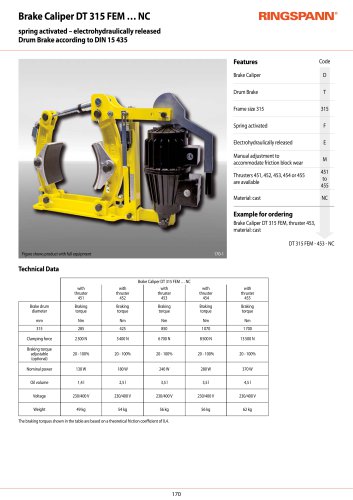 Datasheet DT 315 FEM … NC
2 Pages
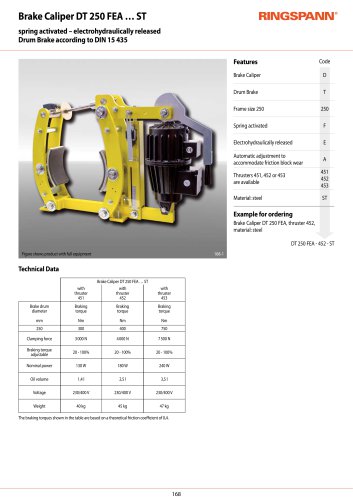 Datasheet DT 250 FEA … ST
2 Pages
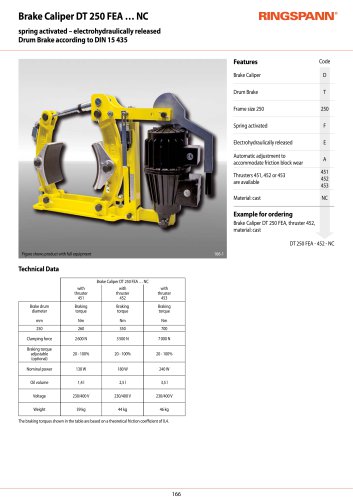 Datasheet DT 250 FEA … NC
2 Pages
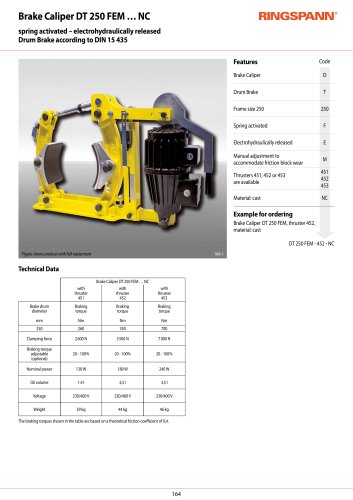 Datasheet DT 250 FEM … NC
2 Pages
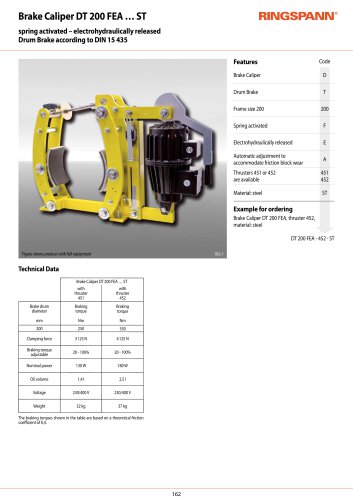 Datasheet DT 200 FEA … ST
2 Pages
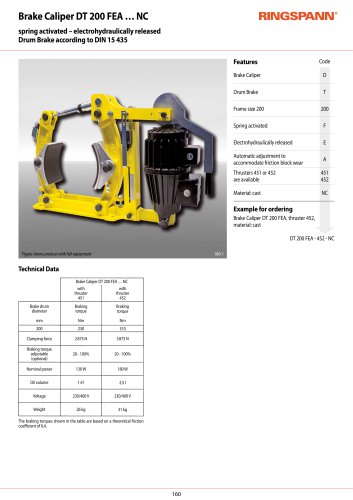 Datasheet DT 200 FEA … NC
2 Pages
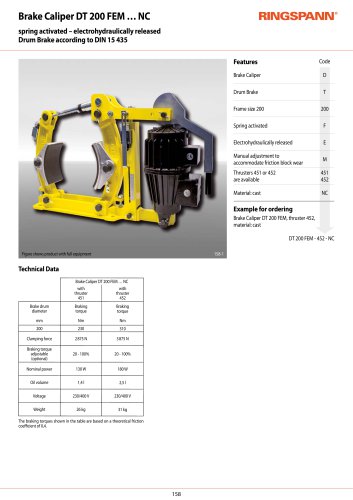 Datasheet DT 200 FEM … NC
2 Pages
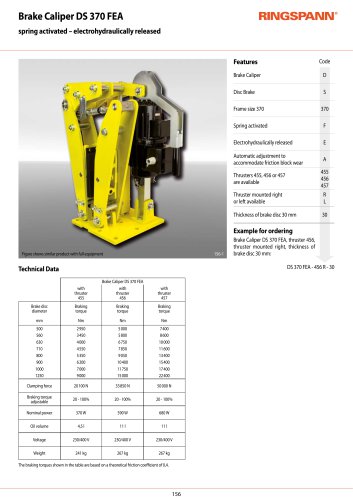 Datasheet DS 370 FEA
2 Pages
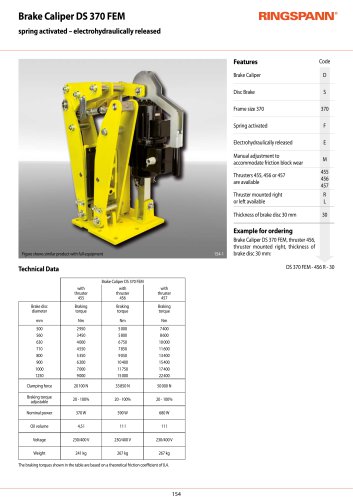 Datasheet DS 370 FEM
2 Pages
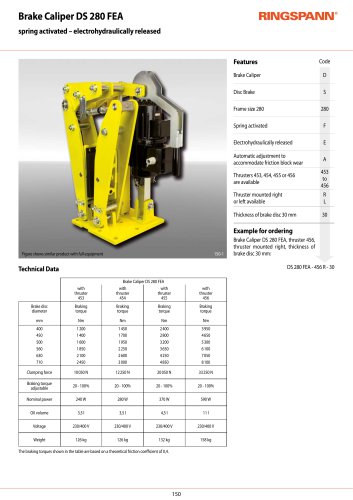 Datasheet DS 280 FEA
2 Pages
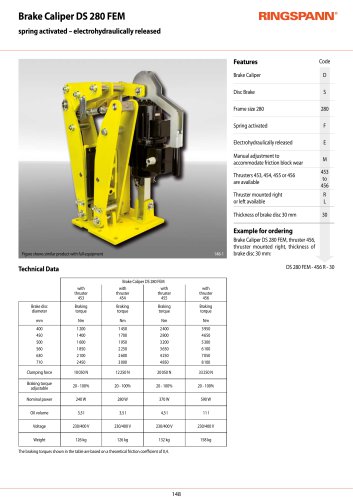 Datasheet DS 280 FEM
2 Pages
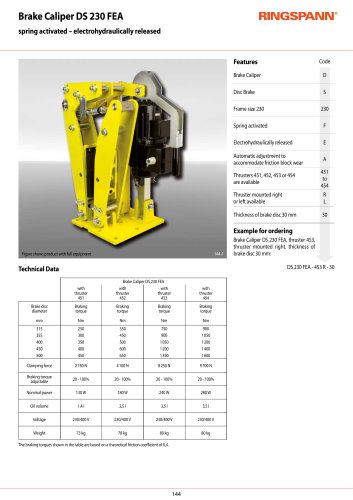 Datasheet DS 230 FEA
2 Pages
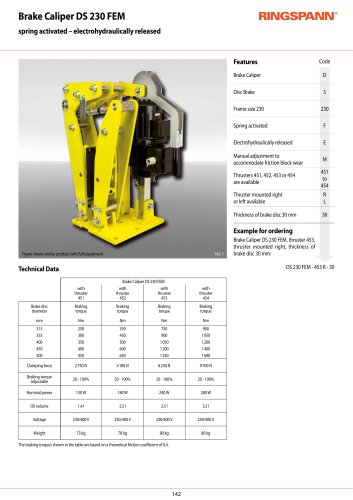 Datasheet DS 230 FEM
2 Pages
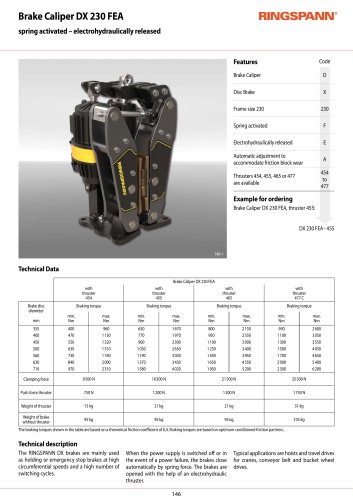 Datasheet DX 230 FEA
2 Pages
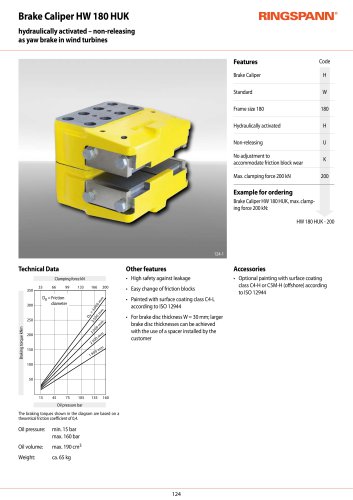 Datasheet HW 180 HUK
2 Pages
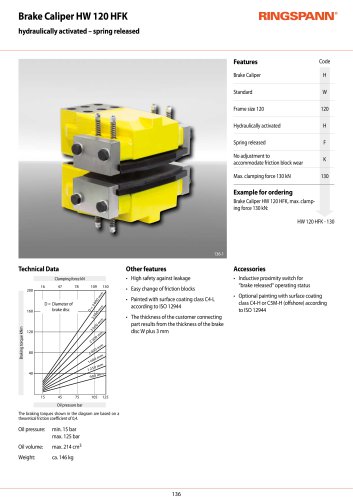 Datasheet HW 120 HFK
2 Pages
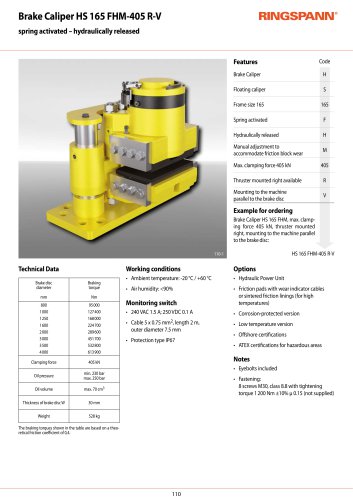 Datasheet HS 165 FHM-405 R-V
2 Pages
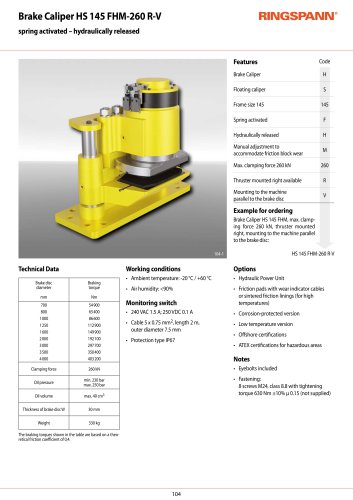 Datasheet HS 145 FHM-260 R-V
2 Pages
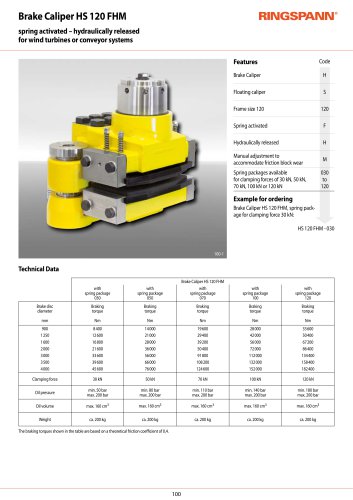 Datasheet HS 120 FHM
2 Pages
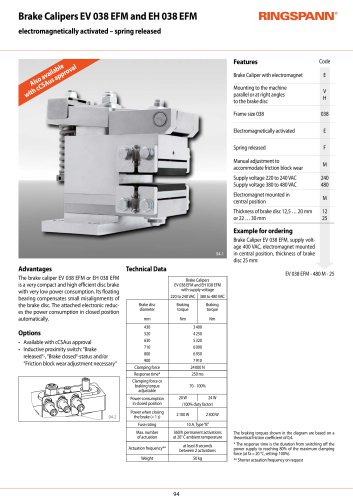 Datasheet EH 038 EFM
2 Pages
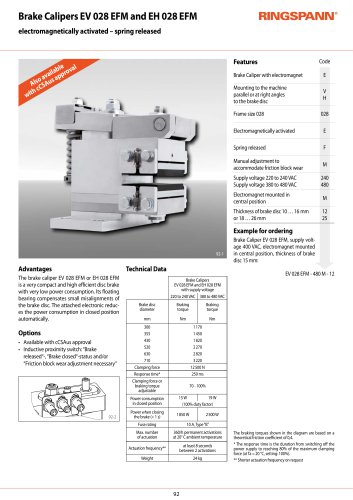 Datasheet EH 028 EFM
2 Pages
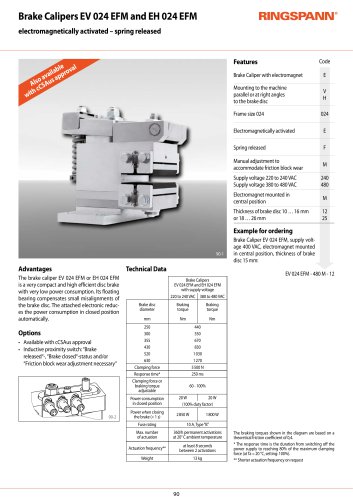 Datasheet EH 024 EFM
2 Pages
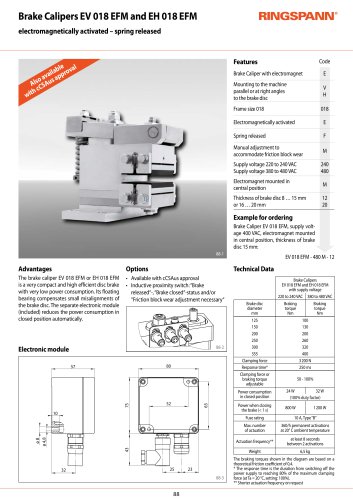 Datasheet EH 018 EFM
2 Pages
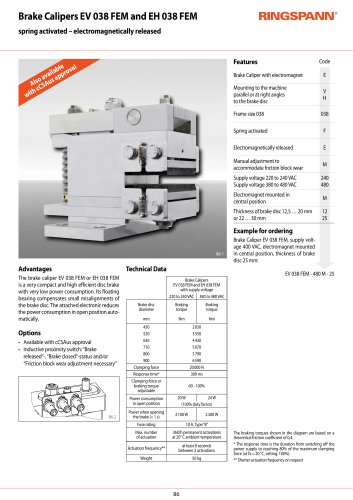 Datasheet EH 038 FEM
2 Pages
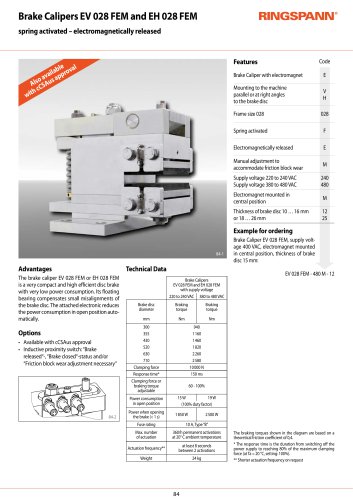 Datasheet EH 028 FEM
2 Pages
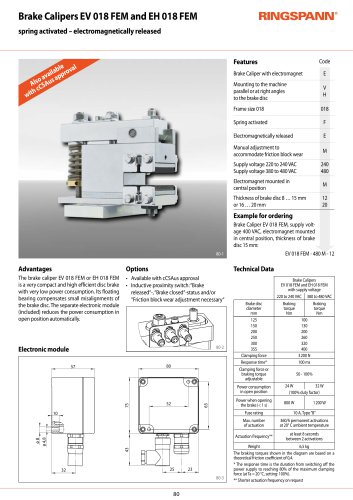 Datasheet EH 018 FEM
2 Pages
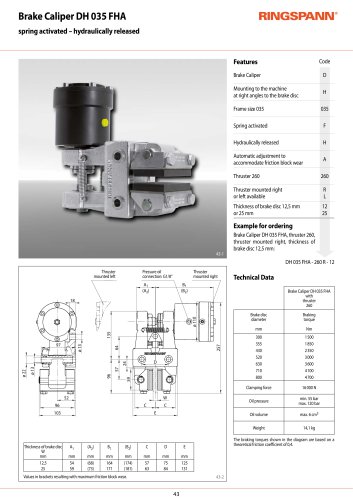 Datasheet DH 035 FHA
1 Page
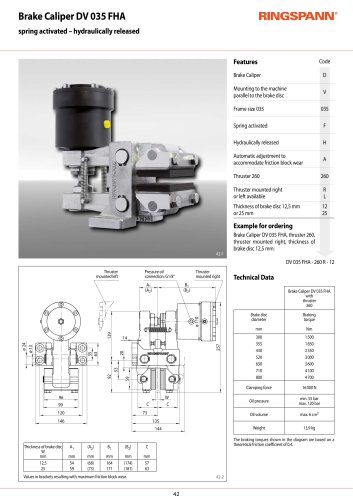 Datasheet DV 035 FHA
1 Page
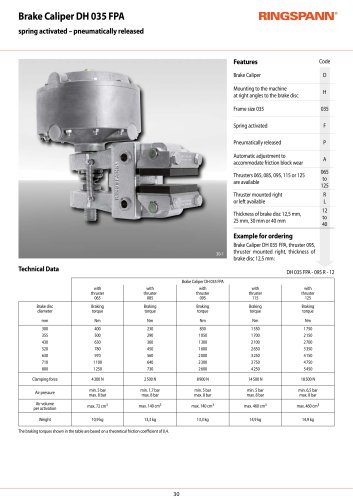 Datasheet DH 035 FPA
2 Pages
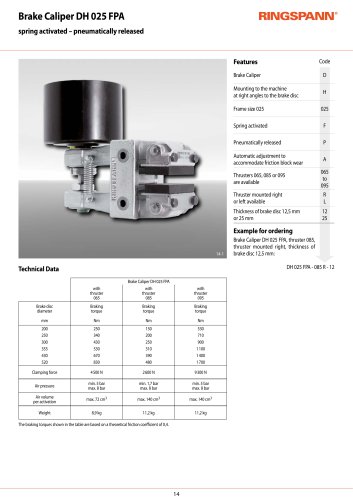 Datasheet DH 025 FPA
2 Pages
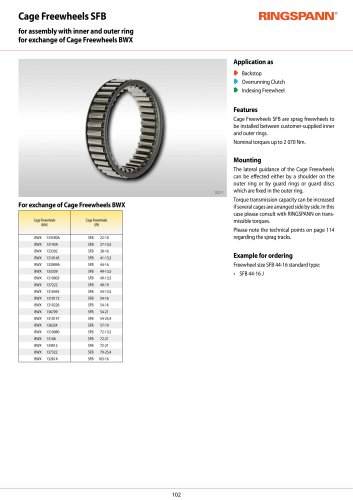 Datasheet SFB
2 Pages
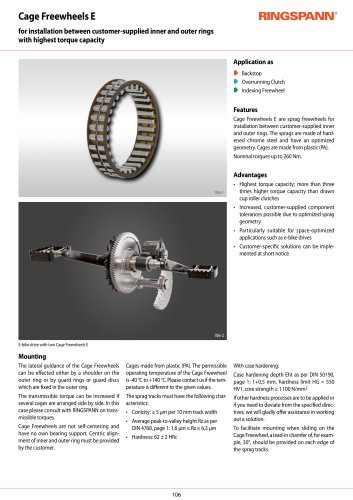 Datasheet E
2 Pages
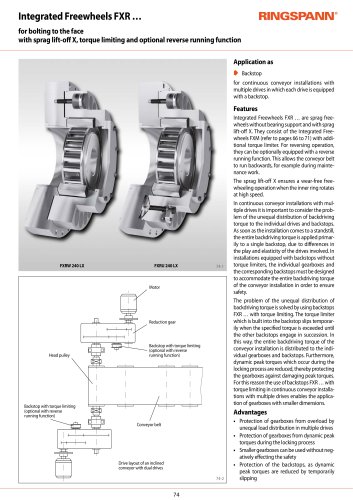 Datasheet FXRU
3 Pages
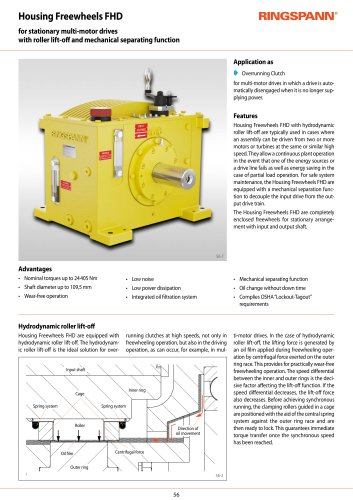 Datasheet FHD
4 Pages
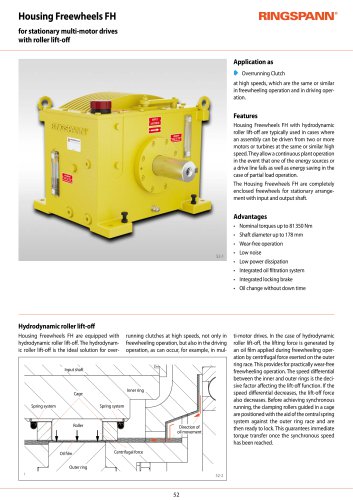 Datasheet FH
4 Pages
 Freewheels_2025-2026
124 Pages
 Industrial Brakes_2025-2026
220 Pages
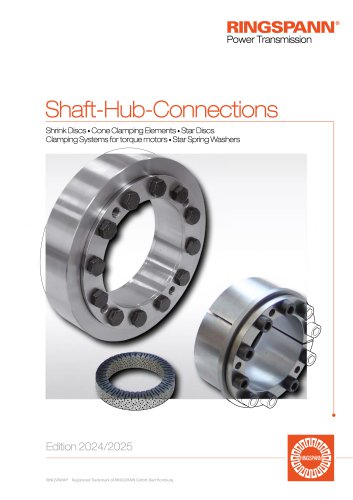 Shaft-Hub-Connections 2024/2025
100 Pages
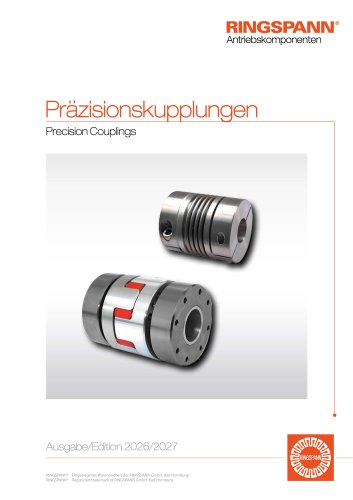 Precision Couplings 2026/2027
60 Pages
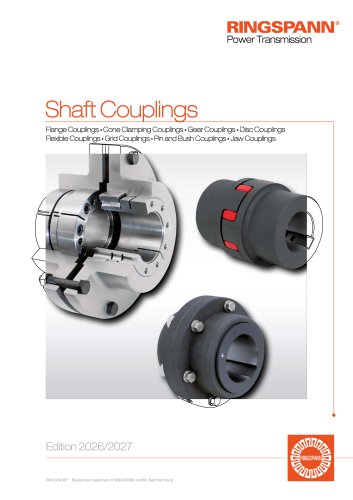 Shaft Couplings 2026/2027
80 Pages
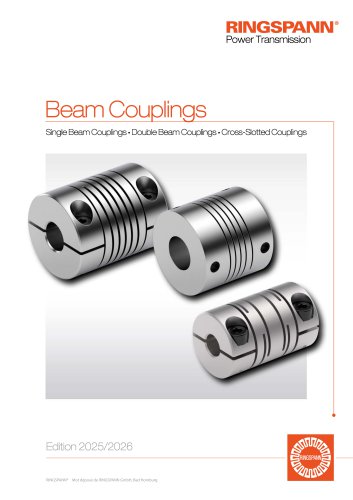 Beam Couplings
26 Pages
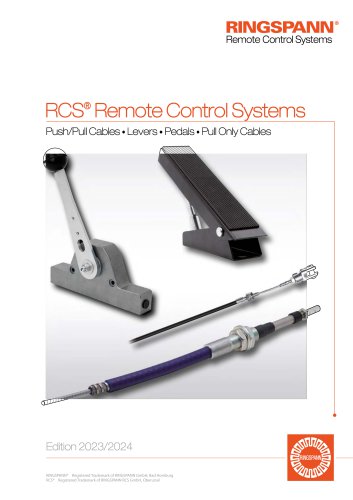 RCS® Remote Control Systems
64 Pages
 Company brochure
7 Pages
 Your benefit in Harbour Cranes
15 Pages
 RINGSPANN in Energy Plants
7 Pages
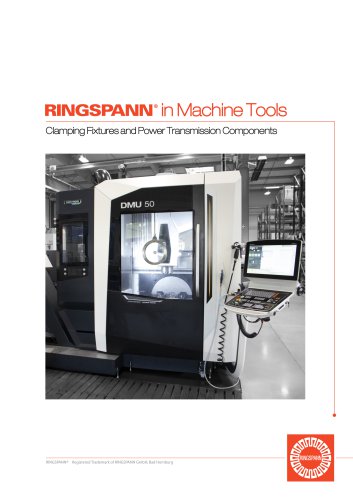 RINGSPANN in Machine tools
7 Pages
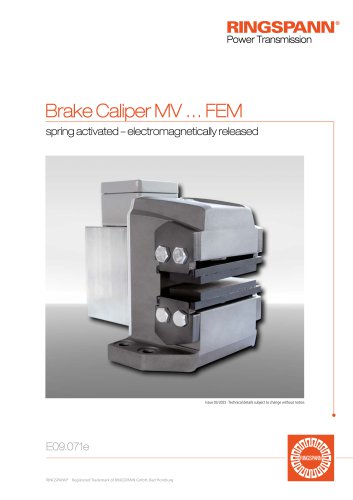 MV 033 FEM
8 Pages
 DH 035 FPM / FPA
2 Pages
 DV 020 FHM
1 Page
 DH 020 FHM
1 Page
 DV 030 FHM
1 Page
 DH 030 FHM
1 Page
 DV 030 FHA
1 Page
 DH 030 FHA
1 Page
 DV 035 FHM / FHA
1 Page
 DH 035 FHM / FHA
1 Page
 DU 060 FHM
2 Pages
 DH 020 FKM
1 Page
 DH 005 PFK
1 Page
 DV 020 FKM
1 Page
 DH 010 PFK
1 Page
 DH 015 PFK
1 Page
 DH 020 PFK
1 Page
 DV 030 PFM
2 Pages
 DH 030 PFM
2 Pages
 DV 035 PFM
2 Pages
 DH 035 PFM
2 Pages
 DU 060 PFM
2 Pages
 DH 010 MSM
1 Page
 DV 020 MSM
1 Page
 DH 020 MSM
1 Page
 DV 020 MKM
1 Page
 DH 020 MKM
1 Page
 HW 075 FHM
2 Pages
 HS 075 HFK
2 Pages
 DV 020 FEM
1 Page
 DV 020 PFK
1 Page
 BCS 600
4 Pages
 DS
DS2 Pages
 DU 060 FPM
2 Pages
 HW 075 HFK
2 Pages
 HS 120 HFK
2 Pages
 KE … FPK series
2 Pages
 RLK 603 S
4 Pages
 RLK 603 K
3 Pages
 RLK 608 series
3 Pages
 RLK 606 series
3 Pages
 RLK 110 series
2 Pages
 RLK 110 K series
2 Pages
 RLK 130 series
2 Pages
 RLK 131 series
2 Pages
 RLK 132 series
2 Pages
 RLK 133 series
2 Pages
 RLK 200 series
2 Pages
 RLK 250 series
2 Pages
 RLK 603 series
4 Pages
 HW 100 HFA
2 Pages
 HI 150 HUK, HI 180 HUK
2 Pages
 FN series
2 Pages
 HW 150 HFA / HW 180 HFA
2 Pages
 DT
DT2 Pages
 HW 063 HFA
1 Page
 RLK 250 L series
2 Pages
 RLK 350 series
2 Pages
 RLK 402 series
2 Pages
 RLK 404 series
2 Pages
 FD series
2 Pages
 RLK 300 series
4 Pages
 Trantorque Mini
2 Pages
 Trantorque OE
2 Pages
 SIKUMAT® SC
6 Pages
 SIKUMAT® SG
6 Pages
 SIKUMAT® ST
6 Pages
 SIKUMAT® SN
6 Pages
 SIKUMAT® SA
6 Pages
 SIKUMAT® SU
6 Pages
 SIKUMAT® SR
6 Pages
 SIKUMAT® SB
6 Pages
 SIKUMAT® SL
6 Pages
 RIMOSTAT® RS
4 Pages
 RSHD series
2 Pages
 RT
RT2 Pages
 PA series
4 Pages
 RFK … TBO series
2 Pages
 RDZ … DTO Series
2 Pages
 RDZ … DFO Series
2 Pages
 RDZ … EEO Series
4 Pages
 REB … DCO Series
4 Pages
 HDDS series
2 Pages
 LAFF series
2 Pages
 BKFF series
2 Pages
 HKFF series
2 Pages
 KFFF series
2 Pages
 LBDF series
2 Pages
 BKDF series
2 Pages
 HKDF series
2 Pages
 KFDF series
2 Pages
 BKDI series
2 Pages
 SKDZ series
2 Pages
 Pull Only Cables
8 Pages
 DV 035 FPM / FPA
2 Pages
 DH 030 FPA
2 Pages
 DV 030 FPA
2 Pages
 DH 030 FPM
2 Pages
 DV 030 FPM
2 Pages
 DH 020 FPM
1 Page
 DH 012 FEM
1 Page
 IR series
2 Pages
 SF … P series
2 Pages
 FNR series
2 Pages
 FSN series
2 Pages
 FRHN
FRHN2 Pages
 FDN series
2 Pages
 FCN … R series
2 Pages
 FXN series
4 Pages
 FGR … R series
2 Pages
 FRHD series
2 Pages
 FBL series
2 Pages
 FBE series
2 Pages
 FAV series
2 Pages
 FA series
2 Pages
 FGR … R A2A3 series
2 Pages
 FGR … R A3A4 series
2 Pages
 BC series
2 Pages
 BA series
2 Pages
 FGRN R A5A6 series
2 Pages
 BM series
2 Pages
 FGR R A2A7 series
2 Pages
 FGR R A1A2 series
2 Pages
 FBF series
2 Pages
 FR series
2 Pages
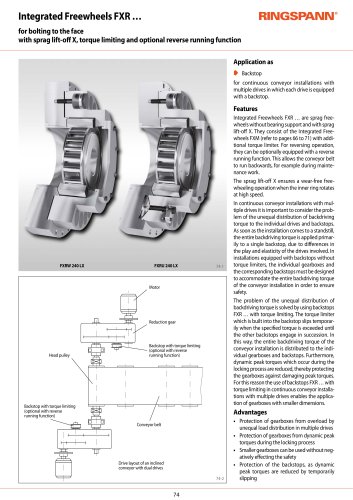 Datasheet FXRW
3 Pages


Archived catalogs
 Energy Generation
7 Pages
 Shaft Couplings 2018/2019
76 Pages
 2020 Machine Tools
7 Pages
 Shaft Couplings
76 Pages
 Mining 07/2020
9 Pages
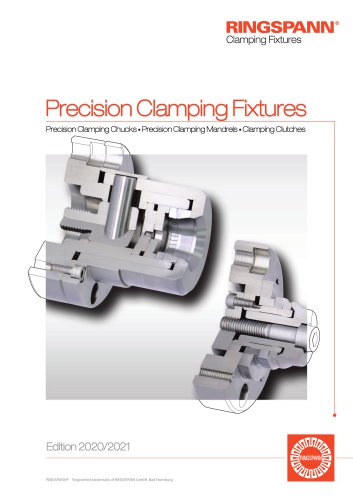
 Precision Clamping Fixtures
100 Pages
 Industrial brake
184 Pages
 Freewheels_2020-2021
112 Pages
 Freewheels_2019-2020
112 Pages
 Overload Clutches
80 Pages
 Industrial Brakes
184 Pages


- Chuck
- Storage cabinet
- RINGSPANN flexible coupling
- RINGSPANN friction brake
- RINGSPANN flange coupling
- Pack unit
- Clamping device
- Single pedal pedal
- Torque coupling
- RINGSPANN rigid coupling
- RINGSPANN spring brake
- Transmission coupling
- RINGSPANN zero-backlash coupling
- Electric hydraulic power unit
- RINGSPANN disc brake
- RINGSPANN friction brake caliper
- RINGSPANN electromagnetic brake
- Friction clutch