
- Catalogs
- Resodyn Acoustic Mixers, Inc.
- Mixing Energetic Materials

- Company
- Products
- Catalogs
- News & Trends
- Exhibitions
Mixing Energetic Materials
Mixing Energetic Materials
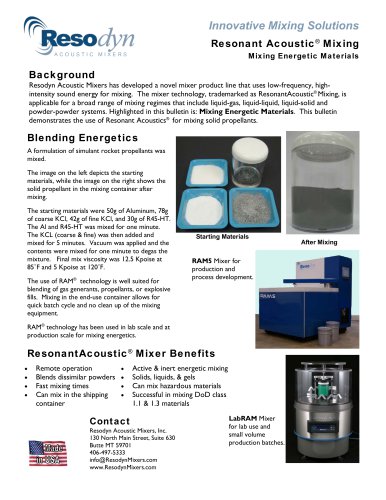
Resodyn Acoustic Mixers has developed a novel mixing technology called ResonantAcoustic® Mixing, which utilizes low-frequency, high-intensity sound energy. This technology is applicable to various mixing regimes, including liquid-gas, liquid-liquid, liquid-solid, and powder-powder systems. This document focuses on its application in mixing energetic materials, specifically solid propellants.
The process involves mixing a formulation of simulant rocket propellants. The starting materials include 50g of Aluminum, 78g of coarse KCl, 42g of fine KCl, and 30g of R45-HT. Initially, Aluminum and R45-HT are mixed for one minute, followed by the addition of coarse and fine KCl, which are mixed for an additional five minutes. A vacuum is applied to degas the mixture, which is mixed for one more minute. The final mix viscosity is measured at 12.5 Kpoise at 85˚F and 5 Kpoise at 120˚F.
RAM® technology is advantageous for blending gas generants, propellants, or explosive fills. It allows mixing in the end-use container, enabling quick batch cycles and eliminating the need for equipment cleanup. The technology is effective at both lab and production scales for mixing energetics.
- Remote operation capability
- Ability to blend dissimilar powders
- Fast mixing times
- Capability to mix in the shipping container
- Suitable for active and inert energetic mixing
- Effective for solids, liquids, and gels
- Can handle hazardous materials
- Successful in mixing Department of Defense class 1.1 and 1.3 materials
Resodyn Acoustic Mixers, Inc.
130 North Main Street, Suite 630
Butte MT 59701
Phone: 406-497-5333
Email: [email protected]
Website: www.ResodynMixers.com
Catalog excerpts
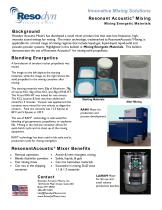
Innovative Mixing Solutions Resonant Acoustic® Mixing Mixing Energetic Materials Resodyn Acoustic Mixers has developed a novel mixer product line that uses low-frequency, highintensity sound energy for mixing. The mixer technology, trademarked as ResonantAcoustic® Mixing, is applicable for a broad range of mixing regimes that include liquid-gas, liquid-liquid, liquid-solid and powder-powder systems. Highlighted in this bulletin is: Mixing Energetic Materials. This bulletin demonstrates the use of Resonant Acoustics® for mixing solid propellants. Blending Energetics A formulation of simulant rocket propellants was mixed. The image on the left depicts the starting materials, while the image on the right shows the solid propellant in the mixing container after mixing. The starting materials were 50g of Aluminum, 78g of coarse KCl, 42g of fine KCl, and 30g of R45-HT. The Al and R45-HT was mixed for one minute. The KCL (coarse & fine) was then added and mixed for 5 minutes. Vacuum was applied and the contents were mixed for one minute to degas the mixture. Final mix viscosity was 12.5 Kpoise at 85˚F and 5 Kpoise at 120˚F. The use of RAM® technology is well suited for blending of gas generants, propellants, or explosive fills. Mixing in the end-use container allows for quick batch cycle and no clean up of the mixing equipment. Starting Materials RAM5 Mixer for production and process development. RAM® technology has been used in lab scale and at production scale for mixing energetics. ResonantAcoustic® Mixer Benefits • • • • Remote operation Blends dissimilar powders Fast mixing times Can mix in the shipping container Active & inert energetic mixing Solids, liquids, & gels Can mix hazardous materials Successful in mixing DoD class 1.1 & 1.3 materials Resodyn Acoustic Mixers, Inc. 130 North Main Street, Suite 630 Butte MT 59701 406-497-5333 [email protected] www.ResodynMixers.com LabRAM Mixer for lab use and small volume production b
Open the catalog to page 1All Resodyn Acoustic Mixers, Inc. catalogs and technical brochures
 OmniRAM H
2 Pages
 RAM 5 H™
2 Pages
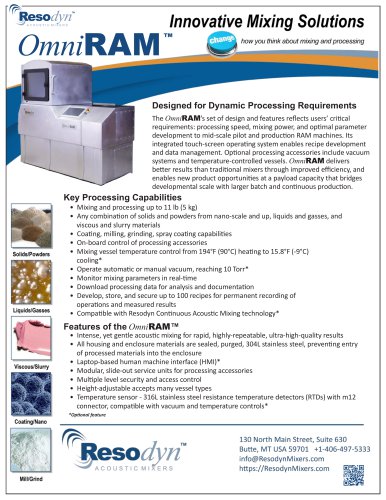 OmniRAM Pharma
2 Pages
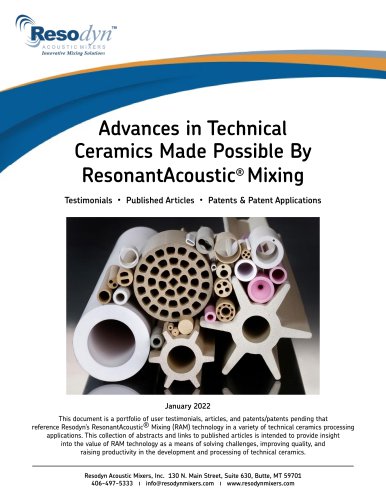 Ceramics
10 Pages
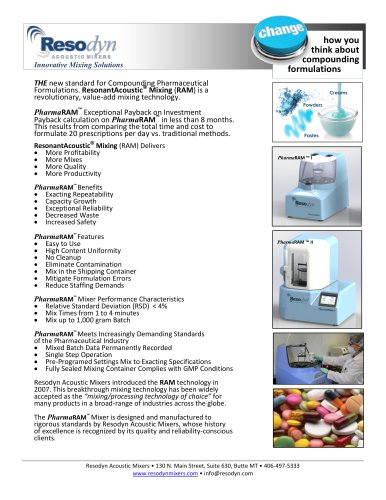 PharmaRAM Compounding
1 Page
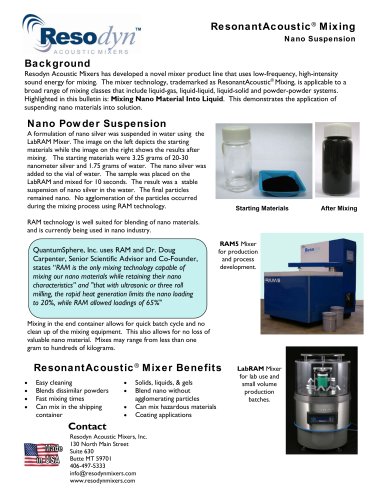 Nano Suspension
1 Page
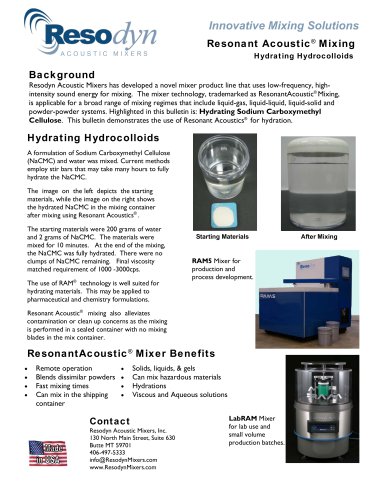 Hydrating Hydrocolloids
1 Page
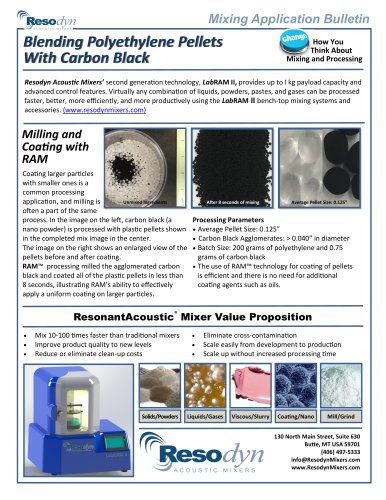 Milling and Coating with RAM
2 Pages
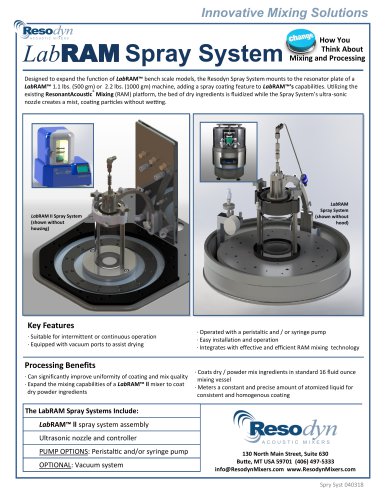 Spray System
2 Pages
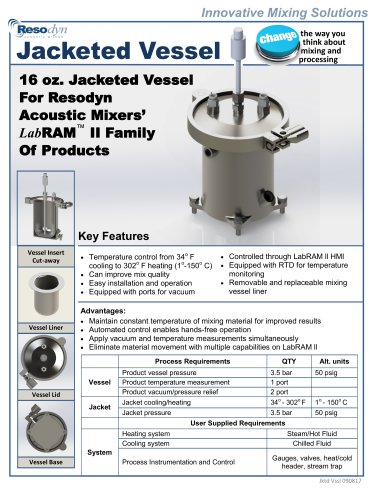 16oz Jacketed Vessel
2 Pages
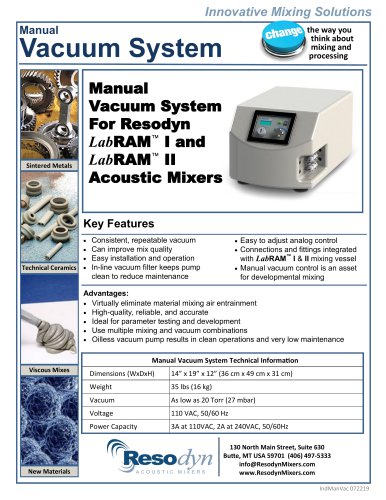 Manual Vacuum System
2 Pages
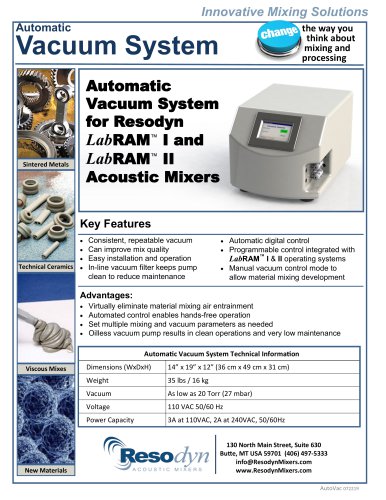 Automatic Vacuum System
2 Pages
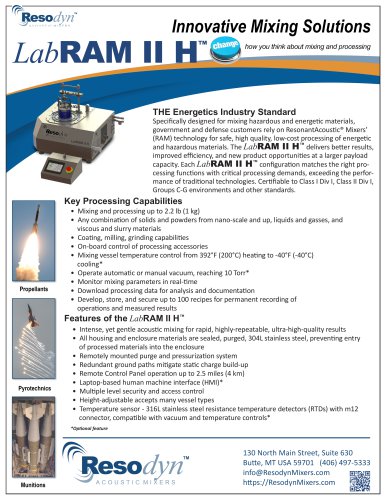 LabRAM II H
2 Pages
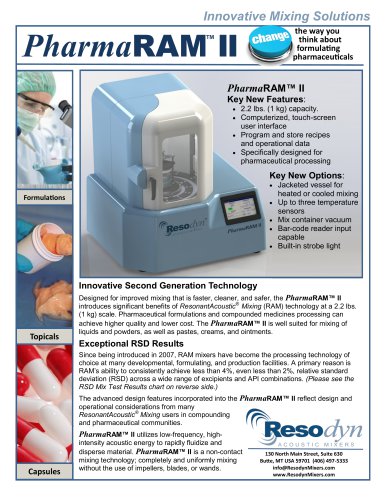 PharmaRAM II
2 Pages
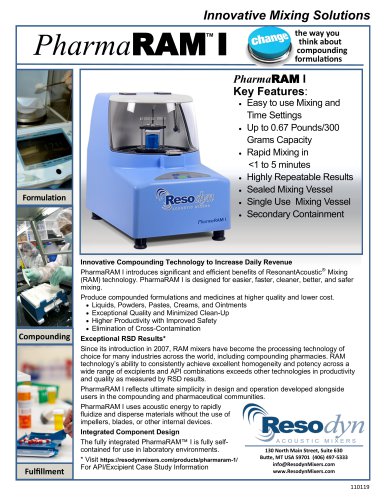 PharmaRAM I
2 Pages
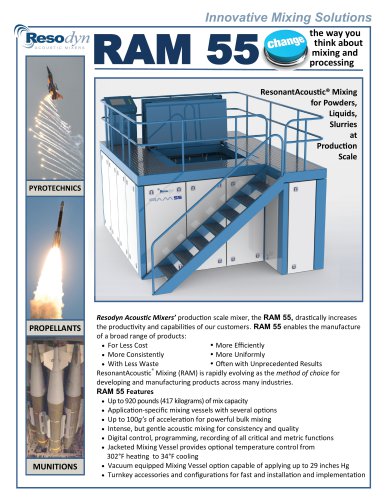 RAM 55
2 Pages
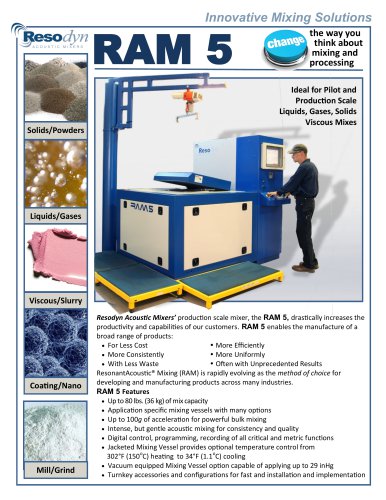 RAM 5
RAM 52 Pages
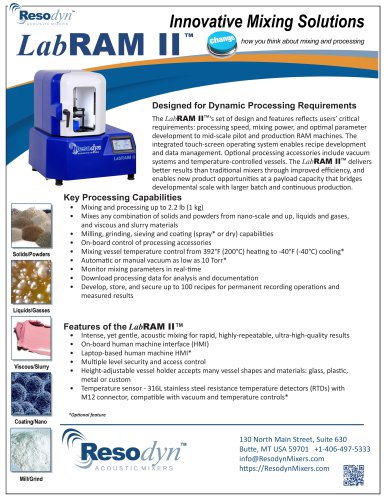 OmniRAM ™
2 Pages
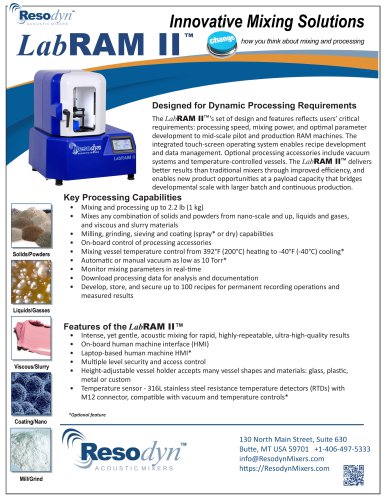 LabRAM II™
2 Pages
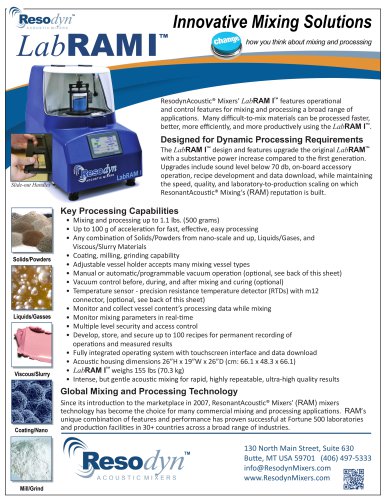 LabRAM I™
2 Pages
- Resodyn batch mixer
- Liquid homogenizer
- Resodyn vertical mixer
- Resodyn mixer for the chemical industry
- Resodyn stainless steel mixer
- Laboratory shaker
- In-line mixer
- Resodyn solid mixer
- Resodyn solids/liquids mixer
- Resodyn powder mixer
- Resodyn mixer for the pharmaceutical industry
- Digital laboratory stirrer
- Agitator for the cosmetics industry
- Bench-top laboratory shaker
- Solid kneader
- Compact homogenizer
- High-speed blender
- Vacuum blender
- Resodyn laboratory mixer
- Explosion-proof agitator