
- Catalogs
- RAS Reinhardt Maschinenbau GmbH
- UpDownCenter 2

UpDownCenter 2
UpDownCenter 2
Document Overview: The document appears to be a technical file containing a mixture of encoded or corrupted text, interspersed with some structured data and references to technical parameters. Due to the heavy presence of non-readable characters and fragmented content, the document’s exact subject matter is unclear. However, it seems to involve technical specifications, procedural steps, and possibly data tables or coded information.
1. Technical Specifications and Parameters
The document includes multiple sequences of characters that resemble parameter listings or coded data entries. These may represent configuration settings, measurement values, or identifiers related to a technical system or process. Unfortunately, the lack of clear labels or units prevents precise interpretation.
2. Procedures and Operational Steps
There are indications of procedural instructions or stepwise operations, suggested by the presence of enumerated sequences and repeated patterns. However, the instructions are not clearly articulated due to the corrupted text.
3. Data Tables and Codes
Several segments resemble tabular data or coded sequences, possibly representing system states, error codes, or configuration matrices. The document contains strings of alphanumeric characters and symbols that might correspond to technical codes or identifiers.
4. Limitations and Issues
The primary limitation is the document’s corrupted or encoded state, which obscures meaningful content extraction. This prevents a detailed understanding of the technical content, specifications, or recommendations.
Summary
Due to the document’s heavily corrupted and encoded nature, a comprehensive structured summary is not feasible. The document likely contains technical specifications, procedural guidelines, and coded data relevant to a specialized technical domain. However, critical information such as clear section headings, parameter definitions, and procedural clarity is missing or unreadable.
Recommendation: To enable effective analysis, a clean, decoded, or original version of the document is necessary. This would allow extraction of specifications, procedures, standards, and best practices in a structured and comprehensible manner.
Catalog excerpts
RAS REINHARDT MASCHINENBAU GMBH
Open the catalog to page 1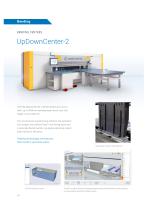
Bending BENDING CENTERS The RAS UpDownCenter-2 bends sheets up to 4 mm thick, up to 4060 mm bending length and a max. tool height of up to 600 mm. The one-click part programming software, the automatic tool changer, the UpDownTools in the folding beam and a extremely flexible suction cup plate positioning system adds maximum efficiency. Folding technology innovations that result in precision parts
Open the catalog to page 2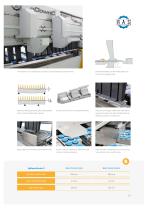
Extended flexibility, as the folding beam can be used as a gauging stop. Only one set of upper cheek tools with heel to squeeze envelopes for great design flexibility. Bending of high four-sided parts. Maximum bending accuracy due to the patented Folded UpDownTools for sectional bending, beam-in-beam folding beam design. Suction cups for small parts allow safe positioning of small workpieces. High flexibility in handling due to front suction cups and small part suction cups.
Open the catalog to page 3
RAS Reinhardt Maschinenbau GmbH Richard-Wagner-Stralie 4-10 71065 Sindelfingen
Open the catalog to page 4All RAS Reinhardt Maschinenbau GmbH catalogs and technical brochures
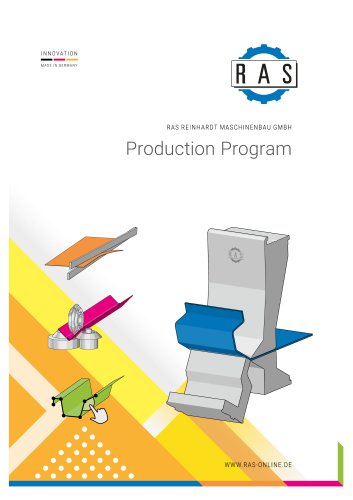
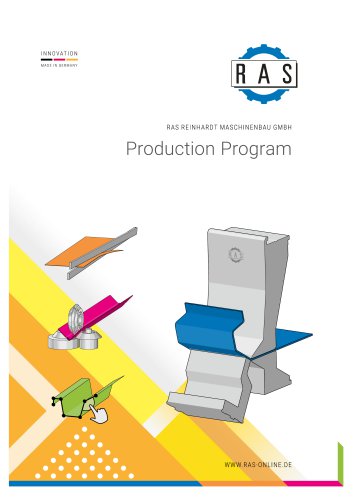
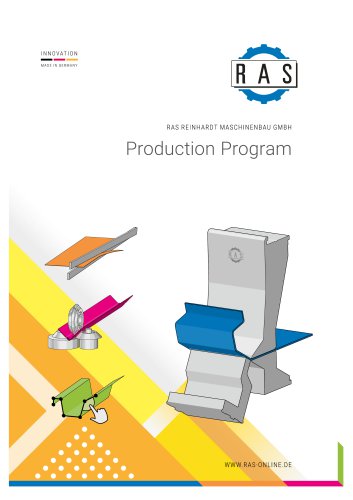
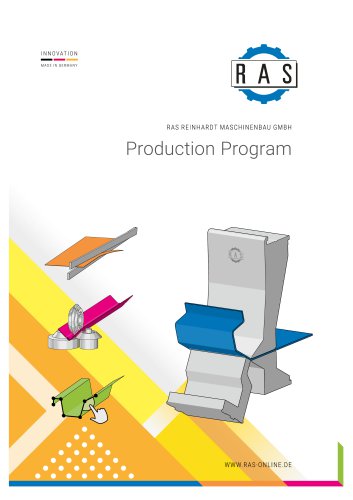
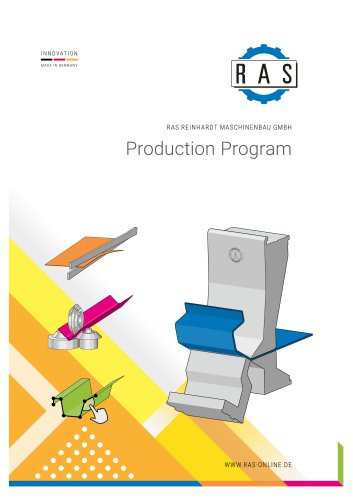
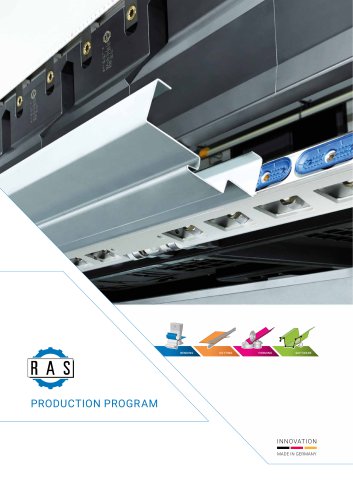 Production Program
76 Pages
 Seam Closing Machine 25.15
4 Pages
 Flanging Machine 21.20
4 Pages
 Swaging Machine EASYformer
4 Pages
 SMARTcut
4 Pages
 PRIMEcut
4 Pages
 POWERcut2
4 Pages
 XXL-Center
4 Pages
 XL-Center
4 Pages
 ProfileCenter
4 Pages
 XLTbend
6 Pages
 TURBObend
4 Pages
 TURBO2plus
4 Pages
 MEGAbend
4 Pages
 GIGAbend
4 Pages
 FLEXI2bend
4 Pages
 MiniBendCenter-2
6 Pages
 Multibend-Center
10 Pages
 Multibend-Center ECO
6 Pages
 Multibend-Center ECOauto
6 Pages
- Automation software solution
- Management software solution
- Analysis software solution
- Bender
- Control software
- 3D software solution
- Lifting system
- Simulation software solution
- Network software
- Profile bender
- Machine software
- Automatic bending cell
- Sheet metal shear
- 2D software
- Plate bending machine
- Rollformer
- Manual bending machine
- Precision bending cell
- Profile roll forming machine