1. Catalogs
  2. Putzmeister
  3. Concrete Technology for Concrete Pumps

Concrete Technology for Concrete Pumps

Concrete Technology for Concrete Pumps
1 / 35 PagesView full catalog

Concrete Technology for Concrete Pumps

Product catalog summary
Preliminary Comments: Concrete is described as an artificial stone made from cement, aggregates, and water, with possible admixtures and additives. The document outlines the diverse properties and applications of concrete, emphasizing its versatility in construction. It categorizes concrete based on reinforcement, density, hardening state, preparation location, and placement location.
1. Concrete Components: This section details the base materials influencing concrete properties. It covers cement types, including Portland, composite, blast furnace, pozzolanic, and composite cements, each with specific properties and applications. The importance of the water-cement ratio is highlighted, noting its impact on hydration and concrete strength.
2. Properties of Freshly-Mixed Concrete: Discusses bulk density and workability, essential for determining the concrete's suitability for various applications. The section emphasizes the need for proper handling to maintain these properties.
3. Properties of Hardened Concrete: Focuses on exposition classes, compressive strength, and corrosion protection. It highlights the importance of these properties in ensuring the durability and structural integrity of concrete structures.
4. Pumping Concrete: Explores the behavior of freshly-mixed concrete during pumping, including pumpability and the formation of the boundary zone layer. It provides insights into the challenges and considerations when using concrete pumps.
5. Avoiding and Eliminating Faults: Offers guidance on preventing and addressing issues during concrete delivery and pumping. It stresses the importance of adhering to proper procedures to maintain concrete quality.
6. Specifications and Recommendations: Summarizes technical regulations and standards relevant to concrete technology, ensuring compliance with industry norms.
7. Further Literature: Lists additional resources for in-depth understanding and technical guidance on concrete technology.
Specifications and Standards: The document outlines the specifications for concrete components, focusing on particle size distribution, water addition, aggregates, admixtures, and additives. It references standards such as DIN EN 1008 for mixing water and DIN EN 12620 for aggregates, emphasizing the importance of adhering to these standards to ensure quality and performance.
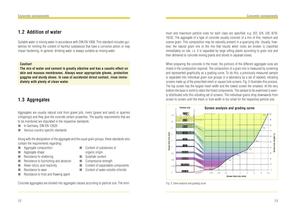
Screen Analysis and Grading Curve: The grading curve is used to represent the composition of grain mixes in concrete. It involves separating a sample into grain size groups using a set of vibrating screens. The process ensures that the aggregate mix meets the required specifications for concrete production.
Concrete Components: Water Addition: Suitable mixing water must comply with DIN EN 1008, ensuring it is free from harmful substances. Protective measures are necessary due to the caustic nature of the water-cement mix. Aggregates: These are sourced from natural rock and must meet quality requirements such as resistance to shattering, abrasion, and frost. The document specifies aggregate classes based on particle size and highlights the influence of grain shape on concrete workability.
Admixtures and Additives: Admixtures: Classified into Type I (inert) and Type II (reactive), they improve workability and physical properties. Examples include coal fly ash and microsilica. Additives: These are liquid substances added in small amounts to enhance concrete properties like workability and water resistance. Types include deflocculants, plasticisers, air-entraining agents, and setting retarders/accelerators.
Concrete Corrosion and Composition: The document discusses the limits for concrete composition to prevent corrosion, specifying maximum water-cement ratios and minimum compressive strengths for different exposure classes. It also addresses reinforcement corrosion, detailing requirements for cement content and air content.
Key Recommendations: - Use drinking water as mixing water to avoid harmful effects. - Follow specified standards for aggregates to ensure durability and performance. - Carefully select admixtures and additives to enhance concrete properties without compromising quality. - Adhere to specified limits for concrete composition to prevent corrosion and ensure structural integrity.
Specifications: Mortar is composed of cement, water, air voids, and 0/2 mm aggregate, measured in dm3 per 1 m3 of compressed fresh concrete. The mortar content affects the pumpability and workability of concrete. Standard values for pumpable concrete are provided, with specific cement and fine matter content limits based on aggregate size and concrete class.
Mix Formula Calculation: The mix formula for 1 m3 of compacted freshly-mixed concrete considers the bulk densities and water content of individual grain groups. The water-cement ratio is crucial, affecting concrete strength, permeability, drying, shrinkage, and durability. Fine matter content, composed of particles smaller than 0.125 mm, is essential for workability and texture but must be balanced to avoid increased water demand and reduced frost resistance.
Workability and Consistency: Concrete consistency is measured by standardized tests like the flow-table and compaction tests. Consistency affects workability and is influenced by cement paste amount rather than the water-cement ratio. The temperature of fresh concrete is critical, especially in extreme weather, and should be between +5°C and +30°C during placement.
Properties of Freshly-Mixed Concrete: Key properties include bulk density and workability. Proper compaction is vital to remove air voids and ensure strength. Various consistency classes (F1 to F6) and compaction classes (C0 to C4) are defined, with specific methods for measuring consistency.
Properties of Hardened Concrete: Exposition classes describe environmental conditions affecting concrete durability. Compressive strength, the most important property, is tested after 28 days. Improper handling, such as unauthorized water addition or insufficient compaction, can reduce strength.
Concrete Exposure and Resistance: Concrete is exposed to various environmental conditions that affect its durability. Categories include exposure to frost with and without thawing agents, chemical environments, and reinforcement corrosion by carbonation. Specific classifications like XF3, XA2, XM1, and XM2 denote different exposure levels and requirements.
Water Impermeability: Concrete's impermeability is crucial for protecting reinforcement from corrosion and preventing water penetration under pressure. Testing follows DIN 12390-8 standards, ensuring water penetration does not exceed 50 mm under specified conditions.
Corrosion Protection: Effective corrosion protection requires leakproof cement paste and adequate concrete cover. Mistakes in particle size assessment and mixing can compromise protection. Proper spacers and compaction are essential to maintain reinforcement integrity.
Resistance to Chemical Corrosion: Concrete's resistance to chemical corrosion is categorized into weak, medium, and severe environments. High sulphate resistance cement is recommended for environments with high sulphate content.
Frost Resistance: Concrete must be water-impermeable and strong, with frost-resistant aggregates. Air-entraining additives improve resistance to frost and thawing salts.
Wear Resistance: Concrete surfaces exposed to mechanical loads require high wear resistance. This includes areas with heavy traffic or exposure to strong currents.
Pumpability of Fresh Concrete: Pumpable concrete must be structurally leakproof, with all components enclosed by liquid. Key factors include suitable composition, cement content, fine matter content, and pipeline diameter. The consistency coefficient is crucial for determining pumpability.
Boundary Zone Layer: When concrete is pumped, a lubricating film forms on the pipe wall, affecting the distribution of fine grains. This boundary zone segregation is essential for maintaining pumpability and structural integrity.
Concrete Pump Behavior: The concrete pump must maintain a continuous flow without altering the concrete's composition. The behavior of freshly-mixed concrete in the pump involves passive and reactive interactions, affecting its properties during pumping.
Specifications and Procedures: The document discusses the mechanics of pumping freshly-mixed concrete, focusing on the role of the pump's piston stroke in creating low pressure to draw concrete from the hopper into the delivery line. It highlights the importance of minimizing resistance to flow and deformation of concrete, facilitated by the agitator's design and operation.
Concrete Pump Types: Different types of concrete pumps, such as piston pumps with trunk or S-pipe valves and squeezed tube pumps, are mentioned. The document notes that the valve system's imperviousness is crucial for maintaining concrete pumpability.
Challenges and Solutions: Issues like boundary zone segregation, encrustation, and blockages are discussed. The document suggests that increasing piston speed does not improve filling rates for poorly-flowing concrete. It emphasizes the need for large suction openings and consistent cross-sections to optimize pump efficiency.
Wear and Maintenance: The wear effect of concrete on pump components is significant, influenced by the concrete's consistency and speed. The document advises thorough cleaning to prevent hardened concrete from damaging pump seals and pistons.
Concrete Flow Dynamics: The behavior of concrete in delivery lines, including the effects of pipe bends and elbows, is analyzed. The document provides a nomogram to illustrate the relationship between pump performance, delivery line geometry, and concrete consistency.
Starting Pump Operations: Special attention is required when starting to pump, as the initial concrete flow must wet the delivery line's interior. The document recommends using a start-up mixture or Putzmeister slurry to prevent blockages.
Introduction: This document provides detailed guidelines on the properties and conditions of freshly-mixed concrete during pumping, emphasizing the importance of proper emptying and cleaning of delivery lines to prevent blockages.
Specifications and Procedures: The document outlines the specifications for different pipe elbows and their equivalent pipe lengths, highlighting the need for accurate measurement of the concrete's consistency coefficient using a pump trial or the Sliding Pipe Rheometer. It stresses that traditional methods like spread or slump are no longer reliable for determining pump properties.
Concrete Pumping Dynamics: The document explains the relationship between delivery pressure, pipe diameter, and flow rate. It provides an example calculation for delivery pressure based on a specific pump output and pipe diameter, illustrating the impact of pipe diameter reduction on flow speed and pressure requirements.
Consistency Coefficient Calculation: Due to complex concrete recipes, the document describes a more sophisticated method for calculating the consistency coefficient, involving pump trials and the use of the Sliding Pipe Rheometer. This instrument simulates pipe flow characteristics to determine the consistency coefficient accurately.
Fault Avoidance and Elimination: A short guide is provided to address common issues during concrete delivery and pumping, such as gravel noises, consistency changes, and blockages. Recommended measures include checking delivery notes, adjusting concrete consistency, and ensuring proper mixing.
Technical Regulations: The document lists relevant DIN standards and technical reports related to concrete specifications, performance, production, and testing methods.
Further Literature: A list of additional resources and literature is provided for further reading on concrete technology and production standards.
Specifications and Recommendations of Technical Regulations:
  • DIN EN 450-1: Defines specifications and conformity criteria for fly ash concrete.
  • DIN EN 12620: Covers aggregates for concrete, aligning with the German version EN12620:2002 + A1:2008.
  • DIN EN 1008: Specifies the sampling, testing, and suitability assessment of mixing water for concrete.
  • DAfStb Guidelines: Include regulations for water impermeable concrete structures, concrete with prolonged pot life, and self-compacting concrete.
  • FGSV 818: Provides a code of practice for manufacturing and processing air-entrained concrete.
  • ZTV-ING: Offers additional technical terms of contract and guidelines for civil engineering structures.
  • EFNARC: European guidelines for the specification, production, and use of self-compacting concrete.
Further Literature:
  • Kasten, K.: Discusses the Sliding Pipe Rheometer for determining flow properties of high viscous media in pipelines.
  • In puncto Transportbeton GmbH: Lists 10 arguments for pumping concrete.
  • Cement Data Sheets: Provide insights into properties and testing of fresh and self-compacting concrete.
  • Busson et al.: Offers a technical guide to pumping concrete.
  • Feys, D.: Examines interactions between rheological properties and pumping of self-compacting concrete.
  • SIKA Betonhandbuch: A comprehensive manual on concrete technology.
  • Springenschmid, R.: Focuses on practical concrete technology.
  • Thomaseth et al.: Evaluates the adhesive properties of concrete with new test facilities.
See more

Catalog excerpts

Concrete Technology for Concrete Pumps-1

Concrete Technology

 Open the catalog to page 1

Concrete Technology for Concrete Pumps-2

Concrete Technology

 Open the catalog to page 2
Concrete Technology for Concrete Pumps-3

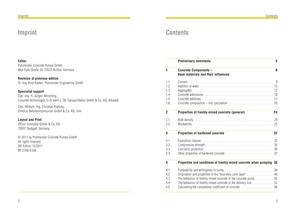
Imprint Imprint Editor Putzmeister Concrete Pumps GmbH Max-Eyth-Straße 10, 72631 Aichtal, Germany Contents Contents Layout and Print Offizin Scheufele GmbH & Co. KG 70597 Stuttgart, Germany © 2011 by Putzmeister Concrete Pumps GmbH All rights reserved 6th Edition 12/2011 BP 2158-6 GB 2 Concrete Components – Base materials and their influences 9 1.1 1.2 1.3 1.4 1.5 1.6 Cement . . . . . . . . . . . . . . . . . . . . . . . . . . . . . . . . . . . . . . . . . . . . . . . . . . . . . . . . . . . . . . . . . . . . . . . . . . . . . . 9 Addition of water . . . . . . . . . . . . . . . . . . . . . . ....

 Open the catalog to page 3
Concrete Technology for Concrete Pumps-4

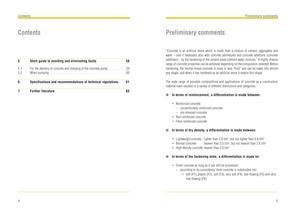
Contents Preliminary comments Contents Preliminary comments 5 Short guide to avoiding and eliminating faults 5.1 5.2 For the delivery of concrete and charging of the concrete pump . . . . . . . . . . . . . . . . 59 When pumping . . . . . . . . . . . . . . . . . . . . . . . . . . . . . . . . . . . . . . . . . . . . . . . . . . . . . . . . . . . . . . . . . . . . . 60 "Concrete is an artificial stone which is made from a mixture of cement, aggregates and water – and if necessary also with concrete admixtures and concrete additions (concrete additives) – by the hardening of the cement paste (cement-water...

 Open the catalog to page 4
Concrete Technology for Concrete Pumps-5

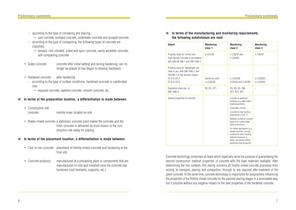
- according to the type of conveying and placing, -► cast concrete, pumped concrete, underwater concrete and sprayed concrete. - according to the type of compacting, the following types of concrete are -► tamped, rod, vibrated, jolted and spun concrete, easily workable concrete, self-compacting concrete • Green concrete concrete after initial setting and during hardening; can no longer be placed (it has begun to develop hardness) • Hardened concrete after hardening - according to the type of surface conditions, hardened concrete is subdivided exposed concrete, washed concrete, smooth concrete,...

 Open the catalog to page 5
Concrete Technology for Concrete Pumps-6

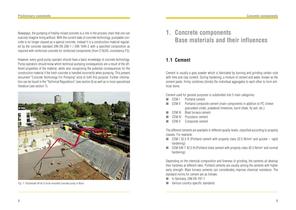
Preliminary comments Nowadays, the pumping of freshly-mixed concrete is a link in the process chain that one can scarcely imagine living without. With the current state of concrete technology, pumpable concrete is no longer classed as a special concrete, instead it is a construction material regulated by the concrete standard DIN EN 206-1 / DIN 1045-2 with a specified composition as required with reinforced concrete for reinforced components (from C16/20, consistency F3). However, every good pump operator should have a basic knowledge of concrete technology. Pump operators should know which technical...

 Open the catalog to page 6
Concrete Technology for Concrete Pumps-7

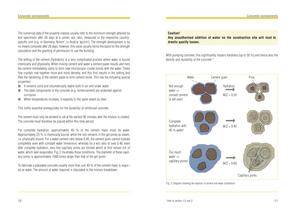
Concrete components The numerical data of the property classes usually refer to the minimum strength attained by test specimens after 28 days at a certain w/c ratio, measured in the respective countryspecific unit (e.g. in Germany: N/mm2, in Austria: kp/cm2). The strength development is by no means complete after 28 days; however, this value usually forms the basis for the strength calculation and the granting of permission to use the building. The setting of the cement (hydration) is a very complicated process where water is bound chemically and physically. When mixing cement and water a cement...

 Open the catalog to page 7
Concrete Technology for Concrete Pumps-8

Suitable water is mixing water in accordance with DIN EN 1008. This standard includes gui- delines for limiting the content of harmful substances that have a corrosive action or may impair hardening. In general: drinking water is always suitable as mixing water. mum and maximum particle sizes for each class are specified, e.g. 0/2; 0/4; 2/8; 8/16; 16/32. The aggregate of a type of concrete usually consists of a mix of fine, medium and coarse grain. This composition may be naturally present in a quarrying site. Usually, how- ever, the natural grain mix or the mix that results when rocks are broken...

 Open the catalog to page 8
Concrete Technology for Concrete Pumps-9

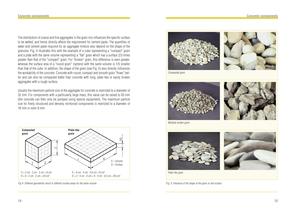
Concrete components Concrete components The distribution of coarse and fine aggregates in the grain mix influences the specific surface to be wetted, and hence directly affects the requirement for cement paste. The quantities of water and cement paste required for an aggregate mixture also depend on the shape of the granules. Fig. 4 illustrates this with the example of a cube representing a "compact" grain and a plate with the same volume representing a "flat" grain which has a surface 2/3 times greater than that of the "compact" grain. For "broken" grain, this difference is even greater, whereas...

 Open the catalog to page 9
Concrete Technology for Concrete Pumps-10

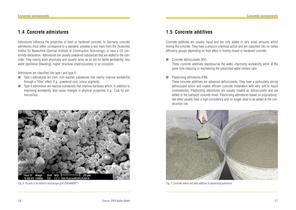
Concrete components Concrete components 1.4 Concrete admixtures 1.5 Concrete additives Admixtures influence the properties of fresh or hardened concrete. In Germany, concrete admixtures must either correspond to a standard, possess a test mark from the Deutsches Institut für Bautechnik (German Institute of Construction Technology), or have a CE conformity declaration. Admixtures are usually powdered substances that are added to the concrete. They mainly work physically and usually serve as an aid for better workability, less water repellence (bleeding), higher structural imperviousness or as...

 Open the catalog to page 10
Concrete Technology for Concrete Pumps-11

Concrete components Concrete components I Air-entraining agents (LP) Concrete with high resistance to frost and thawing salt must have a minimum content necessary the for larger volume prevented invoids (smaller than 0.3 than water. If the obtained of the voids entraining agents.space concrete then the concrete may can beThe additional airfrozen water is of micro air Ice has athis extension. mm) which burst. expansion by adding air offer the I Water resisting admixtures (DM) These are used to improve the water imperviousness of the concrete. Water resisting stances that may be harmful particular...

 Open the catalog to page 11
Concrete Technology for Concrete Pumps-12

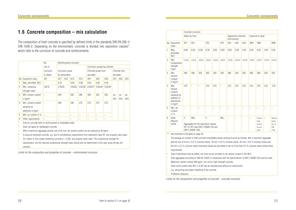
Concrete components 1.6 Concrete composition - mix calculation The composition of fresh concrete is specified by defined limits in the standards DIN EN 206-1/ DIN 1045-2. Depending on the environment, concrete is divided into exposition classes*, which refer to the corrosion of concrete and reinforcements. Limits for the composition and properties of concrete - reinforcement corrosion 'refer to section 3.1 on page 32 Concrete components Limits for the composition and properties of concrete - concrete corrosion

 Open the catalog to page 12

All Putzmeister catalogs and technical brochures

  1. SP 20 GHF

    2  Pages

  2. BSA 1407 D5

    1  Page

  3. M36-4

    2  Pages

  4. MIXKRET 4

    6  Pages

  5. Catalogue 2014

    24  Pages

  6. Trans Mix

    12  Pages

  7. PM Academy

    2  Pages

*Prices are pre-tax. They exclude delivery charges and customs duties and do not include additional charges for installation or activation options. Prices are indicative only and may vary by country, with changes to the cost of raw materials and exchange rates.