
- Catalogs
- PTR HARTMANN GmbH
- PTR HARTMANN Testing Technology Catalogue

- Products
- Catalogs
- News & Trends
- Exhibitions
PTR HARTMANN Testing Technology Catalogue

PTR HARTMANN Testing Technology Catalogue
PTR HARTMANN is a leading global provider of electromechanical components, known for precision, innovation, and reliability. The company has a vast distribution network across 60 locations worldwide, ensuring product availability and customer service. Since merging with Phoenix Mecano in 1989, PTR HARTMANN has expanded its global presence, offering products like terminal blocks, multi-connectors, test probes, and DIN rail terminal blocks.
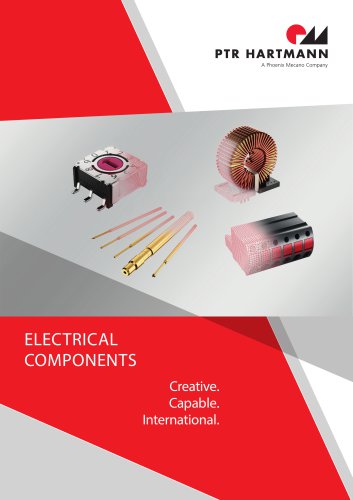
PTR HARTMANN operates in key areas including Testing Technology, Connection Technology, Inductivities, Switches, and DIN Rail Terminal Blocks.
The company's test probes are utilized in sectors such as telecommunications, medical technology, aeronautics, aerospace, and automotive industries, serving as reliable contact elements for testing PCBs and cable harnesses.
PTR HARTMANN is committed to continuous product development to meet market demands, including high-frequency test probes for communication and in-car entertainment technology.
The company adheres to EN ISO 9001 standards and prioritizes environmental responsibility with certifications like EN ISO 14001 and compliance with EU directives such as ROHS2 and REACH.
The document provides detailed technical specifications for various test probes, categorized by series, center extension height, working travel, and maximum travel, essential for selecting appropriate test probes for specific applications.
PTR HARTMANN is dedicated to providing high-quality, reliable products and services, emphasizing innovation and customer satisfaction, ensuring continued success in the global market.
Phoenix Mecano AG operates globally, focusing on niche products for smooth operations in the machine industry and industrial electronics, with applications in mechanical engineering, medical technology, and aerospace.
- Enclosures: Protect electronic and electrical equipment, used in plant engineering, automotive, and offshore oil platforms.
- Mechanical Components: Includes linear actuators and lifting columns for industry and home care sectors.
- ELCOM/EMS: Products for electrical energy flow across various industrial sectors.
Used in electronic product manufacturing for testing PCBs and connectors in the automotive industry, ensuring high-quality standards by optimizing production and reducing costs.
- Test Probe Design: Consists of a barrel, plunger, and spring, with materials like steel, copper beryllium, brass, bronze, nickel silver, spring steel, stainless steel, and high-quality plastics.
- Coatings: Gold, rhodium, nickel, and silver coatings enhance electrical properties and wear resistance.
Used for replacing spring contacts without wiring work, made from bronze, nickel silver, or brass, with gold plating for electrical properties.
Phoenix Mecano has locations worldwide, including North and South America, Europe, Africa, Asia, and Australia.
These receptacles come with a component lead adjustable to the required length by the customer, designed for different extension heights.
For optimal fit, assembly holes must be drilled carefully with specific conditions, such as using hard metal drills and specific RPM.
Various types include threaded, insulated, non-rotating, and easy-replacement receptacles, each with specific features for different applications.
Accuracy is influenced by adapter tolerances and lateral play of the spring contact probe.
Test probes are manufactured under ISO 9001 standards, with continuous monitoring for functionality and durability.
Designed for applications with very small centers, these probes have specific mechanical and electrical data.
Various tip styles are available for different applications, such as concave, pointed, serrated, and chisel tips.
Detailed designations for test probes and receptacles include series, tip style, spring force, plating, and additional information for precise identification and ordering.
The probes are available in different center distances, featuring a temperature range of -30°C to +120°C, with some models capable of withstanding up to +250°C.
The maximum current rating for these probes is typically 3.0 A, with continuity resistance ranging from ≤ 20 mOhm to ≤ 75 mOhm.
The probes are constructed from high-quality materials such as bronze, stainless steel, and CuBe, all gold-plated for enhanced conductivity and durability.
Specific models are designed to operate between -40°C and +250°C, with adjusted spring forces to maintain performance.
The document provides a detailed guide on how to order the probes, specifying series, tip style, spring force, plating, and diameter.
These test probes are versatile and can be used in various fields, including automotive industry testing, burn-in/run-in tests, and testing of connectors on cable harnesses.
- Mechanical Data: The probes are available in different center distances with varying full and working travel lengths.
- Electrical Data: The maximum current rating varies between 2.0 A to 8.0 A, depending on the series.
- Materials: The probes are constructed using gold-plated bronze barrels, gold-plated spring steel springs, and steel or CuBe plungers.
Each series has a specific ordering code that includes details such as series number, tip style, spring force, tip plating, and tip diameter.
The probes offer a large selection of head styles, metric design, and variable installation heights.
The document includes recommended drill diameters for different materials and series.
These probes are designed for better penetration of contaminants and improved signal transfer.
Center: 1.91 mm / 75 mil to 2.54 mm / 100 mil, Temperature Range: -30 °C to +120 °C, Full Travel: 4.40 mm to 6.40 mm.
Max. Current Rating: 3.0 A to 8.0 A, Typical Continuity Resistance: ≤ 20 mOhm to ≤ 30 mOhm.
Barrel: Brass, gold-plated; Spring: Spring Steel, gold-plated; Plunger: Steel, CuBe, gold-plated.
HP 2361.1 (Trolitax): 1.68 mm to 3.31 mm.
Various screw tools are available with different maximum tip and plate diameters.
Temperature Range: -40 °C to +250 °C, Pre-Loaded Spring Force: 0.50 N to 1.00 N.
The document provides a structured format for ordering test probes, specifying series, threaded design, tip style, spring force, tip plating, and tip diameter.
- Mechanical Data: The test probes have a center measurement of 4.00 mm / 160 mil, with a temperature range of -30 °C to +120 °C.
- Electrical Data: Maximum current rating is between 5.0 A and 8.0 A, with typical continuity resistance ≤ 30 mOhm.
- Materials: The barrel is made of brass, gold-plated; the spring is made of spring steel or stainless steel, gold-plated; the plunger is steel.
For high-temperature applications, the temperature range extends from -40 °C to +250 °C.
The document provides a detailed guide on how to order test probes, specifying series, threaded design, tip style, spring force, high temperature, tip plating, and tip diameter.
Various screw tools are available, with maximum tip diameters ranging from 3.0 mm to 5.0 mm.
These probes feature an anti-turn design for precise contact creation.
The document also details the recommended diameter of drills for receptacles and the materials used.
This document serves as a comprehensive guide for selecting and ordering test probes for cable harness testing.
- Mechanical Data: The probes have varying center sizes, temperature ranges, full travel, working travel, and switching travel.
- Electrical Data: The maximum current rating and typical continuity resistance differ between receptacle-plunger and pin-plunger configurations.
- Materials: Common materials include brass and spring steel, both gold-plated.
The document outlines how to order the probes based on series, design, tip style, spring force, plating, and dimensions.
- High soldering temperature tolerance up to 300°C.
- Easy-replacement systems allow for probe replacement without soldering.
Recommended drill diameters and available screw tools are provided for proper installation and maintenance of the probes.
This document serves as a comprehensive guide for selecting and ordering switching test probes.
- Test Probe Types: Includes switching test probes, push-back test probes, and high-current test probes.
- Mechanical Data: Details such as center distance, temperature range, full travel, working travel, and spring force are provided for each probe type.
- Electrical Data: Information on maximum current rating, continuity resistance, and insulating voltage is included.
- Materials: Common materials used include brass and spring steel, often gold-plated for enhanced conductivity and durability.
- Easy-Replacement System: Allows for probe replacement without soldering.
- Switching Mechanism: Describes the "OFF-ON-OFF" switching type for certain probes.
- Drill Diameter: Recommended diameters for drilling are specified for different materials and probe types.
- Ordering Information: Detailed instructions on how to order probes.
- High-Current Capability: Some probes are designed to handle high currents, up to 100 A.
- Versatility: Probes are available in various sizes and configurations.
- Design and Benefits: These probes are robust, have low contact resistance, and are suitable for high-current transmission.
- Mechanical Data: The probes have varying center sizes and temperature ranges.
- Electrical Data: Maximum current ratings range from 24.0 A to 100.0 A.
- Materials: Components are primarily made of brass, stainless steel, and CuBe.
- Ordering Information: Probes are ordered based on series, threaded design, tip style, spring force, and other specifications.
- Design and Benefits: These probes are operated with compressed air and are used for contacting individual test points without adapters.
- Mechanical Data: Centers range from 3.00 mm to 4.00 mm.
- Electrical Data: Maximum current ratings are up to 3.0 A.
- Materials: Made of brass and steel, with gold plating.
- Design and Benefits: These are compact probes used for board-to-board contacting and in charging units.
- Mechanical Data: Center size is 2.54 mm.
- Electrical Data: Maximum current rating is 5.0 A.
Various accessories are available for pneumatic test probes, including threaded sleeves, T-pieces, and compressed air hoses.
1. Materials: Various materials are used for different components such as Nickel Silver, Spring Steel, Stainless Steel, CuBe, and Brass.
2. Temperature Range: Standard applications range from -30°C to +120°C.
3. Electrical Data: Maximum current ratings vary from 1.5 A to 20.0 A.
4. Mechanical Data: Full travel ranges from 1.00 mm to 10.00 mm.
1. How to Order: Each series has a specific ordering code.
2. Recommended Drill Diameter: Specific drill diameters are recommended for different materials and configurations.
1. UL Certification: Interface pin blocks are UL certified.
2. Test Standards: Series 5322 has passed vibration and shock tests.
1. Applications: Suitable for board-to-board contacting, charging units, and use in tough conditions.
2. Assembly: Options for SMD automated assembly and tape on reel packaging are available.
1. Design: Short, compact size with options for long full travel.
2. Flexibility: Allows for individual bonding and connection with various wire types.
3. Durability: Long lifetime and low contact resistances.
- Specifications: Available in 100 mil (2.54 mm) and 50 mil (1.27 mm) series.
- Materials: Components are gold-plated brass and spring steel.
- Ordering Information: Various configurations available with different poles and widths.
- Specifications: Designed for four-pole measurement with independent spring-loaded inner and outer conductors.
- Electrical Data: Inner contact max current rating is 1.0 A, and ring contact is 6.0 A.
- Materials: Gold-plated CuBe and steel components.
- Specifications: Suitable for high-frequency measurements up to 9 GHz with an impedance of 50 Ohms.
- Materials: Gold-plated brass and CuBe components.
- Ordering Information: Various configurations available with specific article numbers.
This document provides technical specifications and ordering information for high frequency test probes, specifically Series 7860 and 7860/G, designed for high frequency measurements up to 6 GHz with an impedance of 50 Ohm.
- Inner Conductor: Full travel is 3.70 mm with a working travel of 2.00 mm.
- Outer Conductor: Full travel is 5.00 mm with a working travel of 4.00 mm.
- Total Spring Force: Full spring force at working travel ranges from 5.30 to 10.00 N.
- Impedance is 50 Ohm.
- Frequency range is up to 6 GHz.
- Barrel: Brass, gold-plated.
- Spring: Steel, gold-plated.
- Plunger: CuBe, gold-plated.
Article designation WFSB 7860/G-8.0 with a maximum tip diameter of 8.0 mm.
- Type: Multiflex 86.
- Length: 750 mm.
- Connector Test Probe: MCX.
- Connector Testing Technology: SMA.
The document provides a detailed breakdown of how to order complete test probes and inner conductors.
The probes are suitable for high frequency measurements, offer a compact design, and are available in a screwable type.
This document provides detailed specifications and ordering information for high frequency test probes, specifically the FAKRA plug and socket series, designed for high frequency measurements up to 6 GHz with an impedance of 50 Ohm.
- Inner Conductor: Full travel of 3.70 mm, working travel of 2.00 mm.
- Outer Conductor: Full travel of 5.00 mm, working travel of 4.00 mm.
- Electrical Data: Impedance of 50 Ohm, frequency range up to 6 GHz.
- Materials: Barrel made of brass, spring of steel, and plunger of CuBe, all gold-plated.
The document provides a detailed guide on how to order complete test probes and inner conductors.
Offers interface pins and test probes for various adapter interfaces.
A wide range of tools is available, including insertion and extraction tools for test probes.
The probes are designed for universal application, compact design, and easy integration into existing systems.
The document outlines various screwing tools and test probes with specific torque requirements.
It is crucial to adhere to the recommended torque limits to avoid damage to the test probes or screwing tools.
The document lists various tools and accessories, including torque screwdrivers, digital force gauges, and assembly tools for high-frequency test probes.
When ordering tools, it is advised to specify the test probe to be assembled.
The document provides contact information for PTR HARTMANN's global representatives across various countries.
PTR HARTMANN supports environmentally friendly practices, as indicated by their adherence to FSC guidelines for sustainable forest management and carbon-neutral printing processes.
PTR HARTMANN is part of the Phoenix Mecano Group, a global technological enterprise with a presence in over 60 locations worldwide.
Catalog excerpts

fii PTR HARTMANN A Phoenix Mecano Company TESTING TECHNOLOGY Quality Down to the Tiniest Detail
Open the catalog to page 1
WE COMBINE PRECISION, INNOVATION AND RELIABILITY FOR YOUR BENEFIT. PTR HARTMANN is responding to the globalisation of markets with an expanded distribution network. In over 60 locations worldwide, qualified personnel ensure that our products and services are always available to customers.
Open the catalog to page 2
Areas of Operation · Testing Technology · Connection Technology · Inductivities · Switches · DIN Rail Terminal Bloc
Open the catalog to page 3
Good functionality, a high level of efficiency, excellent precision and absolute reliability in our delivery performance: these factors are why customers worldwide are putting their faith in PTR HARTMANN products. We combine quality and reliability with the claim to provide optimal solutions for customer-specific requirements. For us, these features have a long tradition. Since 1979, alongside a constantly expanding range of products, they have played a major role in our becoming a modern global player in the electromechanical components sector. Today, the name of PTR stands for excellence and...
Open the catalog to page 5
Content CONTENT TECHNICAL COMPENDIUM Lateral Play 20 Quality and Operation Life EXTENSION HEIGHT WORKING TRAVEL mm / INCHES mm / INCHES TEST PROBES FOR SMALL CENTER STANDARD TEST PROBES STANDARD TEST PROBES CENTER < 100 mil / 2.54 mm STANDARD TEST PROBES CENTER > 100 mil / 2.54 mm
Open the catalog to page 6
EXTENSION HEIGHT WORKING TRAVEL mm / INCHES mm / INCHES HPL TEST PROBE WITH HIGH PRE-LOADED SPRING FORCE ROTATING TEST PROBES FLYING PROBES TEST PROBES WITH THREAD NON-ROTATING TEST PROBES SWITCHING TEST PROBES 0 SWITCHING TEST PROBES WITHOUT THREAD SWITCHING TEST PROBES WITH THREAD
Open the catalog to page 7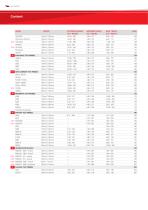
SERIES CENTER EXTENSION HEIGHT WORKING TRAVEL MAX. TRAVEL PAGE mm / INCHES mm / INCHES mm / INCHES
Open the catalog to page 8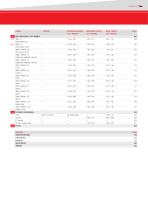
FAKRA Socket 1^ FIXTURE CUSTOMIZING 1016 100 mil / 2.54 mm CONTENT PAGE
Open the catalog to page 9
PHOENIX MECANO AG The Group Phoenix Mecano is a global player in the enclosures and industrial components segments, has a streamlined operating structure and is a leader in many markets. Geared towards the professional and cost-effective manufacture of niche products, it helps to ensure the smooth operation of processes and connections in the machine industry and industrial electronics. Its products are used in the mechanical engineering, measurement and control technology, alternative energy, medical technology, aerospace technology and home and hospital care sectors, amongst others. Enclosures...
Open the catalog to page 10
STRONG TOGETHER – PRODUCTS OF OUR GROUP OF COMPANIES DEO.Red.1.eps Standard-Logo für alle farbigen Anwendungen, mit Ausnahme definierter Spezialfälle
Open the catalog to page 11
Phoenix Mecano-Group Gross Sales approx. Employees approx. PHOENIX MECANO GROUP LOCATIONS AROUND THE WORLD *The numbers relate to 2018. You can find current figures on our Website: www.phoenix-mecano.com
Open the catalog to page 12
North | South America USA: Orlando, Florida Springfield, Ohio Shannon, Mississippi Frederick, Maryland Chino, Kalifornien Brasilien: Barueri Uruguay: Montevideo Europe | Africa Great Britain: Aylesbury Spain: Zaragoza France: Fontenay-sous-Bois Benelux: Deinze, Belgien Doetinchem, Netherlands Enschede, Netherlands Scandinavia: Odense, Denmark Ingelstad, Sweden Germany: Alsdorf, Baiersdorf, Breitenguess-bach, Bunde, Burscheid, Gravenwiesbach, Kirchlengern, Minden, Niederzier , Porta Westfalica, Salem-Neufrach, Stuttgart, Villingen-Schwenningen, Werne, St. Wendel, Wessling, Wutha-Farnroda Switzerland:...
Open the catalog to page 13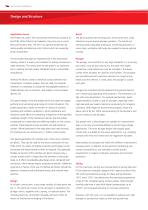
Application Areas Test Probes are used in the manufacture of electronic products to test PCBs. When fitted in test adapters, they carry out in-circuit tests and function tests. The aim is to optimize production by raising quality and reducing costs, factors which are caused by faulty components. The test probe also plays an important part in the automotive industry, where it is used in test modules for testing connectors in cable harnesses. This means that the test probe is an important link in meeting the high quality standards found in automobile manufacture. Interface Pin Blocks create an...
Open the catalog to page 14
Normally, gold is used as a surface plating because it reduces Fig. 1: Test Probe Design wear and improves the contact characteristics. The coating is applied in such a way that the structural characteristics of the high-strength spring material are affected as little as possible. In special cases, the springs are silver-coated (improved conductivity). In most cases, stainless steel springs are not given an additional coating, and they are used when temperatures are very high or for maximum heating. The rated spring force of the spring contact probes refers to the working travel, which, as a...
Open the catalog to page 15
MATERIALS Steel PTR uses steel as the standard material for the plungers. The stability of this material is good in comparison with others, and is extremely suitable for aggressive probe tips such as the "pointed tip" or the "chisel". The electrical properties are improved by the preferred gold coating. Copper Beryllium Copper beryllium is superior to steel in respect of the long-term stability of the electrical properties. Adding beryllium allows the materials to be easily processed, without completely losing the excellent properties of the copper. Brass Brass is a relatively soft material which...
Open the catalog to page 16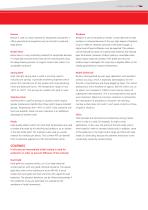
Bronze Bronze is used as a base material for receptacles and barrels; it offers good electrical properties and can be both turned and deep drawn. Nickel Silver Nickel silver is a very interesting material for receptacles because it is especially corrosion-proof and can be manufactured using the deep drawing process. Its copper content also makes it an acceptable conductor. Spring Steel High-strength spring steel is what is normally used to manufacture springs. It provides excellent properties which permit the manufacture of test probes with long operating times and balanced forces. The temperature...
Open the catalog to page 17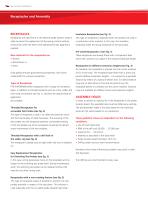
RECEPTACLES Receptacles are fitted firmly in the relevant probe location oards in order to permit the replacement of the spring contacts without wiring work when the limit to the operating life (see page 20) is reached. Base materials for the receptacles are » Bronze » Nickel Silver or » Brass Gold plating ensures good electrical properties, with nickel underneath for corrosion protection. Types of Receptacles PTR HARTMANN offers receptacles with a range of connection types. In addition to standard products such as crimp, solder and wire wrap connections (see fig. 1), solutions for special fields...
Open the catalog to page 18All PTR HARTMANN GmbH catalogs and technical brochures
 INM260-S-BAGY
3 Pages
 INS260-P-BAGY
3 Pages
 / AKZ1130/..-7.62-GREEN
3 Pages
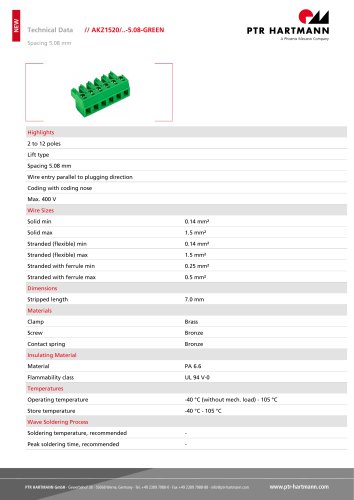 / AKZ1520/..-5.08-GREEN
3 Pages
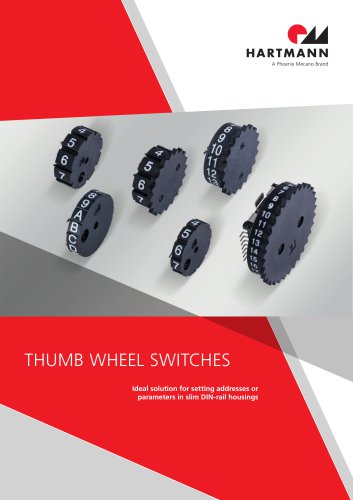 Thumb Wheel Switches
4 Pages
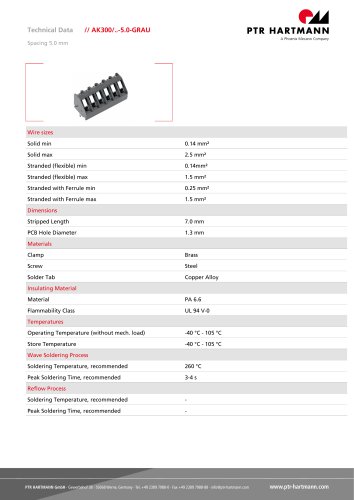 AK300/..-5.0-GREY
3 Pages
 AK114/..DS-7.5-V-GREY
3 Pages
 AK110/..DS-7.5-H-GREY
3 Pages
 AK104/..DS-5.0-V-GREY
3 Pages
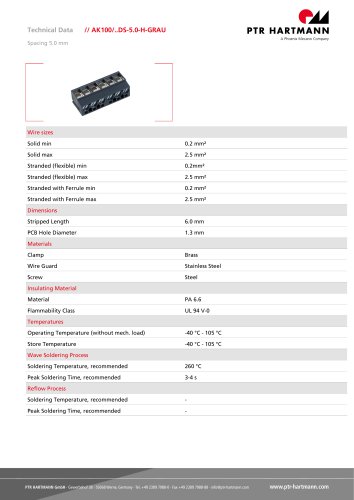 AK100/..DS-5.0-H-GREY
3 Pages


- Transformer
- Electrical power supply connector
- Metal connector
- Dry transformer
- Single-pole switch
- Screw-in connector
- Industrial connector
- Plastic plug
- Multipole switch
- Screw connection terminal block
- Power transformer
- Copper connector
- Screw connector
- DIN rail-mounted terminal block
- Rotary electric switch
- Rocker switch
- Polyamide connector
- IP67 switch