
- Catalogs
- Promega Corporation
- UDP-Glo™ Glycosyltransferase Assay

UDP-Glo™ Glycosyltransferase Assay

UDP-Glo™ Glycosyltransferase Assay
The UDP-Glo™ Glycosyltransferase Assay is a bioluminescent method designed to detect glycosyltransferase activity, particularly those using UDP-sugars as donor substrates. It is essential for studying biological processes such as cell signaling and bacterial cell wall biosynthesis. The assay measures UDP release, converting it to ATP, which generates light in a luciferase reaction. This light is proportional to UDP concentration, allowing for sensitive detection of glycosyltransferase activity.
The assay is available in three sizes (200, 400, and 4,000 assays) and includes components like UDP, UDP-Glo™ Enzyme, Enzyme Dilution Buffer, Nucleotide Detection Buffer, and ATP Detection Substrate. The enzyme should be stored below –65°C, while other components require storage at –20°C. Proper thawing and mixing are essential before use. The document also lists various UDP-sugar substrates available in different sizes.
The assay involves adding UDP Detection Reagent to the glycosyltransferase reaction, converting UDP to ATP, and measuring luminescence. It is performed in a single well of a multiwell plate, suitable for high-throughput screening. A UDP standard curve ranging from 0–25µM is recommended to estimate UDP production, with standards prepared in a separate plate and transferred to the assay plate.
The assay offers a linear response from nM to µM ranges, high dynamic range, and sensitivity, detecting as low as 0.1–0.5 pmol UDP. It provides reliable data with Z´ factor values >0.7 and is less susceptible to interference from chemical compounds. The luminescent signal remains stable for over 3 hours, facilitating batch processing.
The assay is used for screening glycosyltransferase inhibitors and studying their mechanisms. It is compatible with various substrates, including peptides, proteins, lipids, and sugars, making it versatile for different glycosyltransferase classes.
Optimization involves adjusting the amounts of glycosyltransferase and substrates. The document provides a protocol for O-GlcNAc Transferase (OGT) enzyme titration, including preparation of substrate mix and OGT solution, and performing serial dilutions.
Integration time should be between 0.25–1 second per well. The IC50 determination protocol involves inhibitor titration in an OGT reaction with specific concentrations of UDP-GlcNAc and OGT, designed for a 96-well plate, with adjustments for a 384-well plate.
Temperature and chemical environment affect luminescence intensity. Assay plates and reagents should be equilibrated to room temperature. The pH should be between 6–9, and certain chemicals are compatible with the assay. A table lists chemicals and their maximum tolerated concentrations.
Compounds that interfere with the assay are rare. A method is provided to test for chemical interference.
The document includes references for further reading and a list of related products with catalog numbers.
Recent changes include the addition of new components and updated instructions for the UDP-Glo™ working solution.
Catalog excerpts
TECHNICAL MANUAL UDP-Glo™ Glycosyltransferase Assay Instructions for Use of Products V6961, V6962 and V6963
Open the catalog to page 1
UDP-Glo™ Glycosyltransferase Assay All technical literature is available at: www.promega.com/protocols/ Visit the web site to verify that you are using the most current version of this Technical Manual. E-mail Promega Technical Services if you have questions on use of this system: [email protected] 1. Description The UDP-Glo™ Glycosyltransferase Assay(a) is a bioluminescent assay for detecting the activity of glycosyltransferases that use UDP-sugars as donor substrates and release UDP as a product. Glycosylation reactions catalyzed by glycosyltransferases are central to many biological processes,...
Open the catalog to page 2
Description (continued) The UDP-Glo™ Glycosyltransferase Assay is a homogenous, single-reagent-addition method to rapidly detect UDP formation in glycosyltransferase reactions. After the glycosyltransferase reaction, an equal volume of UDP Detection Reagent is added to simultaneously convert the UDP product to ATP and generate light in a luciferase reaction. The light generated is detected using a luminometer (Figure 1). Luminescence can be correlated to UDP concentration by using an UDP standard curve. The light output is proportional to the concentration of UDP from low nM to 25µM (Figure 2,...
Open the catalog to page 3
Promega Corporation ■ 2800 Woods Hollow Road ■ Madison, WI 53711-5399 USA ■ Toll Free in USA 800-356-9526 ■ 608-274-4330 ■ Fax 608-277-2516 3
Open the catalog to page 4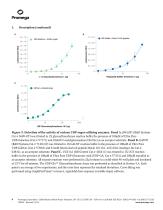
Description (continued) UDP-Galactose + GlcNAc (sugar) UDP-GalNAc + Mucin 10 EA2 (peptide) Polypeptide GalNAc Transferase 1 (ng) UDP-GA + Estradiol (drug) Figure 3. Detection of the activity of various UDP-sugar-utilizing enzymes. Panel A. β4GalT1 (R&D Systems Cat.# 3609-GT) was titrated in 1X glycosyltransferase reaction buffer the presence of 100µM of Ultra Pure UDP-Galactose (Cat.# V7171) and 10mM N-acetylglucosamine (GlcNAc) as an acceptor substrate. Panel B. GalNT1 (R&D Systems Cat.# 7140-GT) was titrated in 1X GALNT reaction buffer in the presence of 100µM of Ultra Pure UDP-GalNAc (Cat.#...
Open the catalog to page 5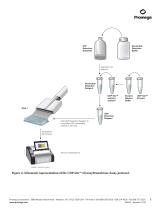
Nucleotide Detection Buffer Dispense into aliquots. Nucleotide Detection Reagent UDP-Glo™ working solution Enzyme Dilution Buffer UDP-Glo™ Enzyme Step 1 UDP Detection Reagent Add UDP Detection Reagent to completed UDP-generating reactions, and mix. Record luminescence. GloMax® Discover System Figure 4. Schematic representation of the UDP-Glo™ Glycosyltransferase Assay protocol. Promega Corporation · 2800 Woods Hollow Road · Madison, WI 53711-5399 USA · Toll Free in USA 800-356-9526 · 608-274-4330 · Fax 608-277-2516 www.promega.com TM413 · Revise
Open the catalog to page 6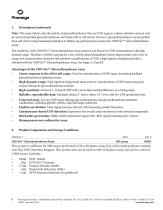
1. Description (continued) Note: This assay detects only the activity of glycosyltransferases that use UDP-sugar as a donor substrate and can only be used with purified glycosyltransferases not whole cells or cell extract. However, glycosyltransferases can be purified from cell extract using immunoprecipitation or affinity tag pull down then used in the UDP-Glo™ Glycosyltransferase Assay. The sensitivity of the UDP-Glo™ Glycosyltransferase Assay means it can detect low UDP concentrations with high dynamic range. Therefore, whether assaying for a low-activity glycosyltransferase whose sugar transfer...
Open the catalog to page 7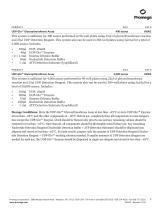
UDP-Glo™ Glycosyltransferase Assay 400 assays V6962 This system is sufficient for 400 assays performed in 96-well plates using 25pl of glycosyltransferase reaction and 25pl UDP Detection Reagent. This system also can be used in 384-well plates using 5pl:5pl for a total of 2,000 assays. Includes: UDP, 10mM UDP-Glo™ Enzyme Enzyme Dilution Buffer Nucleotide Detection Buffer ATP Detection Substrate (lyophilized) UDP-Glo™ Glycosyltransferase Assay 4,000 assays V6963 This system is sufficient for 4,000 assays performed in 96-well plates using 25pl of glycosyltransferase reaction and 25pl...
Open the catalog to page 8
© Promega 2. Product Components and Storage Conditions (continued) UDP-Sugar Substrates PRODUCT SIZE CAT.# Ultra Pure UDP-GIcNAc, 100mM 50pl V7071 Ultra Pure UDP-GalNAc, 100mM 50pl V7081 Ultra Pure UDP-Glucose, 100mM 50pl V7091 Ultra Pure UDP-Galactose, 100mM 50pl V7171 Ultra Pure UDP-Glucuronic Acid (UDP-GA), 100mM 50pl V7321 UDP-Glo™ Glycosyltransferase Assay + UDP-Sugar Substrate PRODUCT SIZE CAT.# UDP-Glo™ Glycosyltransferase Assay (V6961) + Ultra Pure UDP-GIcNAc, 100mM (V7071) 200 assays V6971 UDP-Glo™ Glycosyltransferase Assay (V6962)...
Open the catalog to page 9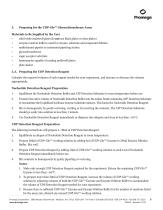
Preparing for the UDP-Glo™ Glycosyltransferase Assay Materials to Be Supplied by the User • solid white multiwell plate (do not use black plates or clear plates) • enzyme reaction buffers; used for enzyme, substrate and compound dilution • multichannel pipette or automated pipetting station • glycosyltransferase • sugar acceptor substrate • luminometer capable of reading multiwell plates • plate shaker 3.A. Preparing the UDP Detection Reagent Calculate the required volumes of each reagent needed for your experiment, and increase or decrease the volumes appropriately. Nucleotide Detection Reagent...
Open the catalog to page 10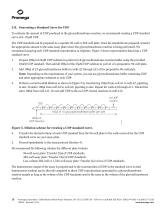
3.B. Generating a Standard Curve for UDP To estimate the amount of UDP produced in the glycosyltransferase reaction, we recommend creating a UDP standard curve of 0–25µM UDP. The UDP standards can be prepared in a separate 96-well or 384-well plate. Once the standards are prepared, transfer the appropriate amount to the same assay plate where the glycosyltransferase reaction is being performed. We recommend assaying each UDP standard concentration in triplicate. Figure 2 shows representative data from a UDP standard curve. 1. Prepare 200µl of 25µM UDP solution in preferred 1X glycosyltransferase...
Open the catalog to page 11
UDP-Glo™ Glycosyltransferase Assay Protocols Prior to performing the UDP-Glo™ Glycosyltransferase Assay, prepare the reagents and UDP standards as described in Section 3. Calculate the volume of Nucleotide Detection Reagent required for your experiments, and equilibrate that volume to room temperature before use. Return the remaining reagents to less than –65°C. The UDP Detection Reagent is stable for 2 hours at 22°C with minimal loss of signal and up to 5 hours with ~20% loss of signal. However the signal-to-background ratio is stable for at least 5 hours. The UDP-Glo™ working solution should...
Open the catalog to page 12All Promega Corporation catalogs and technical brochures
 Spectrum CE System
16 Pages
 Spectrum Compact CE System
12 Pages
 GloMax multi jr
6 Pages
 GloMax20/20
6 Pages
 2015 Catalog
432 Pages
 Quantus
2 Pages
 Maxwell® 16 Research System
4 Pages
 Maxwell® 16 Clinical System
4 Pages


Archived catalogs
 GloMax Discover and Explorer
14 Pages
 the 2013 Catalog
388 Pages
- Purification system
- Extractor
- Microplate reader
- Laboratory extractor
- Fluorometer
- Absorbance microplate reader
- Multi-mode microplate reader
- Fluorescence microplate reader
- Luminescence microplate reader
- Compact fluorometer
- Tube luminometer
- Acid purification system
- Electrophoresis unit
- Filter fluorometer
- Laboratory electrophoresis unit
- Microplate luminometer