
- Catalogs
- Promeco S.p.A.
- CARDBOARD RECYCLING PLANT

CARDBOARD RECYCLING PLANT
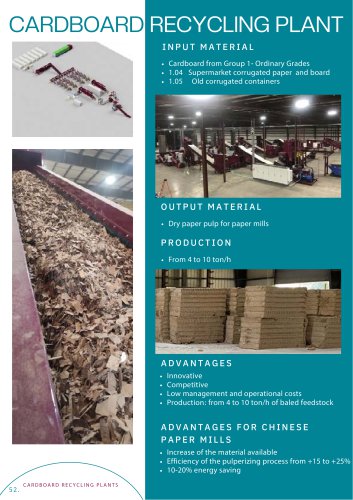
CARDBOARD RECYCLING PLANT
- Ordinary Grades of Cardboard
- Supermarket corrugated paper and board
- Old corrugated containers
- Dry paper pulp for paper mills
- Production capacity: from unspecified to unspecified tons per hour of baled feedstock
- Innovative and competitive process
- Low management and operational costs
- Increased material availability
- Efficient pulperizing process with significant energy savings
- Product suitable for export to China under HS code HS 0000 0000
The Promeco Cardboard Recycling Plant converts old corrugated cardboard (OCC) and waste paper into paper fiber, altering their features and physical properties. The resulting product is pulps of fibers derived from recovered waste and scrap paper or paperboard.
Catalog excerpts
RECYCLING PLANTINPUT MATERIAL • Cardboard from Group 1 - Ordinary Grades • 1.04 Supermarket corrugated paper and board • Low management and operational costs • Production: from 4 to 10 ton/h of baled feedstock • Increase of the material available • Efficiency of the pulperizing process from +15 to +25% CARDBOARD RECYCLING PLANTS
Open the catalog to page 1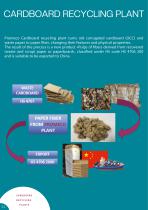
CARDBOARD RECYCLING PLANT Promeco Cardboard recycling plant turns old corrugated cardboard (OCC) and waste paper to paper fiber, changing their features and physical properties. The result of the process is a new product «Pulps of fibers derived from recovered (waste and scrap) paper or paperboard», classified under HS code HS 4706 200 and is suitable to be exported to China. CARDBOARD RECYCLING
Open the catalog to page 2All Promeco S.p.A. catalogs and technical brochures
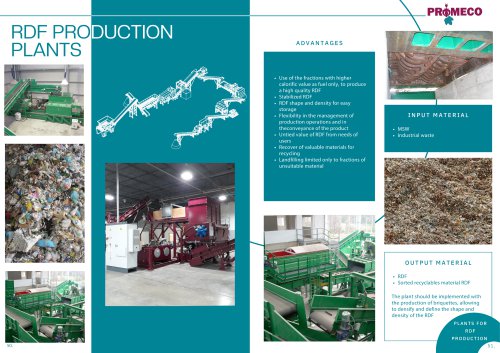 RDF PRODUCTION PLANTS
1 Page
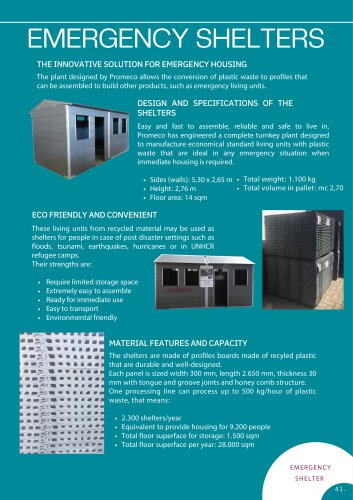 EMERGENCY SHELTERS
1 Page
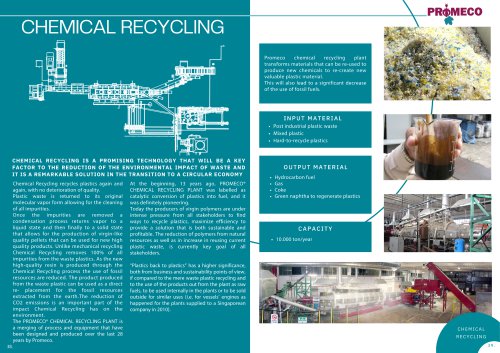 CHEMICAL RECYCLING
1 Page
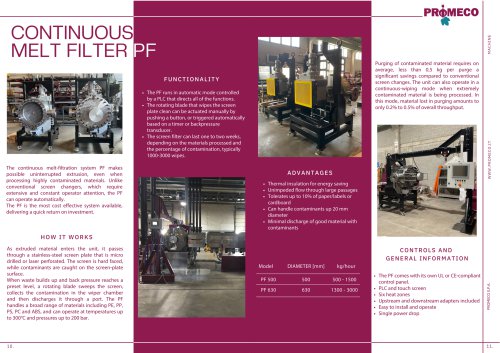 CONTINUOS MELT FILTER PF
1 Page
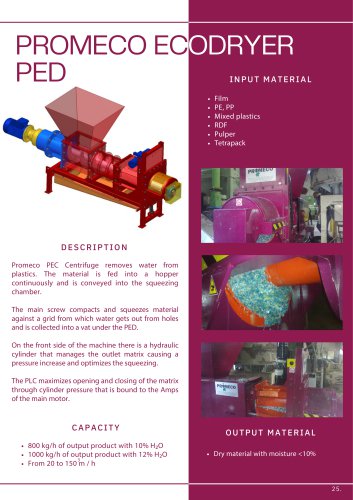 PROMECO ECODRYVER PED
1 Page
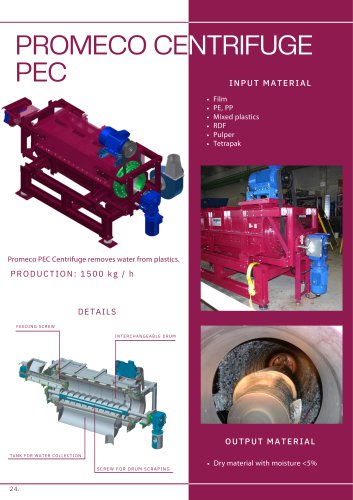 PROMECO CENTRIFUGE PEC
1 Page
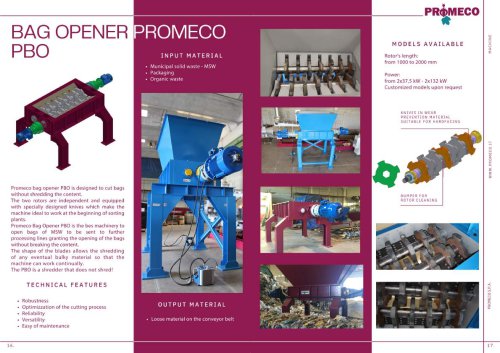 BAG OPENER PROMECO PBO
1 Page
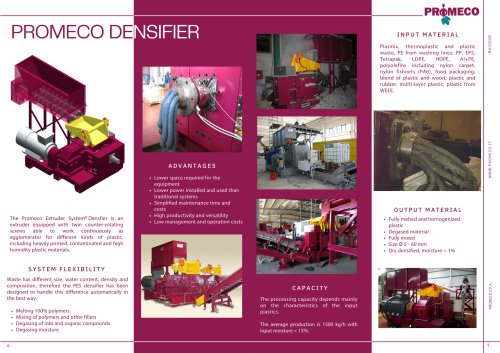 PROMECO DENSIFIER
1 Page
- Solids separator
- Screening unit
- Centrifugal classifier
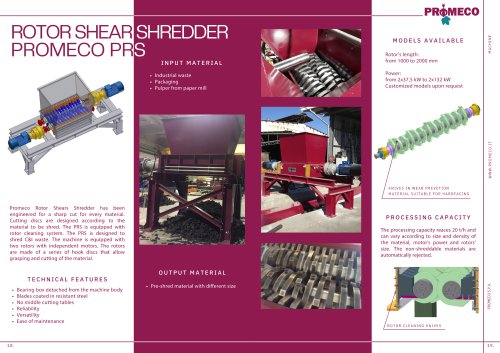
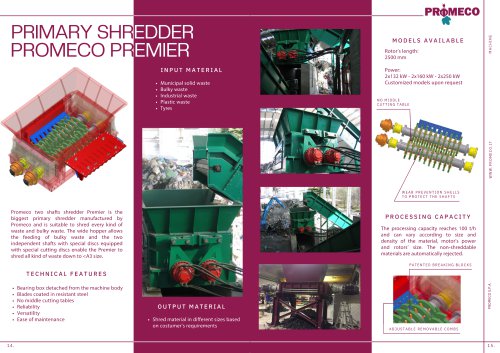
- Waste shredder
- Liquids separator
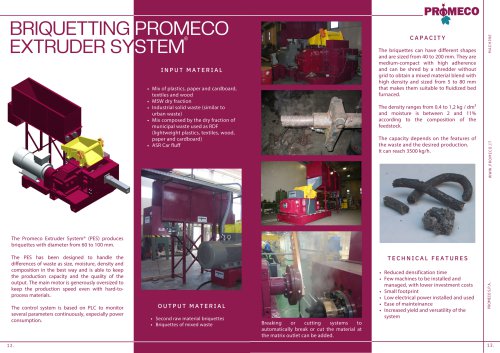
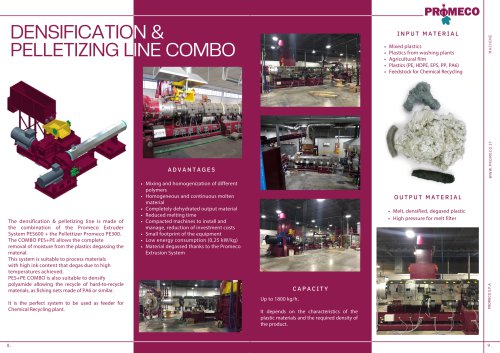
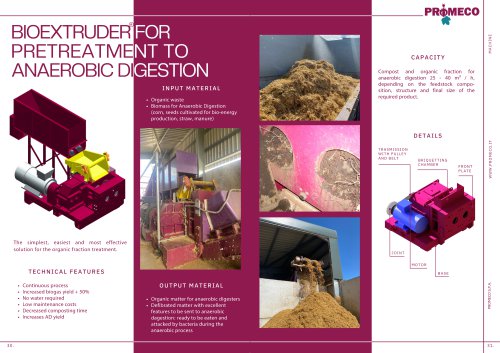
- Screw extruder
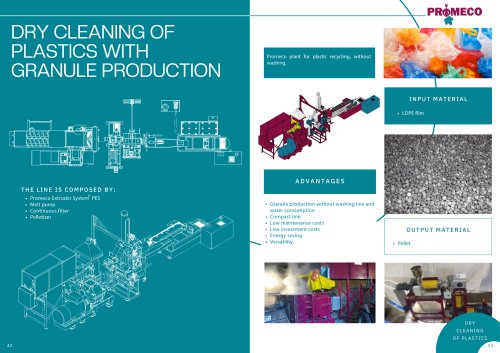
- Pelletizer
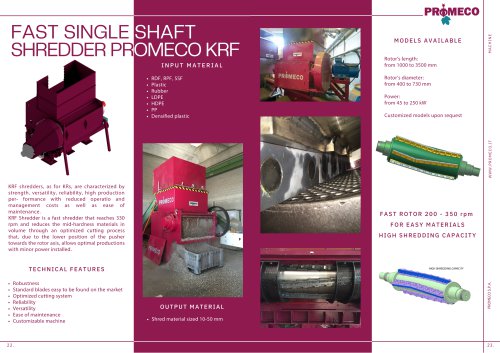
- Primary shredder machine
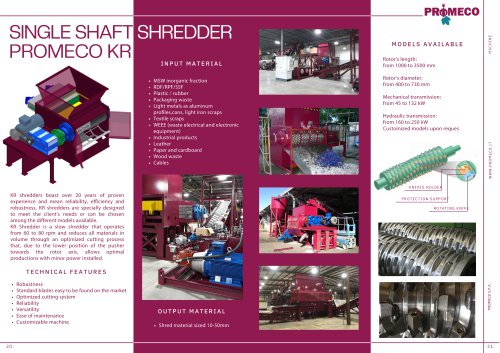
- Single shaft shredder machine
- Cascade separator
- Laboratory centrifuge
- Vertical centrifuge
- Twin screw extruder
- Plastic shredding machine
- Paper shredder
- Filtration system
- Benchtop centrifuge
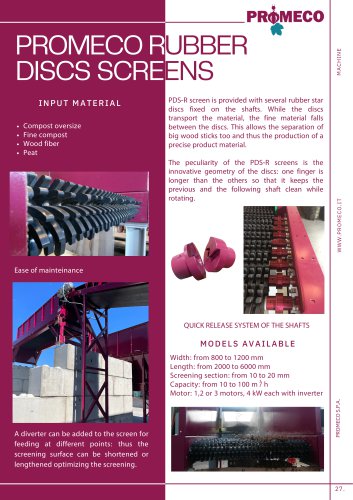
- Recycling screening machine
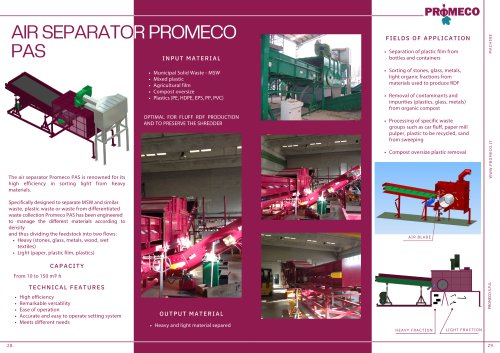
- Air separator
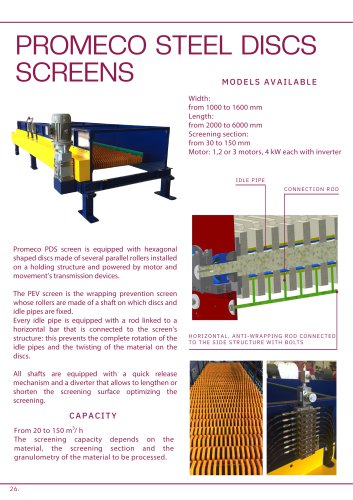
- Dry screening screening machine