- Catalogs
- Prisma Telecom Testing S.r.l
- F8800B PROPSIM F64

F8800B PROPSIM F64
F8800B PROPSIM F64
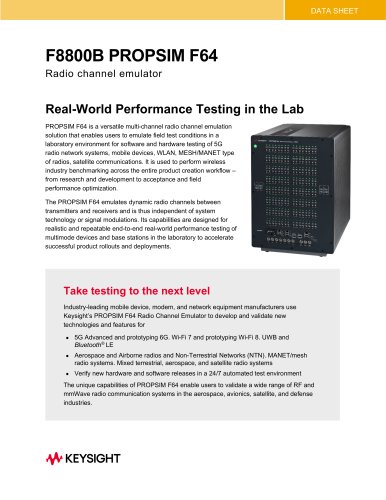
The F8800B PROPSIM F64 is a sophisticated radio channel emulator designed for testing real-world performance in a controlled lab setting. It is versatile, supporting technologies such as 5G, Wi-Fi, and satellite communications, and is useful throughout the product lifecycle from research and development to field optimization.
Key Features
The emulator can simulate dynamic radio channels for various technologies and signal modulations. It supports up to 2048 digital channels and offers flexible MIMO/mesh topologies. It also includes multi-band and carrier aggregation support with an operational bandwidth of up to 1600 MHz. Integrated test setup calibration and uplink/downlink separation are also featured.
Specifications
The device operates within a frequency range of 450 MHz to 18 GHz, with options extending up to 53 GHz. It offers signal bandwidth options ranging from 100 MHz to 1600 MHz and provides precise RF input/output level settings with a low noise floor. Specifications for residual EVM and crosstalk ensure high signal integrity.
Applications
The F8800B is utilized by manufacturers for developing and validating technologies in industries such as 5G, Wi-Fi, aerospace, and defense. It supports automated testing environments for both hardware and software validation.
Additional Tools
The PROPSIM software includes channel models adhering to 3GPP standards, as well as satellite and aerospace scenarios. Channel Studio tools allow for the creation of custom test topologies and advanced channel modeling.
Technical Details
The emulator can be remotely controlled via SCPI commands and offers synchronization capabilities. Power consumption varies depending on configuration, with a maximum of 4000 W. It is designed to fit into a 19-inch rack installation.
Conclusion
The F8800B PROPSIM F64 is a comprehensive tool for emulating complex radio environments, playing a crucial role in the advancement of wireless communication technologies.
Catalog excerpts
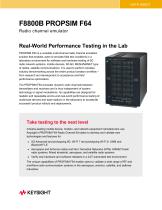
DATA SHEET F8800B PROPSIM F64 Radio channel emulator Real-World Performance Testing in the Lab PROPSIM F64 is a versatile multi-channel radio channel emulation solution that enables users to emulate field test conditions in a laboratory environment for software and hardware testing of 5G radio network systems, mobile devices, WLAN, MESH/MANET type of radios, satellite communications. It is used to perform wireless industry benchmarking across the entire product creation workflow – from research and development to acceptance and field performance optimization. The PROPSIM F64 emulates dynamic radio channels between transmitters and receivers and is thus independent of system technology or signal modulations. Its capabilities are designed for realistic and repeatable end-to-end real-world performance testing of multimode devices and base stations in the laboratory to accelerate successful product rollouts and deployments. Take testing to the next level Industry-leading mobile device, modem, and network equipment manufacturers use Keysight’s PROPSIM F64 Radio Channel Emulator to develop and validate new technologies and features for • 5G Advanced and prototyping 6G. Wi-Fi 7 and prototyping Wi-Fi 8. UWB and Bluetooth® LE • Aerospace and Airborne radios and Non-Terrestrial Networks (NTN). MANET/mesh radio systems. Mixed terrestrial, aerospace, and satellite radio systems • Verify new hardware and software releases in a 24/7 automated test environment The unique capabilities of PROPSIM F64 enable users to validate a wide range of RF and mmWave radio communication systems in the aerospace, avionics, satellite, and defense ind
Open the catalog to page 1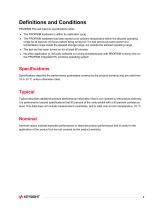
Definitions and Conditions PROPSIM F64 will meet its specifications when • The PROPSIM hardware is within its calibration cycle • The PROPSIM hardware has been stored at an ambient temperature within the allowed operating range for at least six (6) hours before being turned on; if it had previously been stored at a temperature range inside the allowed storage range, but outside the allowed operating range • The test set has been turned on for at least 60 minutes • No other application or 3rd party software is running simultaneously with PROPSIM running view on the PROPSIM integrated PC windows...
Open the catalog to page 2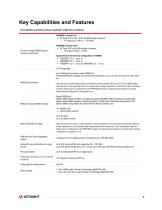
Key Capabilities and Features Key capabilities and features (requires applicable configuration and options) F8800BRF1 channel unit • RF Ports: 8 RF In/Out + 8 RF Out SMA-female connectors. o RF range up to 3 MHz (*) – 7250 MHz RF ports in single F8800B eight (8) channel unit slot frame F8800BRF2 channel units • RF Ports: 8 RF In/Out SMA-female connectors. o RF range 7.25 GHz – 18 GHz Supported Channel Unit (CU) configurations in F8800B: • F8800BRF1 CU 1…8 pcs, or • F8800BRF2 CU 1…8 pcs, or • F8800BRF1 CU 1…4 pcs and F8800BRF2 CU 1…4 pcs (*) RF range edge Up to 2048 digital channels in single...
Open the catalog to page 3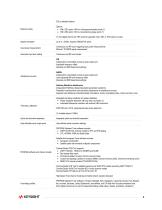
Maximum delay Doppler emulation Input power measurement Automatic input level setting Interference sources Test setup calibration Uplink and downlink separation User definable input/ output ports PROPSIM software and channel models Fast fading profiles • With -ED1 option 1500 ms, Aerospace emulation mode (*) • With -ED2 option 100 ms, terrestrial long delay option (*) (*) One digital channel per TRX channel supported when -ED1 or -ED2 option is active. Continuous and RF burst- triggering input power measurements NR and LTE RSRP signal measurement Continuous and RF burst modes Independent uncorrelated...
Open the catalog to page 4
PROPSIM Standard Tools software with Shadowing option • Each RF channel independently, 100 dB dynamic range • Each digital fading channel independently, 60 dB dynamic range Delay profiles PROPSIM Standard Tools software: Constant, sliding delay, 3GPP birth-death, 3GPP sliding delay group, user- defined, delay profiles from 3rd party simulation tools, ray-tracing applications Each digital fading channel has independent delay setting
Open the catalog to page 5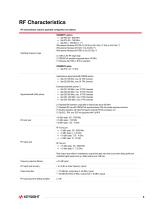
RF characteristics (requires applicable configuration and options). F8800BRF1 options • Opt-R60 450 - 6000 MHz With external Hardware M1740A: 24.25 GHz to 29.5 GHz, 37 GHz to 43.5 GHz (**) With external Hardware M1742A: 10 to 32 GHz (**) With external Hardware M1749B: 24.5 to 53 GHz (**) Operating frequency range (*) F882SATxA operation supported above 140 MHz Signal bandwidth (BW) options Frequency response flatness RF output level accuracy Output noise floor RF input/output level setting resolution Instantaneous signal bandwidth F8800B options Extended bandwidth options (*) (*) Extended BW...
Open the catalog to page 6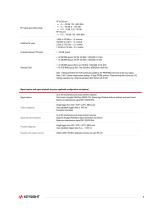
RF output gain setting range Crosstalk between TRX ports 3 MHz to 700 MHz < 1.8, nominal 700 MHz to 2 GHz < 1.3, nominal 2 GHz to 7.25 GHz < 1.5, nominal 7.25 GHz to 16 GHz < 2.0, nominal Note 1: Residual EVM is the EVM contribution added by the PROPSIM instrument to the input signal. Note 2: 802.11ax/be measurement settings: 16 data OFDM symbols, Phase tracking from pilots only, EQ training preamble only, Channel estimation filter Wiener (DS 0.001) Signal capture and signal playback (requires applicable configuration and options) Signal capture Capture triggering Signal waveform playback Playback...
Open the catalog to page 7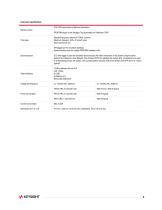
Instrument specifications Remote control Time base ATE SCPI commands via Ethernet connection PROPSIM plugin for the Keysight Test Automation on PathWave (TAP) Standard frequency reference 10 MHz, nominal Maximum frequency drift ± 0.1ppm/2 years Warm-up time 30 min HW trigger port for emulation start/stop. Synchronization ports for multiple PROPSIM hardware units UTC-time trigger to start the emulation synchronously with other instruments in the system using the same network time reference. Uses Network Time Protocol (NTP) for adjusting the system time. Corrected time is used in all timestamps...
Open the catalog to page 8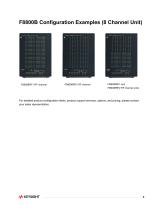
F8800B Configuration Examples (8 Channel Unit) For detailed product configuration items, product support services, options, and pricing, please contact your sales representative.
Open the catalog to page 9All Prisma Telecom Testing S.r.l catalogs and technical brochures
 F8800A PROPSIM F64
8 Pages
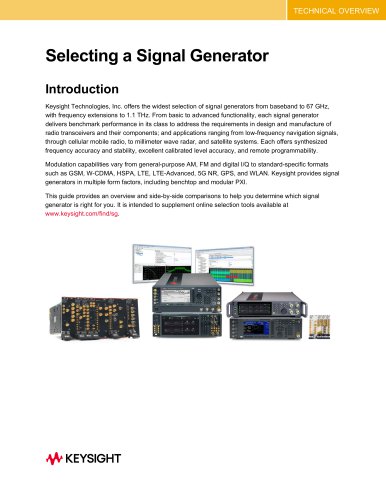 Selecting a Signal Generator
32 Pages
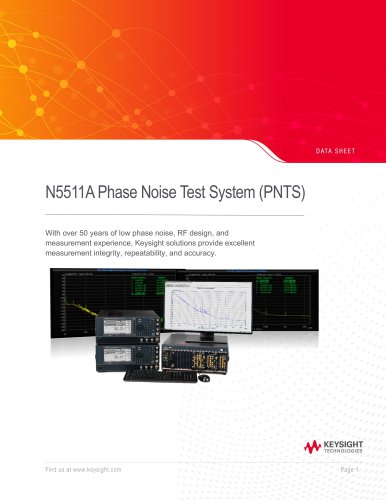 N5511A
31 Pages
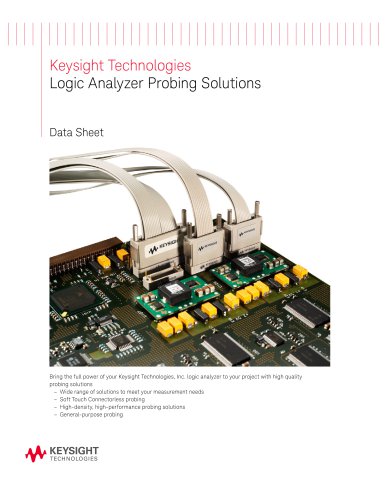 Logic Analyzer Probing Solutions
75 Pages
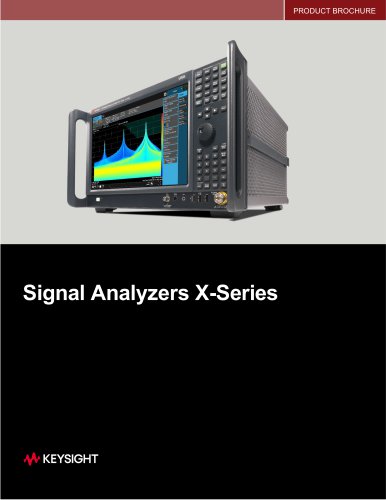 Signal Analyzers X-Series
21 Pages
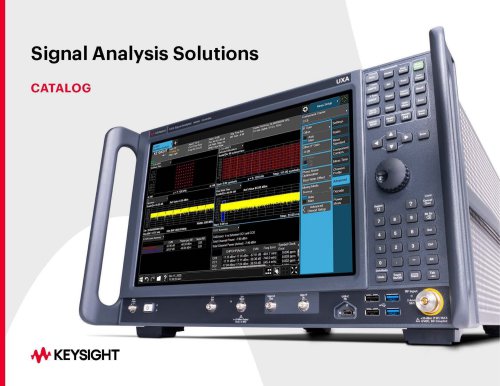 Signal Analysis Solutions
26 Pages
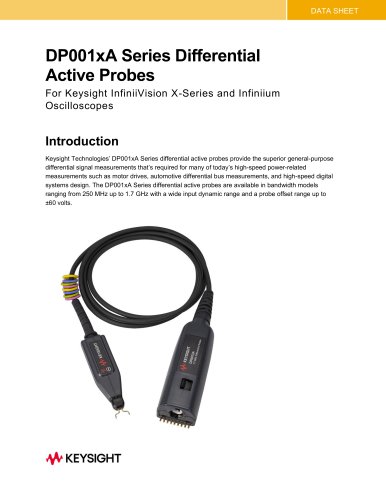 DP001xA Series
10 Pages
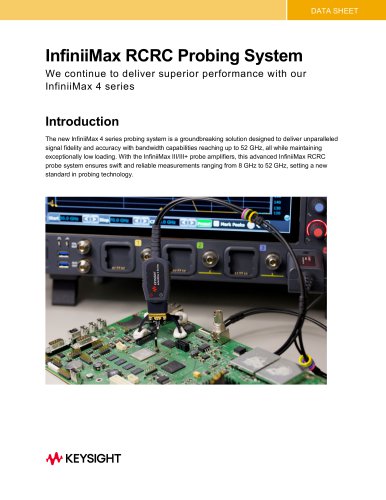 InfiniiMax RCRC Probing System
17 Pages
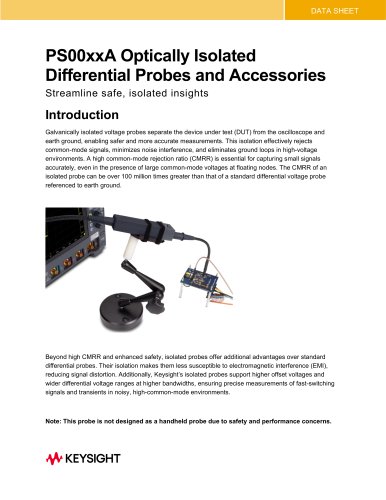 PS00xxA
11 Pages
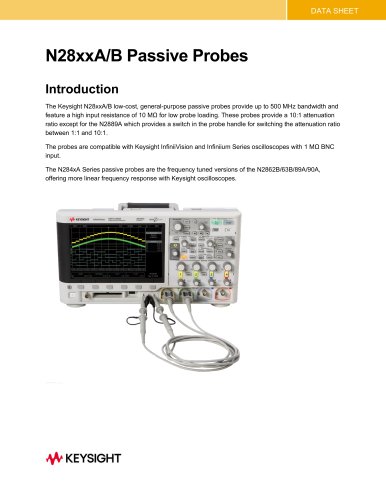 N28xxA/B Passive Probes
7 Pages
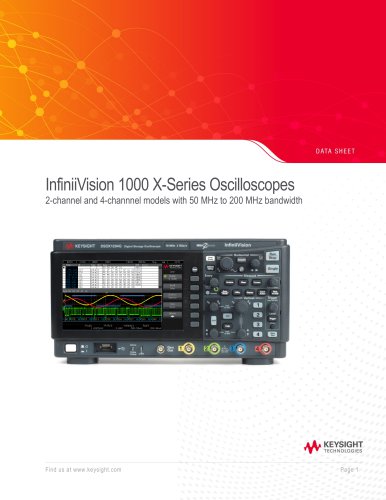 InfiniiVision 1000 X-Series
23 Pages
 RuSIM O-DU Testing Solution
6 Pages
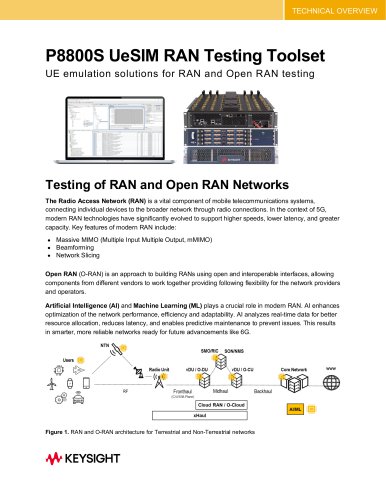 P8800S UeSIM RAN Testing Toolset
15 Pages