GREEN LINE PNEUMATIC FITTINGS CATALOGUE
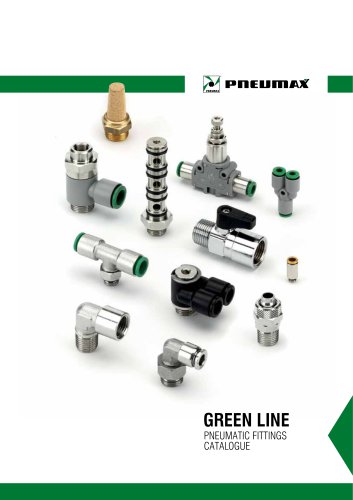
GREEN LINE PNEUMATIC FITTINGS CATALOGUE
The Green Line Pneumatic Fittings Catalogue by Pneumax offers comprehensive solutions for pneumatic circuit connections using materials like brass, technopolymer, and stainless steel. Produced by Titan Engineering, a Pneumax Group company, it highlights expertise and reliability since 1993.
The catalogue includes a wide range of pneumatic connection solutions such as ball taps, silencers, flow nozzles, tubes, push-in fittings, standard fittings, compression fittings, push-on fittings, flow regulators, valves, and function fittings.
Materials used include brass, aluminum, stainless steel, and technopolymers. The fittings are certified under ISO 9001, ISO 14001, and ISO 45001 standards, ensuring quality management and compliance with food and water contact regulations.
The R&D department collaborates with customers for customized projects, utilizing partnerships with accredited laboratories for sector-specific testing. The company emphasizes competence and experience in application engineering to provide optimal solutions.
Production integrates advanced technologies for efficiency and flexibility, with quality management as a core operational style. The company adheres to total quality management principles, involving all staff in process efficiency and product quality monitoring.
The RAP series push-in fittings are manufactured in Italy, adhering to ISO norms. They are suitable for pneumatic circuits and low-pressure hydraulic applications, with a recommended working pressure of 15 bar and temperature range of -20°C to +70°C. The fittings are tested for durability and performance under various conditions.
The catalogue includes detailed specifications for various fittings, such as brass push-in fittings, technopolymer push-in fittings, and stainless steel push-in fittings, with information on dimensions, materials, and application suitability.
The Green Line Pneumatic Fittings Catalogue is a comprehensive resource for specialists in pneumatic fittings, offering a wide range of certified and customizable solutions for various industrial applications.
The document provides detailed specifications and technical information on pneumatic fittings, specifically focusing on push-in fittings made from technopolymer and stainless steel. It includes various series such as TECNORAP and SS, highlighting their dimensions, materials, and applications.
The document lists numerous fittings with their respective codes, dimensions (e.g., diameter, length), and other technical parameters. These fittings are categorized by type, such as swivel male stud, elbow adaptors, Y connectors, and more. Each entry includes measurements like ØD (outer diameter), G (thread size), and L (length).
The fittings are made from technopolymer and stainless steel, ensuring durability and resistance to corrosion. The stainless steel series is noted for being oil-free and compliant with ISO standards.
These fittings are suitable for pneumatic equipment used in various industries, including food service, chemical, and medical sectors. They are designed to withstand high temperatures and pressures, making them ideal for environments requiring anti-corrosion and acid resistance.
The document suggests using specific tube materials like TPU, PA11/PA12, and TPE for optimal performance. It also provides tolerance levels for tube diameters and outlines the recommended temperature and pressure ranges for operation.
The fittings adhere to thread types such as BSP parallel and tapered, as well as metric standards. The document emphasizes the importance of consulting the technical catalogue of tube suppliers for comprehensive information.
- Ack ring and spring are made of Stainless Steel SUS316L.
- Seals are made of FKM/FPM.
- Note: The raw material is non-magnetic, but cold working may induce weak magnetism due to austenite transforming into martensite.
- Tests conducted to FDA specifications for food contact materials.
- Test A: Seal ring made of Viton FPM fluororubber (FKM) tested for chloroform-soluble extractives. Results comply with FDA standards.
- Test B & C: Stainless Steel SUS316L fittings tested for total chromium content. Results suitable for food contact.
- Various types of stainless steel push-in fittings (e.g., straight male adaptor, elbow connector) with detailed dimensions and codes.
- Overall dimensions and technical information are subject to change without notice.
- Designed for the food and beverage sector, complying with European and US standards (e.g., ISO, NSF/169).
- Manufactured by Titan Engineering Spa, focusing on sustainable development and environmental respect.
- Fittings are tested for compatibility with various food fluids, with customizable test parameters.
- Developed for validating FCM fittings, ensuring compliance with food contact regulations.
- Machine specifications: Dimensions 74 x 130 x 100.5 cm, weight 160 kg, pressure range 0-16 Bar, testable piping sizes Ø4-Ø14.
- Machine certifications include CE standards and compliance with UNI EN ISO 13846: 2001.
The document outlines the specifications for pneumatic push-in fittings, specifically the Series FCM, designed for use with compressed air and food fluids. The fittings are suitable for applications in the food and beverage industry, such as boxing, bagging, vacuum packaging, and bottling. The recommended working pressure is 15 bar, with a temperature range of -20°C to +70°C. The fittings are made from materials like brass, POM copolymer, and stainless steel, ensuring compliance with food contact regulations.
Various migration tests, including global and specific migration tests for dyes and metals, were conducted to ensure the fittings' safety in contact with food. The tests confirmed no liquid leakage or pressure loss under specified conditions, and all migration limits were respected.
The document provides detailed technical data, including dimensions, materials, and pressure ratings for different fitting components. It includes information on thread types, tube tolerances, and breaking loads for various tube diameters. The fittings are tested for durability, with breaking pressures significantly higher than working pressures.
Suggested tubes for use with these fittings include TPU, PA11/PA12, TPE, and TCO for compressed air, and PE, PVC, PELD for food fluids. The document advises consulting the technical catalogue of tube suppliers for more detailed information.
Each production batch undergoes rigorous testing, including shape observation, leakage verification, and functionality checks at 8 bar working pressure. The fittings are designed to withstand higher pressures, with experimental breaking values ranging from 1.2 to 2.5 times the working pressure, depending on the diameter.
The document provides technical specifications and details for the Series 100 brass standard fittings, primarily used in pneumatic, oleodynamic, and hydraulic circuits. These fittings are designed for use with compressed air and water up to 100°C, with a maximum suggested pressure of 60 bar. The fittings are manufactured in Italy and adhere to ISO norms, ensuring high quality and reliability.
- Fluids: Compressed air, water (up to 100°C). For other fluids, contact the Technical Department.
- Applications: Pneumatic, oleodynamic, and hydraulic circuits.
- Temperature and Pressure: Max pressure suggested is 60 bar, dependent on the technical features of the employed tubes.
- Thread Type: BSP parallel UNI-ISO 228, BSP tapered UNI-ISO 7, Metric ISO/R 262.
- Materials: Body made of Brass UNI EN 12164 CW614N (bar) and UNI EN 12165 CW617N (molded); Seals made of NBR 70 DWGV-EN549 UL157; Washers made of Aluminium/Nylon.
The document lists various fittings with their respective codes, dimensions, and specifications. These include taper nipples, parallel nipples, sleeves, reducers, extensions, plugs, elbows, tees, crosses, and adapters. Each fitting type is detailed with dimensions such as diameter, length, and thread size, along with the material and pressure ratings.
- Manufactured according to ISO norms for quality assurance.
- Available in various sizes and configurations to suit different applications.
- Designed for high reliability in industrial applications.
The document notes that all technical information is provided for informative purposes and may be subject to change without notice. For specific applications or fluids not listed, consultation with the Technical Department is recommended.
This document provides technical specifications and details for various pneumatic fittings used in industries such as food service, chemical, and medical. These fittings are designed to ensure anti-corrosion, acid resistance, and functionality at high temperatures.
- Temperature: Operating range is between -20°C and +120°C.
- Working Pressures: Maximum value is 25 bar.
- Thread Type: BSP parallel UNI-ISO 228, BSP tapered UNI-ISO 7, Metric ISO/R 262.
- Materials: Body made of Stainless steel SUS316; O-Ring made of FKM.
The raw material is non-magnetic, but cold working may induce weak magnetism due to austenite transforming into martensite.
- Series RX-100: Includes various standard fittings such as taper nipples, sleeves, reducers, plugs, elbows, and connectors. Dimensions and technical information are provided for each type.
- Compression Fittings: Brass compression fittings (Series 200) are used for pneumatic, oleodynamic, and hydraulic circuits. They are compatible with various plastic and metal tubes and have a recommended maximum pressure of 60 Bar.
- Push-on Fittings: Brass and stainless steel push-on fittings (Series 300) ensure a perfect pneumatic seal. They are suitable for compressed air and water up to 100°C, with a maximum pressure of 18 bar.
Each series includes detailed technical sheets specifying the fluids, applications, connecting tubes, working pressure, thread type, and materials used.
The document contains extensive tables listing the dimensions, codes, and prices for each fitting type, providing a comprehensive guide for selection and application.
The pressure regulator is designed to reduce, regulate, and stabilize air pressure in a conduit to meet equipment needs. It includes a relieving function and can be mounted on a panel, DIN rail, or directly on a support plate. Key specifications include a maximum working pressure of 10 bar, temperature range of -5°C to 50°C, and a flow rate of 180 Nl/min at 6 bar with a pressure drop of 1 bar.
The blocking valve maintains downstream pressure in case of supply pressure loss, ensuring the position of units is maintained. It is available in unidirectional and bidirectional versions, requiring a pneumatic signal for flow in certain directions. It can be mounted on a DIN rail, with a 90° bracket, or directly on a support plate. Specifications include a working pressure range of 0.5 to 10 bar and a flow rate of 285 Nl/min at 6 bar with a pressure drop of 1 bar.
This valve has two inlets and one output, allowing only the highest pressure to pass through. It is used to operate a component from two separate positions. It can be mounted on a DIN rail, with a 90° bracket, or directly on a support plate. The maximum working pressure is 10 bar, with a flow rate of 600 Nl/min at 6 bar with a pressure drop of 1 bar.
The quick exhaust valve is a 3-way, two-position valve that discharges air directly into the atmosphere, enabling maximum actuator speed. It can be mounted on a DIN rail, with a 90° bracket, or directly on a support plate. Specifications include a maximum working pressure of 10 bar and a flow rate of 250 Nl/min at 6 bar with a pressure drop of 1 bar.
The pressure visual indicator measures pressure inside a pneumatic circuit, with a visualization scale of 0 to 8 bar. It can be used alone or coupled with another device and mounted on a DIN rail, with a 90° bracket, or directly on a support plate. The maximum working pressure is 8 bar.
The soft start valve gradually pressurizes the downstream circuit until 50% of the upstream pressure is reached, then fully opens. It ensures slow return of cylinders to home position during start-up, avoiding collisions. Specifications include a flow rate of 350 Nl/min at 6 bar with free exhaust and a temperature range of -5°C to 50°C.
This document provides technical specifications and configurations for various pneumatic function fittings, including blocking valves, flow control valves, quick exhaust valves, and pressure regulators. These components are designed to maintain downstream pressure and regulate flow in pneumatic systems, particularly in cases of accidental loss of supply pressure.
- Fluid: Filtered and lubricated air or non-lubricated air.
- Working Pressure: 0.5 to 10 bar for most components, with pressure regulators having a maximum of 8 bar.
- Temperature Range: -5°C to +50°C.
- Flow Rate: 285 Nl/min at 6 bar with a pressure drop of 1 bar.
- Weight: Varies by component, typically around 51-62 grams.
- Blocking Valves and Flow Control Valves: Available in unidirectional and bidirectional configurations, both in-line and at 90° angles.
- Quick Exhaust Valves: Can be combined with unidirectional or bidirectional blocking valves to allow rapid discharge of air.
- Pressure Regulators: Available with visual indicators, adjustable from 0 to 8 bar.
Various connection types are available, including straight and rotating banjo fittings, male and female threads, and different tube diameters.
These components are typically used in pneumatic systems where maintaining pressure and controlling flow are critical, such as in actuator connection ports.
Accessories such as cartridges, coupling kits, DIN rail adapters, and fixing brackets are available to facilitate installation and integration into existing systems.
The document provides technical specifications and information on various pneumatic fittings, including function fittings, quick exhaust valves, manual valves, and ball taps. These components are essential for controlling air flow in pneumatic systems.
The document details elbow male tapered and parallel stop fittings, as well as straight male tapered and parallel unidirectional fittings. Key specifications include dimensions, thread types, and applicable tube sizes. The fittings are designed to allow airflow in one direction, preventing backflow.
These valves are designed for high-speed cylinder applications, allowing rapid exhaust of air to enhance performance. The document specifies materials, operating pressures, and temperatures. The valves also feature noise reduction capabilities.
Produced according to ISO norms, these valves are used for manual control of air flow. Specifications include working temperature, pressure limits, and materials used, such as brass and anodized aluminum.
Mini ball valves are used in pneumatic, hydraulic, and vacuum circuits. They are made of nickel-plated brass and technopolymer, with specifications covering working temperature, pressure, and thread types. The document also provides breaking load data for different tube diameters.
The document emphasizes the importance of adhering to specified dimensions and operating conditions to ensure optimal performance and longevity of the fittings. It also highlights the need for proper installation to avoid over-tightening, which can impair functionality.
The document outlines the materials used in the construction of various pneumatic fittings and ball taps. Key materials include brass (nickel-plated) for components like the ball, ogive, nut, ring nut, shaft, and body, and PA66 plastic for handles, which are available in multiple colors. The washer ball seat is made of PTFE, and the O-ring is NBR 70.
This section provides detailed specifications for different types of ball taps, including tapered/parallel male, tapered male/female, female/female, and parallel male/female ball valves. Each type is listed with dimensions and technical information, such as diameter, length, and height, which are subject to change without notice.
Series 600 ball taps are made from brass alloy CW164N and are suitable for pneumatic, oleodynamic, hydraulic, and medium/low vacuum systems. They operate within a temperature range of -20°C to +80°C and a maximum pressure of 20 bar. The document specifies the use of BSPP pipe threads and suggests compatible tube materials.
Silencers are designed to reduce noise in pneumatic systems and are made from materials like stainless steel, bronze, brass, and technopolymer. Flow nozzles are used for directing air or steam and are made from technopolymer and anodized aluminum. The document includes technical specifications for various silencer models, detailing their noise reduction capabilities and construction materials.
The document emphasizes that all dimensions and technical information are for informational purposes and may be modified without notice. It also provides noise level data for silencers at different pressures, highlighting the importance of noise reduction in pneumatic applications.
Polyester coated with polyurethane has recently become popular in pneumatic applications due to its technical and economic advantages over traditional tubing materials. It offers high flexibility, excellent resistance to various environmental factors, and good chemical resistance.
The material is characterized by its high flexibility even at low temperatures, excellent elastic return, low sensitivity to stress cracking, and good resistance to abrasion and atmospheric agents. It also shows good aging properties, resistance to fatigue, and chemical resistance, particularly to lubrication oil at low to medium temperatures.
- Hardness: 95 ShA
- Water absorption: <1%
- Density: 1.20 g/cm²
- Elongation at break: 500%
- Flexural elastic modulus: 110 MPa
- Abrasion loss: 25 mm³
- Break resistance: 55 MPa
- Working temperature: -40°C to +65°C
This material is suitable for use in pneumatics and agriculture, especially where resistance to grease, emulsified oils, and lubrication is required. However, continuous pulsating pressures may lead to heat accumulation.
The document provides detailed specifications for various polyurethane and polyamide tubes, including dimensions, working pressure, breaking pressure, and bending radius. It also includes a correction value scale for working pressure based on temperature variations.
The document outlines the use of tube cutters and fittings, emphasizing the importance of precise cuts for optimal pneumatic sealing. It also describes the features of aluminum manifolds used in pneumatic circuits.
Instructions for cutting and inserting tubes are provided to ensure proper installation and performance. The document stresses the importance of following installation instructions and adhering to chemical compatibility charts for maximum product performance.
- Ensure no surface scratches or dents on the pipe.
- Maintain required tolerances for ovalities.
- Check the straightness of the pipe, especially in the sealing area.
- Remove burrs to prevent O-ring damage during insertion.
- The chart provides compatibility ratings for various substances with different materials such as NBR, FPM, EPDM, Brass, POM, INOX AISI316L, PA12, PA6, LDPE, PU, and PTFE.
- Ratings include 'Very Good', 'Good', 'Limited resistance', 'Not recommended', and 'Information not available'.
- Substances listed include acids, alcohols, gases, oils, and other chemicals.
- Details are provided for different thread types including Gas taper, NPTF, Gas parallel with O-Ring, and Metric with O-Ring.
- Torque values are specified for various thread sizes.
- Overall dimensions and technical information are for informative purposes and may change without notice.
- Contact information for PNEUMAX S.p.A. is provided for further inquiries.
Catalog excerpts
GREEN LINE PNEUMATIC FITTINGS CATALOGUE
Open the catalog to page 1
Pneumatic fittings Catalogue Green Line Pneumatic Fittings Catalogue The Green Line range includes solutions for connection in pneumatic circuits made of brass, technopolymer or stainless steel. Overall dimensions and technical information are provided solely for informative purposes and may be modified without notice
Open the catalog to page 3
Pneumatic fittings Catalogue Titan Engineering Expertise and Reliability since 1993 a Pneumax Group Company Production plants Italiy Group companies Titan Engineering S.p.A. is a company of the Pneumax Group, founded in 1993 with the goal of becoming the production site and warehouse for fittings and accessories for compressed air for the worldwide Pneumax distribution network, following the development strategies pursued by the Group over the years. The constant growth of the company during the years is due to the capability of modeling itself on the needs of customers: this allows to make targeted...
Open the catalog to page 4
Pneumatic fittings Catalogue A wide range of solutions for pneumatic connections • Silencers • Tubes Overall dimensions and technical information are provided solely for informative purposes and may be modified without notice
Open the catalog to page 5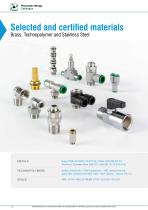
Pneumatic fittings Catalogue Selected and certified materials Brass, Technopolymer and Stainless Steel Brass CW614N CW6117N (OT 58 ), Brass CW510N (OT 57) Aluminum, Stainless Steel (AISI 301- AISI 304 -K110-316-316L) Acetal compounds – POM compounds – ABS compounds with glass fibre reinforcement IXEF 1022 – IXEF 1022FC – Grivory HT1V-4 NBR, VITON, FKM, EXTREME VITON, SILICON, TEFLON Overall dimensions and technical information are provided solely for informative purposes and may be modified without n
Open the catalog to page 6
Pneumatic fittings Catalogue Application engineering knowledge allows us to always provide the best solution Our R&D department is available to work in co-design with customers, creating customized projects, using brass, technopolymer or other special materials. Titan Engineering also has partnership agreements with accredited laboratories for the execution of tests dedicated to specific sectors. Special products • Machine Tools • Wood Machinery • Life Science • Stone & Glass Machinery Overall dimensions and technical information are provided solely for informative purposes and may be modified...
Open the catalog to page 7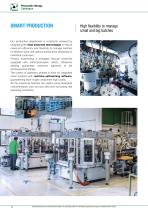
Pneumatic fittings Catalogue SMART PRODUCTION High flexibility to manage small and big batches Our production department is constantly renewed by integrating the most advanced technologies to ensure maximum efficiency and flexibility to manage batches of different sizes and special productions dedicated to individual customers. Product assembling is managed through machines equipped with anthropomorphic robots. Ultrasonic welding guarantees maximum tightness of the technopolymer fittings. The control of assembly phases is done by integrated vision systems with real-time self-learning software,...
Open the catalog to page 8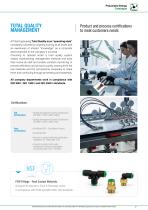
Pneumatic fittings Catalogue TOTAL QUALITY MANAGEMENT Product and process certifications to meet customers needs At Titan Engineering Total Quality is an “operating style” constantly nurtured by ongoing training at all levels and an awareness of shared “knowledge” as a corporate asset essential to the company’s success. Choosing to operate under a total quality system means implementing management methods and tools that involve all staff and enable constant monitoring of process efficiency and product quality, starting from the raw materials and the components necessary to make them and continuing...
Open the catalog to page 9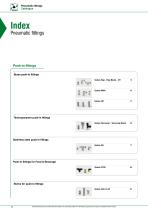
Pneumatic fittings Catalogue Pneumatic fittings Push-in fittings Brass push-in fittings Series Rap - Rap Black - OT Series MINI Series Tecnorap - Tecnorap Black Technopolymer push-in fittings Stainless steel push-in fittings Push-in fittings for Food & Beverage Stems for push-in fittings Overall dimensions and technical information are provided solely for informative purposes and may be modified without notice
Open the catalog to page 10
Pneumatic fittings Catalogue Standard fittingsr Brass standard fittings Stainless steel standard fittings Technopolymer flow regulators Series Tecnorap - Tecnorap Black 142 Stainless steel flow regulators Overall dimensions and technical information are provided solely for informative purposes and may be modified without notice 9
Open the catalog to page 11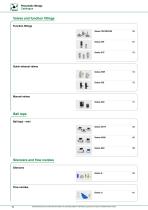
Pneumatic fittings Catalogue Function fittings Quick exhaust valves Manual valves Ball taps Ball taps - mini Flow nozzles Overall dimensions and technical information are provided solely for informative purposes and may be modified without notice
Open the catalog to page 12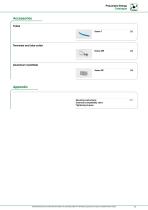
Pneumatic fittings Catalogue Accessories Tubes Series T Terminals and tube cutter Aluminium manifolds Mounting instructions Chemical compatibility chart Tightening torques Overall dimensions and technical information are provided solely for informative purposes and may be modified without notice
Open the catalog to page 13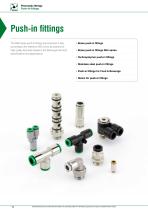
Pneumatic fittings Push-in fittings Push-in fittings The RAP series push-in fittings are produced in Italy according to the reference ISO norms as warranty of high quality level and answer to the followings technical specifications and applications. • Brass push-in fittings • Brass push-in fittings Mini series • Technopolymer push-in fittings • Stainless steel push-in fittings • Push-in fittings for Food & Beverage • Stems for push-in fittings Overall dimensions and technical information are provided solely for informative purposes and may be modified witho
Open the catalog to page 14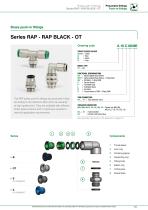
Pneumatic fittings Push-in fittings Brass push-in fittings Brass push-in fittings according to the reference ISO norms as warranty of high quality level. They are available with different thrust sleeve colours and in numerous variants to meet all application requirements. THRUST SLEEVE COLOUR blank = Green FUNCTIONAL DENOMINATIONS OT = Nickel-plated Brass Sleeve OTV = Nickel-plated Brass Sleeve - O-Ring Viton V = Thrust sleeve in POM - O-Ring FKM TUBE CONNECTION THREADED CONNECTION 04 ... 16 = Tube diameter L0 = Version with lateral plug See assembly instructions in the appendix on page 211 Overall...
Open the catalog to page 15All PNEUMAX catalogs and technical brochures
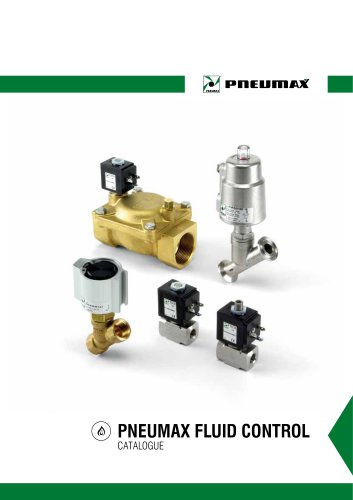 PNEUMAX FLUID CONTROL
70 Pages
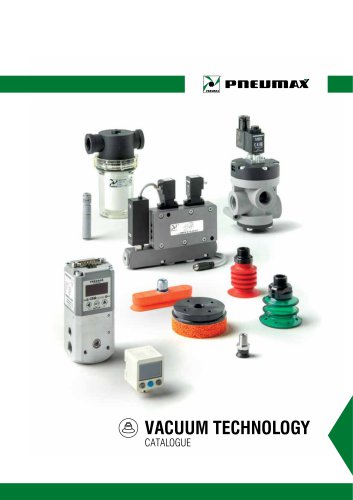 VACUUM TECHNOLOGY
140 Pages
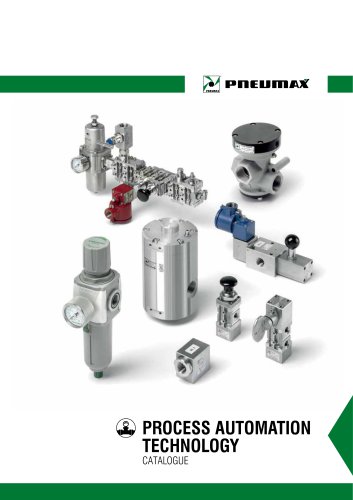 PROCESS AUTOMATION
164 Pages
 GENERAL CATALOGUE 2025
1096 Pages
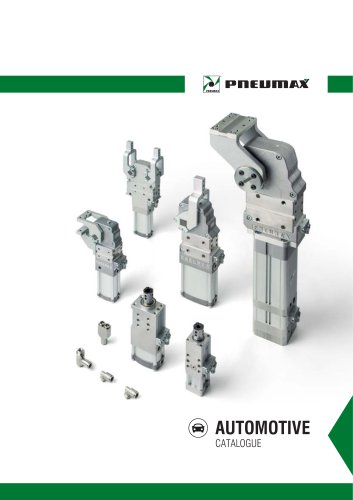 AUTOMOTIVE CATALOGUE
240 Pages
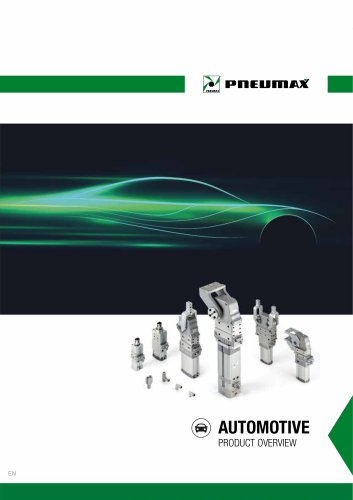 AUTOMOTIVE PRODUCT OVERVIEW
8 Pages
 AIRPLUS DIGITAL FLOW SENSOR
8 Pages
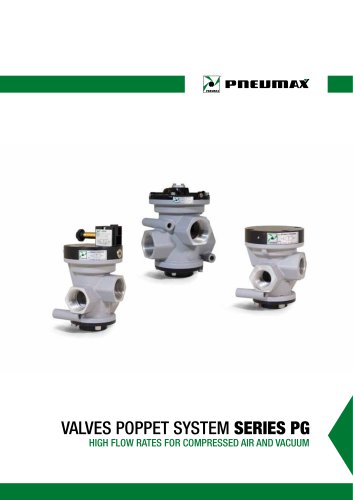 VALVES POPPET SYSTEM SERIES PG
19 Pages
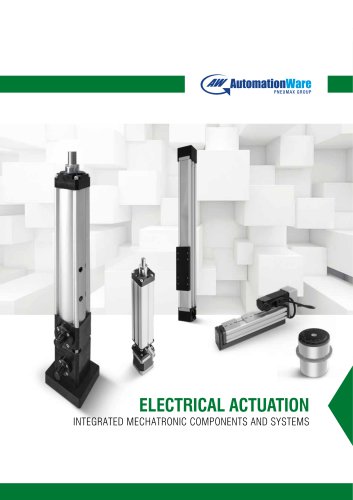 ELECTRICAL ACTUATION - AW
8 Pages
 PNEUMAX ACADEMY
12 Pages
 C O M P A N Y P R O F I L E
26 Pages
 SALES PROGRAM
170 Pages
 SOLENOID VALVES SAFELINE
20 Pages
 SERIES 1800 ELECTRIC CYLINDERS
38 Pages
 LT LINE
36 Pages
 ATEX OVERVIEW
28 Pages
 WOODWORKING INDUSTRY
8 Pages
 VOLUME BOOSTER
19 Pages
 PNEUMAX OVERVIEW
8 Pages
 MULTIPROTOCOL MODULE - SERIES PX
26 Pages