
- Catalogs
- PERUZA limited liability company
- AUTOMATIC SMALL FISH FILLETING LINE - PASFF 110


AUTOMATIC SMALL FISH FILLETING LINE - PASFF 110

AUTOMATIC SMALL FISH FILLETING LINE - PASFF 110
The PASFF 110 is designed for processing fresh pelagic fish, specifically for creating beheaded, degutted, and tail-cut loins. It can produce 'butterfly' type or single fillets and clean the belly with brushes. Suitable for fish sizes 9-14 cm, such as sprats, anchovies, and capelin.
Main Benefits
- Replaces 4-5 manual processing specialists.
- Offers three times higher productivity than conventional machines.
- Easy to operate.
Operating Principle
The machine uses rotary knives for beheading and tail cutting, and a vacuum suction unit for degutting. It can be adjusted for different fish types and sizes, provided they fit the machine's pocket size. Fish must be placed head forward and belly first, although an optional vision system can automate orientation.
Processing Capacity
The PASFF 110 can process up to 200 fish per minute, depending on species and freshness.
Technical Characteristics
- Fish Type: Small pelagic fish
- Processing Capacity: Up to 200 fish/minute
- Fish Size: 90-140 mm
- Equipment Dimensions: 2650 x 3265 mm
- Operators Required: 2
Additional Solutions
- Autonobbing line
- Drum-type nobbing line
- Water defrosting line
- Roller grading line
For more information, contact via www.peruza.com, phone: (+371) 67 248 036, or email: [email protected].
Catalog excerpts

AUTOMATIC SMALL FISH FILLETING LINE - PASFF 110 Application Equipment is designed for fresh pelagic fish processing. The nobbing section can create beheaded (H), degutted (G), tail cut (T) straight cut loins. With filleting unit it is possible to make "butterfly" type or single fillets or cut off belly and clean it with brushes. PERUZA Automatic fish filleting machine - PASFF 110 is used for fish 9 – 14 cm, such as sprats, anchovies, capelin and other. Main benefits ✓ One machine replaces 4 - 5 manual processing specialists ✓ 3 times higher productivity than conventional pocket nobbing machines ✓ Easy to operate Operating principle The beheading (H) and tail cut process (T) is made with rotary knives adjusted to the needed length of the final product, while degutting (G) is achieved with a vacuum suction unit that comes after cutting knives. Processing capacity The processing machine can be adjusted for specific types and sizes of fish. The machine can be used for various species of fish if they do not exceed the pocket size of the machine. Each fish must be placed head forward and belly first in each pocket to ensure the right cut. An optional, but suggested, vision system removes the requirement to orientate the fish belly first. Thus, enabling operators to work faster and ensuring less error percentage. This system is required if infeed of fish is done automatically. For more information contact us at www.peruza.com *Capacity can vary depending on fish species and freshness of fish
Open the catalog to page 1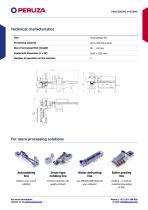
Technical characteristics Fish Small pelagic fish Processing capacity Size of processed fish (length) Number of operators on the machine For more processing solutions Autonobbing line Drum-type nobbing line Water defrosting line Roller grading line Reduce your cost of nobbing! Process small fish into quality product! Use efficient defrosting for your products! Grading - a must for industrial processing of fish! For more information contact us at www.peruza.com
Open the catalog to page 2All PERUZA limited liability company catalogs and technical brochures
 Pallet Organizer
2 Pages
 Pallet shuttle Conveyors
2 Pages
 Pallet Conveyors
2 Pages
 Pallet dispenser
2 Pages
 Continuous vertical elevator
2 Pages
 High speed palletizer
2 Pages
 REDUCED GIVEAWAY LINE
2 Pages
 AUTOPACKER FOR VERTICAL CANS
2 Pages
 POCKET TYPE NOBBING MACHINE
2 Pages
 VOLUMETRIC BATCHING LINE
2 Pages
 VEGETABLE SLICER S-9A
2 Pages
 ROLLER GRADING LINE
2 Pages
 ASSEMBLY LINE
2 Pages
 ROBOT PALLETIZER
2 Pages
 ROBOT DEPALLETIZER
2 Pages
 MANUAL GRADING LINE
2 Pages
 JAR WASHING MACHINE
2 Pages
 HOPPER ELEVATOR
2 Pages
 FULL LAYER PALLETIZER
2 Pages
 FLOW WEIGHT GRADER
2 Pages
 FISH DESCALING MACHINE
2 Pages
 FISH DEFROSTER
2 Pages
 DRUM TYPE NOBBING LINE
2 Pages
 BIN TIPPER
2 Pages
 CONTINUOUS BRINING LINE
2 Pages
 BOX WASHING MACHINE
2 Pages
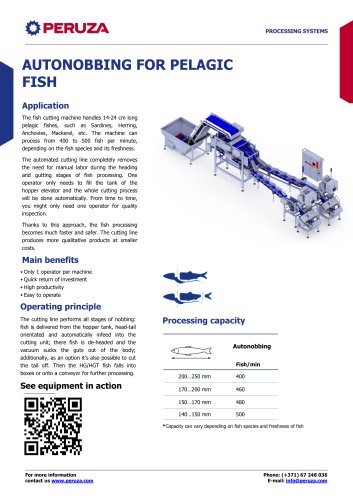 AUTONOBBING FOR PELAGIC FISH
2 Pages
 ACCUMULATION TANK
2 Pages
 PERUZA BIN TIPPER
2 Pages
 PERUZA DRUM TYPE NOBBING
2 Pages
 WATER DEFROSTING LINE
2 Pages





- Rail conveyor
- Vessel
- Storage vessel
- Horizontal conveyor
- Automatic cleaning system
- Metal tank
- Stainless steel vessel
- Water cleaning system
- Feeder
- Lifting system
- Roller conveyor
- Electric drive conveyor
- Chain conveyor
- Palletizer
- Stainless steel conveyor
- Tank for food applications
- Industrial slicing machine
- Robotic cell
- Automated feeder
- Food cleaning machine