


QUICK REFERENCE PRODUCT SELECTOR
QUICK REFERENCE PRODUCT SELECTOR
Catalog excerpts

Engineering Adhesives QUICK REFERENCE PRODUCT SELECTOR
Open the catalog to page 1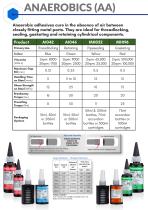
3.14 x radius (cm)2 x length of cylinder (cm) - ml. Radius is half the diameter.
Open the catalog to page 2
A1042 • Locks and seals threaded fasteners • Prevents vibration loosening • Removable with tools • Prevents rust seizure IDEAL FOR: Machinery, vehicles, vibration resistance, tamper-proofing A1046 • Very high strength • Allows relaxed machining tolerances • Prevents fretting corrosion • Bonds dissimilar metals IDEAL FOR: Bearings, bushes, gears, pulleys, splines MH052 • Easy application and assembly • Seals to pipe burst pressure • Chemical, gas & liquid resistant • No debris or tape shredding • Approved for gas & drinking water IDEAL FOR: Metal pipework, plumbing, valves, sprinklers, cooling...
Open the catalog to page 3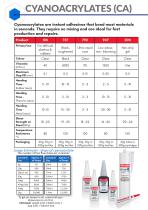
Us age Estimator - drops of cyanoacrylate The number of free flow drops per container: To get an answer in ml, convert all your dimensions to cm first. Flat bond: Length (cm) x Width (cm) x Gap (cm) = Volume (ml)
Open the catalog to page 4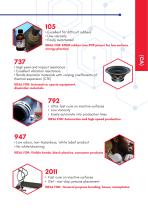
105 • Excellent for difficult rubbers • Easily automated IDEAL FOR: EPDM rubber (use POP primer for low surface energy plastics) 737 • High peel and impact resistance • Excellent vibration resistance • Bonds dissimilar materials with varying coefficients of thermal expansion (CTE) IDEAL FOR: Automotive, sports equipment, dissimilar materials 792 • Ultra-fast cure on inactive surfaces • Easily automate into production lines IDEAL FOR: Automotive and high-speed production 947 • Low odour, non-hazardous, 'white label' product IDEAL FOR: Visible bonds, black plastics, consumer products • Fast cure...
Open the catalog to page 5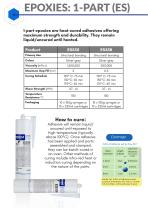
1-part epoxies are heat-cured adhesives offering maximum strength and durability. They remain liquid/uncured until heated. Handy Tip: 1 litre of adhesive covers 1sq.m at a thickness of 1 mm i.e. if only 0.5 mm thick, 1 litre will cover 2 sq.m Adhesive will remain liquid/ uncured until exposed to high temperature (typically above 100°C). Once adhesive has been applied and parts assembled and clamped, they can be batch-cured in an oven. Other methods of curing include infra-red heat or induction curing depending on the nature of the parts.
Open the catalog to page 6
ES550 • Extremely high shear & peel strength • Excellent temperature & chemical resistance • Good gap-filling IDEAL FOR: Welding alternatives, tooling, heavy machinery Heat exchangers Stainless steel Oil cooler productionvarious materials bonded • Same high strength as ES550 • Excellent heat, environmental and chemical resistance • Flows during cure to seal gaps IDEAL FOR: Applications requiring penetration into small gaps Poor Adhesive Joint Design (Avoid): Straight Butt-Joints: Unstable, prone to cracking under load Corner Butt-Joints: Peel: Flexible Component Indirect forces introduce cleavage...
Open the catalog to page 7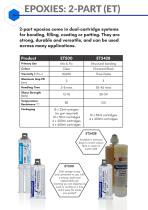
EPOXIES: 2-PART (ET) 2-part epoxies come in dual-cartridge systems for bonding, filling, coating or potting. They are strong, durable and versatile, and can be used across many applications. Product Structural bonding Charcoal Black Viscosity (mPa.s) Thixo Paste Handling Time 15 x 25ml syringes(no gun required) 10 x 50ml cartridges 6 x 200ml cartridges 6 x 400ml cartridges ET5428 Available in charcoal black to match carbon fibre or cream to match GRP ET500 25ml syringe is easy and convenient to use, with a mixing nozzle and replaceable cap meaning you can dispense as much or as little at a time...
Open the catalog to page 8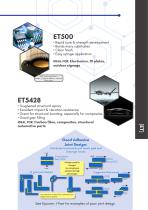
• Rapid cure & strength development • Bonds many substrates • Clear finish • Easy syringe application IDEAL FOR: Electronics, ID plates, outdoor signage Truck crank case filters Rubber / polymer blends + cellulose fibre paper • Toughened structural epoxy • Excellent impact & vibration resistance • Great for structural bonding, especially for composites • Good gap-filling IDEAL FOR: Carbon fibre, composites, structural automotive parts Good Adhesive Joint Design: Distributes load evenly and resists peel and cleavage forces Compression: Best JJJ If design cannot be changed: Use a toughened Load...
Open the catalog to page 9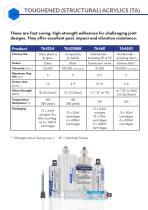
TOUGHENED (STRUCTURAL) ACRYLICS (TA)These are fast curing, high-strength adhesives for challenging joint designs. They offer excellent peel, impact and vibration resistance. Product Changes colour during cure / ~ SF = Substrate Failure
Open the catalog to page 10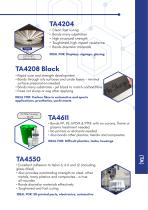
• Clear, fast curing • Bonds many substrates • High structural strength • Toughened, high impact resistance • Bonds dissimilar materials IDEAL FOR: Displays, signage, glazing • Rapid cure and strength development • Bonds through oily surfaces and oxide layers - minimal surface preparation needed • Bonds many substrates - jet black to match carbon fibre • Does not slump or sag after applying IDEAL FOR: Carbon fibre in automotive and sports applications, prosthetics, yacht masts TA4611 • Bonds PP, PE, EPDM & PTFE with no corona, flame or plasma treatment needed • No primers or etchants needed •...
Open the catalog to page 11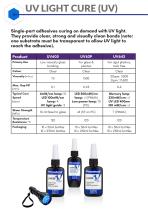
UV LIGHT CURE (UV) Single-part adhesives curing on demand with UV light. They provide clear, strong and visually clean bonds (note: one substrate must be transparent to allow UV light to reach the adhesive).
Open the catalog to page 12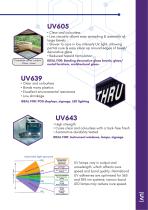
• Low viscosity allows easy spreading & assembly of large bevels • Slower to cure in low intensity UV light, allowing partial cure & easy clean up around edges of bevel/ decorative glass • Reduced hazard formulation IDEAL FOR: Bonding decorative glass bevels, glass/ metal furniture, architectural glass. • Bonds many plastics • Excellent environmental resistance IDEAL FOR: POS displays, signage, LED lighting • High strength • Cures clear and colourless with a tack-free finish • Automotive durability tested IDEAL FOR: Instrument windows, lamps, signage UV lamps vary in output and wavelength, which...
Open the catalog to page 13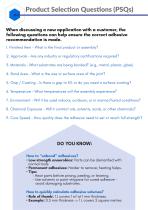
Product Selection Questions (PSQs)When discussing a new application with a customer, the following questions can help ensure the correct adhesive recommendation is made. 1. Finished Item - What is the final product or assembly? 2. Approvals - Are any industry or regulatory certifications required? 3. Materials - What substrates are being bonded? (e.g., metal, plastic, glass) 4. Bond Area - What is the size or surface area of the joint? 5. Gap / Coating - Is there a gap to fill, or do you need a surface coating? 6. Temperature - What temperatures will the assembly experience? 7. Environment -...
Open the catalog to page 14All Permabond catalogs and technical brochures
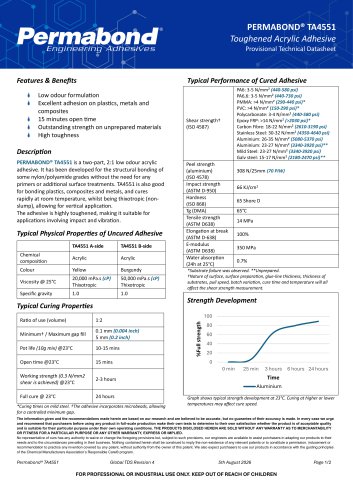 TA4551
2 Pages
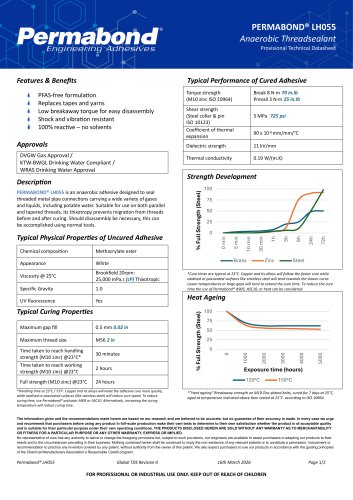 LH055
LH0552 Pages
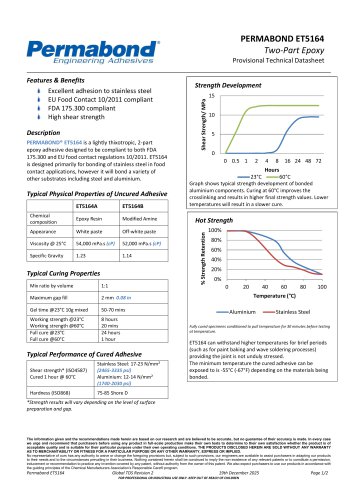 ET5164
2 Pages
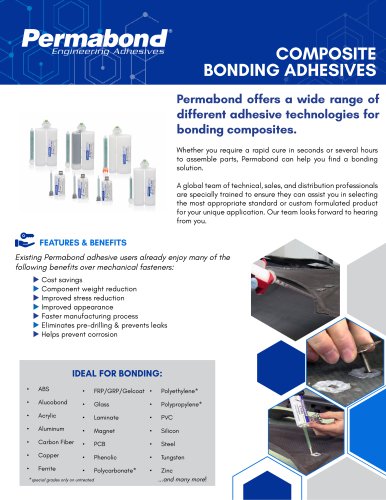 Composite Bonding Adhesives
3 Pages
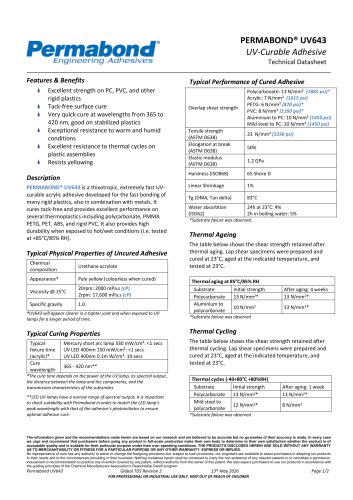 PERMABOND® UV643
2 Pages
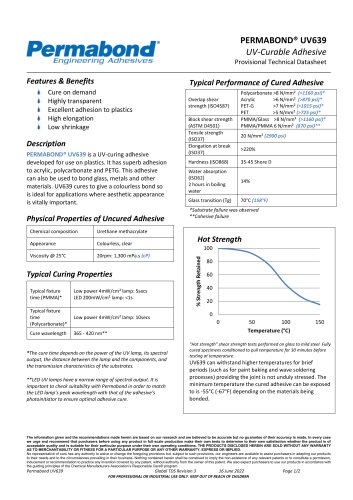 PERMABOND® UV639
2 Pages
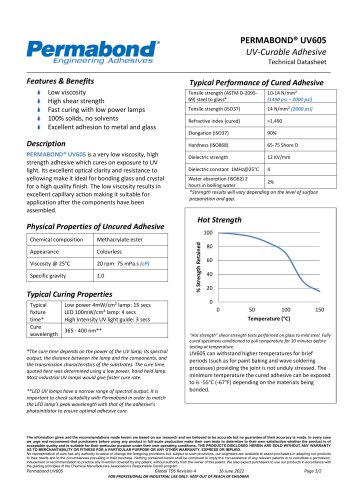 PERMABOND® UV605
2 Pages
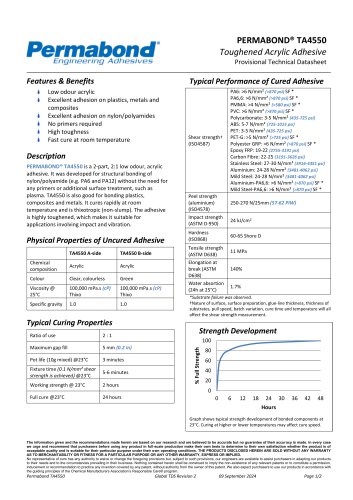 PERMABOND® TA4550
2 Pages
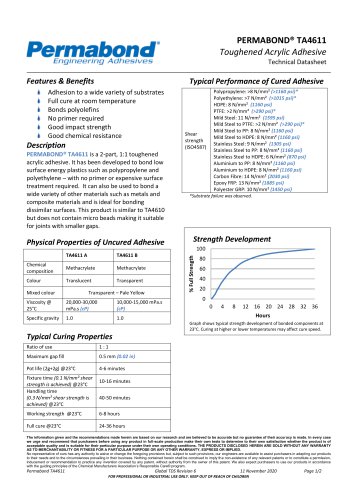 PERMABOND® TA4611
2 Pages
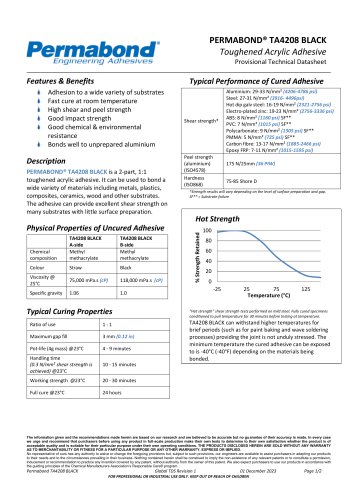 PERMABOND® TA4208 BLACK
2 Pages
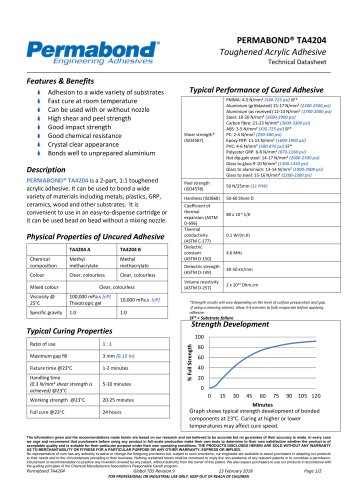 PERMABOND® TA4204
2 Pages
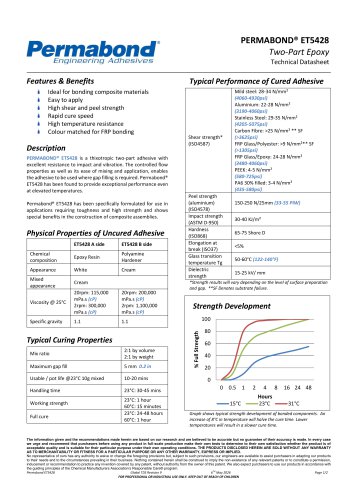 PERMABOND® ET5428
2 Pages
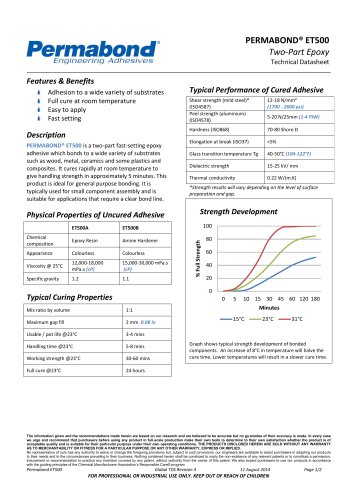 PERMABOND® ET500
2 Pages
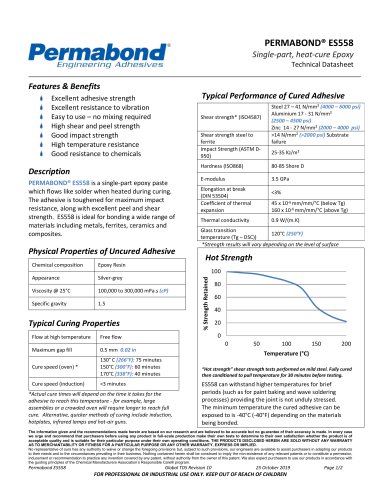 PERMABOND® ES558
2 Pages
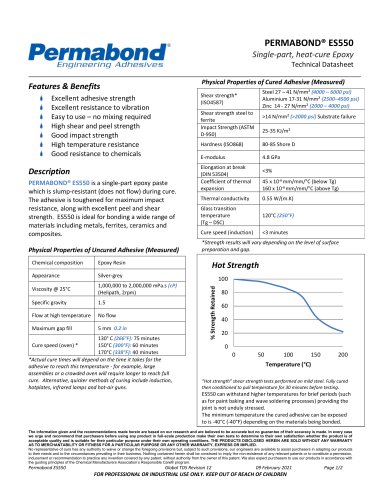 PERMABOND® ES550
2 Pages
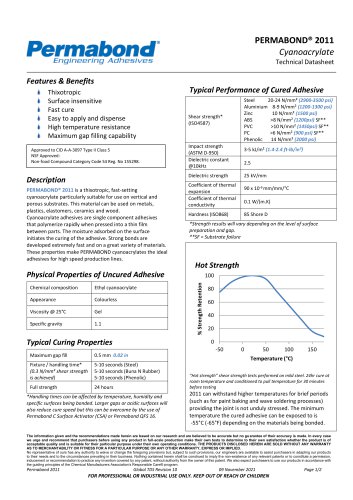 PERMABOND® 2011
2 Pages
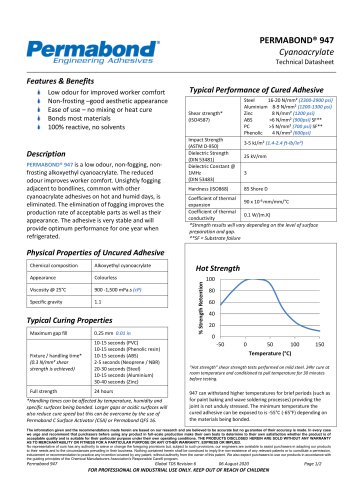 PERMABOND® 947
2 Pages
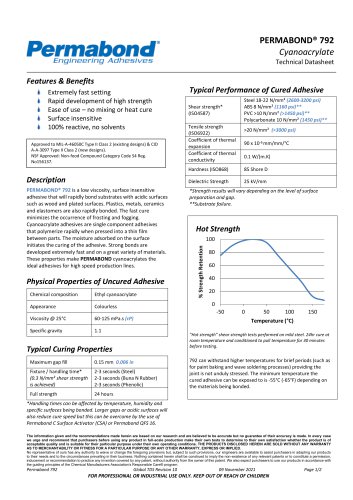 PERMABOND® 792
2 Pages
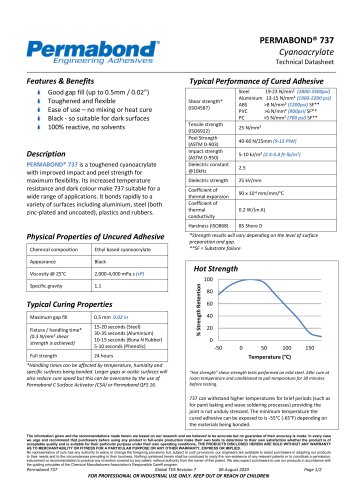 PERMABOND® 737
2 Pages
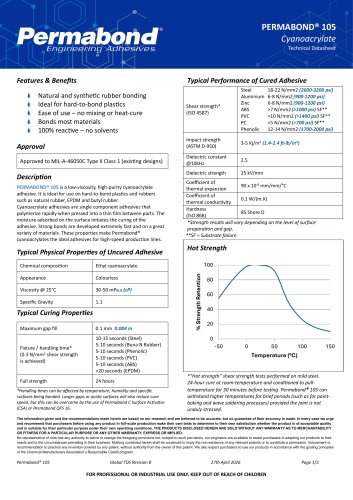 PERMABOND® 105
2 Pages
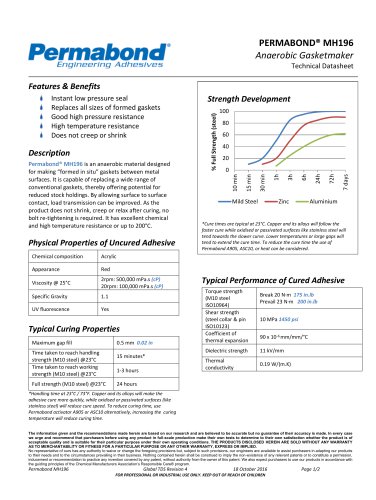 Permabond® MH196
2 Pages
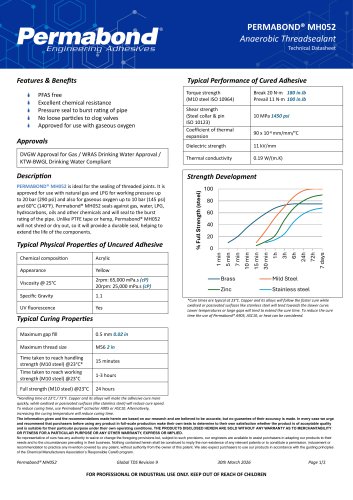 Permabond® MH052
2 Pages
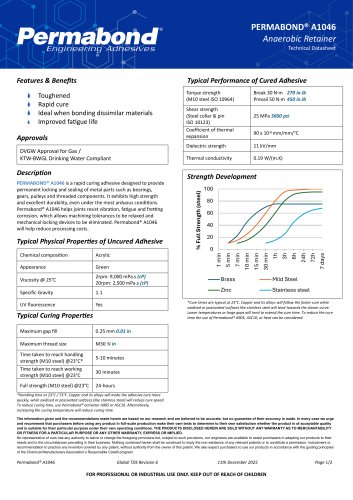 Permabond® A1046
2 Pages
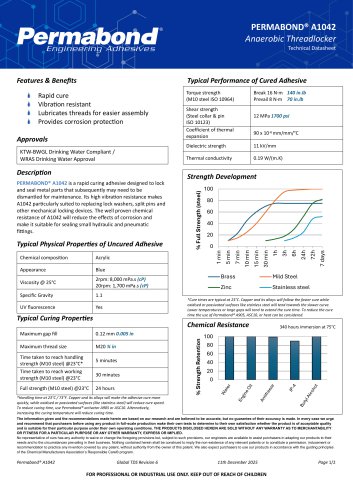 Permabond® A1042
2 Pages
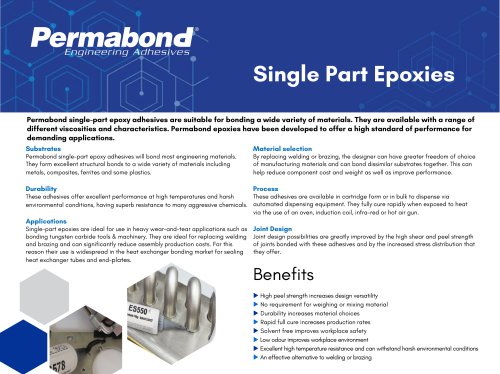 Single Part Epoxies
3 Pages
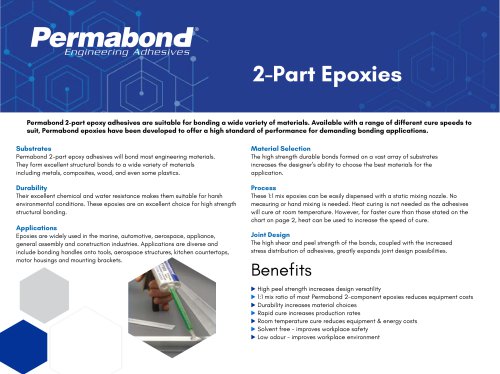 2-Part Epoxies
3 Pages
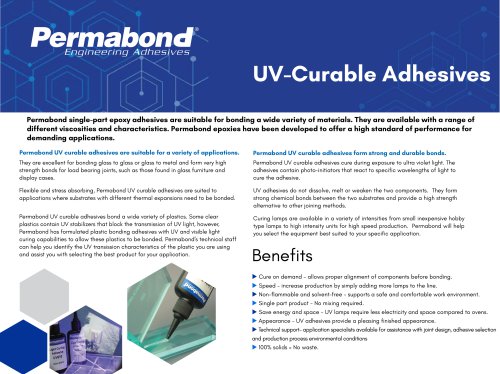 UV-Curable Adhesives
3 Pages
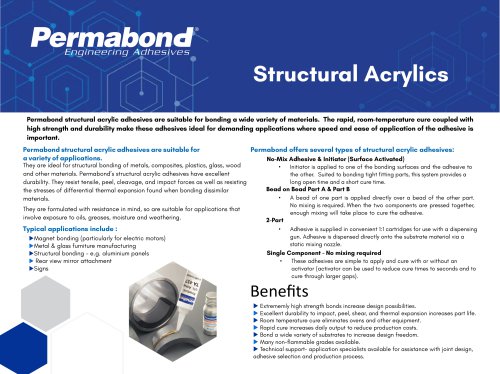 Structural Acrylics
4 Pages
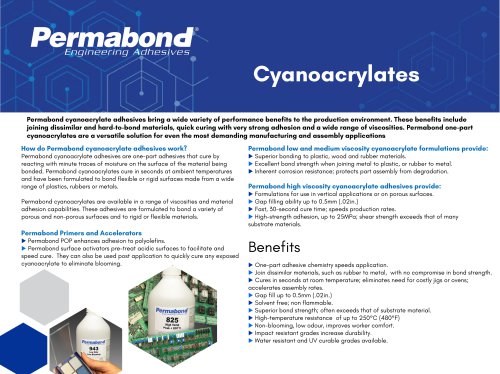 Cyanoacrylates
3 Pages
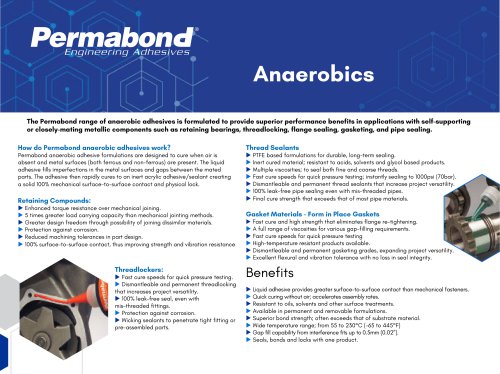 Anaerobics
4 Pages
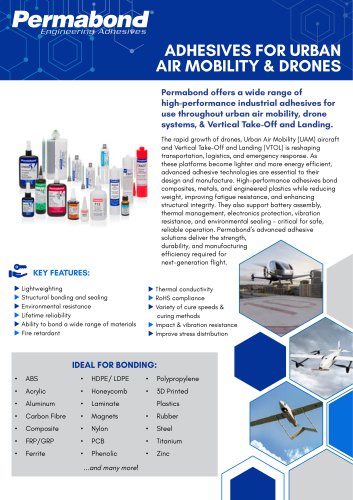
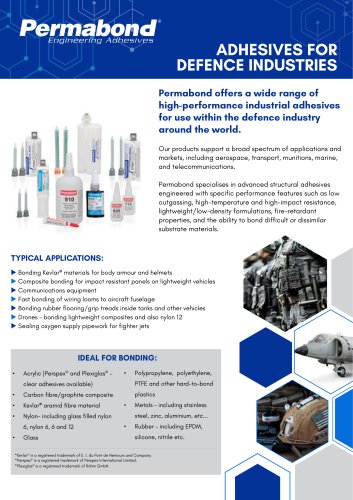
- Permabond single-component adhesive
- Permabond metal adhesive
- Permabond industrial adhesive
- Permabond plastic adhesive
- Glass adhesive
- Permabond dispersion adhesive
- Epoxy adhesive
- Permabond bonding adhesive
- Two-component adhesive
- Electronic adhesive
- Permabond ceramic adhesive
- Sealing adhesive
- Permabond fast curing adhesive
- Permabond viscosity adhesive
- Wood adhesive
- Rubber adhesive
- Permabond automotive adhesive
- Permabond composite material adhesive
- High-temperature adhesive
- Transparent adhesive