
- Catalogs
- Parker Polyflex Division - Europe
- Thermoplastic Hose for Hydraulics & Industry


Thermoplastic Hose for Hydraulics & Industry

1 / 344 PagesView full catalog
Thermoplastic Hose for Hydraulics & Industry
Product catalog summary
Introduction
Parker Hannifin's Polyflex division offers a range of thermoplastic hoses, fittings, and accessories for hydraulic and industrial applications, capable of handling pressures up to 70 MPa. These products are suitable for various markets, including standard hydraulics, ultra-high pressure applications, and the oil & gas industry.
Parker Hannifin's Polyflex division offers a range of thermoplastic hoses, fittings, and accessories for hydraulic and industrial applications, capable of handling pressures up to 70 MPa. These products are suitable for various markets, including standard hydraulics, ultra-high pressure applications, and the oil & gas industry.
Specifications and Features
Parker thermoplastic hoses are lightweight, have small outer diameters, and small bend radii. They are available in long continuous lengths, reducing waste and connection joints. They support high working pressures up to 400 MPa, offer excellent abrasion resistance, and operate in temperatures from -73°C to 232°C. They are resistant to UV, ozone, and seawater.
Parker thermoplastic hoses are lightweight, have small outer diameters, and small bend radii. They are available in long continuous lengths, reducing waste and connection joints. They support high working pressures up to 400 MPa, offer excellent abrasion resistance, and operate in temperatures from -73°C to 232°C. They are resistant to UV, ozone, and seawater.
Compliance and Safety
Manufacturers must follow guidelines and technical regulations to ensure safety and compliance. Parker's hoses are electrically non-conductive according to SAE J517 and offer high purity to prevent contamination.
Manufacturers must follow guidelines and technical regulations to ensure safety and compliance. Parker's hoses are electrically non-conductive according to SAE J517 and offer high purity to prevent contamination.
Environmental Considerations
Since 2006, Parker has used trivalent chromate plating for steel fittings, enhancing corrosion resistance and environmental friendliness, complying with the EU End-of-life Vehicle Directive.
Since 2006, Parker has used trivalent chromate plating for steel fittings, enhancing corrosion resistance and environmental friendliness, complying with the EU End-of-life Vehicle Directive.
Crimping Tools
Parker provides a global system for secure crimping processes with minimal training. The Parkrimp® crimping tools are designed for Parflex® hoses and compatible with various crimping presses.
Parker provides a global system for secure crimping processes with minimal training. The Parkrimp® crimping tools are designed for Parflex® hoses and compatible with various crimping presses.
Hose and Fitting Selection
The catalogue includes guidelines for selecting hoses based on application, working pressure, fluid compatibility, and standards. It provides tables for chemical resistance and hose types by international standards.
The catalogue includes guidelines for selecting hoses based on application, working pressure, fluid compatibility, and standards. It provides tables for chemical resistance and hose types by international standards.
Applications
Parker's thermoplastic hoses are suitable for a wide range of applications, including standard and mini hydraulics, industrial gases, alternative fuels, automotive, and more.
Parker's thermoplastic hoses are suitable for a wide range of applications, including standard and mini hydraulics, industrial gases, alternative fuels, automotive, and more.
Conclusion
Parker Hannifin's thermoplastic hoses offer a versatile and reliable solution for hydraulic and industrial applications, focusing on safety, compliance, and environmental responsibility.
Parker Hannifin's thermoplastic hoses offer a versatile and reliable solution for hydraulic and industrial applications, focusing on safety, compliance, and environmental responsibility.
Materials and Construction
The hoses are constructed using materials such as elastomer, polyurethane, polyamide, and polyester elastomer, featuring braided layers of high tensile steel wire or synthetic fibers for reinforcement.
The hoses are constructed using materials such as elastomer, polyurethane, polyamide, and polyester elastomer, featuring braided layers of high tensile steel wire or synthetic fibers for reinforcement.
Temperature and Pressure Ratings
The hoses operate within specific temperature ranges, typically from -40°C to +121°C for petroleum-based fluids, and up to +100°C for synthetic and water-based hydraulic fluids. Pressure ratings vary, with some handling up to 5,000 psi.
The hoses operate within specific temperature ranges, typically from -40°C to +121°C for petroleum-based fluids, and up to +100°C for synthetic and water-based hydraulic fluids. Pressure ratings vary, with some handling up to 5,000 psi.
Key Specifications
Each hose type is detailed with specifications such as inner diameter, outer diameter, working pressure, burst pressure, and weight per meter.
Each hose type is detailed with specifications such as inner diameter, outer diameter, working pressure, burst pressure, and weight per meter.
Special Features
Some hoses have special features like pinpricked covers for gas permeability and non-conductive properties for safety in electrical environments.
Some hoses have special features like pinpricked covers for gas permeability and non-conductive properties for safety in electrical environments.
Recommendations
The document emphasizes selecting the correct hose type based on application requirements, including temperature, pressure, and fluid compatibility.
The document emphasizes selecting the correct hose type based on application requirements, including temperature, pressure, and fluid compatibility.
Hose Fittings
The document lists multiple hose fittings, specifying dimensions, thread types, and materials. Most fittings are made from galvanized steel, with options for stainless steel and brass for specific applications.
The document lists multiple hose fittings, specifying dimensions, thread types, and materials. Most fittings are made from galvanized steel, with options for stainless steel and brass for specific applications.
Accessories
Details various accessories, including spring guards, anti-abrasion sleeves, fire protection sleeves, and hose guards, designed to protect hoses from abrasion, heat, and other environmental factors.
Details various accessories, including spring guards, anti-abrasion sleeves, fire protection sleeves, and hose guards, designed to protect hoses from abrasion, heat, and other environmental factors.
Workshop Equipment
Includes heavy-duty hose crimpers, hand pumps, air pumps, and hose cutting tools. The TH8-380.E crimper is noted for its high crimping force and electronic control system.
Includes heavy-duty hose crimpers, hand pumps, air pumps, and hose cutting tools. The TH8-380.E crimper is noted for its high crimping force and electronic control system.
Specifications and Requirements
Maximum operating pressure of hoses must meet or exceed system pressure. Ambient and fluid temperatures should not surpass the hose/fittings' rated design temperature.
Maximum operating pressure of hoses must meet or exceed system pressure. Ambient and fluid temperatures should not surpass the hose/fittings' rated design temperature.
Inspection and Maintenance
Regularly inspect hoses for cracks, blisters, cleanliness, and other defects. Check fittings for damage or corrosion.
Regularly inspect hoses for cracks, blisters, cleanliness, and other defects. Check fittings for damage or corrosion.
Installation Guidelines
Establish hose size based on flow rate, pressure drop, and chemical resistance. Avoid routing hoses near heat sources.
Establish hose size based on flow rate, pressure drop, and chemical resistance. Avoid routing hoses near heat sources.
Safety and Usage Instructions
Improper selection or use of hoses and fittings can lead to severe consequences. Provide safety guides to personnel responsible for hose selection and usage.
Improper selection or use of hoses and fittings can lead to severe consequences. Provide safety guides to personnel responsible for hose selection and usage.
Environmental and Mechanical Considerations
External forces such as excessive flexing, twisting, and environmental exposure can reduce hose life. Proper routing and protection from environmental factors are essential for hose longevity.
External forces such as excessive flexing, twisting, and environmental exposure can reduce hose life. Proper routing and protection from environmental factors are essential for hose longevity.
See more
All Parker Polyflex Division - Europe catalogs and technical brochures
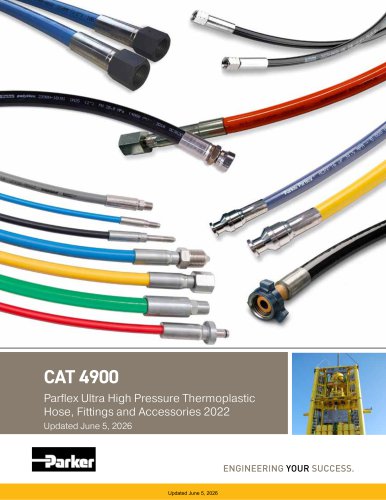 CAT 4900
222 Pages
 Parker Polyflex PTFE Hoses
2 Pages
Archived catalogs
 2440P-04V32 Hydrogen Hose
2 Pages
 Industrial Hoses
164 Pages
 Black Eagle Product Manual
92 Pages
 Product Diversity
2 Pages
 830M
830M4 Pages
 Parker PTFE Hose Overview
3 Pages


Related Searches
- Parker piping
- Parker hydraulic fitting
- Pneumatic fitting
- Metal fitting
- Parker plastic hose
- Parker structure hose
- Parker stainless steel fitting
- Flexible hose
- Elbow fitting
- Neoprene® hose
- Abrasion-resistant hose
- Parker water hose
- Plastic fitting
- Parker braided metal hose
- Male fitting
- Parker rugged hose
- Suction hose
- Female fitting
- Smooth piping
*Prices are pre-tax. They exclude delivery charges and customs duties and do not include additional charges for installation or activation options. Prices are indicative only and may vary by country, with changes to the cost of raw materials and exchange rates.
About DirectIndustry
DirectIndustry is a marketplace that offers B2B players a complete experience, from product sourcing to purchase. DirectIndustry is an entity of VirtualExpo Group.
Are you a buyer?
Are you a supplier?