Overview: The document serves as a comprehensive catalogue for Parker Legris, detailing their expertise in connection solutions for industrial fluids. It highlights the company's history, product offerings, and commitment to innovation and quality.
Company History: Parker Legris has a rich history dating back to 1848, with significant milestones including the invention of the LF 3000® push-in
fitting in 1969 and becoming part of the Parker Hannifin Corporation in 2008.
Product Offerings: The catalogue introduces a wide range of products including fittings, couplers, valves, and tubing designed for various industrial applications. New products like the LIQUIfit+ and energy-saving blowguns are highlighted for their ecological design and efficiency.
Industrial Applications: Parker Legris products are used in sectors such as production automation, packaging, transport, food processing, and medical industries. The company also engages in innovative sectors like renewable energy and ICT.
Quality and Safety: Parker Legris emphasizes the importance of quality and safety, with ISO/TS 16949 certification and rigorous quality management processes to ensure product reliability and traceability.
Regulatory Compliance: The document outlines compliance with various European standards and directives, including RoHS, REACH, and ATEX, ensuring that products meet safety and environmental regulations.
Environmental Commitment: Parker Legris is ISO 14001 certified, focusing on resource conservation and environmental protection as part of its corporate mission.
Customer Support and Services: The company offers customized solutions, e-catalogue integration, EDI transmission, and technical support to enhance customer performance and satisfaction.
Introduction: Parker Legris is committed to sustainable development by integrating environmental protection into its industrial operations. The company has achieved ISO 14001 certification across all sites, promoting unified environmental management objectives.
Environmental Impact Reduction: Parker Legris has implemented measures to recover 85% of waste and reduce energy consumption by 15%. The company focuses on selecting materials and recycling channels to minimize hazardous substances and enhance industrial performance.
Ecological Design and Innovation: Under its continuous improvement process, Parker Legris incorporates ecological design into innovation, using Life Cycle Assessment (LCA) to optimize product environmental impact. The Product Environmental Profile (PEP) provides reliable data for promoting ecological advances.
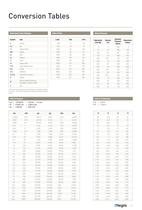
Technical Guidelines: The document outlines technical guidelines for pneumatic components, including flow and pressure drop calculations. It explains the relationship between Kv and pressure drop, and provides conversion tables for various units of measurement.
Vacuum and Pressure: Details on vacuum levels and pressure measurements are provided, including classifications of vacuum and the relationship between absolute and relative pressure.
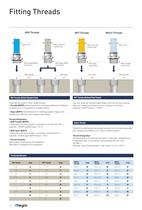
Thread Standards: The document describes different thread standards, including BSP, NPT, and metric threads, with examples of thread designations and sealing methods.
Coupling Systems: Parker Legris offers a range of coupling systems, including push-in fittings, compression fittings, and couplers, each with specific advantages and principles of operation.
Materials and Performance: The document lists various materials used in fittings and tubing, along with their performance in different environments, maximum pressure, and temperature ranges.
Product Specifications: The document provides detailed technical specifications and product information for various fittings, valves, and related components used in fluid distribution networks. It includes data on materials, compatible fluids, pressure and temperature ranges, and performance in different environments.
Product Selection and Identification: The document includes a product selection table and part number identification guide, detailing the coding system for fittings and valves based on nominal diameter, thread code, and other specifications.
Push-In Fittings: The document highlights the advantages of push-in fittings, including ease of connection, durability, and sealing technology. It provides specifications for various series such as LF 3000®, LF 3600, and LIQUIfit®.
Specifications: The modular system is composed of symmetrical components connected by joining clips, with a coupling clip to lock the module. A dismantling tool is provided for disconnection. The recommended maximum is five modules for the mating module, while the fixed module has no limit. The box includes 10 units, 20 joining clips, 4 end pins, 4 mounting brackets, 4 coupling clips, and 1 dismantling tool.
Technical Characteristics: The
connectors are compatible with compressed air and other fluids upon consultation. They operate under a pressure range from vacuum to 10 bar and a temperature range from -20°C to +80°C. The materials used include technical polymer and nickel-plated brass, ensuring reliability and performance.
Installation Configurations: The document outlines various configurations such as panel-mounted, in-line, and DIN rail connectors. It emphasizes the importance of matching the number of outlets on male and female bodies for multi-connectors.
Regulations: The products comply with ISO 14743 for pneumatic fluid power and several directives including PED, RoHS, and REACH.
Product Advantages: The fittings offer features like self-sealing and oscillating capabilities, which prevent fluid flow when disconnected and allow for rotation to match cylinder rod strokes. These features enhance reliability, durability, and simplify circuit assembly.
Accessories: Accessories such as tamper-proof safety clips, coloured release button covers, and disconnection tools are available to improve safety and circuit identification. These accessories are designed to prevent accidental disconnection and facilitate easy disconnection where access is difficult.
Applications: The products are suitable for various applications including robotics, automotive processes, semi-conductors, textiles, and packaging.
Specifications: The document lists part numbers, dimensions, and weights for each fitting type. Key dimensions include diameter (ØD), length (L), and weight (kg). The fittings are available in high volumes (WP3), with packaging options of 40, 50, or 100 parts per bag, depending on the diameter.
Materials and Features: All fittings are made from bio-based polymer and EPDM. They feature threads without pre-coating and a swiveling body for easy positioning.
Product Types: The document provides detailed specifications and descriptions of various fittings and connectors made from FDA chemical nickel-plated brass and FKM. These components are designed for use in various industrial applications, particularly where chemical resistance and durability are required.
Specifications: The document lists numerous fittings, including stud standpipes, elbows, tees, and connectors, each with specific dimensions and weights. The fittings are categorized by their thread types (BSPP, BSPT, Metric) and sizes, ranging from 4mm to 14mm in diameter.
Materials and Construction: All components are made from FDA chemical nickel-plated brass and FKM, ensuring chemical resistance and durability. The fittings are designed to swivel for easy positioning and are suitable for use in temperatures ranging from -250°C to +260°C.
Applications: These fittings are suitable for use in aggressive environments, including those involving corrosive fluids. They are ideal for applications requiring frequent sterilization and are compatible with polymer and grooved stainless steel tubing.
Product Advantages: The fittings offer high resistance to corrosion, easy cleaning, and proven gripping technology. They are designed for reliability and safety, with features such as manual connection and disconnection, full bore for minimal pressure drop, and 100% leak-tested production.
Technical Characteristics: The fittings are made from stainless steel 316L, with seals made from FKM. They are designed to provide complete protection against ingress in both food and non-food zones, with IP 51 bulkhead protection.
Specifications: - Fluids: Compatible with fitting and tubing component materials. - Working Pressure: Vacuum to 30 bar (20 bar for specific models). - Working Temperature: -20° to +150°C. - Adaptor Tightening Torque: Varies by thread size, from 0.16 daN.m to 3.5 daN.m. - Bulkhead Tightening Torque: Varies by diameter, from 0.5 daN.m to 1 daN.m.
Applications: Suitable for use in food processing, paper industry, petrochemical, pharmaceutical, chemical, and medical sectors.
Regulations: Complies with ISO 14743, DI 97/23/EC (PED), DI 2002/95/EC (RoHS), DI 94/9/EC (ATEX), RG 1907/2006 (REACH), UL94 V-0, RG 21CFR (FDA), RG 1935/2004/EC, USDA NSF H1.
Product Features: - Reliable performance depends on fluid type, component materials, and tubing. - Guaranteed use with a vacuum of 755 mm Hg (99% vacuum). - Silicone-free.
Fittings Overview: - Various stud fittings available in stainless steel 316L with FKM seals. - Includes male BSPT, NPT, BSPP, and metric threads. - Compact designs for space-saving installations. - Swiveling bodies for positioning purposes. - Maximum pressure for some models is 20 bar.
Key Data from Tables: - Detailed dimensions and weights for each fitting type. - Specific models and part numbers for ordering.
Specifications: The document lists cavity dimensions in millimeters for both metric and inch systems. It includes tables with dimensions for different cavity sizes, such as ØD1, ØD2, ØD3, H, H1, H2, N, and K, for various materials like brass, aluminum, and polyamide.
Materials and Components: The document specifies the materials used in the construction of the cartridges, including technical polymer, nickel-plated brass, NBR, and stainless steel. It highlights the use of different materials for specific applications, such as high-temperature resistance and chemical resistance.
Technical Characteristics: The document outlines the working pressure and temperature ranges for the cartridges, emphasizing their reliability and compatibility with various fluids. It mentions the use of patented cartridges for optimized installation configurations.
Applications: The cartridges and fittings are suitable for various applications, including robotics, automotive processes, pneumatics, semi-conductors, refrigeration, packaging, and vacuum systems.
Customised Solutions: Parker Legris offers customized solutions for specific customer requirements. The document describes the process of developing customized products, from defining function parameters to serial production.
Regulations and Standards: The document references compliance with various regulations and standards, such as DI: 97/23/CE (PED), RG: 21CFR (FDA), and DI: 2011/65/CE (RoHS).
Product Advantages: The document highlights the advantages of using LF Cartridges and TL Cartridges, including mechanical strength, chemical resistance, and the ability to handle high temperatures.
Fittings and Tubing: The document provides information on different types of fittings and tubing, including LF 3000®, LIQUIfit®, and various types of technical tubing and hose. It details the materials, pressure, and temperature specifications for each type.
Technical Tubing and Hose Overview: The document outlines various types of tubing and hoses, specifying their materials, pressure, temperature ranges, and dimensions. Key materials include semi-rigid polyamide, polyurethane, and PVC. The tubing is designed for fluids like compressed air, coolants, and industrial fluids.
Product Types and Features: - Anti-Spark PA or PU Tubing: Available with or without PVC sheath, suitable for compressed air and industrial fluids, with a pressure capacity of up to 36 bar and temperature range from -20°C to +80°C. - Self-Fastening NBR Hose: Made from nitrile butadiene rubber, reinforced with polyamide braid, suitable for compressed air and coolants, with a pressure capacity of 16 bar and temperature range from -20°C to +100°C. - Braided PVC Hose: Suitable for compressed air and non-corrosive fluids, with a pressure capacity of 15 bar and temperature range from -25°C to +70°C. - Twin PU Tubing: Made from polyurethane ester, suitable for compressed air, with a pressure capacity of 14 bar and temperature range from -20°C to +70°C.
Packaging and Customization: The document details packaging options such as Tubepack® and drums, offering lengths from 5 m to 1000 m. Custom tube cutting and marking are available for easy identification and installation optimization.
Regulatory Compliance: The tubing complies with various industrial and transportation regulations, including RoHS, REACH, and specific railway standards for fire resistance and safety.
Performance and Applications: PA tubing is highlighted for its durability, chemical resistance, and versatility in applications such as industrial machinery, robotics, and pneumatic systems. The document emphasizes the importance of using compatible fittings to ensure reliable performance.
Product Codes and Identification: Product codes are explained, detailing how to identify tubing based on material, color, length, and diameter. This system aids in the quick selection and ordering of the appropriate tubing for specific applications.
Specifications: - Advanced PE Tubing: Offers excellent resistance to aggressive chemicals, UV stabilization, and is approved for food and beverage contact. It operates under a working pressure from vacuum to 16 bar and temperatures from -40°C to +95°C. - Low Density PE Tubing: Similar chemical resistance with a working pressure up to 20 bar and temperature range from -40°C to +60°C. - Fluoropolymer (FEP) Tubing: Known for its transparency and chemical resistance, suitable for temperatures from -40°C to +150°C and pressures up to 28 bar. - PFA Tubing: Offers exceptional chemical resistance and durability, withstanding temperatures from -196°C to +260°C and pressures up to 36 bar.
Applications: These tubings are used in various sectors including food processing, chemical and petrochemical industries, water treatment, instrumentation, and laboratory settings.
Regulations: The tubing materials comply with several international standards such as FDA, RoHS, PED, and REACH, ensuring safety and environmental compliance.
Product Advantages: The tubing products are designed for flexibility, durability, and compatibility with Parker Legris push-in fittings, ensuring perfect sealing and reliable performance across different applications.
Packaging: Tubing is available in various lengths and packaging options, including Tubepack® formats for easy handling and storage.
Specifications: - Polyamide (PA) Recoil Tubing: Available in lengths of 4m and 6m with male BSPT fittings. Outer diameters (O.D.) range from 6mm to 8mm, with corresponding inner diameters (I.D.) of 4mm to 6mm. The tubing is lightweight and designed for easy handling. - Polyurethane (PU) Recoil Tubing: Offered in both ester and ether variants, with lengths ranging from 2m to 7.5m. The tubing features excellent mechanical properties, including abrasion resistance and flexibility, making it suitable for confined spaces. - Braided PU Recoil Hose: Combines durability with flexibility, available in lengths of 3m to 7.5m. It is highly resistant to abrasion and kinking, with a working pressure of up to 15 bar. - PVC Braided Hose: Available in food-grade and industrial-grade variants, these hoses are reinforced with a braided polyester ply and are suitable for transporting various fluids.
Technical Characteristics: - Working Pressure: Ranges from 0 to 15 bar depending on the product type. - Working Temperature: Varies from -40°C to +75°C for PU hoses and -20°C to +70°C for PVC hoses. - Materials: Polyurethane (52 Shore D for recoil tubing, 85 Shore A for braided hoses), Polyamide, and PVC with polyester braid.
Applications: The tubing and hoses are suitable for use in workshops, tooling, pneumatics, motion technologies, robotics, industrial machinery, and in-plant automotive systems.
Regulations: The products comply with various industrial standards and regulations, including RoHS, REACH, and PED.
Product Advantages: - Excellent mechanical properties and coil memory. - Lightweight and easy to handle. - Silicone-free and available with pre-assembled fittings.
Accessories: Nickel-plated brass push-in fittings with protection springs are available for secure connections.
Product Overview: This document provides detailed specifications and features of Parker Legris flow control regulators, designed for various applications including pneumatics, robotics, semi-conductors, textiles, automotive processes, and packaging. The regulators are available in both uni-directional and bi-directional models, offering precise flow control and improved productivity.
Component Materials: - Body: Technical polymer or nickel-plated brass - Seals: NBR - Nut, Adjustment Screw, Adaptor: Nickel-plated brass - Gripping Ring: Stainless steel
Technical Characteristics: - Higher maximum flow than standard regulators - Full flow with minimum pressure drop - Optimal control of cylinder rod speed - 100% leak-tested in production - Date coding for quality and traceability - Reduced compressed air and energy consumption
Accuracy & Performance: - Precise adjustment for accurate flow regulation - Constant cylinder rod displacement speed - Long-term stability of flow - Reduced weight in polymer version - Mechanical strength and corrosion resistance in nickel-plated brass version
Ergonomics & Range: - External adjustment screw: Easy to adjust and lockable - Recessed adjustment screw: Compact and protective - Uni-directional and bi-directional options - 360° positioning - NPT version available on request
Compatible Fluids: - Compressed air - Other fluids upon request
Working Conditions: - Pressure: 1 to 10 bar - Temperature: 0°C to +70°C
Max. Tightening Torques: Details provided for various thread sizes and types, ensuring proper installation and maintenance.
Flow Control Regulator Models: The document lists various models with specifications such as dimensions, weight, and thread types for different applications. Models include: - Regulators with recessed adjustment - Compact regulators with external adjustment - Miniature regulators with external adjustment - Swivel outlet regulators
Associated Products: All flow control regulators are compatible with polyamide and polyurethane tubing, as detailed in Chapter 3.
Flow Control Regulators Specifications: Flow control regulators are designed to manage the flow characteristics at a pressure of 6 bar. The document provides detailed flow characteristics for various models, including 7662, 7067, and others, with specific directions for exhaust and supply versions.
Flow Characteristics: The flow characteristics are presented in terms of flow rate (Nl/min) against the number of turns (N) for different models. Graphs illustrate the flow performance for models like 7640, 7649, 7771, 7020, and others, showing variations in flow rates as the number of turns increases.
Blocking Fittings: Blocking fittings are used to lock the piston by cutting off supply and exhaust when the pilot signal is removed. They are compact, fully orientable, and leak-tested, suitable for demanding environments with excellent corrosion resistance. The fittings are made of nickel-plated brass and NBR, with working pressures from 1 to 10 bar and temperatures from -20°C to +70°C.
Piloted Non-Return Valves: These valves protect installations by locking the air supply to the cylinder when the compressed air supply is removed. They offer system protection, flexible operation, and are orientable and adjustable. The valves are made of nickel-plated brass and technical polymer, with working pressures from 1 to 10 bar and temperatures from -5°C to +60°C.
Non-Return Valves: Non-return valves allow air to flow in one direction and prevent backflow, providing total protection for circuits. They are available in threaded or push-in versions, with lip seals for improved sealing and vibration resistance. The valves are suitable for various applications, including automotive, robotics, and pneumatics, with flow rates specified for different diameters.
Technical Characteristics and Applications: The document outlines the technical characteristics of various fittings and valves, including materials, working pressures, temperatures, and flow rates. Applications span across robotics, machine tools, packaging, and automotive processes, emphasizing the versatility and reliability of these components.
Regulations: The document references several regulations including DI: 2002/95/EC (RoHS), RG: 1907/2006 (REACH), and DI: 97/23/EC (PED), which are important for compliance in manufacturing and environmental standards.
Product Specifications: The document details various non-return valves made from technical polymer, nickel-plated brass, and NBR. These valves are designed for different applications and come in various sizes and thread types, including BSPP, BSPT, and NPT threads. The valves are suitable for use in harsh environments and are resistant to abrasion and corrosion.
Applications: The valves are applicable in industries such as food processing, petrochemical, textile, automotive, and chemical processes. They are also suitable for pneumatic systems, robotics, and packaging.
Technical Characteristics: The valves operate under a working pressure range of 0 to 12 bar and a temperature range of -20°C to +80°C. They feature adjustable cracking pressure and are designed to maintain downstream pressure if upstream pressure drops.
Product Advantages: The valves offer robust design, flexibility in use, and protection and safety features. They are designed to prevent accidental changes in settings and ensure maximum constant flow.
Soft Start Fittings: These fittings are designed to protect systems by controlling the pressure increase in downstream circuits, preventing industrial accidents. They are compatible with compressed air and operate within a pressure range of 3 to 10 bar.
Stainless Steel Non-Return Valves: These are suitable for harsh environments and compatible with many fluids. They operate under a working pressure of 0.5 to 40 bar and a temperature range of -20°C to +180°C.
LIQUIfit® Non-Return Valves: Designed for beverage applications, these valves are compatible with water, beverages, and liquid foodstuffs. They operate under a working pressure of 1 to 10 bar and a temperature range of 0°C to +65°C.
Component Materials: The valves are made from materials such as FDA chemical nickel-plated brass, FKM, and stainless steel, ensuring durability and compliance with industry standards.
Overview: This document provides detailed technical specifications and operational guidelines for various pneumatic components, including
control valves, pressure regulators, and snap fittings. It outlines the materials, applications, and compliance with regulations such as RoHS, REACH, and PED.
Specifications: The components are made from materials like technical polymer, brass, and NBR. They are designed for use with compressed air and have specific working pressures and temperatures. For example, pressure regulators have an upstream pressure range of 1 to 16 bar and a downstream range of 1 to 8 bar, with a working temperature from -10°C to +70°C.
Installation Diagrams: The document includes pneumatic and electrical installation diagrams, highlighting the connection methods and signal outputs. It specifies the use of a 3-core cable for electrical connections and provides details on the pneumatic sensor fittings and pressure cycle installations.
Product Advantages: Key benefits include silicone-free components, energy savings through optimal pressure settings, and ergonomic designs for easy adjustments. The document emphasizes the importance of maintaining pressure stability and reducing energy consumption.
Applications: The components are suitable for various industries, including robotics, textiles, semi-conductors, and packaging. They are designed to handle specific tasks like marking, sleeving, and crimping cylinders.
Regulations: Compliance with international standards such as DI: 2002/95/EC (RoHS), RG: 1907/2006 (REACH), and DI: 97/23/EC (PED) is highlighted, ensuring the components meet environmental and safety requirements.
Technical Characteristics: Detailed tables provide dimensions, weights, and thread specifications for different models. The document also includes flow characteristics at various pressures, emphasizing the efficiency and performance of the components.
Operation: The document describes the operation phases of the components, such as the adjustment of piston speed and pressure supply through control valves. It also covers the manual adjustment of pressure reducers and the use of snap fittings for circuit isolation.
Overview: This document provides detailed specifications and guidelines for the use of stainless steel and brass compression fittings, particularly focusing on their application in various industrial environments. It includes technical characteristics, assembly procedures, and compatibility with different tube materials and fluids.
Specifications: The fittings are manufactured from 316L stainless steel, offering excellent resistance to environmental conditions and corrosive fluids. They are suitable for pneumatic and medium pressure hydraulic applications, with a working pressure range from vacuum to 400 bar, and a temperature range from -40°C to +250°C.
Procedures: The document outlines the assembly sequence for fittings, including the use of nuts and olives for securing tubes. It emphasizes the importance of correct tightening to ensure reliable performance and prevent tube distortion.
Standards and Regulations: The fittings comply with several international standards, including RoHS, PED, REACH, ATEX, and FDA regulations, ensuring their suitability for a wide range of applications, including food processing and chemical industries.
Recommendations: The document recommends using specific tube materials and sizes for optimal performance. It also provides guidance on the use of tube supports and the impact of temperature on working pressure.
Technical Data: Detailed tables provide information on dimensions, thread types, and weight for various fitting configurations. The document also includes pressure coefficients for different temperature ranges and tube materials.
Product Advantages: The fittings offer quick and easy assembly, compatibility with multiple tube materials, and a reliable sealing system. They are designed to reduce envelope dimensions and improve stock management.
Applications: These fittings are suitable for use in diverse environments, including automotive, petrochemical, offshore oil and gas, and fluid transmission systems.
Technical Specifications: - The fittings are designed for low and medium pressure applications and are nickel-plated for increased corrosion resistance. They are suitable for various industries including food processing, painting, pneumatic systems, chemical, welding, laboratories, and railway applications. - Compatible fluids include compressed air and other fluids upon consultation. - Working pressure ranges from vacuum to 40 bar, and the temperature range is -40°C to +100°C. - The body and nut of the fittings are made of nickel-plated brass.
Installation Procedure: - Cut the polymer tube square and push it into the fitting body. - Slide the nut onto the tube and tighten it by hand for soft tubing or with a spanner for semi-rigid tubing until it reaches the end stop.
Product Advantages: - The fittings are silicone-free and guarantee reliable performance depending on the fluid, component materials, and tubing used. - They are guaranteed for use with a vacuum of 755 mm Hg (99% vacuum).
Fitting Dimensions: - Various dimensions are provided for different tube outer diameters, metric threads, bore diameters, hex sizes, and tube insertion lengths.
Industrial Valves: - The document details various types of
ball valves, including universal, stainless steel, and high-pressure series, each with specific fluid compatibility, material composition, pressure, and temperature ratings. - The valves feature automatic seal wear compensation for reliability and are 100% leak-tested. - They are suitable for pneumatic circuits and can be customized for special applications.
Regulations and Applications: - The fittings and valves comply with several directives including DI: 97/23/EC, DI: 2006/42/EC, DI: 2002/95/EC, and RG: 1907/2006. - Applications include pneumatics, vacuum, transportation, packaging, textile, sawmill, and rubber & plastics industries.
Installation Options: - The valves can be installed on steel plates, frames, or wooden panels using appropriate fixing methods. - They feature venting systems for fluid circulation control and are marked with arrows for flow direction.
Overview: This document provides detailed technical specifications and usage guidelines for various types of ball valves, including stainless steel, high pressure, mini series, and LIQUIfit® ball valves. It covers their applications, material composition, pressure and temperature resistance, and regulatory compliance.
1. Stainless Steel Series Ball Valves: - Designed for corrosive fluids and environments with high pressure and temperature capabilities. - Available in one-piece, three-piece, and light series versions, each offering different maintenance and compactness features. - Materials include 316L or 303 stainless steel, PTFE, and FKM seals. - Working pressure ranges from 0 to 65 bar, and temperature from -20°C to +150°C.
2. High Pressure Series Ball Valves: - Suitable for pressures up to 300 bar, with robust design and secure ports. - Materials include dichromate-treated zinc-plated brass and NBR seals. - Working temperature ranges from -15°C to +80°C.
3. Mini Series Ball Valves: - Lightweight polymer valves with push-in connections for easy installation. - Designed for compressed air with a working pressure up to 10 bar. - Materials include technical polymer and nickel-plated brass.
4. LIQUIfit® Ball Valves: - Innovative valves for water and beverage applications, ensuring health safety and cleanliness. - Features include full flow, self-cleaning ball, and EPDM seals. - Working pressure up to 10 bar at 20°C, and temperature from -15°C to +100°C.
5. Needle Valves: - Compact valves for precise fluid control, available in brass and stainless steel. - Working pressure ranges from 0 to 400 bar, and temperature from -20°C to +180°C. - Applications include pneumatics, water circuits, and machine tools.
Regulatory Compliance: - Complies with various directives such as DI: 97/23/EC, DI: 2006/42/EC, DI: 2002/95/EC (RoHS), and RG: 1907/2006 (REACH).
Applications: - These valves are used in diverse sectors including food processing, aviation, chemical, medical, petrochemical, and more.
Overview: This document provides detailed specifications and descriptions of various industrial valves and blowguns, focusing on needle valves, butterfly valves, axial valves, and blowguns. It includes technical characteristics, materials, applications, and compliance with regulations.
1. Needle Valves: - Types: Right-Angle Needle
Valve, Needle Drain Valve, and Pressure Relief Valve. - Materials: Nickel-plated brass, brass, and stainless steel. - Applications: Used for precise flow control in various industrial applications. - Specifications: Include dimensions, thread types, and pressure ratings.
2. Butterfly Valves: - Design: Compact and abrasion-resistant, suitable for frequent operation with low torque. - Materials: Nickel-plated brass body, stainless steel flap, and NBR O-ring. - Applications: Suitable for compressed air, industrial gases, water, and oils. - Technical Characteristics: Working pressure up to 16 bar and temperature range from -20°C to +80°C.
3. Axial Valves: - Features: Incorporate both valve and actuation functions, available in normally closed, normally open, and double-acting versions. - Materials: Nickel-plated brass, EPDM, and FKM seals. - Applications: Used in flow control, plastic injection molding, and pneumatics. - Technical Characteristics: Working pressure up to 10 bar, temperature range from -20°C to +135°C, and various control methods including pneumatic and electro-pneumatic.
4. Blowguns: - Types: Standard, safety, energy-saving, and versatile blowguns. - Materials: Technical polymer, nickel-plated brass, and NBR. - Applications: Used for compressed air applications, offering energy savings and compliance with noise and pressure regulations. - Technical Characteristics: Working pressure up to 10 bar and temperature range from -15°C to +50°C.
5. Regulations and Compliance: - Valves and blowguns comply with various international standards including PED, Machinery Directive, RoHS, and REACH. - Specific models are CE marked for compliance with European standards.
Overview: The document provides detailed technical specifications and compliance information for Parker Legris blowguns, including polymer and metal variants, as well as water pistols. It covers manufacturing processes, technical characteristics, regulatory compliance, and product advantages.
Manufacturing Processes: The blowguns are involved in various manufacturing processes such as cleaning, blowing, mixing, ejection, cooling, and packaging. They are designed to be silicone-free and are made from materials like technical polymer, nickel-plated brass, and treated aluminium.
Technical Characteristics: The blowguns are available in different models with varying flow rates and noise levels. They are designed for ergonomic use and energy efficiency, with features like progressive flow control and interchangeable nozzles. The document provides detailed specifications for each model, including dimensions, materials, and weight.
Regulatory Compliance: All blowguns comply with several directives, including DI: 97/23/EC (PED), DI: 2002/95/EC (RoHS), 2011/65/EC, and DI: 1907/2006 (REACH). Specific models also comply with OSHA standards DI: 1910.242 (b) and DI: 1910.95 (b), ensuring safety in terms of static pressure and noise levels.
Product Advantages: The blowguns offer versatile use with features like a progressive and powerful air jet, safety mechanisms to prevent nozzle blockage, and energy-saving capabilities. They are designed for durability and ease of use, with options for customization in terms of labeling and color.
Applications: The blowguns are suitable for various industrial applications, including manufacturing workshops, automotive processes, and other environments requiring precise air control and safety.
Compliance and Safety: The document emphasizes the importance of compliance with noise exposure regulations, requiring ear protection if exposure exceeds 8 hours. It also highlights the safety features of the blowguns, such as avoiding complete nozzle blockage and providing air screen effects.
Overview: This document provides detailed specifications for various types of probes and couplers made from nickel-plated steel and brass, designed for different series and profiles. The document includes information on dimensions, thread types, and flow rates for each component.
Specifications: - Probes: Available in straight-through and valved types, with options for male and female BSPP threads, and barb connections. They are compatible with specific series and couplers, with dimensions and weights provided for each variant. - Couplers: Offered in male and female BSPP and BSPT threads, with barb connections. They are designed for single and double shut-off applications, with flow rates specified for each series.
Series and Profiles: - 23, 24, 25, 26, 27 Series: These series cover DN sizes ranging from 5.5 to 10, with specific compatibility and flow rate details provided for each. - 14, 18, 19 Series: Focused on DN 5.5, these series offer single shut-off capabilities with specified flow rates. - 13, 17 Series: Designed for DN 5 and 7.5, these series provide single shut-off options with detailed specifications. - 20 Series: Covers DN 2.7, with both single and double shut-off options, and specific flow rates.
Materials and Construction: Components are primarily made from nickel-plated steel and brass, with NBR seals for durability and performance.
Key Parameters: - Flow rates vary by series and shut-off type, ranging from 165 Nl/min to 2400 Nl/min. - Dimensions and weights are provided for each component, ensuring compatibility and ease of integration into systems.
Recommendations: - Ensure compatibility between probes and couplers by matching series and DN sizes. - Consider flow rate requirements and shut-off needs when selecting components.
Overview: The document provides detailed specifications and descriptions of various quick-acting couplers and adaptors used in industrial applications. These components are primarily made from stainless steel, nickel-plated brass, and brass, and are designed for use with different thread types such as BSPP, BSPT, NPT, and metric threads.
Specifications: The document lists multiple series of probes and couplers, including the X20 and X21 series, with details on dimensions, materials, and weight. The probes are available with or without shut-off valves and are made from stainless steel 316L, with some incorporating FKM seals for enhanced performance.
Performance: The X21 series offers single and double shut-off options with flow rates of 560 Nl/min and 310 Nl/min, respectively. The couplers are designed for ergonomic use, allowing one-handed operation and providing a secure connection with pre-coated socket threads for maximum flow rate.
Applications: These components are suitable for various applications, including plastic injection moulding, cooling, die-casting, rubber overmoulding, printing, and coating & laminating. They are compatible with fluids such as cold water, coolants, hot water, and oil, and can operate under pressures from 0 to 10 bar and temperatures ranging from -15°C to +90°C.
Technical Characteristics: The document details the materials used in the construction of these components, including stainless steel for springs and balls, and nickel-plated brass for bodies and sockets. It also highlights the availability of different installation types, such as recessed and exposed sockets, and the use of ergonomic designs for ease of use.
Adaptors and Manifolds: A wide range of adaptors and manifolds is available, offering solutions for both non-corrosive and corrosive environments. These include equal threaded elbows, bulkhead couplings, and various types of reducers and connectors, made from materials like brass, nickel-plated brass, and stainless steel.
Product Advantages: The document emphasizes the robust design and adaptability of these components, which are suitable for low to high-pressure applications. The use of forged shapes enhances mechanical strength, and the surface treatments increase corrosion resistance.
Introduction: This document provides a comprehensive overview of Parker's product offerings and safety guidelines. It includes detailed information on various series and models, along with their respective page references.
Product Series and Models: The document lists numerous series such as the 9201, 9214, 9223, 9285, 9286, 9287, 9293, and 9401, among others. Each series is associated with specific models and page numbers, indicating where detailed information can be found.
Photography and Design Credits: Photography credits are given to Jochen Detscher, with graphic design by Sylvain Fromentin and printing by Zalsman BV.
Safety Warning: A critical safety warning is provided, highlighting the potential dangers of improper selection or use of fittings, function fittings, tubing, or related products. Possible consequences include high-speed ejection of fittings, fluid discharge, explosions, and other hazards.
Key Markets and Products: The document outlines key markets and products across various sectors: - Aerospace: Flight control systems, fluid conveyance systems, and more. - Climate Control: CO2 controls, electronic controllers, and refrigerant distributors. - Filtration: Compressed air and gas filters, hydraulic filters, and nitrogen generators. - Electromechanical: AC/DC drives, electric actuators, and industrial PCs. - Pneumatics: Air preparation, pneumatic actuators, and vacuum generators. - Fluid & Gas Handling: Brass fittings, industrial hose, and quick disconnects. - Hydraulics: Hydraulic cylinders, motors, and valves. - Process Control: Analytical sample conditioning products and high purity gas delivery fittings. - Sealing & Shielding: Dynamic seals, elastomeric o-rings, and EMI shielding.
Parker's Mission: Parker is committed to enhancing customer productivity and profitability by engineering optimal systems tailored to specific requirements. The company emphasizes its extensive experience and global reach in motion and control technology.