
- Catalogs
- Parker Lab Gas Generators
- A Sustainable Approach to the Supply of Nitrogen


A Sustainable Approach to the Supply of Nitrogen

A Sustainable Approach to the Supply of Nitrogen
Nitrogen (N2) is widely used in industrial and laboratory applications to exclude oxygen and moisture. Common uses include laser cutting, packaging, chromatography, and spectroscopy. Traditionally, nitrogen is generated through the energy-intensive fractional distillation of air, which contributes significantly to CO2 emissions.
Alternative Nitrogen Generation Methods
1. Hollow Fiber Membrane System: This method involves using a membrane to separate nitrogen from air, allowing oxygen and water vapor to permeate the membrane while nitrogen is collected. It is energy-efficient and can be implemented in-house, reducing transportation emissions.
2. Pressure Swing Adsorption (PSA): PSA separates nitrogen from oxygen using carbon molecular sieves. It operates with two vessels to ensure continuous nitrogen supply and uses less energy than traditional methods.
Energy Considerations
Fractional distillation is energy-intensive due to the need to liquefy air. In contrast, in-house systems like hollow fiber membranes and PSA require only the energy to power air compressors, significantly reducing energy consumption and greenhouse gas emissions.
Environmental Impact
In-house nitrogen generation methods produce less greenhouse gas compared to fractional distillation. They eliminate the need for transporting nitrogen, further reducing CO2 emissions.
Cost Comparison
In-house systems offer economic benefits over bottled nitrogen. For example, a facility using 20 L/min of nitrogen can achieve significant cost savings and a payback period of just over one year.
Conclusion
In-house nitrogen generation is a sustainable and energy-efficient alternative to traditional methods. It reduces greenhouse gas emissions, lowers costs, and eliminates the need for high-pressure cylinder handling, making it an environmentally friendly choice.
Catalog excerpts

A Sustainable Approach to the Supply of Nitrogen Peter Froehlich, PhD aerospace climate control electromechanical filtration fluid & gas handling hydraulics pneumatics process control sealing & shielding BaLston ENGINEERING YOUR SUCCESS.
Open the catalog to page 1
Nitrogen (N2) is commonly employed in both industrial and analytical applications where it is desired or necessary to exclude oxygen and moisture. Typical industrial applications include laser cutting, modified atmosphere packaging, aluminum degassing, ink, edible oil and chemical blanketing, and boiler layup. Applications that use nitrogen in the laboratory include gas chromatography (GC), liquid chromatography with mass spectroscopy detection (LCMS), fourier transform infrared spectroscopy (FTIR), Inductively coupled plasma spectroscopy (ICP), glove boxes, and blanketing of reactions that require...
Open the catalog to page 2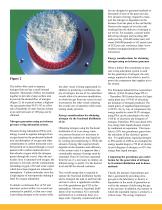
The hollow fiber used to separate nitrogen from air has a small internal diameter. Thousands of fibers are bundled together to provide a large surface area to provide the desired flow of nitrogen (Figure 2). In a typical system, a high-purity gas greater than 99.5% N2 at a flow rate of hundreds of cubic feet per minute at an outlet pressure of 100 psig can be obtained. Nitrogen generation using an in-house pressure swing adsorption system. Pressure Swing Adsorption (PSA) technology is used to separate nitrogen from oxygen based on the preferential adsorb-tion and desorption of oxygen and other...
Open the catalog to page 3
for fractional distillation and operation of the compressor is very dependent on local considerations (fossil fuels, nuclear, wind, biomass, etc.), while the energy required for transport of the gas to the end user is derived from fossil fuels. The use of a hollow fiber membrane or PSA for the generation of nitrogen utilizes significantly less energy and hence generates less greenhouse gas than fractional distillation. Additionally, less energy is required for the isolation of the gas, and no transportation of heavy bottles is required. Comparing the cost of bottled nitrogen and nitrogen obtained...
Open the catalog to page 4All Parker Lab Gas Generators catalogs and technical brochures
 ChromGas ZAG
2 Pages
 Chromatography Product Brochure
16 Pages
 Spectrometry Products for LC-MS
12 Pages
 Bulletin AGS-Spectroscopy-C
20 Pages
 Bulletin AGS-LCMS-D
36 Pages
 Bulletin AGS-Spectroscopy-B
20 Pages
 Bulletin AGS-UDA-B
16 Pages
 FT-IR Purge Gas Generators
20 Pages
 Ultra Dry Gas Generator
16 Pages
 TOC Gas Generators
16 Pages
 Zero Air Generators
3 Pages


- Nitrogen generator
- PSA nitrogen generator
- Process nitrogen generator
- Compact nitrogen generator
- Laboratory nitrogen generator
- Pure nitrogen generator
- Hydrogen gas generator
- UHP nitrogen gas generator
- LC/MS nitrogen generator
- Membrane nitrogen generator
- Laboratory hydrogen generator
- Dry nitrogen generator
- Zero air generator
- Inert nitrogen generator
- Membrane hydrogen generator
- CMS nitrogen generator
- Pure hydrogen generator
- Compact hydrogen generator
- High-flow nitrogen generator
- Automatic hydrogen generator