
- Catalogs
- OMEGA AIR d.o.o. Ljubljana
- Compact nitrogen generators


- Company
- Products
- Catalogs
- News & Trends
- Exhibitions
Compact nitrogen generators
1 /2Pages

Compact nitrogen generators
1 /2Pages
Catalog excerpts

OMEGA AIR: NC-GEN - Compact nitrogen generators COMPACT NITROGEN GENERATORS NC-GEN provides an alternative for gas supply that is more cost effective than N2 gas cylinders. PSA Nitrogen Gas generator technology guarantees consistent high N2 purity in the range from 96% to 99.999% PSA can produce nitrogen at variuos range of purities. The lower the purity, the lower is the cost of nitrogen production. For example, the quality of vegetable oil can be maintained by blanketing with 99,5% nitrogen purity. Normal nitrogen purity for food processing is in the range from 99% to 99,5%. Lower purity nitrogen in the range from 96% to 99% is often used in fire and explosion prevention. High purity with nitrogen content from 99,9 % to 99,999 % is typically used for laser cutting, electronics soldering and pharmaceutical applications. Compact nitrogen generators are ideal for their compact size, safety, reliability, and ability to generate N2 gas wherever it is needed. NC-GEN generators use minimal space and run quiet. They are also safe, reliable, and will generate nitrogen from the air requiring only an annual filter change for regular maintenance. WHY GENERATE YOUR OWN GAS RATHER THAN USING CONTRACT SUPPLY? • Safety reason • Simple and Ready on demand • Total control over production • Production capacity fit your needs • No icing of the liquid gas tanks • No losses of the gas due to evaporation • Lower costs • No contractual limitations Food processing: - Wine blanketing - Beer dispense - Oil sparging - Fruit storage Compact nitrogen generators Fire prevention Explosion prevention Chemical blanketing Laser cutting When the CMS is at high pressure, it selectively adsorbs oxygen, allowing nitrogen to pass through it at the desired purity level. While one vessel is at high pressure to produce nitrogen, the second vessel is depressurized to remove the adsorbed oxygen, which is then vented to the atmosphere. The automatic switching between adsorption and desorption between the two beds enables the continuous production of nitrogen. By adjusting the size of the air compressor and adsorption vessels containing the CMS, a large range of flow and purity combinations can be met. PSAs can economically produce nitrogen gas at flow rates from less than one cubic meter per hour to greater than a few thousand cubic meter per hour at purities ranging from 96% to 99.999%. Industrial nitrogen gas can be produced by either separation of gaseous air using adsorption (PSA) or fractional distillation of liquefied air using cryogenic methods. Electronic soldering The first step in the PSA process is compressed air passing through a combination of filters and an activated carbon tower with the purpose of removing dust, entrained oil and water. The purified air is then directed to one of two adsorption vessels that are packed with carbon molecular sieves (CMS). The remaining impurities such as carbon dioxide and residual moisture are adsorbed by the CMS at the entrance of the adsorbent bed. Injection moulding Nitrogen is an inert gas that is suitable for a wide range of applications, covering various aspects of chemical manufacturing, processing, handling, and shipping. Nitrogen has low reactivity and it is excellent for blanketing and is often used as purging gas. It can be used to remove contaminants from process streams through methods such as stripping and sparging. Due to its properties it can be used for protection of valuable products against harmful contaminants. It also enables safe storage, usage of flammable compounds and can help prevent combustible dust explosions. Pressure testing Pressure swing adsorption PROD. YEAR: PROD. YEAR: Refrigeration dryer Activated carbon tower Pressure vessel Nitrogen generator N2 high pressure compressor N2 high pressure receiver Compact generators High quality carbon molecular sieve ensure long service interval. Molecular sieve is also protected from unexpected liquid intake. Robust ADC 4.0 assures reliable and stable operation and offers variety of settings. The controller is equipped with LCD display which provides all the necessary information about the operation. Compact generators with nitrogen production capacity, suitable for smaller consumers. NC-GEN generators ensure constant nitrogen production with reduced range of optional equipment for competitive price. Carbon molecular sieve material is fixed in the column to prevent fast aging and inconveniently dusting. Adsorbent is also protected from unexpected liquid intake. High efficiency inlet and outlet filters Standard version of NC-GEN generators are equipped with high efficiency filters. Super fine coalescing filters at the inlet prevents contamination of the adsorbent material while a dust filter at the outlet intercepts the dust generated by the process. Nitrogen basics High quality valves Inert, Colourless, Odourless, Tasteless Gas Applications - Blanketing of Chemicals - Pharmaceuticals - Gas Assisted Injection Moulding (GAIM) - Heat Treatment of Ferrous & Non-Ferrous Metals - Inerting of Flammable Liquids - Laser Cutting - Prevention of Dust Explosions - Re-flow and Wave Soldering of PCBs - UV-Curing of Coatings - Food processing – Prevention of oxidation of metals, polymers and chemicals, Our generators are equipped with long life solenoid valves which are important due to high switch count. High flow valves have wide range of piston type actuators for maximum performance at minimum pressure. - Nitrogen does not enter in chemical reactions - Nitrogen prevents oxygen access – For bacteriological growth (foodstuffs & beverage) – Reduces the risk of combustion and explosion (chemicals, reactions, processes) - Source of Nitrogen LIN = Liquid Nitrogen
Open the catalog to page 1
OMEGA AIR: NC-GEN - Compact nitrogen generators Components How generator works? Generator contains two vessels with adsorbing sieve material: 1. As the high pressure air enters the first vessel, it moves through the sieve, and the oxygen is adsorbed. 2. Nitrogen is then channeled to a buffer tank. 3. Directly before the first vessel is completely saturated, the feed air is redirected to move through to the second vessel, where the same process occurs. 4. Once that process is complete, the first nitrogen generator vessel is vented out to the atmosphere, allowing the waste gas to release from the...
Open the catalog to page 2All OMEGA AIR d.o.o. Ljubljana catalogs and technical brochures
 Catalogue - Product overview
72 Pages
 Screw compressors MA SD 2-3
2 Pages
 MA SD 7,5-15 VS /BDK
2 Pages
 Piston compressors - MEGA AIR
12 Pages
 Container and Skid units
8 Pages
 WFIF SERIES
2 Pages
 WHFIT SERIES
2 Pages
 MEGA TOOLS
12 Pages
 MEGA AIR QUALITY OILS
8 Pages
 CO2-R-DRY series
2 Pages
 ACW series
1 Page
 ACA series
1 Page
 RDHP series
2 Pages
 RDF
RDF2 Pages
 RDL series
2 Pages
 RDP series
2 Pages
 M-DRY series
2 Pages
 HP-DRY series
2 Pages
 R-DRY BVL series
2 Pages
 R-DRY BP series
2 Pages
 COM-DRY series
2 Pages
 X-DRY series
2 Pages
 A-DRY TAC
2 Pages
 A-DRY BI+BM series
2 Pages
 PV
PV2 Pages
 AIR AND GAS Product overview
2 Pages
 Compact oxygen generators
2 Pages
 SKID based solutions
2 Pages
 OCI
OCI1 Page
 CKL-IHP series
2 Pages
 SF series
2 Pages
 WFIW series
2 Pages
 MSS
MSS2 Pages
 MDH 400
1 Page
 CHI
CHI1 Page
 VPG 60
1 Page
 FA - flange adapter
1 Page
 TD 400M series
1 Page
 AOK 50SS
1 Page
 EVD series
1 Page
 RC-DRY series
2 Pages
 HPR-DRY series
2 Pages
 TAC HP series
2 Pages
 A-CAT series
2 Pages
 SFH HP
2 Pages
 TP PED series
2 Pages
 TP ASME series
1 Page
 TP series
1 Page
 BS TOWER
1 Page
 PETRO-PACK
1 Page
 AWS
AWS1 Page
 BS 12-3,5
1 Page
 AIRWATT series
2 Pages
 B-AIR plus series
2 Pages
 OWT
OWT2 Pages
 OWE/HWE
2 Pages
 OWB
OWB2 Pages
 OBE SERIES
2 Pages
 ECD-B series
2 Pages
 MDHI 50
1 Page
 MDH
MDH1 Page
 MDM60
MDM601 Page
 CKL-CHP series
2 Pages
 SFH /SFH SS series
2 Pages
 CS /CS SS series
2 Pages
 SPF series
2 Pages
 AV series
2 Pages
 OCI
OCI1 Page
 MDM40
MDM401 Page
 EPG 60
1 Page
 PF series
2 Pages
 IHP series
2 Pages
 HPF series
2 Pages
 BF series
2 Pages
 SORBEO Adsorbents
2 Pages
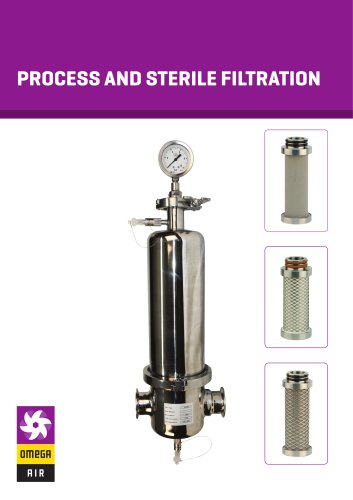 PROCESS AND STERILE FILTRATION
12 Pages


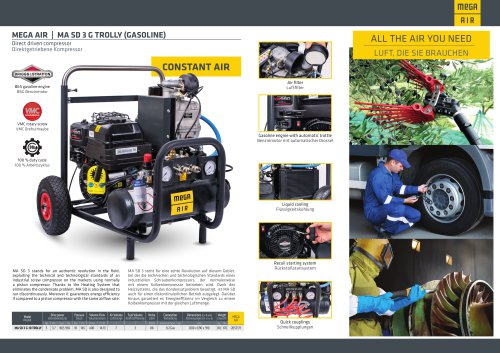


Archived catalogs
 Biogas plants
8 Pages
- Pump
- Fitting
- OMEGA AIR air compressor
- OMEGA AIR positive-displacement compressor
- OMEGA AIR stationary compressor
- Pneumatic fitting
- Liquid filter
- OMEGA AIR industrial compressor
- Storage vessel
- Electrically-powered compressor
- OMEGA AIR pressure gauge
- Pressure limiter
- Filter with cartridge
- Metal tank
- OMEGA AIR filter cartridge
- Single-stage pressure regulator
- OMEGA AIR lubricated compressor
- Oil-free compressor