
- Catalogs
- nVent Schroff GmbH
- Contractors Specifier's Guide

Contractors Specifier's Guide

Contractors Specifier's Guide
Pentair's Hoffman brand offers a wide range of enclosures and accessories for electrical installations, aimed at simplifying contractors' work. These products are distributed locally for quick delivery and cost efficiency.
Hoffman introduces innovative products like the Step-Up Pull Box Extender and Stainless Steel Pull Box and Trough, which reduce the need for custom solutions, cutting costs and lead times.
- Step-Up Pull Box Extender: Increases wire capacity without removing existing pull boxes, available in 17 sizes with painted or galvanized finishes, maintaining a UL Type 1 rating.
- Stainless Steel Pull Box and Trough: Type 4X enclosures available in multiple sizes, providing a strong seal with 304 stainless steel and secure gasketing, maintaining a UL Type 4X rating.
The catalog includes various types of boxes and enclosures, such as Type 1, 3, 3R, 4, and 4X, along with wireways, wiring troughs, and cable trays, each designed for specific industrial and commercial needs.
Used for power distribution and control assemblies, available in various sizes and finishes. The T1FLO Vented Enclosure with Fan is ideal for environments with heat-sensitive electronics.
Products comply with industry standards such as UL, NEMA, and IEC, ensuring safety and reliability in non-hazardous applications.
Hoffman's extensive product line and distribution network provide contractors with reliable, innovative solutions for electrical installations, backed by over 70 years of expertise.
- Dimensions: Boxes range from 4x4x3 inches to 48x48x16 inches, with metric dimensions available.
- Styles: Options include painted and galvanized finishes.
- Cover Screws: Vary from 2 to 12, depending on box size.
- Knockout Patterns: Available along the 'A' and 'B' sides, indicated by letters such as B-C-D, F-G-H-I, etc.
- Screw-Cover Type 1 Pull Boxes: Available without knockouts, with dimensions and styles similar to standard boxes.
- Flush Covers: Designed for flush installations, made of 16 or 14 gauge steel with an ANSI 61 gray polyester powder paint finish.
- Material: Available in painted and galvanized steel for different environmental conditions.
- Versatility: Wide range of sizes and configurations for flexibility in various applications.
- Protection: Designed to protect equipment, with ongoing improvements and updates.
Data on maximum internal heat load for various temperature rises across different models, e.g., T1F80LP model can handle 127W at a 5°F rise and 759W at a 30°F rise.
Sample values for a VFD drive application, detailing drive horsepower, heat from the drive, total heat, and required airflow to maintain a 15°F temperature rise.
Specifications for Type 1 boxes and enclosures, including industry standards, applications, features, and specifications.
Detailed specifications for small, medium, and large Type 1 enclosures, including dimensions, panel sizes, and optional accessories.
Enclosures meet several industry standards, suitable for applications not requiring oil- or dust-tight enclosures.
Range of accessories available, including t-handle latch kits, grounding devices, and touch-up paint.
WeatherFlo HD enclosures designed to protect and cool 100-500 HP variable frequency drives, providing an integrated cooling solution for VFD applications.
- Optional impeller packages providing 840 actual CFM per impeller.
- Easy-to-install back panel with flexible installation methods.
- Painted white polyester powder finish with low solar absorption.
- Selectable bases and tops, designed to meet specific needs.
- Gangable enclosures that can be joined together.
- Easy-to-change filter (not included).
- Frames, bases, and gland plates made of .125-in. aluminum.
- Tops and fan housing made of .080-in. aluminum.
- Sides and standard rear cover made of .100-in. aluminum.
- Gasketed door, top, and base.
- Panels and heavy-duty rear cover made of 12 gauge mild steel.
- Three-point latches operated by patented padlocking handle.
- Grounding provisions on door and body.
RAL 9003 white polyester powder paint finish inside and outside, including panels, tops, covers, and bases.
- InterSafe Data Interface Ports, Type 4/4X/12.
- PaneLite Enclosure Lights Overview.
- Thermoplastic Data Pocket.
- H2omit Thermoelectric Dehumidifier.
- Stainless Steel Window Kits.
Identify and order each component individually: frame, top, base, panel, rear cover, and number of impellers.
Hoffman offers modifications and customizations such as size changes, custom paint, and holes and cut-outs.
Includes options for one-door and two-door enclosures with various tops, bases, panels, and rear covers.
- Pagoda tops include aluminum dampers and stainless steel mesh.
- Solid tops are for closed-loop cooling solutions.
- Vented bases include stainless steel mesh and provisions for standard furnace filters.
Impeller packages include high-performance, shielded impellers with performance metrics based on the number of impellers and temperature differential.
Designed for corrosive environments, featuring welded seams, oil-resistant gaskets, and stainless steel construction.
Pentair Type 1 and Type 3R cabinets provide solutions for telecommunication and data connections, suitable for indoor and outdoor use.
The document provides detailed specifications and features of various equipment protection solutions, including telephone cabinets, current transformer cabinets, and terminal enclosures. It outlines industry standards, applications, features, specifications, and available accessories for each product type.
- Designed for outdoor applications to protect telephone terminations and accessories.
- Comply with UL 50, 50e, UL 497/1863, cUL, NEMA Type 3R, and IEC 60529 IP32 standards.
- Features include lift-off hinges, tamper-resistant latches, grounding bars, and padlock hasps.
- Constructed from 16 or 14 gauge galvanized steel with ANSI 61 gray polyester powder paint finish.
- Provide outdoor protection for instrument current transformers, often used for transformer-rated watt-hour metering.
- Available with screw or hinged covers, and comply with UL 50, 50e, cUL, NEMA Type 3R, and IEC 60529 IP32 standards.
- Features include dripshield tops, seam-free sides, mounting studs, and provisions for padlocking.
- Constructed from 16, 14, or 12 gauge plated or galvanized steel with ANSI 61 gray polyester powder paint finish.
- Used for wire-splice applications in outdoor commercial and industrial settings.
- Available in three- or four-wire configurations, supporting up to 400 Amp.
- Include locking handles, door stop kits, lock inserts, touch-up paint, industrial corrosion inhibitors, and grounding devices.
- Various sizes and configurations are available for different applications, with detailed dimensions and conduit patterns provided for each model.
- Products are designed to meet specific industry standards and provide robust protection for sensitive electrical components.
Industry Standards
These cabinets comply with UL 414, UL 50, 50e, cUL, NEMA Type 3R, and IEC 60529 IP32 standards, ensuring they meet safety and performance requirements.
Designed for both indoor and outdoor use, these cabinets provide protection and assembly solutions for current transformers and three-phase service from 400-1200 amps. They include features like factory-installed wiring buss, mechanical lugs, and provisions for padlocking.
- Overlapping double-door models with 3-point latch and lift-off hinges.
- Drip-shield top and seam-free sides, front, and back.
- Removable copper buss bars and aluminum mechanical lugs.
- Ground stud and mounting holes on the back of the enclosure.
Constructed from 14 gauge galvanized steel with an ANSI 61 gray polyester powder paint finish, these cabinets are robust and durable.
Touch-up paint and other accessories are available to maintain and enhance the cabinets.
Industry Standards
Compliant with UL 1773, UL 50, 50e, cUL, NEMA/EEMAC Type 3R, and IEC 60529 IP32 standards.
These terminal boxes are used for wire splicing in outdoor commercial and industrial settings, available in three- or four-wire configurations.
- Drip-shield top and seam-free sides, front, and back.
- Removable cover and distribution lugs installed.
- Provisions for padlocking or sealing.
Made from 16 gauge galvanized steel with an ANSI 61 gray polyester powder paint finish.
Industry Standards
ANSI C57.12.28 and RUS approved.
These enclosures provide sectionalizing and tap-point functionality for underground distribution systems, available in single- and three-phase models.
- Recessed stainless steel penta-head bolt with padlock security system.
- Wind stop standard on all models.
- Ground nut for each phase.
Constructed from welded 12 gauge steel or .125 aluminum, with a Munsell Green polyester powder paint finish.
Overview
Pentair Canadian cabinets and splitters are CSA approved and designed for metering and power distribution. They include features like hinged doors, pre-punched panels, and integral splitter lugs.
Used for splitting feeder circuit conductors into multiple branch circuits, with pre-installed terminal blocks for three- and four-wire systems.
Similar to the trough, this box also splits feeder circuits and includes pre-installed terminal blocks.
The document provides detailed specifications and features of various electrical cabinets and splitters designed for indoor applications, particularly those meeting Hydro-Québec requirements. It includes descriptions of metering cabinets, splitter troughs, and wireways, along with their respective standards, features, and specifications.
The document provides detailed specifications for various wireway components, including dimensions in both inches and millimeters. It covers different types of wireways such as stainless steel and fiberglass, each with specific industry standards and applications. The stainless steel wireways are NEMA Type 4X, suitable for wet or corrosive environments, while the fiberglass wireways are NEMA Type 12 and 3R, designed for temperature and chemical resistance.
Installation procedures include allowances for gaskets at joints and the use of specific fittings like elbows, tees, and closure plates. The document specifies that standard packages contain gaskets and screws, with additional sets available for order.
The wireways comply with various standards such as UL 870, CSA, and IEC 60529, ensuring they meet safety and performance requirements for different environments.
Recommendations include using specific fittings for different applications, such as flexible fittings for shock and vibration isolation and telescope fittings for adjustable lengths. The document also advises on the use of box connectors for secure enclosure entries.
The tables provide catalog numbers, dimensions, and descriptions for each component, allowing for easy selection based on specific needs. For example, straight sections are available in lengths from 12 to 120 inches, and various fittings are detailed with their respective dimensions.
All dimensions are to outside surfaces, and an additional 0.12 inches (3 mm) should be allowed for gaskets at joints. The document emphasizes the importance of selecting the correct wireway type based on environmental conditions and application requirements.
This document provides detailed specifications and features of various types of wiring troughs designed for different applications, including indoor and outdoor environments. The document is structured into sections based on the type of wiring trough, each with specific industry standards, applications, features, specifications, and available sizes.
- Industry Standards: UL 870 Listed, cUL CSA c22.2 no. 26 Listed, NEMA/EEMAC Type 1, IEC 60529, IP30.
- Application: Designed for indoor use, these troughs are shipped fully assembled to save time and labor.
- Features: Keyhole screw slots, flat cover with plated steel screws, no gasketing or knockouts.
- Specifications: Made from 16 or 14 gauge plated steel, unpainted finish.
- Industry Standards: UL 870 Listed, cUL CSA c22.2 no. 26 Listed, NEMA/EEMAC Type 3R, IEC 60529, IP32.
- Application: Suitable for outdoor applications exposed to moisture.
- Features: Drip shield top, slip-on removable cover, provision for padlocking.
- Specifications: 16 or 14 gauge plated steel, ANSI 61 gray polyester powder paint finish.
- Industry Standards: UL 870 Listed, cUL CSA c22.2 no. 26 Listed, NEMA/EEMAC Type 3R, IEC 60529, IP32.
- Application: Designed for outdoor use in wet conditions, with optional padlock hasp kit for security.
- Features: Drip-shield top, removable cover, embossed mounting holes.
- Specifications: 16 or 14 gauge galvanized steel, unpainted finish.
- Industry Standards: UL 870 Listed, NEMA Type 12, JIC standards, CSA, IEC 60529, IP55.
- Application: Suitable for moist or dirty environments, featuring a hinged cover for easy access.
- Features: Welded seams, butt hinges, oil-resistant gasket.
- Specifications: 14 gauge steel, ANSI 61 gray polyester powder coating.
- Industry Standards: UL 870 Listed, NEMA Type 12.
- Application: Designed for environments where frequent access is not needed, providing protection in corrosive or dirty settings.
The document provides comprehensive details on various wiring troughs, highlighting their suitability for different environments and applications. Each type is designed to meet specific industry standards, ensuring reliability and safety in their respective use cases.
This document outlines the specifications and applications of various wiring troughs and cable trays designed for environments where frequent access is not required. These products provide protection in moist, dirty, or corrosive environments and can be customized with different finishes.
- Continuous welding and smooth seams with no holes or knockouts.
- Captivated cover screws and oil-resistant gaskets.
- Available in steel and fiberglass materials.
- Steel troughs: 14 gauge steel covers and bodies, with some models using 16 gauge.
- Fiberglass troughs: Pultruded fiberglass polyester bodies and covers.
- Stainless steel troughs: Type 304 stainless steel, 12 to 16 gauge.
- Steel troughs: ANSI 61 gray polyester powder finish.
- Fiberglass troughs: Gray finish.
- Stainless steel troughs: No. 2B finish.
- Compliance with JIC standards eGP-1-1967 and emP-1-1967.
- CSA File no. 42184: Type 12.
- IEC 60529, IP55 for protection against dust and water.
- NEMA Type 12 and 3R for fiberglass troughs.
- UL 870, 50e Listed; Type 3R, 4, 4X, 12 for stainless steel troughs.
- Touch-up paint and various accessories available.
- Customization options through Hoffman sales offices.
The document includes detailed tables listing various models of wiring troughs and cable trays, specifying dimensions, number of fasteners, and other critical measurements.
- Designed for applications requiring frequent washdown.
- Features adjustable dividers, perforated fittings, and multiple cover options.
- Available in straight sections and various elbow configurations.
The document provides a comprehensive guide on bonding and grounding accessories, focusing on cable pathways and ladder rack systems. It includes specifications, procedures, and standards for various components used in cable management and equipment protection.
The ladder rack system is designed to route cables through unused spaces while maintaining accessibility for maintenance. It includes straight and curved sections made of 1-1/2-inch steel, available in various widths (6, 12, 15, 18, and 24 inches). The system is UL/cULus classified for equipment grounding and load, with a load capacity of 369.2 lb per 10 support lengths.
Installation involves using various kits such as butt-splice, junction splice, and adjustable splice kits to connect sections. Ceiling support kits and foot kits are used to secure the ladder racks to different surfaces.
The components comply with CSA C22.2 No. 126.1-02 standards, ensuring electrical continuity and load testing. Two grounding jumper kits are required per splice kit on painted ladder rack sections.
Accessories include touch-up paint, retaining post kits, L-bracket kits, radius drop kits, and various support brackets. These accessories enhance the functionality and adaptability of the ladder rack system.
For optimal performance, it is recommended to use the appropriate splice kits and support brackets based on the specific installation requirements. Ensure all components are securely mounted and comply with the specified standards.
The tables provide detailed catalog numbers, finishes, and dimensions for each component, allowing for precise selection based on installation needs. Components are available in finishes such as gray, black, white, and plated, catering to different aesthetic and functional requirements.
- Wall Angle Support: LWASK12BLK includes j-bolts for mounting.
- Rack-to-Runway Mounting Kit: LRRMPBLK for connecting racks to runways.
- End Cap Kit: LEC for finishing ladder rack ends.
- Runway Elevation Kit: Elevates ladder racks by 3 or 6 inches, available in various finishes and sizes (LEK3, LEK6, LEK12).
- Runway Overhead Stack Kit: Allows stacking of ladder racks 12 inches apart (LST12).
- Runway Center Support Kit: Provides center support for ladder racks using threaded rods (LCSK6, LCSK12, LCSK18, LCSK24).
- Spool Divider Kit: Improves cable management by separating cables (LCRDSK).
- Insulated Ground Jumper Kit: Ensures secure grounding between ladder rack sections (DGJ).
- J-bolt Kit: Connects ladder racks to cabinets or support channels (LJBK series).
- Used for mounting and securing 19-inch rack equipment, ideal for high-density cabling applications (E19T6U).
- Specifications: Made of high-strength steel wire, available in pre-galvanized or black powder-coated finishes.
- Applications: Routes cables through unused spaces, suitable for easy maintenance.
- Standard Products: Various sizes and load capacities available, with specific fill rates for Cat6 and Cat6A cables.
- Splice Kits and Accessories: Includes splice kits, washers, bars, and trapeze hanging clips for secure connections and installations.
- Trapeze Hanging Clip: For trapeze hung installations, corrosion-resistant finish (QTPTH series).
- C-bracket: For installations under ceilings or overhangs, supports multi-level tray installations (QTPCB series).
- Center Hangers: Used with threaded rods for suspending trays, suitable for multiple-level installations (QTPCH series).
- L-Brackets: Used for overhead mounting, available in pre-galvanized and black finishes, with sizes ranging from 4 to 12 inches.
- Reinforced Wall Brackets: Designed for heavy-duty applications, available in sizes from 4 to 24 inches, with pre-galvanized and black finishes.
- Divider Strips: Used for wire separation within cable trays, available in heights of 2, 4, and 6 inches.
- Polymer Inserts: Provide continuous support for cables, available in widths from 4 to 24 inches.
- Installation of L-brackets and reinforced wall brackets requires specific splice washers and kits for securing trays.
- Divider strips are secured using splice washers and kits for each strip.
- Grounding accessories include lay-in lugs, compression lugs, C-taps, and ground bar kits, each with specific installation requirements.
- Ground bar kits are UL 467 and cUL listed, meeting industry standards for telecommunication and server room applications.
- Enclosure ratings and standards are discussed, including NEMA, UL, CSA, and IEC classifications, highlighting differences in testing and compliance requirements.
- Conduct a full analysis of specific applications and environments to determine the best enclosure choice, considering corrosion resistance and other environmental factors.
- Ensure compliance with relevant standards to facilitate international acceptance of products.
For electrical accessories not located in a control circuit and not marked with a short circuit current rating, the default rating from table SB4.1 of UL 508A applies. If the accessory includes both a load and controls, the controls must be assigned a short circuit current rating, either from table SB4.1, through testing per UL508, or the applicable standard for the component.
The document provides detailed tables for wireway fill based on the 2008 National Electric Code. It specifies the maximum number of conductors allowed in wireways of various sizes, ensuring that the sum of the cross-sectional areas of all conductors does not exceed 20% of the interior cross-sectional area of the wireway. Exceptions are noted for industrial machine wireways, which allow up to 50% fill according to NFPA 79.
The tables list conductor sizes (AWG-MCM) and their respective areas in square inches, along with the maximum number of conductors allowed for different wireway dimensions. These tables are crucial for ensuring compliance with electrical codes and preventing overfilling, which could lead to overheating and potential hazards.
- A wireway should not contain more than thirty current-carrying conductors unless ampacity adjustments are made.
- The document emphasizes the importance of adhering to the National Electric Code to ensure safety and compliance.
Catalog excerpts

SPECIFIER’S GUIDE EQUIPMENT PROTECTION
Open the catalog to page 1
Electrical Installations Just Got Easier From utility junctions to protecting relays, contactors and wire, Hoffman has you covered. Our variety of enclosures, wireway, trough and accessories are available through local electrical distributors. Seven regional warehouses allow you to get projects completed faster, saving you time and money. Hoffman brings over 70 years of enclosure expertise to the commercial market. As a result, contractors can select from our superior line of junction boxes, enclosures and new, innovative commercial products.
Open the catalog to page 2
SETTING NEW STANDARDS STEP-UP PULL BOX EXTENDER Step-Up Type 1 pull box extenders allow you to increase the wire capacity of an existing installation without removing the existing pull box, saving you time and money. Additionally, extenders reduce the need for custom pull box sizes during installation. This new standard is available today or tomorrow, through a local distributor versus 5–10 days from a local fabricator. FEATURES • 17 Step-Up sizes in 4-inch depths are available in painted mild steel or galvanized finishes. • Extenders can be configured to create 34 additional sizes when combined...
Open the catalog to page 3
Working Harder for the Contractor Now more than ever, Hoffman has the right products for today’s contractor. Not only do we continue to add new products and additional sizes of our most popular boxes and cabinets, our broad distribution network assures you of convenient, fast product delivery. We have what you need for every application – junction boxes, weatherproof outdoor enclosures, basic panel enclosures and wireway. We deliver what you expect – innovative products, competitive pricing, easy ordering and the industry’s largest and most-experienced sales and applications staff. Use this catalog...
Open the catalog to page 4
TABLE OF CONTENTS TYPE 1 BOXES AND ENCLOSURES SCREW-COVER TYPE 1 PULL BOXES AND ACCESSORIES . . . . . . . . . . . . . . . . . . . . . . . . . . . . . . 6 HINGED-COVER TYPE 1 BOXES, ENCLOSURES AND ACCESSORIES . . . . . . . . . . . . . . . . . . . . . . . .16 TYPE 3, 3R, 4, 4X BOXES AND ENCLOSURES SCREW-COVER TYPE 3 ENCLOSURES . . . . . . . . . . . . . . . . . . . . . . . . . . . . . . . . . . . . . . . . . SCREW-COVER TYPE 3R ENCLOSURES . . . . . . . . . . . . . . . . . . . . . . . . . . . . . . . . . . . . . . . . HINGE-COVER TYPE 3R ENCLOSURES . . . . . . . . . . . . . . . . . . . . . . . ....
Open the catalog to page 5
CONTRACTOR TYPE 1 BOXES AND ENCLOSURES Type 1 Boxes and Enclosures Pentair offers a wide range of indoor Type 1 Boxes that are used for power distribution, merging conductors, and splicing and housing control assemblies. They come in a wide variety of sizes and styles, with or without knockouts, and with a painted or galvanized finish. T1FLO VENTED ENCLOSURE WITH FAN, TYPE 1 These enclosures have a thermostatically controlled forced-air ventilation system for the removal of heat. Ideal for control systems in HVAC or industrial environments that have a combination of heatsensitive electronics...
Open the catalog to page 6
CHAPTER CONTENTS TYPE 1 BOXES AND ENCLOSURES SCREW-COVER TYPE 1 PULL BOXES AND ACCESSORIES Screw-Cover, Type 1. . . . . . . . . . . . . . . . . . . . . . . . . . . . . . . . . . . . . . . . . . . . . . . . . . . . . 6 Flush Covers. . . . . . . . . . . . . . . . . . . . . . . . . . . . . . . . . . . . . . . . . . . . . . . . . . . . . . . . . . 10 Flush-Mount Door Frames . . . . . . . . . . . . . . . . . . . . . . . . . . . . . . . . . . . . . . . . . . . . . . . . 11 Type 1 Locking Window Pull Box Accessory. . . . . . . . . . . . . . . . . . . . . . . . . . . . . . . . . . . 12 Type 1 Pull Box...
Open the catalog to page 7
TYPE 1 BOXES AND ENCLOSURES SCRE'W-GQVER TYPE 1 FULL BOXES AND ACGESSORiES SCREW-COVER, TYPE 1 INDUSTRY STANDARDS UL 50, 50E Listed; Type 1; File No. E27525 cUL Listed per CSA C22.2 No 40; Type 1; File No. E27525 NEMA/EEMAc type 1 IEc 60529, i P30 application Use this enclosure in commercial and general industrial applications that require a junction or pull box. For flush installations, order flush covers and door frames separately. features • Unique keyhole screw slots in the cover • Available with or without knockouts. Various sizes of easy-to-remove concentric knockouts on all four sides...
Open the catalog to page 8
Number of Knockout Pattern Knockout Pattern Catalog Number AxBxC in. AxBxC mm Style Cover Screws Along "A" Sides Along "B" Sides Galvanized Painted Painted Galvanized Painted Galvanized Painted Galvanized Painted Galvanized Painted Galvanized Painted Galvanized Painted Galvanized Painted Galvanized Painted Galvanized Painted Galvanized Painted Galvanized Painted Galvanized Painted Painted Painted Galvanized Painted Painted Painted Painted Painted Painted Painted Painted Painted Painted Painted Painted Painted Painted Painted Painted Painted Standard Product Screw-Cover...
Open the catalog to page 9
TYPE 1 BOXES AND ENCLOSURES SCRE'W-GQVER TYPE 1 FULL BOXES AND ACGESSORiES Catalog Number Number of Cover Screws Painted Galvanized Painted Galvanized Painted Galvanized Painted Galvanized Painted Galvanized Painted Galvanized Painted Painted Galvanized Painted Painted Galvanized Painted Galvanized Painted Painted Painted Galvanized Painted Galvanized Painted Galvanized Painted Galvanized Painted Galvanized Painted Painted Galvanized Painted Galvanized Painted Galvanized Painted Galvanized Painted Galvanized Painted Galvanized Painted Galvanized Painted Galvanized Painted Galvanized Painted Galvanized Painted Galvanized Painted Galvanized Painted Galvanized Painted Galvanized Painted Painted Galvanized Painted Galvanized Painted Galvanized Painted Painted Galvanized Painted Painted Galvanized Painted Galvanized Painted Galvanized...
Open the catalog to page 10
Catalog Number Number of Cover Screws Painted Galvanized Painted Galvanized Painted Galvanized Painted Galvanized Painted Galvanized Painted Galvanized Painted Galvanized Painted Galvanized Painted Painted Galvanized Painted Painted Painted Galvanized Painted Painted Galvanized Painted Galvanized Painted Galvanized Painted Galvanized Painted Galvanized Painted Galvanized Painted Painted Galvanized Painted Painted Galvanized Painted Galvanized Painted Galvanized Painted Galvanized Painted Painted Galvanized Painted Galvanized CONDUIT SIZES Knockout Pattern (from outside of box) EQUIPMENT PROTECTION...
Open the catalog to page 11All NVent Schroff GmbH catalogs and technical brochures
 Varistar Data/Network Systems
52 Pages
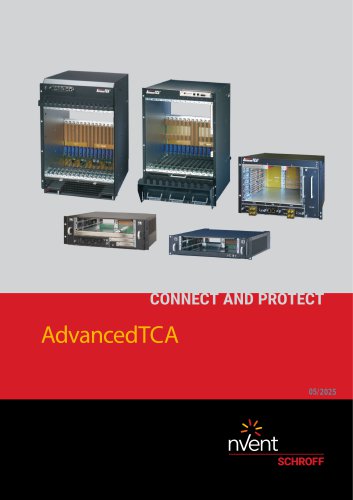 Advancedtca
26 Pages
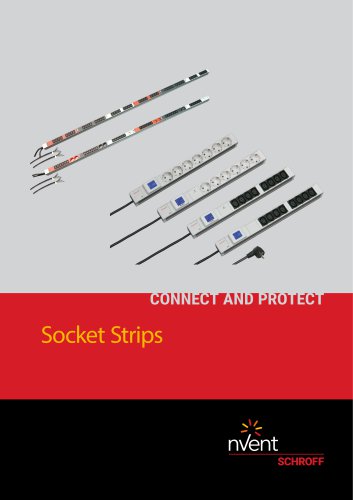 Socket Strips
24 Pages
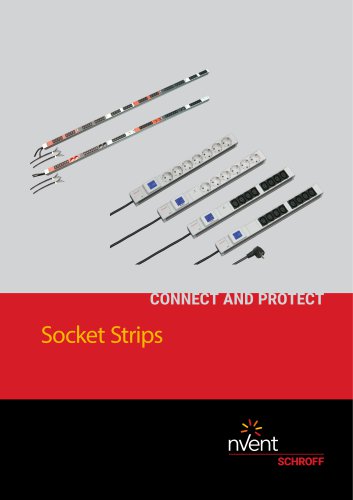 Socket Strips
24 Pages
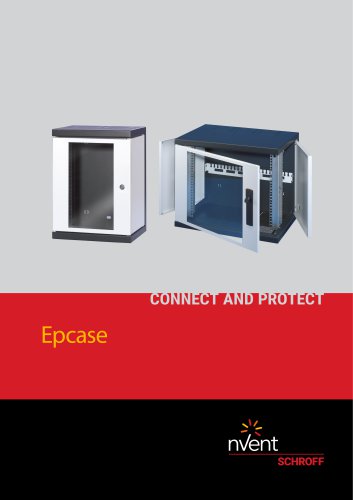 Epcase
14 Pages
Archived catalogs
 Varistar Containment
32 Pages
 Varistar MIL
6 Pages
 RatiopacPRO Style
38 Pages
 Enclosure Accessories
32 Pages
 Human-Machine Interface
32 Pages
 Industrial Modular Enclosures
64 Pages
 Schroff Design Guide
36 Pages
 Hazardous Location Solutions
16 Pages
 STEINHAUER NC-CUT
2 Pages
 Oil & Gas Solutions
8 Pages
 Non-metallic Enclosures
6 Pages
 Telecommunications
24 Pages
 Oil & Gas Solutions
8 Pages
 Stainless Steel Enclosures
8 Pages
 Defense & Aerospace
20 Pages
 Rack & Cabinet Solutions
24 Pages
 ACCESSPLUS
2 Pages
 Thermal Management Specifier's Guide
356 Pages
 Mods Made Easy
2 Pages
 Accelerate Your Project
8 Pages
 Cable and Wire Management
32 Pages
 SYSPEND 180-MAX
2 Pages
 NETWORKING SOLUTIONS
3 Pages
 E-Mobility Unlimited
12 Pages
 Wall-Mount Solutions
16 Pages
 Epcase
12 Pages
 VARISTAR Electronic locking
2 Pages
 IT-News 2009
2 Pages
 Innovations 2010
4 Pages
 Cases and subracks
2 Pages
 Innovations 2010/2011
8 Pages
 Novastar
2 Pages
 Innovations 2008 - 2009
8 Pages


- Power supply unit
- DC power supply
- AC/DC power supply
- Laboratory power supply
- Rack-mount power supply
- Multiple-output power supply
- Electronic equipment power supply
- Telecommunications equipment power supply
- Modular power supply
- Dual-output power supply
- Linear power supply
- Redundant power supply
- 19" rack power supply
- Distribution panel power supply
- Data center power supply
- Flow control unit