- Catalogs
- NSK Europe Ltd.
- Handling Instructions


Handling Instructions

Handling Instructions
NSK, established in 1916, is a prominent manufacturer of rolling bearings, focusing on expanding its product range and services across various industrial sectors. The company emphasizes technological advancements in rolling bearings, linear systems, automotive components, and mechatronic systems, supported by a global network of research and production facilities.
1. Precautions for Proper Handling of Rolling Bearings
Proper handling is essential to prevent premature bearing failure. Key precautions include maintaining cleanliness, verifying dimensions and finishes, avoiding harmful substances, using appropriate tools, and ensuring correct lubrication. Engineers must be knowledgeable about handling and mounting methods to protect bearings and ensure optimal performance.
2. Mounting
2.1 Fits and Clearances
Standard bearings with cylindrical bores require interference fits. The clearance for tapered roller bearings is adjustable, unlike ball and cylindrical roller bearings. Equations are provided to calculate clearance reduction due to fitting.
2.2 Press Fitting Force and Heating Temperature
The press-fitting force varies with interference and shaft diameter. Heating the inner ring in oil facilitates mounting.
3. Maintenance and Inspection
Regular maintenance and inspection, including proper lubrication and failure identification, are crucial for bearing longevity.
4. Dismounting
Guidelines for safely dismounting and cleaning bearings are provided.
5. Bearing Storage
Proper storage conditions are necessary to prevent damage and ensure readiness for use.
6. Appendices
Additional technical details and tables support handling and mounting instructions.
Specifications and Calculations
Formulas for calculating press fitting force and circumferential stress are provided, involving variables like nominal bearing bore diameter, raceway diameter, and friction coefficient.
Procedures for Mounting Bearings
Mounting methods include press fitting and shrink fitting, with specific recommendations for heating temperatures to prevent hardness reduction.
Handling and Safety Recommendations
Recommendations include avoiding force on the outer ring during press fitting and using high-viscosity oil for mounting and dismounting.
Mounting Bearings with Tapered Bores
Guidelines for mounting with adapter or withdrawal sleeves are provided, including clearance reduction and axial movement.
Mounting in a Housing
Instructions for mounting bearings in housings, considering load conditions and material properties, are detailed.
Mounting with Preload Applications
Preload for Radial Bearings
Preload minimizes shaft deflection in angular contact ball bearings and tapered roller bearings. Methods include screws, springs, or spacers.
Preload for Thrust Bearings
Preload prevents misalignment in thrust ball bearings, with methods like screws and springs.
General Mounting Precautions
Ensure perpendicularity of shaft shoulders and cleanliness before mounting. Proper documentation and planning are recommended.
Lubrication
A table of lubricating greases is provided, detailing compositions and performance ratings. Proper lubrication is crucial for performance and longevity.
Specifications and Properties of Greases
Various greases are listed with their compositions, temperature ranges, and performance ratings.
Lubrication Methods
Grease lubrication is preferred for its simplicity, while oil lubrication offers excellent flowability and heat dissipation.
Grease Lubrication Details
Emphasizes packing sufficient grease and regular replacement due to quality changes over time.
Test Operation and Maintenance
Test operations check for abnormal noise and temperature rise. Regular maintenance ensures longevity.
Lubrication Method and Replenishment Intervals
Guidelines for grease replenishment intervals based on bearing type and conditions are provided.
Grease Lubrication
Details on using a grease valve for high-speed operations are provided.
Oil Lubrication
Instructions for checking oil levels and replacement intervals are given.
Maintenance and Inspection
Observing failed bearings helps prevent recurrence. Causes of failure include improper mounting and lubrication.
Bearing Failure Types
Various failure types are discussed, including flaking, fractures, and wear.
Dismounting Bearings
Methods for dismounting bearings safely are described.
Introduction
Emphasizes the importance of considering mounting and dismounting processes during design.
Dismounting and Cleaning
Instructions for cleaning bearings after dismounting are provided.
Cleaning Agents
Kerosene and low-viscosity spindle oil are recommended for cleaning.
Storage Instructions
Guidelines for storing bearings in moisture-free, well-ventilated spaces are provided.
Appendices
Includes tables detailing tolerances for housing bore diameters.
Contact Information
Contact details for NSK sales offices across Europe are provided.
Catalog excerpts

MOTION & CONTROL NSK HANDLING INSTRUCTIONS FOR BEARINGS
Open the catalog to page 1
As one of the world's leading manufacturers of rolling bearings, linear technology components and steering systems, we can be found on almost every continent - with production facilities, sales offices and technology centres - because our customers appreciate short decision-making channels, prompt deliveries and local service. Europe »ՕՕՕՕ »ՕՕՕՕ< »ՕՕՕՕ< »ՕՕՕ Օ »ՕՕՕՕ< >ՕՕ Օ »ՕՕՕՕ< >Օ ■ՕՕՕՕ1 »ՕՕՕՕ< >ՕՕ »ՕՕՕՕ< >ՕՕ ■ՕՕՕՕ1 tmm m »ՕՕՕՕ< tmm »ՕՕՕՕ< »ՕՕՕ mi »ՕՕՕ i ' Asia »ՕՕՕ Օ ՕՕՕՕ ■ՕՕa »ՕՕՕ >ՕՕՕ »ՕՕ ■ Oceania Օ Օ Օ Օ ՕՕ Օ ta >Օ m ■ tmm m >ՕՕ >ՕՕՕ Օ Օi !ՕՕՕ« >ՕՕՕ Օ Օ4 >ՕՕՕՕ ՕՕ1 ՕՕ Օ Օ Օ Օ ՕՕՕ ՕՕ ՕՕՕ...
Open the catalog to page 2
Partnership based on trust -and trust based on quality Total Quality by NSK: The synergies of our global network of NSK Technology Centres. Just one example of how we meet our requirements for high quality. NSK is one of the leading companies with a long tradition in patent applications for machine parts. In our worldwide research centres, we not only concentrate on the development of new technologies, but also on the continual improvement of quality based on the integrated technology platform of tribology, material technology, analysis and mechatronics. More about NSK at www.nskeurope.com or...
Open the catalog to page 3
For Proper Handling of Rolling Bearings
Open the catalog to page 4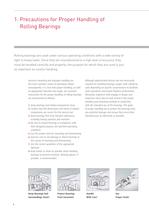
1. Prcautions for Proper Handling of Rolling Bearings Rolling bearings are used under various operating conditions with a wide variety of light to heavy loads. Since they are manufactured to a high level of accuracy, they must be handled carefully and properly; the purpose for which they are used is just as important as careful handling. Incorrect mounting and improper handling are the most common causes of premature failure. Consequently, it is clear that proper handling, as well as appropriate selection and usage, are essential. Instructions for the proper handling of rolling bearings are summarised...
Open the catalog to page 6
2. Mounting 2.1 Fits and Clearances Table 1: Fits of Radial Bearings with Shafts Load conditions Examples Shaft Diameter (mm) Tolerance of shaft Remarks Ball bearings Cylindrical roller bearings, tapered roller bearings Spherical roller bearings Radial bearings with cylindrical bores Rotating outer ring load Easy axia Ni spha(ctement of inner 1 Wheels on stationary axles ring on shaft desirable All shaft diameters g6 Use g5 and h5 where accuracy is required. In case of large Easy ax ial displa rnent of iyner Tension pulleys rope sheaves ring on shaft unnecessary h6 bearings, f6 can be used to...
Open the catalog to page 8
A Table 2: Fits of Radial Bearings with Housings Load conditions Examples Tolerances for housing bores Axial displacement of outer ring Remarks Radial bearings with housings Rotating outer ring load Heavy loads on bearing in thin-walled housing of heavy shock loads Automotive wheel hubs (Roller bearings) Crane travelling wheels P7 Solid housings Normal or heavy loads Automotive wheel hubs (Ball bearings) Vibrating screens N7 Impossible Light or variable loads Conveyor rollers rope sheaves Tension pulleys M7 Heavy shockloads Traction motors Direction of load indeter-minate Normal or heavy loads...
Open the catalog to page 9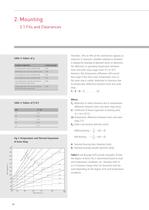
2. Mounting 2.1 Fits and Clearances Table 3: Values of \\ Example of application \\ value (average) Press-fitting inner ring to cylindrical shaft 0.120 Withdrawing inner ring from cylindrical shaft 0.180 Press-fitting inner ring to cylindrical shaft 0.165 Press-fitting inner ring to cylindrical shaft 0.135 Press-fitting sleeve onto the area between shaft and bearing's tapered hole 0.300 Withdrawing sleeve from the area between shaft and bearing's tapered hole 0.330 Therefore, 70% to 90% of the interference appears as reduction in clearance. (Smaller reduction in clearance is adopted for bearings...
Open the catalog to page 10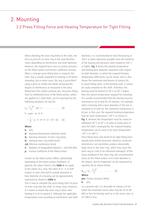
2. Mounting 2.2 Press Fitting Force and Heating Temprature for Tight Fitting A When attaching the inner ring firmly to the shaft, the force to press-fit an inner ring in the axial direction varies depending on interference and shaft diameter. However, the required force rises as surface pressure on the fitted surface and friction coefficient increase. When a stronger press fitting force is required, the inner ring is usually expanded by heating in oil before mounting, but in some cases, the ring is press-fitted using a press or similar tool while measuring the degree of interference as measured...
Open the catalog to page 11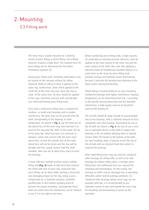
2. Mounting 2.3 Fitting work The inner ring is usually mounted on a shaft by means of press fitting or shrink fitting. Press fitting, however, requires a large force. The required force for press fitting can be determined by the before mentioned equation (5). During press fitting work, brinelling indentations may be caused on the raceway surfaces by rolling elements (balls or rollers) if force is applied to the outer ring. Furthermore, direct shock applied to the small ribs of the inner ring may cause the ring to crack. At the same time, no force should be applied to the cage. Therefore, exercise...
Open the catalog to page 12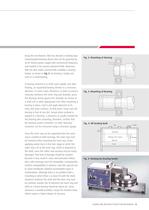
A Using this mechanism, NSK has devised a heating-type mounting/dismounting device that can be powered by an AC factory power supply with commercial frequency, and markets it for various industrial fields. Moreover, NSK has also made commercially available a bearing heater, as shown in Fig. 5, for heating a single unit, such as a small bearing. A bearing attached to a shaft cools rapidly, and after heating, an expanded bearing shrinks in a crosswise direction. In some cases, therefore, in order to avoid a clearance between the inner ring and shoulder, press the bearings firmly against the shoulder...
Open the catalog to page 13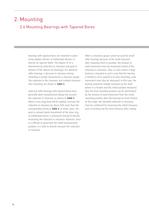
2. Mounting 2.4 Mounting Bearings with Tapered Bores Bearings with tapered bores are mounted in place using adapter sleeves or withdrawal sleeves, or directly on tapered shafts. The degree of fit is determined by reduction in clearance and push-in amount of the sleeves (or bearings). For spherical roller bearings, a decrease in clearance during mounting is usually measured by a clearance gauge. The reduction in the clearance and residual clearance after mounting are shown in Table 5. Spherical roller bearings with tapered bores have generally been manufactured taking into account the reduction...
Open the catalog to page 14All NSK Europe Ltd. catalogs and technical brochures
 Ball Screws - BSS Series
1 Page
 BNEQARTET Bearings
1 Page
 TF Series Bearings
1 Page
 HMS series
1 Page








Archived catalogs
 ROBOT MODULE™ MR SERIES
44 Pages
 Precision Machine Components
55 Pages
 Disc Harrow Bearings
2 Pages
 ROLLING BEARINGS
707 Pages
 TECHNICAL INSIGHT
2 Pages
 Hub unit bearings
23 Pages
 CONDITION MONITORING
6 Pages
 BEARING MOUNTING TOOLS
28 Pages
 Automotive Products
48 Pages
 NSK IN EUROPE
6 Pages
 Linear Guides Standard Items
62 Pages
 Bearings for the Steel Industry
44 Pages
 Corporate Brochure
24 Pages
 Molded Oil™- Bearings
9 Pages
 Bearing Replacement Guide
264 Pages
 Bearing Doctor
44 Pages
 Self-Lube Hand book
160 Pages
 ROLLING BEARINGS
283 Pages
 Bearings for the Cement Industry
20 Pages
 Added Value Training
12 Pages
 Authorised Distributor
7 Pages
 Bearings for Quarry and Mining
20 Pages
 Double Row Ball Bearing
44 Pages
 Pocket Guide Linear Motion
44 Pages
 Deep Groove Ball Bearings
12 Pages
 Plummer Blocks
52 Pages
 Guide to RHP Self-Lube
12 Pages
 Corporate Precision Components
24 Pages
 Agri Disc Hub
1 Page
 Troubleshooting poster
1 Page
 Super Precision Bearings
120 Pages
 Ball Screw Support Bearings
44 Pages
 Asset improvement programme
6 Pages
 Bearings for Pumps & Compressors
24 Pages