


BALL SPLINE ROTARY BALL SPLINE STROKE BALL SPLINE

BALL SPLINE ROTARY BALL SPLINE STROKE BALL SPLINE
The NB ball spline is a linear motion mechanism that uses ball elements for load support and torque transfer, applicable in robotics and transport equipment.
Types and Structure
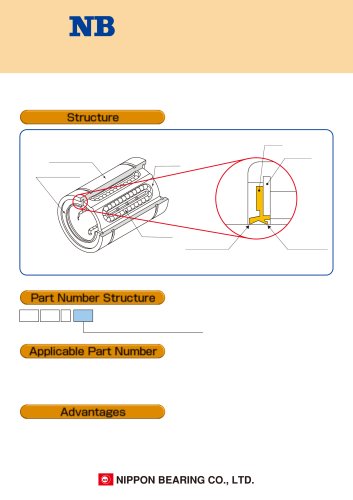
Comprising a spline shaft with raceway grooves and a spline nut, the ball spline ensures smooth motion and high load capacity. Available in diameters from 4mm to 100mm, with cylindrical and flange types, and materials like stainless steel.
Accuracy and Preload
Ball splines are categorized into high-grade and precision-grade. Preload and clearance are crucial for precise motion, available in standard, light, and medium levels.
Strength and Load Rating
Capable of handling radial loads, bending moments, and torque. Strength is determined using specific equations, with load ratings varying by load direction.
Deflection and Rotational Speed
Formulas calculate deflection and deflection angle. Allowable rotational speed is based on shaft specifications and conditions.
Life Calculation and Operating Conditions
Rated life is calculated based on load and environment. Proper lubrication and handling are essential.
Special Features and Mounting
Hollow shafts and custom machining are available. Mounting instructions and dimension tables ensure accurate installation.
Rotary Ball Spline and Stroke Ball Spline
Variants offer structural advantages for rotary and stroke applications, with detailed accuracy specifications and preload options.
Ball Screw Spline
Combines ball screws and splines for high accuracy and load capacity, with specific motion patterns and dimension tables.
Specifications and Calculations
Equations for life calculation include parameters like rated life, contact coefficient, and load coefficient. Commercial splines have a load rating of about 70% of standard ball splines.
Operating Conditions
Performance is influenced by dust prevention and temperature, with standard seals effective under normal conditions. Operating temperature should not exceed 80℃.
Critical Speed and Shaft Selection
Critical speed is calculated with specific equations, with operating speed set at 80% of critical speed. Guidelines for shaft size selection are provided.
Lubrication and Maintenance
Spline nuts are prelubricated with lithium soap-based grease, requiring periodic relubrication. Hollow shafts are available for weight reduction.
Use and Handling Precautions
Careful handling is required, with guidelines for spline nut insertion and alignment.
Mounting and Installation
Illustrations for mounting methods and secure installation using retaining rings and lock plates.
Tables and Figures
Includes tables with specifications for spline shaft profiles and dimensions for lock plates, and figures illustrating dust prevention and lubrication mechanisms.
Specifications and Tolerances
Details on angular contact bearing rotation tolerance, spline support area tolerance, and radial runout of spline nut.
Preload and Clearance
Values for preload and clearance in rotational direction for different part numbers.
Hollow Spline Shaft
Offers weight reduction with recommended inner diameters for various part numbers.
Mounting Instructions
Guidelines for mounting flange attachment screws and spacers, emphasizing proper torque application.
Lubrication
Prelubricated with lithium soap-based grease, with relubrication recommendations.
Operating Conditions
Temperature should not exceed 80°C, with dust prevention measures recommended.
Application Examples
Examples of grease fitting and oil hole installations for different types.
Stroke Ball Spline
The SPLFS type handles radial load and torque with low dynamic friction and specific accuracy measurement points.
Specifications
Specifications for stroke ball splines and ball screw splines focus on tolerance, preload, and clearance.
Procedures
Precautions include dust prevention and retainer slippage prevention, with recommendations for protective covers.
Norms and Standards
Tables on radial runout, perpendicularity, and other tolerances for various part numbers.
Recommendations
Lubrication advice includes a groove and holes for easy replenishment, with full-stroke movements recommended.
Key Features
Stroke ball spline features low dynamic friction, low noise, compact size, and stainless steel construction for corrosion resistance.
Data Summary
Tables provide measurements and tolerances, with comparisons of dynamic frictional resistance and motion patterns.
Catalog excerpts

BALL SPLINE STROKE BALL SPLINE STRUCTURE AND ADVANTAGES・ B-2 TYPES・ ・・・・・・・・・・・・・・・・・・・・・・・・・・・ B-3 ACCURACY・ ・・・・・・・・・・・・・・・・・・・・・・ B-5 PRELOAD AND CLEARANCE IN ROTATIONAL DIRECTION・ B-6 STRENGTH OF SPLINE SHAFT・・・・ B-7 LOAD RATING・・・・・・・・・・・・・・・・・・・・・ B-8 CALCULATION OF DEFLECTION AND DEFLECTION ANGLE OF SPLINE SHAFT・ B-9 ALLOWABLE ROTATIONAL SPEED OF SPLINE SHAFT・ B-10 LIFE CALCULATION・ ・・・・・・・・・・・・・・ B-11 OPERATING CONDITIONS・・・・・・・・・ B-11 LUBRICATION・・・・・・・・・・・・・・・・・・・・・ B-12 HOLLOW SPLINE SHAFT・ ・・・・・・・・・ B-12 SPECIAL REQUIREMENTS・・・・・・・・・ B-12 USE AND HANDLING PRECAUTIONS・ B-13 MOUNTING・・・・・・・・・・・・・・・・・・・・・・・・ B-14 DIMENSION TABLE・・・・・・・・・・・・・・・・ B-18〜 STRUCTURE AND ADVANTAGES・ B-46 ACCURACY・ ・・・・・・・・・・・・・・・・・・・・・・ B-47 PRELOAD AND CLEARANCE IN ROTATIONAL DIRECTION・ B-48 COMPARISON OF DYNAMIC FRICTIONAL RESISTANCE・ B-48 USE AND HANDLING PRECAUTIONS・ B-49 DIMENSION TABLE・・・・・・・・・・・・・・・・ B-50〜 BALL SCREW SPLINE STRUCTURE AND ADVANTAGES・ B-52 PRELOAD・ ・・・・・・・・・・・・・・・・・・・・・・・・ B-52 USE AND HANDLING PRECAUTIONS・ B-52 ACCURACY・ ・・・・・・・・・・・・・・・・・・・・・・ B-53 SPBR TYPE MOTION PATTERN・ ・・ B-54 SPBF TYPE MOTION PATTERN
Open the catalog to page 1
BALL SPLINE BALL SPLINE The NB ball spline is a linear motion mechanism utilizing the rolling motion of ball elements that can sustain loads and transfer torque simultaneously. It can be used in a wide variety of applications including robotics and transport type equipment. TYPES TYPES OF SPLINE NUT A wide variety of spline nut designs are available and all spline nuts come with side-seals as a standard feature. Table B-1 Types of Spline Nut type of nut Ease of Additional Custom Machining Since a round shaft with raceway grooves is used, NB ball spline shafts can be easily machined to customized...
Open the catalog to page 2
BALL SPLINE ACCURACY TYPES OF SPLINE SHAFT Depending on the application requirements, either a ground spline shaft or a non-ground (commercial grade) spline shaft is available. The NB ball spline is measured for accuracy at the points shown in Figure B-2 and categorized as either highgrade (blank) or precision-grade (P). Contact NB for accuracy information on the commercial type ball spline. Figure B-2 Accuracy Measurement Points Table B-2 type of spline shaft ground spline shaft Note: The support area is the portion where, for example, radial bearings are attached in order to support the spline...
Open the catalog to page 3
BALL SPLINE STRENGTH OF SPLINE SHAFT Table B-5 ④Radial Runout of Outer Surface of Spline Nut Relative to Spline Shaft Support Area (Max.) unit: μm total length of SSP4 SSP5AM SSP8 SSP10 spline shaft SSP4AM SSP6 SSP8AM SSP10AM (mm) SSP6AM high- precision high- precision high- precision high- precision greater or less grade grade grade grade grade grade grade grade than ─ 200 46 26 46 26 46 26 36 20 SSP100 SSP100L high- precision grade grade 30 16 ★ SSP13A, 16A maximum length: 1500mm ★★ Please contact NB for shaft lengths exceeding 2000mm. Table B-7 Preload and Operating Condition preload standard...
Open the catalog to page 4
BALL SPLINE CALCULATION OF DEFLECTION AND DEFLECTION ANGLE OF SPLINE SHAFT The following formulas are used to obtain the deflection and its angle of the ball spline shaft. Typical conditions are listed in Table B-10. Table B-8 Cross-sectional Characteristics of Spline Shaft I moment of inertia part number of area mm4 IP polar moment of inertia of area mm4 ZP polar modulus of section mm3 support method Table B-10 Formulas for Calculating Deflection and Deflection Angle support 5 ┃ support fixed 6 ┃ fixed basic static load vertical rating horizontal fixed ┃ free support ┃ support fixed ┃ fixed...
Open the catalog to page 5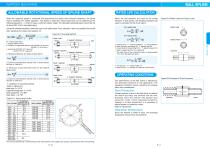
BALL SPLINE ALLOWABLE ROTATIONAL SPEED OF SPLINE SHAFT When the rotational speed is increased and approaches the spline shaft resonant frequency, the spline shaft is disabled from further operation. This speed is called the critical speed and can be obtained by the following equations. In order to leave a sufficient safety margin, the allowable operating speed should be set at about 80% of the calculated value. Using the following equations, select the size of ball spline shaft. First, calculate Id and A by equation (8) and (9) then, substitute the values into equation (7). 2 ・d×103 I NC=60 2π...
Open the catalog to page 6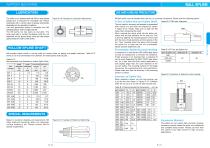
BALL SPLINE LUBRICATION The spline nut is prelubricated with lithium soap based grease prior to shipment for immediate use. Please relubricate with a similar type of grease periodically depending on the operating conditions. Low dust generation grease is available from NB standard grease. (refer to page Eng-39) The NB spline nut has seals as standard. The seals work well to contain the grease inside the nut especially for the ground shaft, since the seal shape approximates the spline shaft profile. Figure B-10 Example of Lubrication Mechanism A Set of Spline Nut and Spline Shaft Figure B-12 NB...
Open the catalog to page 7
BALL SPLINE MOUNTING Mounting of SSP Type Examples of installing the SSP type are shown in Figures B-14 and B-15. Example of installing the SSPM type are shown in Figure B-17. Figure B-15 Using a Push Plate Figure B-14 Using a Retaining Ring Figure B-17 Using SSP4AM Lock Plates Examples of installing the SSPM type are shown in Figures B-18,19,22 and 23. Figure B-18 Using F Type Lock Plates The SSP type spline nut comes with a key shown in Figure B-16. Table B-15 Major Dimensions of Key a part number F Type Lock Plate (Standard Plate) 0.2 The lock plate shown in Figure B-19 is provided with the...
Open the catalog to page 8
BALL SPLINE LP Type Lock Plate (Optional Plate) Mounting of SSPF Type The LP type lock plate is also available for purchase with the SSPM spline nut. Material: SUS304CSP Examples of installing the SSPF type are shown in Figure B-24. Figure B-24 Examples of installing SSPF Type Figure B-21 LP Type Lock Plate BALL SPLINE When using the LP type lock plate, please machine the housing as shown above. Table B-17 LP Type Lock Plate part number lock plate major dimensions G t R X mm mm mm mm machined housing dimensions B E GM M mm mm mm Figure B-23 Using Special Lock Plates (2) Mounting of SSPT Type...
Open the catalog to page 9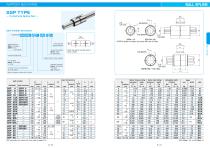
BALL SPLINE part number structure example SSP 80 L - 2 - T1 - 600 - P / CU accuracy grade blank: high P: precision nominal diameter BALL SPLINE with special specification specification SSP: standard SSPS: anticorrosion When two spline nuts are used in close contact. spline shaft total length nut length blank: standard L: long preload symbol blank: standard T1: light T2: medium number of nuts attached to one shaft Note: retainer material is resin. part number standard SSP type spline nut comes with a key (refer to page B-14) . mass shaft
Open the catalog to page 10All NB catalogs and technical brochures
 SLIDE SHAFT SPINDLE SHAFT
24 Pages
 STROKE BUSH SLIDE ROTARY BUSH
14 Pages
 TOPBALLR
13 Pages
 SLIDE BUSH
74 Pages
 SLIDE GUIDE
40 Pages
 FIT Series
2 Pages
 Actuator BG15
2 Pages
 Linear System General Catalog
293 Pages
 Slide Guide SEBS-BS
4 Pages
 ROTARY BALL SPLINE SPB type
4 Pages
 TOPBALL Slide Products
28 Pages
 Compact Slide Way NYT/NYTS
2 Pages
 BALL SPLINE SSP-AM type
2 Pages
 SLIDE SCREW
4 Pages
 ACTUATOR
39 Pages
 LINEAR SYSTEM
21 Pages




Archived catalogs
 General Catalog
289 Pages
 NB - Slide Way
14 Pages
 NB - Rotary Ball Spline
2 Pages
 NB - Actuator
55 Pages
 NB - Slide Bush
4 Pages
 NB - Slide Rotary Series
14 Pages
 NB - Miniature Slide Table
6 Pages
 NB - Gonio way
8 Pages
 NB - Slide guide
18 Pages
 NB - Lienar system
23 Pages
- Actuator
- Linear actuator
- Electric actuator
- Compact actuator
- Screw actuator
- Linear motion system
- Precision actuator
- Ball screw actuator
- Positioning actuator
- Steel linear guide
- Ball bearing linear guide
- Slide carriage block
- Compact linear guide
- Precision linear guide
- Machining spindle
- High-speed actuator
- Metal ball screw
- Track linear guide
- Roller linear guide