

Monitran Accelerometers

1 / 6 PagesView full catalog
Monitran Accelerometers
Product catalog summary
Overview
This document provides guidance on selecting and using vibration sensors, specifically accelerometers, for various industrial and research applications. It highlights the importance of choosing the right sensor to ensure reliable performance and accurate data collection.
This document provides guidance on selecting and using vibration sensors, specifically accelerometers, for various industrial and research applications. It highlights the importance of choosing the right sensor to ensure reliable performance and accurate data collection.
Specifications
Monitran offers a range of accelerometers with different mounting options such as male, female, quick-fit, adhesive bonding, magnetic mount, and spike probe. Most are made from stainless steel, with options for lighter materials like anodised aluminium. The standard IP rating is IP65, with options up to IP68 for submersible use. Electrical connections include integral armoured cables and various connectors.
Monitran offers a range of accelerometers with different mounting options such as male, female, quick-fit, adhesive bonding, magnetic mount, and spike probe. Most are made from stainless steel, with options for lighter materials like anodised aluminium. The standard IP rating is IP65, with options up to IP68 for submersible use. Electrical connections include integral armoured cables and various connectors.
Calibration
All accelerometers come with a calibration certificate, detailing sensitivity in pC/g or mV/g. Calibration is performed using a reference accelerometer traceable to UK National Standards. Recalibration is available for research applications but is generally unnecessary for industrial use.
All accelerometers come with a calibration certificate, detailing sensitivity in pC/g or mV/g. Calibration is performed using a reference accelerometer traceable to UK National Standards. Recalibration is available for research applications but is generally unnecessary for industrial use.
Types of Accelerometers
- Piezoelectric Accelerometers: These are robust, with no moving parts, offering long-term stability and a wide frequency range. They convert mechanical stress into electrical signals.
- Piezoresistive Accelerometers: Suitable for monitoring static or DC acceleration levels, these have a lower frequency range but offer temperature compensation and signal amplification.
Applications
Accelerometers are used in scientific research and industrial settings for vibration monitoring, predictive maintenance, and reducing machinery downtime. They help in predicting maintenance needs and minimizing production disruptions.
Accelerometers are used in scientific research and industrial settings for vibration monitoring, predictive maintenance, and reducing machinery downtime. They help in predicting maintenance needs and minimizing production disruptions.
Instrumentation & Systems
Monitran provides ancillary equipment like single-channel monitors, junction boxes, and portable vibration meters to integrate accelerometers into process control systems.
Monitran provides ancillary equipment like single-channel monitors, junction boxes, and portable vibration meters to integrate accelerometers into process control systems.
Accessories
A variety of accessories are available, including mounting studs, cable checkers, and signal simulators, to enhance the functionality and installation of accelerometers.
A variety of accessories are available, including mounting studs, cable checkers, and signal simulators, to enhance the functionality and installation of accelerometers.
See more
All Monitran catalogs and technical brochures
 MTN/2200-4P
2 Pages
 MTN/2200C
2 Pages
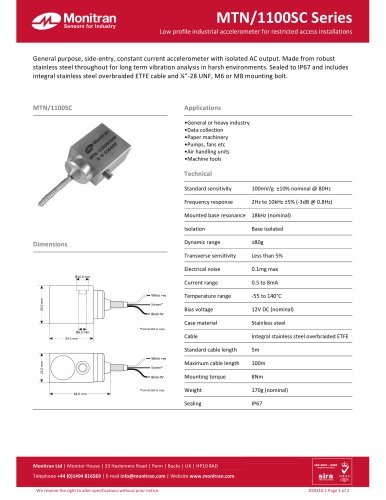 MTN/1100SC
2 Pages
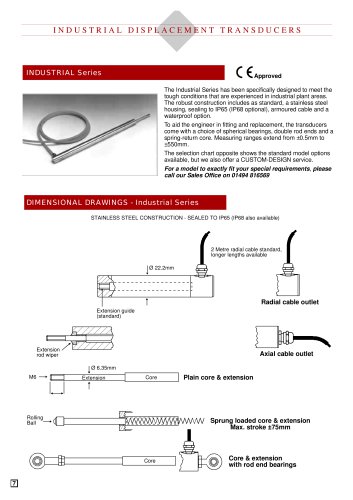 LVDT series
2 Pages
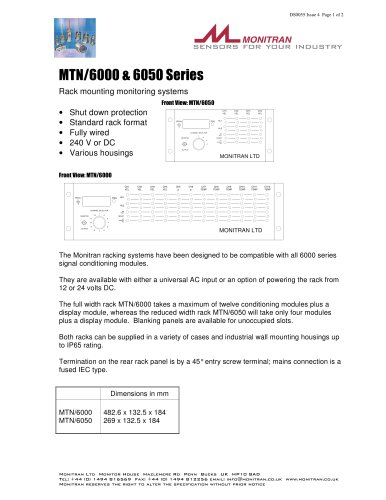 MTN/6000 & 6050 series
2 Pages
 MTN/2285IW series
2 Pages
 MTN/1100C
2 Pages
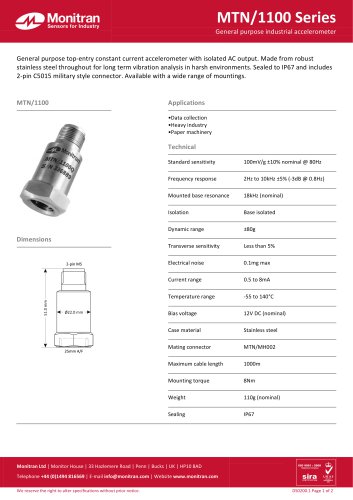 MTN/1100
2 Pages
 MTN/VS0004
1 Page
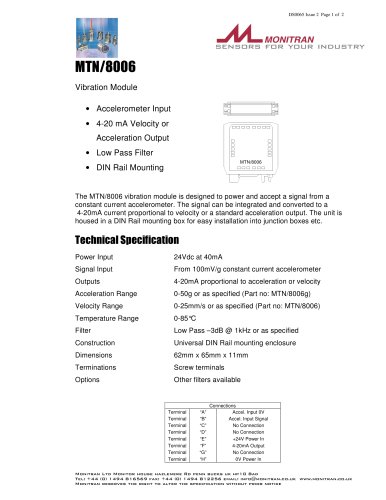 MTN/8006
2 Pages
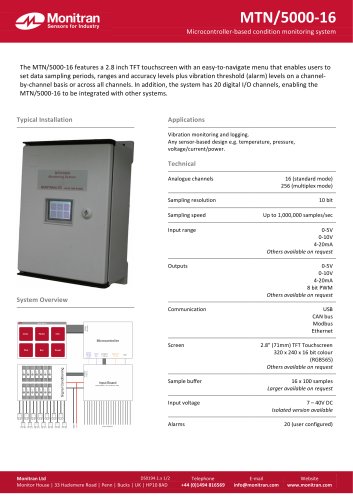 MTN/5000
2 Pages
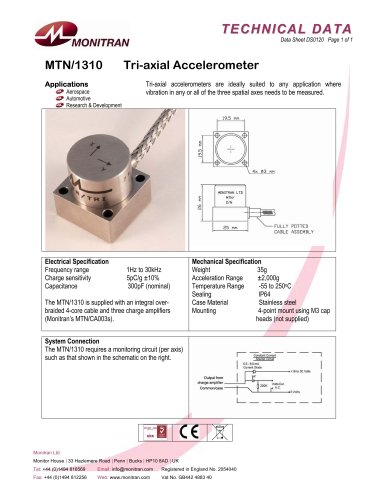 MTN/1310
1 Page
 MTN/1020
2 Pages
 MTN/1800
1 Page
 MTN/1100TW
2 Pages
 MTN/P05
2 Pages
 MTN/1600
2 Pages
 MTN/1185IC
3 Pages
 MTN/1187W
3 Pages
 MTN/1185
2 Pages
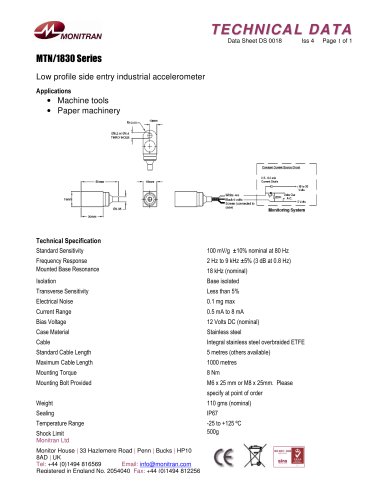 MTN/1830 Series
1 Page
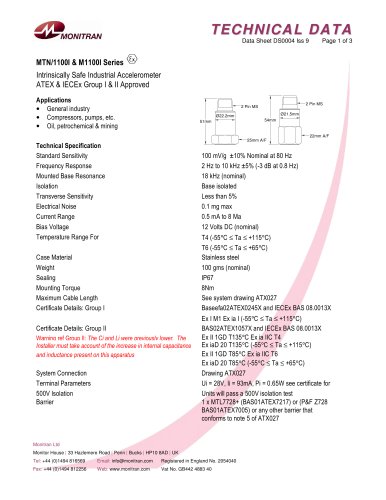 MTN/1100I & M1100I Series
3 Pages
 MTN/1100W Series
2 Pages
 MTN/1100 Series
2 Pages
 Vibration switch
1 Page
 accelerometers MTN/1100ISC
2 Pages
 accelerometers MTN/1100IC
3 Pages
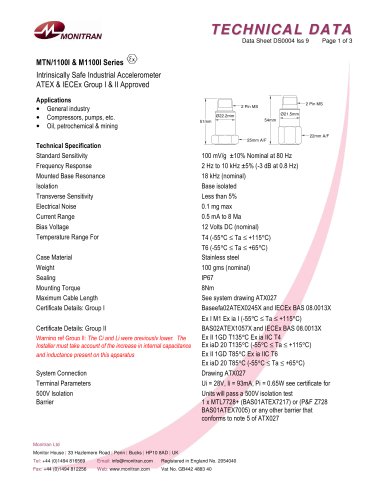 accelerometers MTN/1100I
3 Pages
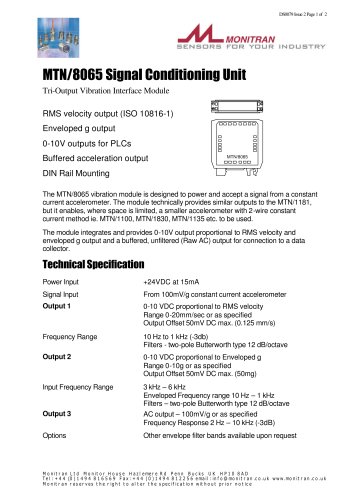 vibration module MTN/8065
2 Pages
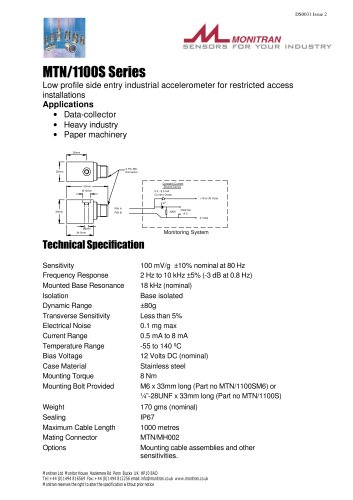 accelerometers MTN/1100S
1 Page
 accelerometer MTN/1100C
2 Pages
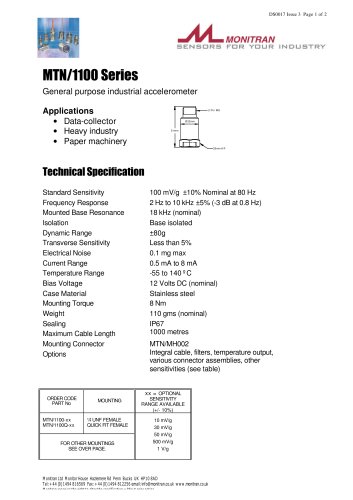 accelerometer MTN/1100
2 Pages


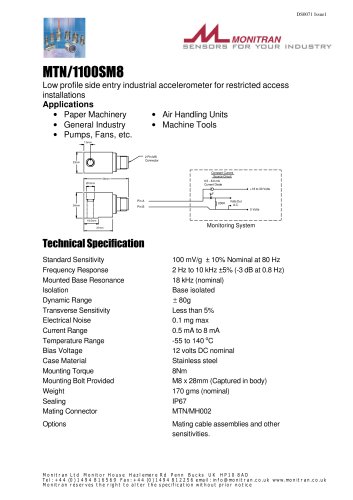

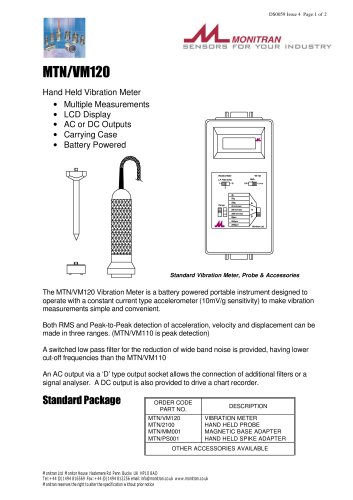

Archived catalogs


Related Searches
- Calibration system
- Polymer junction box
- Displacement transducer
- Portable calibrator
- Linear displacement sensor
- Fuse box
- Triaxial acceleration sensor
- Waterproof terminal box
- Compact accelerometer
- PC terminal box
- Signal conditioner
- Analog displacement transducer
- Continuous monitoring module
- Industrial accelerometer
- Signal conditioning module
- Industrial displacement sensor
- Signal converter
*Prices are pre-tax. They exclude delivery charges and customs duties and do not include additional charges for installation or activation options. Prices are indicative only and may vary by country, with changes to the cost of raw materials and exchange rates.
About DirectIndustry
DirectIndustry is a marketplace that offers B2B players a complete experience, from product sourcing to purchase. DirectIndustry is an entity of VirtualExpo Group.
Are you a buyer?
Are you a supplier?