
- Catalogs
- miller graphics
- Atom PIM - Product Information Management Brochure

- Company
- Products
- Catalogs
- News & Trends
- Exhibitions
Atom PIM - Product Information Management Brochure
1 / 3 PagesView full catalog
Atom PIM - Product Information Management Brochure
Product catalog summary
Introduction to PIM Systems
Product Information Management (PIM) systems are essential for businesses with complex product information managed by multiple people, aiming to speed up product launches, enhance customer experience, and ensure consistent product delivery across various channels. PIM systems provide a centralized data storage solution, supporting the creation, enrichment, planning, and release of product information.
Benefits of PIM Systems
Features of PIM Systems
Conclusion
PIM systems are vital for businesses looking to manage product information efficiently, enhance customer experience, and maintain brand integrity across multiple channels. They provide a robust solution for centralized data management, ensuring businesses can adapt to changing market needs and regulatory requirements.
Product Information Management (PIM) systems are essential for businesses with complex product information managed by multiple people, aiming to speed up product launches, enhance customer experience, and ensure consistent product delivery across various channels. PIM systems provide a centralized data storage solution, supporting the creation, enrichment, planning, and release of product information.
Benefits of PIM Systems
- Centralized Data Management: PIM systems store master product data in one place, ensuring all versions are updated simultaneously, providing a single source of truth.
- Improved Customer Experience: By delivering high-quality, consistent products and harmonized promotions, PIM systems reduce customer complaints and product returns.
- Enhanced Governance and Compliance: PIM systems help improve governance and compliance with regional regulations.
- Efficient Distribution: Secure and safe access to information allows for efficient distribution to relevant channels within minutes.
- Omnichannel Support: PIM systems are crucial for omnichannel retailers, supporting multiple platforms, mobile applications, and point-of-sale systems.
Features of PIM Systems
- Customizable Setup: PIM systems offer a simple, customized setup interface with metadata and functions tailored to company needs, scalable as the business changes.
- Seamless Integration: PIM systems connect and synchronize with eCommerce platforms, ensuring the latest product data and marketing materials are online, maintaining brand integrity.
- Compatibility with Other Systems: PIM systems easily connect to other systems, export in multiple formats, and integrate with Digital Asset Management (DAM) systems and online artwork applications.
- Workflow Management: Integration with tools like millnet allows control over workflows and approval cycles for packaging processes.
Conclusion
PIM systems are vital for businesses looking to manage product information efficiently, enhance customer experience, and maintain brand integrity across multiple channels. They provide a robust solution for centralized data management, ensuring businesses can adapt to changing market needs and regulatory requirements.
See more
Catalog excerpts

atom^e CONNECTING YOUR BRAND
Open the catalog to page 1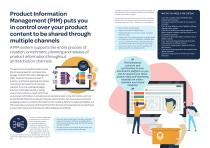
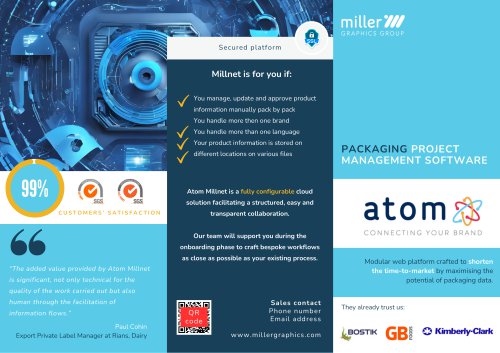
Product Information Management (PIM) puts you in control over your product content to be shared through multiple channels A PIM system supports the entire process of creation, enrichment, planning and release of product information throughout all distribution channels. PIM The key factors driving the market include the increasing need for centralised data storage. Product Information Management (PIM) supports the entire process of creation, enrichment, planning and release of product information for all channels required. If you are creating packaging artworks, marketing material or selling your...
Open the catalog to page 2
© 2021 Miller Graphics Group. All rights reserved.
Open the catalog to page 3All Miller graphics catalogs and technical brochures




Related Searches
- Management software solution
- Automation software solution
- Computer-aided design software
- Cloud-based software
- Design software solution
- Industrial software
- Automated software
- Creation software
- Optimization software
- Web-based software solution
- Centralized software
- Graphic software
- Production software
- Editing software
- Printing software
- Web browser software
- Collaborative software
- Commercial software
- Custom-made software
- SaaS software
*Prices are pre-tax. They exclude delivery charges and customs duties and do not include additional charges for installation or activation options. Prices are indicative only and may vary by country, with changes to the cost of raw materials and exchange rates.
About DirectIndustry
DirectIndustry is a marketplace that offers B2B players a complete experience, from product sourcing to purchase. DirectIndustry is an entity of VirtualExpo Group.
Are you a buyer?
Are you a supplier?