


- Products
- Catalogs
- News & Trends
- Exhibitions
MICROTRAC PRODUCT OVERVIEW
MICROTRAC PRODUCT OVERVIEW
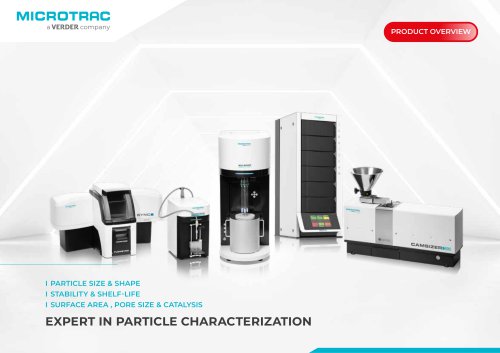
Microtrac has been a leader in particle characterization since 1974, introducing groundbreaking instruments such as the first commercial laser diffraction analyzer and a high-precision gas adsorption instrument. The recent integration of Formulaction in 2023 has enhanced their capabilities in stability and dispersibility analysis.
Microtrac provides comprehensive solutions for particle characterization, focusing on particle size distribution, shape analysis, stability, shelf-life, surface area, pore size, and catalysis. Their technologies, including Dynamic Image Analysis (DIA) and Laser Diffraction (LD), ensure high accuracy and repeatability across various particle sizes and sample types.
Microtrac's SYNC and CAMSIZER series use advanced laser diffraction and dynamic image analysis for precise particle size and shape measurements, applicable in industries from pharmaceuticals to construction materials.
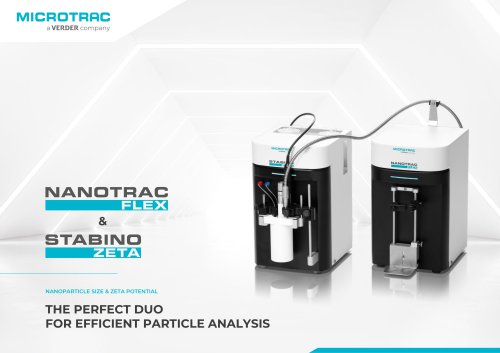
Solutions like NANOTRAC, STABINO, and TURBISCAN analyze critical parameters such as particle size, zeta potential, and stability using Dynamic Light Scattering (DLS) and Static Multiple Light Scattering (SMLS) for accurate and fast measurements.
Microtrac's BELSORP and BELPORE analyzers are renowned for precision in gas and vapor adsorption measurements, determining BET surface area and pore size distribution, essential for research and quality control.
Microtrac's solutions are used in industries like chemicals, pharmaceuticals, food and beverages, and electronics, supporting applications from coatings and paints to battery materials and personal care products.
Microtrac offers a single-source solution for particle characterization, providing advanced technologies and comprehensive support for optimal product quality and research advancements.
This technology evaluates low specific surface area using Kr adsorption at 77.4 K and high-performance PSD analysis, integrated into devices like BELSORP MINI X and BELSORP MAX X for simultaneous measurement of up to four samples.
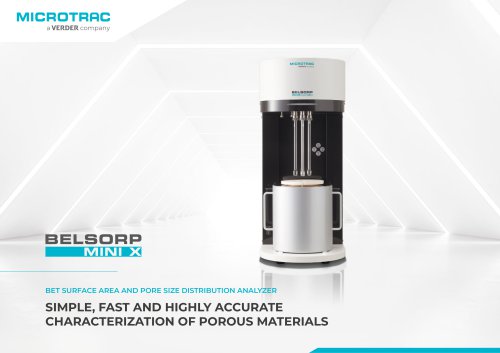
- BELSORP MINI X: Allows simultaneous measurement of up to four samples with a "Gas Dosing Optimization" function for short-time measurement.
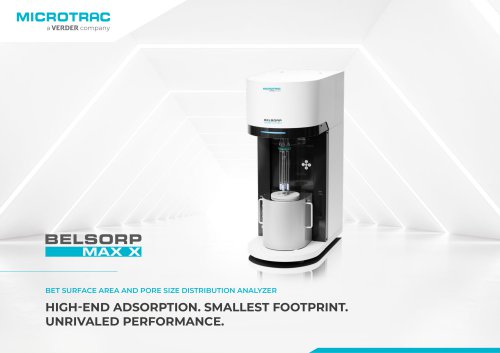
- BELSORP MAX X: Offers high throughput with simultaneous measurement capabilities and optional chemisorption analysis.
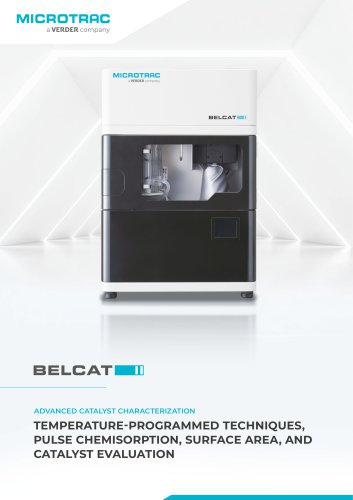
A fully automated catalyst analyzer capable of TPD, TPR, TPO, and pulse measurements, with precise gas control and a wide range of measurable gases.
A high-pressure gas adsorption analyzer suitable for non-corrosive gases, with a maximum pressure of 13.5 MPa.
- BELPYCNO: Provides quick and reliable true density measurements using gas displacement methods.
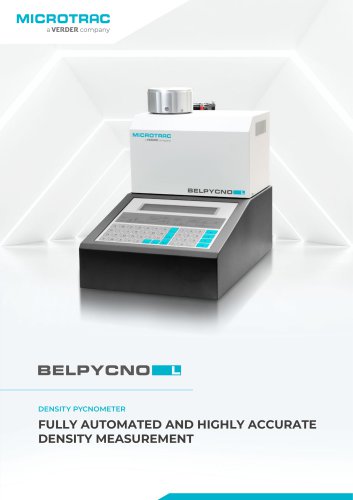
- BELPYCNO L: Offers automated density and volume measurement with built-in temperature control.
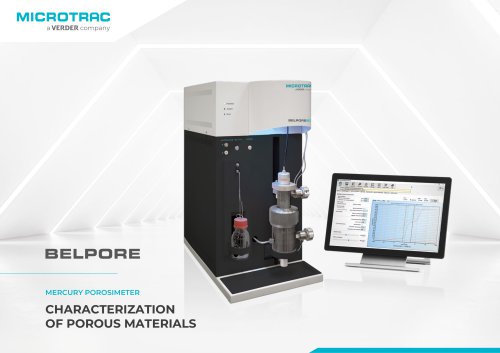
The BELPORE series uses the PASCAL method for pressure build-up control, providing reliable pore size distribution analysis.
The technologies are applicable in industries such as batteries, pharmaceuticals, cosmetics, and semiconductors.
Microtrac is part of the Verder Group, which includes companies specializing in laboratory equipment for quality control and research and development.
Catalog excerpts
PRODUCT OVERVIEW I PARTICLE SIZE & SHAPE I STABILITY & SHELF-LIFE I SURFACE AREA , PORE SIZE & CATALYSIS
Open the catalog to page 1
Premiere of the catalysis investigation system MICROTRAC launches the first commercial laser diffraction analyzer, MICROTRAC Model 7991. Rollout of the high-precision gas adsorption instrument BELSORP 28 by MicrotracBEL. Retsch Technology develops the CAMSIZER and its patented dual camera system. Debut of MICROTRAC‘s BLUEWAVE laser diffractor that uses real blue lasers for highest resolution and sensitivity. with optional modules for wet and dry measurement. MicrotracBEL introduces the multi-sample BET surface area measurement system, BELSORP MR6. Launch of the MICROTRAC SYNC: laser diffraction...
Open the catalog to page 2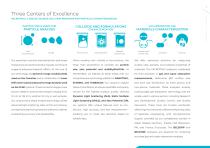
Three Centers of Excellence MICROTRAC: A SINGLE-SOURCE SOLUTION PROVIDER FOR PARTICLE CHARACTERIZATION PARTICLE SIZE & SHAPE FOR PARTICLE ANALYSIS Size & Distribution COLLOIDS AND FORMULATIONS CHARACTERIZATION Particle size Zeta potential Stability & Shelf-Life MATERIALS CHARACTERIZATION Surface Area & Pore size Our expertise in particle size distribution and shape When working with colloids or formulations, the We offer advanced solutions for measuring analysis ensures optimal product quality control and three main parameters to consider are particle surface area, porosity, and catalytic properties...
Open the catalog to page 3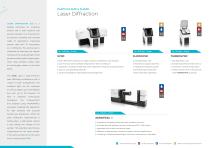
PARTICLE SIZE & SHAPE leading technique for analyzing particle size in both research and industry settings. It is renowned for its precision, versatility and its broad range of applications measuring particle sizes from 10 nanometers to 4 millimeters. The particle size is measured by detecting the angular intensity of the scattered light. Small particles scatter light at large angles, while large particles scatter light at small angles relative to the laser beam. The SYNC uses a state-of-the-art laser diffraction architecture with a unique Tri-Laser arrangement. The scattered light can be measured...
Open the catalog to page 4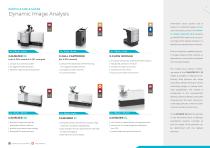
PARTICLE SIZE & SHAPE Dynamic Image Analysis Information about particle size & shape is an important aspect of process and quality control. All DYNAMIC IMAGE ANALYSIS (DIA) systems by MICROTRAC determine the particle shape of the sample material in a detailed and representative manner. Due to its superior capability, dynam- X-FALL CARTRIDGE (with X-DRY module & X-JET cartrigde) | unique dual camera system | contact-free dispersion of free-flowing, non-agglomerated particles | efficient high-pressure dispersion X-FLOW MODULE | X-Change module for suspensions & emulsions | integrated ultrasonic...
Open the catalog to page 5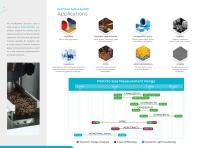
PARTICLE SIZE & SHAPE Applications The MICROTRAC solutions cover a wide range of APPLICATIONS. Our analysis systems for particle size & shape are used in numerous industry segments, including the agricultural industry, geology, for catalysts, coal CONSTRUCTION MATERIAL Paint, inks, pigments… Sand, gravel, cements, glass and glass beads… Pellets, granulates, active ingredients, excipients… Battery materials, coal & coke, wood chips… ADDITIVE MATERIALS Activated carbon, catalysts, polymers, superabsorbent, refractory products, supporting agents, minerals … Salt and sugar, ground, coffee, dairy...
Open the catalog to page 6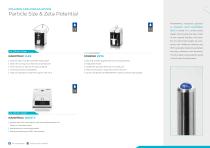
Particle Size & Zeta Potential MICROTRAC‘s innovative approach on DYNAMIC LIGHT SCATTERING (DLS) is based on a unique probe design. By focusing the laser probe at the material interface, the benefits of a short path length are combined with Reference Beating and 180° backscatter, delivering excellent accuracy, resolution and sensitivity. NANOTRAC FLEX STABINO ZETA | external “dip-in” probe with 180° backscatter | zeta and streaming potential in one measurement | allows for turning any vessel into a sample cell | small volume, as little as one drop of liquid | suitable for particles from 0.3 nm...
Open the catalog to page 7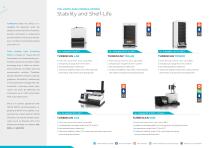
Stability and Shelf-Life TURBISCAN offers the ability to investigate the dispersion state, the stability and the shelf-life of liquid dispersions (emulsions & suspensions) and formulations without any dilution, even on highly concentrated samples (up to 95% v/v). (SMLS) is based on measuring the TURBISCAN TRILAB TURBISCAN TOWER | temperature range from RT to 60°C | temperature range from 20°C to 60°C | temperature range from 4°C to 80°C | fast destabilization detection | fast destabilization detection | fast destabilization detection | Turbiscan Stability Index (TSI), mean particle | Turbiscan...
Open the catalog to page 8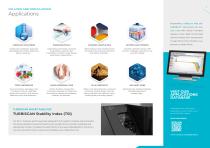
MICROTRAC’s STABILITY AND DISPERSIBILITY instruments can analyze a very wide variety of samples: opaque or clear, highly concentrated and very diluted, from nanoparticles to large floccs (mm), emulsions, susCHEMICALS & POLYMERS COATINGS, PAINTS & INKS BATTERY & ELECTRONICS Surfactants, stabilizers, polymers and biopolymers, fillers, pigments, latexes, solvents, ... Injectables, parenterals, vaccines, drug delivery systems, skin treatments, inhalers, cough syrups, ophthalmic suspensions, ... Water-based, solvent-based, resins, varnishes, inks, primers, protective and special coatings, ... Anode...
Open the catalog to page 9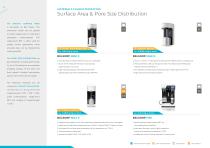
MATERIALS CHARACTERIZATION The SPECIFIC SURFACE AREA is calculated via BET theory. This theoretical model can be applied to either single point or multi-point adsorption measurements. The single-point BET is often used for quality control applications. More accurate data can be obtained by multi-point BET. The PORE SIZE DISTRIBUTION via gas adsorption is measured through N2, Ar or CO2 isotherms as a standard, enabling analysis of the pore size from several hundred nanometers down to the molecular size range. The following methods can be utilized for CATALYST EVALUATION: temperature-programmed...
Open the catalog to page 10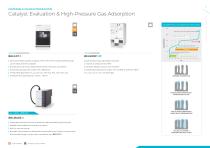
Catalyst Evaluation & High-Pressure Gas Adsorption | fully automated catalyst analyzer (TPD / TPR / TPO / Pulse), breakthrough | high-pressure gas adsorption analyzer curve measurement available | precise gas control by 3 high-performance mass flow controllers | compact design, easy-to-use interface | automatic gas injection system for calibration | operating temperature range: -10°C to 800°C optional -196°C BELMASS II | mass spectrometer for both qualitative and quantitative gas analyses | heated hose enables the analysis of vapors | built-in vacuum pump | provides information on desorbed compounds...
Open the catalog to page 11All MICROTRAC catalogs and technical brochures
 BELCAT II
12 Pages
 BELPORE SERIES
8 Pages
 BELPYCNO L
4 Pages
 BELSORP MAX X
12 Pages
 BELSORP MINI X
12 Pages
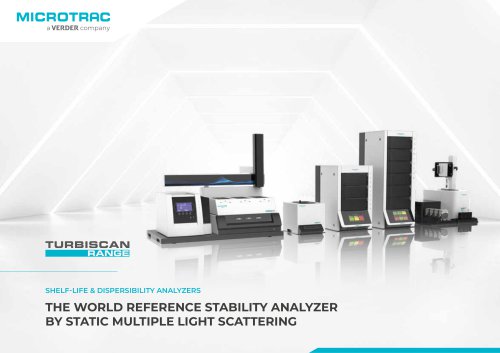 TURBISCAN RANGE
24 Pages
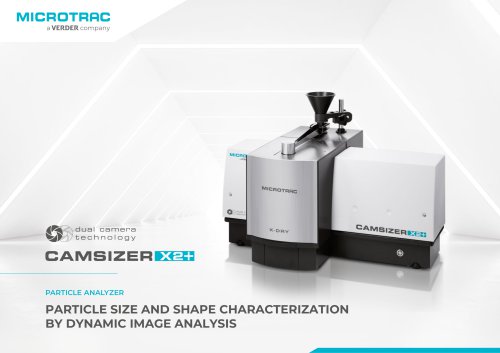 CAMSIZER X2+
24 Pages
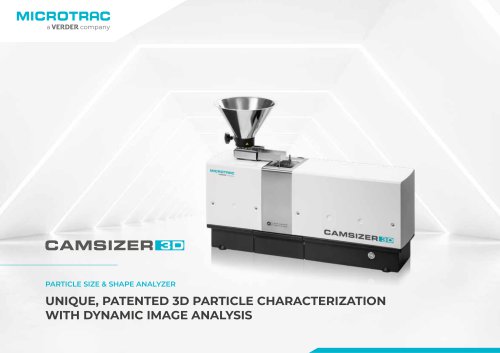 CAMSIZER 3D
20 Pages
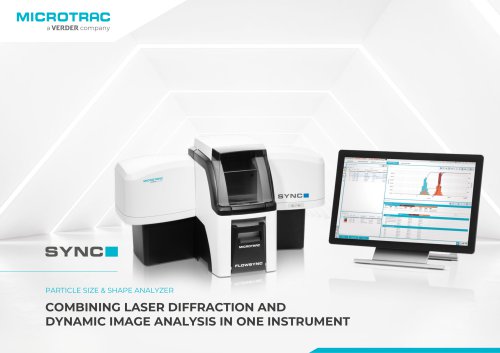 SYNC
SYNC20 Pages
- Gas analyzer
- Monitoring analyzer
- Liquids analyzer
- Automatic analyser
- Benchtop analyser
- Process analyzer
- Laboratory analyzer
- Compact analyzer
- Analyzer for the food industry
- Quality control analyzer
- Simultaneous analyzer
- Particle size measuring instrument
- Food analyzer
- Pharmaceutical product analyzer
- Analyzer for the chemical industry
- Laser diffraction particle size analyzer
- Laboratory particle size analyzer
- Research particle size analyzer
- Temperature control analyzer
- Stability analyzer