- Catalogs
- MEREFSA, S.L.U.
- Encapsulated FEP silicone o-rings


Encapsulated FEP silicone o-rings

Encapsulated FEP silicone o-rings
- Pure PTFE O-Ring: Offers excellent chemical resistance but lacks flexibility, making it unsuitable for compression gaskets.
- PTFE Sandwich: Economical but prone to side permeation, making it vulnerable to chemical attacks.
- PTFE-Coated O-Rings: Provide lower friction but lack a durable chemical-resistant barrier.
- Perfluorelastomer O-Rings: Offer superior chemical resistance across a wide temperature range but are costly.
- Metal O-Rings: Good chemical resistance and high-pressure capacity but are rigid and expensive.
- Encapsulated O-Rings: Ideal for static seals, combining excellent chemical resistance with flexibility. Silicone cores are suitable for FDA-approved applications and food contact, with FEP covers limiting temperature range compared to PFA, which is stable up to +260 ºC and offers better abrasion and pressure resistance.
Catalog excerpts
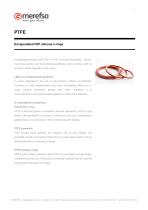
Encapsulated silicone with FEP or PFA, in round, rectangular, square, oval cross section and for Camlok-type fittings, solid or hollow, with no limit as to inside diameter of the o-ring. <j,Why use encapsulated gaskets? In some applications the use of conventional rubbers is forbidden. Corrosion or high temperatures may have devastating effects on o-rings, causing premature ageing and leaks, therefore it is recommended to use encapsulated gaskets in these circumstances. O-ring material comparison: Pure PTFE o-ring: PTFE is inert and gives an excellent chemical resistance, but as a rigid plastic with practically no memory it cannot be used as a compression gasket since, once removed, it will not ensure proper sealing. PTFE sandwich: even though these gaskets are cheaper due to their design, the possibility of side permeation makes them a weak gasket which can be quickly attacked by chemical products. PTFE-coated o-rings: With acrylic or latex emulsions with PTFE you can obtain a lower friction coefficient but they do not provide a chemical resistant barrier and the coating gets damaged very easily. MEREFSA ■ [email protected] ■ Cobalto, 101, 08907 Hospitalet de Llobregat, Barcelona (Spain) ■ Tel. 00 34 933 372 081 ■ Fax 00 34 933 374 373
Open the catalog to page 1
Perfluorelastomer o-rings: The most advanced material, it provides a fantastic chemical resistance in a very wide range of temperatures but its high cost makes these impossible to use in many occasions. Metal o-rings: they have a good chemical resistance and an excellent working capacity under high pressures, but they are very rigid and often expensive. Encapsulated o-rings: Always used as a static seal, FEP and PFA give an excellent chemical resistance and the silicone body a flexibility that plastic does not have. A silicone (-60 a +260 °C) core will be preferably used in conditions where FDA...
Open the catalog to page 2All MEREFSA, S.L.U. catalogs and technical brochures
 Merefsa Catalog
11 Pages
 Silicone sponge profiles
1 Page
 PTFE coated belts
1 Page
 Qualisil cooking sheets
1 Page
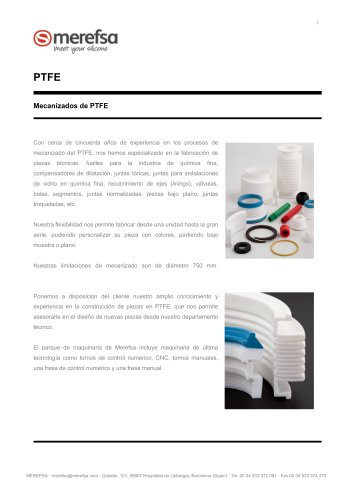 Mecanizados de PTFE
1 Page
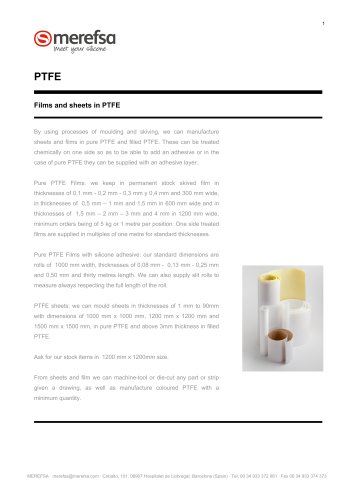 Films and sheets in PTFE
1 Page
 PTFE
PTFE2 Pages
 Catalog
11 Pages
 Silicone
1 Page
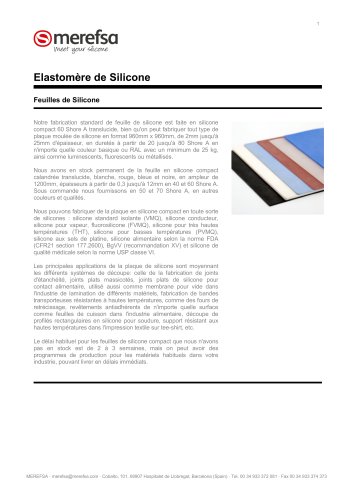 Elastomère de Silicone
1 Page