
- Catalogs
- Master Bond
- UV15TK for 3-D Printing of Reverse Osmosis Feed Spacers with Reduced Scaling E ects


- Company
- Products
- Catalogs
- News & Trends
- Exhibitions
UV15TK for 3-D Printing of Reverse Osmosis Feed Spacers with Reduced Scaling E ects
UV15TK for 3-D Printing of Reverse Osmosis Feed Spacers with Reduced Scaling E ects
This case study explores the use of Master Bond UV15TK, a UV-curable epoxy, for 3-D printing reverse osmosis (RO) feed spacers to reduce scaling effects. The study addresses the global challenge of freshwater shortages and the role of RO in desalination, highlighting the issues of high energy costs and membrane scaling.
Application and Challenges
Reverse osmosis is crucial for desalinating brackish and seawater, which constitutes 97.5% of Earth's water. The process faces challenges such as high energy consumption and membrane fouling, which require costly chemical treatments. The study focuses on improving feed spacer design to enhance efficiency and longevity.
Research and Development
Jeremy Walker's research at Wayne State University aimed to design a feed spacer with reduced fouling and enhanced de-scaling properties. Master Bond UV15TK was selected for 3-D printing micromixer elements directly onto the membrane. Fluid dynamic modeling determined the optimal chevron pattern geometry to minimize scaling and fouling.
Key Parameters and Requirements
RO systems must endure high pressures and harsh chemical environments. The printing material must resist concentrated salts, acids, and bases, and maintain dimensional stability under pressure. UV15TK meets these requirements with its high modulus and chemical resistance.
Experimental Setup
Fluid-flow dynamic modeling using COMSOL Multiphysics optimized the chevron-shaped micromixer elements. The study found a 90° chevron angle to be optimal for maintaining water flux and minimizing fouling.
Results
The study showed that 3-D printed micromixer elements significantly reduced scaling compared to standard mesh spacers. After 12 hours, the micromixer system maintained a stable water flux, reducing scaling by 24% compared to 78% with standard spacers. The micromixer elements also facilitated rapid descaling in reverse flow tests.
Conclusion
The research demonstrated that 3-D printed micromixer elements could reduce fouling and enhance cleaning efficiency in RO systems. The use of UV-curable epoxy like UV15TK offers new engineering possibilities, including optimizing epoxy chemistry for improved water flux efficiency.
Catalog excerpts

<8> M ASTERBONDCASE STUDY UV15TK for 3-D Printing of Reverse Osmosis Feed Spacers with Reduced Scaling Effects Master Bond Inc. 154 Hobart Street, Hackensack, NJ 07601 USA Phone +1.201.343.8983 | Fax +1.201.343.2132 | [email protected]
Open the catalog to page 1
CASE STUDY UV15TK: for 3-D Printing of Reverse Osmosis Feed Spacers with Reduced Scaling Effects Application In the coming decades, global freshwater shortages will pose a significant hazard for humanity. Not only is clean, fresh water critical for essential human life, but our ever expanding industrial and agricultural footprint further increases the demand for freshwater. A combination of factors including population growth, the destruction of natural reservoirs, industrial pollution and the impacts of climate change will see water as one of the most important commodities of the 21st century....
Open the catalog to page 2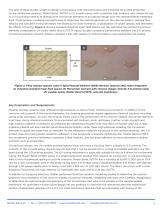
The goal of these studies sought to design a feed spacer with reduced fouling and enhanced de-scaling properties during membrane cleaning.2 Master Bond UV15TK, a UV-curable epoxy with a relatively high modulus, was chosen for use as a 3-D printing material to directly print micromixer elements of an optimal design onto the semipermeable membrane itself. Fluid dynamic modeling was performed to determine the optimal geometry of the chevron pattern. Optimal flow velocity and turbulent mixing decreases the tendency for scale formation, crystallization of solute species, and decreases the effects...
Open the catalog to page 3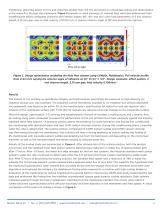
membrane. Velocities below 0.1 m/s and velocities greater than 0.3 m/s are known to encourage scaling and deterioration in the water flux through the membrane. Figure 3 presents a visual summary of channel feed velocities determined from modelling the offset configured chevrons with interior angles: 60°, 90° and 120° with fixed parameters of 3 mm chevron length, 5.75 mm gap, and an inlet velocity of 0.104 m/s. A chevron interior angle of 90°was found to be optimal. Figure 3. Design optimization modelling the fluid flow channel using COMSOL Multiphysics. Full velocity profile from 0-0.3 m/s varying...
Open the catalog to page 4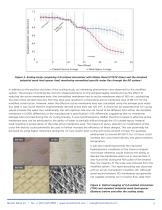
Figure 4. Scaling study comparing 3-D printed micromixer with Master Bond UV15TK (blue) and the standard industrial mesh feed spacer (red) monitoring normalized specific water flux through the RO system.2 In addition to the positive outcome of the scaling study, an interesting phenomenon was observed for the modified system. The process of printing the chevron-shaped elements on the semipermeable membrane has the effect of reducing the active membrane area—the unmodified membrane had an active membrane area of 140 cm2; subtracting the area of the printed chevrons from the total area resulted...
Open the catalog to page 5
this study could prove useful in the design of next generation RO systems. As scaling and fouling problems are the Achille’s heal of reverse osmosis treatment, the ability to quickly descale an RO system and without the use of hazardous and expensive chemical solutions would be a key advancement in the technology. This work positively contributed to the field of engineering and to the development and advancement of reverse osmosis technology. It was demonstrated that 3-D printed micromixer elements can be optimized to reduce fouling and may also possess novel ability to readily clean and descale...
Open the catalog to page 6All Master Bond catalogs and technical brochures
 Understanding low outgassing
5 Pages



- MasterBond single-component adhesive
- MasterBond metal adhesive
- MasterBond industrial adhesive
- MasterBond plastic adhesive
- MasterBond glass adhesive
- MasterBond dispersion adhesive
- MasterBond epoxy adhesive
- MasterBond bonding adhesive
- MasterBond two-component adhesive
- MasterBond electronic adhesive
- MasterBond ceramic adhesive
- MasterBond sealing adhesive
- MasterBond fast curing adhesive
- MasterBond viscosity adhesive
- MasterBond conductivity adhesive
- Curing system
- MasterBond epoxy resin
- MasterBond rubber adhesive
- Automotive adhesive
- MasterBond composite material adhesive