
- Catalogs
- Master Bond
- Electro-thermal Actuated, Miniaturized Optical Scanning Fiber Endoscope


- Company
- Products
- Catalogs
- News & Trends
- Exhibitions
Electro-thermal Actuated, Miniaturized Optical Scanning Fiber Endoscope
Electro-thermal Actuated, Miniaturized Optical Scanning Fiber Endoscope
The document discusses the development of a miniaturized optical scanning fiber endoscope using electro-thermal actuation. Traditional endoscopes have limitations in accessing narrow pathways due to their size, necessitating more invasive procedures. The new design aims to overcome these limitations by reducing the diameter of the endoscope to less than 0.5 mm, allowing access to distal airways.
Design and Functionality
The novel endoscope employs a thermal actuator and a micro-cantilever fiber for laser scanning. The micro-cantilever is made from a dual-core fiber assembly, allowing it to serve as both the illumination source and the detector. The actuator uses a metal bridge that expands and contracts with electrical current, causing the fiber to vibrate and scan the image plane.
Key Parameters and Requirements
Material selection for the thermal actuator is crucial, focusing on properties like thermal expansion, conductivity, and resistivity. The actuator must rapidly heat and cool to match the natural frequency of the fiber, maximizing displacement. Materials like pure copper and aluminum alloys were chosen for their optimal properties.
Assembly and Adhesive Selection
The assembly requires precise alignment and bonding within a 500 μm hypodermic needle. The adhesive used, Master Bond EP17HTND-CCM, was selected for its strong adhesion, minimal shrinkage, high hardness, and thermal resistance. It ensures the stability and performance of the device.
Results and Challenges
The prototype achieved the target diameter and performance metrics, with a tip displacement of 200 μm. However, issues with thermal management led to micro-cracks in the adhesive after prolonged use, affecting performance. Future work will focus on improving heat dissipation and structural rigidity.
Conclusion
The study demonstrates the potential of the electro-thermal actuated endoscope to access narrow pathways with high image quality. Despite challenges, the prototype's success encourages further optimization and development.
Catalog excerpts
<8> M ASTERBONDCASE STUDY EP17HTND-CCM: Electro-thermal Actuated, Miniaturized Optical Scanning Fiber Endoscope Master Bond Inc. 154 Hobart Street, Hackensack, NJ 07601 USA Phone +1.201.343.8983 | Fax +1.201.343.2132 | [email protected]
Open the catalog to page 1
CASE STUDY Electro-thermal Actuated, Miniaturized Optical Scanning Fiber Endoscope Application Endoscopes have had a revolutionizing impact in the field of medicine. Prior to their inception, routine diagnostic and surgical procedurals were more invasive requiring longer recovery times as well as a greater risk of complications. The advent of small, flexible endoscopes enabled physicians and surgeons to easily access internal cavities and the inside of vital organs.1 Generally, endoscopes are composed of a flexible insertion tube, a light source for illumination, a lens system, and an image sensor....
Open the catalog to page 2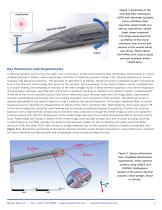
Figure 1. Schematic of the scanning fiber endoscope (SFE) with thermally actuated micro-cantilever fiber assembly seated inside of a 500 μm hypodermic needle. Insert shows proposed 2-D image generated from oscillation of the microcantilever laser source and rotation of the needle barrel. Not shown: Master Bond EP17HTND-CCM used to bond and seal assembly within needle bore.1 Key Parameters and Requirements A thermal actuator, such as the one used in the construction of the novel scanning fiber endoscope, relies heavily on sound material selection. Primary criteria were linear coefficient of thermal...
Open the catalog to page 3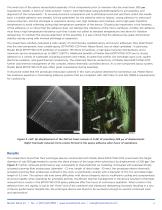
The small size of the device necessitated assembly of the components prior to insertion into the small bore, 500 μm hypodermic needle. A series of small polymer “collars” were fabricated using photolithography to aid assembly and alignment of the components.1 To securely bond the components and to ultimately bond and seal them within the needle bore, a suitable adhesive was needed. Critical parameters for the adhesive were as follows: strong adhesion to metal and various polymers, minimal shrinkage or expansion during cure, high hardness and modulus, and a high glass transition temperature to...
Open the catalog to page 4
Future work will seek to optimize the shape and size of the thin foil cut-out to better aid in heat dissipation, methods to improve the rigidity and temperature resistance at the back end of the assembly, and improvements to the repeatability of the manufacturing and assembly process. Also worthy of mention, it may be possible to further optimize the application of the epoxy adhesive as well as the cure schedule to further improve performance and robustness. To improve on the commercially available Master Bond EP17HTND-CCM, the engineers at Master Bond offer custom formulated solutions tailored...
Open the catalog to page 5All Master Bond catalogs and technical brochures
 Understanding low outgassing
5 Pages



- MasterBond single-component adhesive
- MasterBond metal adhesive
- MasterBond industrial adhesive
- MasterBond plastic adhesive
- MasterBond glass adhesive
- MasterBond dispersion adhesive
- MasterBond bonding adhesive
- MasterBond two-component adhesive
- MasterBond electronic adhesive
- MasterBond ceramic adhesive
- MasterBond sealing adhesive
- MasterBond fast curing adhesive
- MasterBond viscosity adhesive
- MasterBond conductivity adhesive
- Curing system
- MasterBond epoxy resin
- MasterBond rubber adhesive
- Automotive adhesive
- MasterBond composite material adhesive