
- Catalogs
- Marzocchi Pompe
- GEAR PUMPS GHP

GEAR PUMPS GHP

GEAR PUMPS GHP
Marzocchi Pompe, established in 1961, is a prominent manufacturer of external gear hydraulic pumps and motors, part of the Marzocchi Group. The company is known for its reliable, high-quality products and excellent service, operating in the hydraulic pump, motor, and suspension systems sectors for motorcycles and mountain bikes.
External gear pumps are favored in modern hydraulic systems for their versatility, durability, and long lifespan. Marzocchi's gear pumps are designed for heavy-duty conditions, offering high hydraulic power, efficiency, low noise, and compact dimensions. The GHP series includes models GHP1, GHP2, and GHP3, suitable for various industrial and mobile applications.
The GHP series offers three groups with displacements from 1.4 to 87 cm³/rev, with options for different flanges, shafts, and ports. Special versions are available for high-temperature fluids, low-temperature fluids, and high inlet pressures.
Special versions include:
- "V" for high-temperature fluids (-10°C to +120°C)
- "VV" for very high temperatures (-10°C to +150°C, max 20 bar)
- "ST" for high or low temperatures (-40°C to +120°C)
- "H" for low temperatures (-40°C to +80°C)
- "TR" for high inlet pressures up to 6 bar absolute
For optimal performance, follow installation and usage recommendations, including:
- Proper alignment and avoiding axial or radial loads on the pump shaft
- Protecting the rotary shaft seal during painting and ensuring cleanliness
- Checking for debris in connection flanges
- Maintaining fluid levels and avoiding contaminants
- Using appropriate filtration systems
Design and assembly require careful attention to intake, delivery, and return pipes, and positioning of components like valves, filters, tanks, heat exchangers, and accumulators. Safety devices and reliable instruments are crucial to prevent fluid turbulence and contamination. A proper filtering unit is essential for system integrity.
Ensure the pump's rotation direction matches the drive shaft, align pump and motor shafts, protect the drive shaft seal, and ensure cleanliness. Remove contaminants from flanges, keep intake and return pipes submerged and apart, and install the pump below head if possible. Fill the pump with fluid, manually rotate it, and disconnect the pump drain during startup to bleed air. Set pressure limiting valves to the minimum at startup, avoid low-speed operation under high pressure, and gradually increase pressure while monitoring temperatures.
Contaminated fluids are a primary cause of pump failures. Preventive measures include thorough cleaning during assembly, deburring, and pre-filtering fluids. The initial contamination level should not exceed ISO 4406 class 18/15. Use filters with low absolute filtering power and high β filtering ratio. The filtering system should ensure contamination levels do not exceed specified values, with a recommended absolute filtering power of 5 µm or lower for systems with sophisticated valves.
Use mineral oil-based hydraulic fluids with anti-wear, anti-foaming, antioxidant, anti-corrosion, and lubricating properties, complying with DIN 51525 and VDMA 24317 standards. The fluid temperature should be between -10°C and +80°C. Specify the type and conditions for compatibility assessment if using other fluids.
Inlet pressure should range between 0.7 and 3 bars (absolute). The GHP series supports a wide range of rotation speeds, with minimum values specified for different models.
Product tables indicate three maximum pressure levels (P1, P2, P3) for each pump, achievable only if rotation speeds do not exceed specified limits. Consult the Sales and Technical Department for conditions outside the product tables.
Hydraulic pipes should avoid sudden direction changes, sharp bends, and disproportionate lengths. Pipe cross-sections should be sized to maintain recommended fluid velocities. Consider potential diameter reductions in flange fittings.
GHP series pumps are available in single and bi-rotational configurations. Single rotation pumps have a defined direction based on the observer's viewpoint, while bi-rotational pumps can rotate both clockwise and counter-clockwise.
Flexible couplings, such as box or Oldham couplings, are crucial to prevent radial and axial forces from affecting the pump shaft during rotation, maintaining efficiency and preventing early wear. Couplings must accommodate misalignment and allow for axial movement. Regular lubrication with specific grease is recommended.
Formulas are provided for calculating fluid velocity, flow rate, absorbed torque, and absorbed power, essential for determining operational parameters like volumetric and hydromechanical efficiency, influenced by pressure differential, rotation speed, fluid characteristics, and filtration degree.
The GHP series pumps are rotary positive-displacement pumps converting mechanical power into hydraulic power. The document explains selecting the appropriate pump model based on system flow rate and motor rotation speed, highlighting the impact of internal dripping on efficiency and the role of pressure axial compensating systems.
Details on configuration options for GHP series pumps, including flanges, shafts, ports, and seals, are provided. Examples of standard pump types and their specifications, such as displacement, flow rate, maximum pressure, and speed, are included. Accessories supplied with standard pumps and specifications for standard ports are outlined.
Performance curves are mentioned as a tool to determine the suitable pump for specific applications based on flow rate, torque, and power absorbed. The importance of selecting the correct pump configuration to meet customer needs and ensure efficient operation is emphasized.
Catalog excerpts
POMPE ad INGRANAGGI GEAR PUMPS
Open the catalog to page 1
Marzocchi Pompe fu fondata nel 1961 da Guglielmo e Stefano Marzocchi a Casalecchio di Reno, nelle vicinanze di Bologna. Oggi, Marzocchi Pompe è la capofila di un gruppo industriale il “Gruppo Marzocchi” che occupa più di 400 persone. Il Gruppo, di proprietà e diretto da Adriano e Paolo Marzocchi, opera nei settori delle pompe e dei motori idraulici e dei sistemi di sospensione per motociclette e mountain bikes. Marzocchi Pompe ha sviluppato nel corso degli anni le sue dimensioni e la sua gamma di prodotti, arrivando ad essere oggi uno dei maggiori produttori di pompe e di motori idraulici ad...
Open the catalog to page 2
CONTENTS pagina /pages Informazioni generali 2 General information Progetto di base 2 Basic design Gamma di prodotto 4 Product range Versioni speciali 4 Special versions Informazioni tecniche 5 Technical information Note per l’installazione Pulizia dell’impianto e filtrazione Fluidi idraulici Pressione in aspirazione Velocità minima di rotazione Definizione delle pressioni Condotti d’aspirazione e mandata Senso di rotazione Traino Formule di uso corrente Installation notes Cleaning and filtering the system Hydraulic fluids Inlet pression Min. rotation speed Pressure definition Inlet and delivery...
Open the catalog to page 3
INFORMAZIONI GENERALI GENERAL INFORMATION PROGETTO DI BASE La pompa ad ingranaggi esterni è uno dei componenti maggiormente impiegato nei moderni impianti oleodinamici. Essa unisce in sé caratteristiche di versatilità, resistenza, lunga durata. La semplicità nella costruzione permette costi d'acquisto e di manutenzione contenuti. Il consolidamento di questi concetti base, uniti alla continua evoluzione dei prodotti, allo sviluppo della progettazione e della ricerca basate su decenni d'esperienza, alla precisa scelta dei materiali, alla costante cura sia del processo di produzione che dei tests...
Open the catalog to page 4
COMPONENTI BASE DELLA POMPA BASIC PUMP'S PARTS 1 0 - ANELLO ELASTICO D'ARRESTO / - DRIVE GEAR 7 - ROTARY SHAFT SEAL
Open the catalog to page 5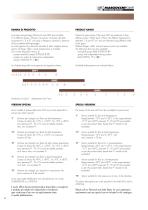
PRODUCT RANGE Le pompe ad ingranaggi Marzocchi serie GHP sono prodotte in tre differenti gruppi. All'interno di ognuno, le diverse cilindrate (comprese tra 1.4 e 87 cm³/giro) si ottengono variando lo spessore di fascia dentata dell'ingranaggio. La nostra gamma di produzione permette di poter scegliere diverse opzioni di flange, alberi o porte d'aspirazione e mandata. Sono inoltre disponibili versioni di: - pompe reversibili (campo ROTAZIONE "R") - pompe con sistemi di trasmissione indipendente (campo OPZIONE "T" o "RA") Marzocchi gear pumps of the serie GHP are produced in three different groups....
Open the catalog to page 6
INFORMAZIONI TECNICHE TECHNICAL INFORMATION Per ottenere dalle pompe serie GHP Marzocchi le migliori condizioni in termini di durata e prestazioni è consigliato seguire le raccomandazioni e i suggerimenti di installazione ed utilizzo indicate nel presente catalogo. Per quanto riguarda il sistema idraulico nel quale andrà inserita la pompa, valgono alcune considerazioni generali: prestare molta cura nella progettazione e nella realizzazione dell'intero impianto, in special modo per quanto riguarda i condotti d'aspirazione, di mandata, di ritorno, e la posizione dei componenti presenti (valvole,...
Open the catalog to page 7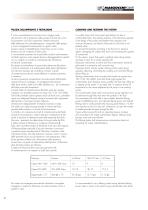
PULIZIA DELL'IMPIANTO E FILTRAZIONE CLEANING AND FILTERING THE SYSTEM È ormai universalmente riconosciuto che la maggior parte dei prematuri cali di prestazioni delle pompe è dovuta ad un loro funzionamento con fluidi contaminati; l'estrema riduzione delle tolleranze che contraddistinguono i componenti delle pompe e il loro conseguente funzionamento con giochi ridotti, possono essere irrimediabilmente compromessi se non si pone estrema cura nel mantenere il fluido pulito. È comunemente accertato che le particelle circolanti continuamente nel fluido agiscono come agente abrasivo danneggiando le...
Open the catalog to page 8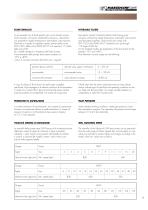
FLUIDI IDRAULICI HYDRAULIC FLUIDS Si raccomanda l'uso di fluidi specifici per circuiti idraulici a base d'olio minerale, con buone caratteristiche antiusura e antischiuma, con proprietà di rapida disareazione, antiossidanti, anticorrosione, lubrificanti e in grado di soddisfare quanto previsto dalla norma DIN 51525, dalla norma VDMA 24317 e di superare l'11° stadio della prova FZG. Per i modelli standard, la tempertura del fluido durante il funzionamento della pompa deve essere compreso tra -10°C e +80°C. I valori di viscosità cinematica del fluido sono i seguenti: Use specific mineral oil based...
Open the catalog to page 9
DEFINIZIONE DELLE PRESSIONI PRESSURE DEFINITION Le tabelle di prodotto presentano tre livelli massimi di pressione (P1, P2, P3) alle quali ogni pompa può essere sottoposta; si intende con: Product tables show three max. pressure levels (P1, P2 and P3) to which each pump can be used. P3 = pressione massima di picco P2 = pressione massima intermittente P1 = pressione massima continua peak max. pressure intermittent max. pressure continuous max. pressure Diagramma pressione in funzione del tempo. Pressure diagram as a function of time. I valori di pressione P1, P2 e P3 possono essere raggiunti solo...
Open the catalog to page 10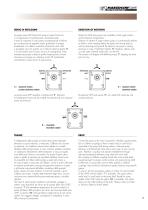
Le pompe serie GHP Marzocchi possono essere fornite sia in configurazione monodirezionale che bidirezionale. Il senso di rotazione di una pompa monodirezionale è definito per convenzione nel seguente modo: guardando la pompa frontalmente con l'albero conduttore posizionato verso l'alto e sporgente verso chi guarda, se si tratta di rotazione destra "D", il suo movimento sarà in senso orario e di conseguenza il lato mandata sarà posto a destra e quella d'aspirazione a sinistra. Viceversa per pompe con rotazione sinistra "S" mantenendo naturalmente lo stesso punto di osservazione. Marzocchi GHP...
Open the catalog to page 11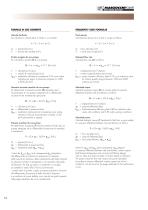
FREQUENTLY USED FORMULAS Velocità del fluido Per calcolare la velocità (v) di un fluido in un condotto: Fluid velocity Calculate the velocity (v) of a fluid in a pipe as follows: = portata [litri/min] = sezione del condotto [cm2] Portata erogata da una pompa Per calcolare la portata (Q) di una pompa: Q=V = flow rate [liter/min] = inside area of pipe [cm²] Delivered flow rate Calculate flow rate (Q) as follows: = cilindrata [cm3/giro] = velocità di rotazione [giri/min] ηvol = rendimento volumetrico (considerare 0,95 come valore indicativo per regimi di rotazione compresi tra 1000 e 2000 giri/min)...
Open the catalog to page 12All Marzocchi Pompe catalogs and technical brochures
 ALM series aluminium gear motors
52 Pages
 ALP series aluminium gear pump
64 Pages
 1P K1P series
43 Pages
 ELIKA series low noise
20 Pages
 ELI2 multiple series
20 Pages
 ELI3 series
16 Pages
 ELI2 series
20 Pages
 EK1P series
2 Pages
 1P
1P1 Page
 GEAR PUMPS ALP
64 Pages
 GEAR PUMPS
43 Pages
 GEAR MICROPUMPS
40 Pages
 HI-LOW PUMPS HL
6 Pages
 MULTIPLE MODULAR PUMPS ALP/GHP
52 Pages
 GEAR MOTORS GHM
56 Pages
 GEAR MOTORS ALM
52 Pages


