

Sigma
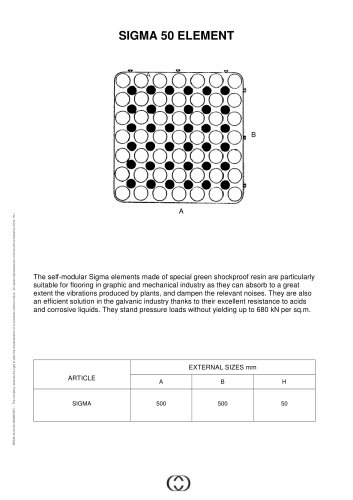
Sigma
Product Overview
The Sigma 50 Element is a self-modular flooring component made from a special green shockproof resin. It is designed primarily for use in industries such as graphic, mechanical, and galvanic sectors.
Key Features and Benefits
- Vibration Absorption: Effectively absorbs vibrations generated by industrial plants, reducing mechanical disturbances.
- Noise Dampening: Helps in minimizing noise levels associated with machinery operation.
- Chemical Resistance: Exhibits excellent resistance to acids and corrosive liquids, making it suitable for galvanic industry environments.
- Load Capacity: Can withstand pressure loads up to 680 kN per square meter without yielding, ensuring durability under heavy industrial use.
Specifications
- Material: Special green shockproof resin
- External Dimensions: 500 mm x 500 mm
- Height: 50 mm
Applications
Ideal for flooring solutions in:
- Graphic industry
- Mechanical industry
- Galvanic industry
Summary
The Sigma 50 Element offers a robust, chemical-resistant, and vibration-dampening flooring solution suitable for heavy industrial environments. Its modular design and high load capacity make it a reliable choice for reducing operational noise and protecting floors from corrosive substances.
Catalog excerpts

The self-modular Sigma elements made of special green shockproof resin are particularly suitable for flooring in graphic and mechanical industry as they can absorb to a great extent the vibrations produced by plants, and dampen the relevant noises. They are also an efficient solution in the galvanic industry thanks to their excellent resistance to acids and corrosive liquids. They stand pressure loads without yielding up to 680 kN per sq.m. EXTERNAL SIZES mm ARTICLE
Open the catalog to page 1All MARTINI ALFREDO catalogs and technical brochures
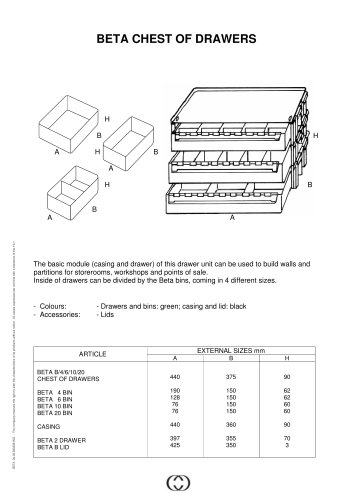 BETA CHEST OF DRAWERS
1 Page
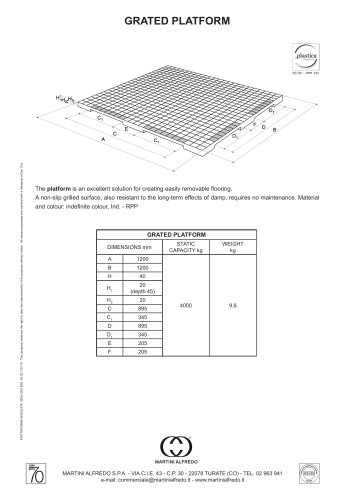 GRATED PLATFORM
1 Page
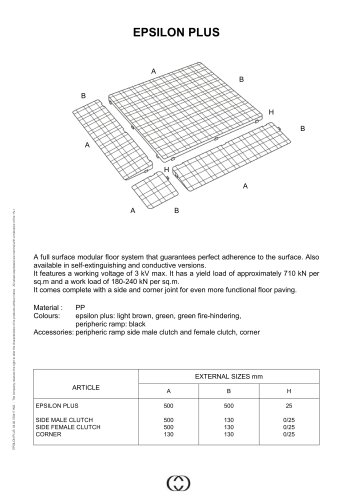 EPSILON Plus series
1 Page
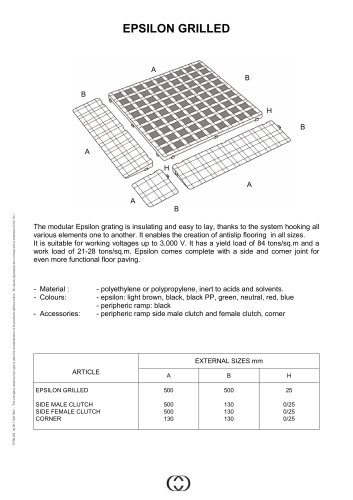 EPSILON series
1 Page
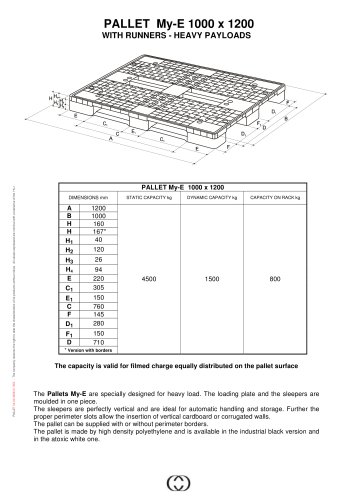 My-E 1000×1200
1 Page
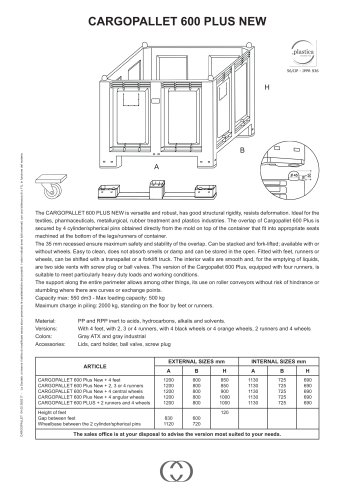 Cargo 600 PLUS NEW
1 Page
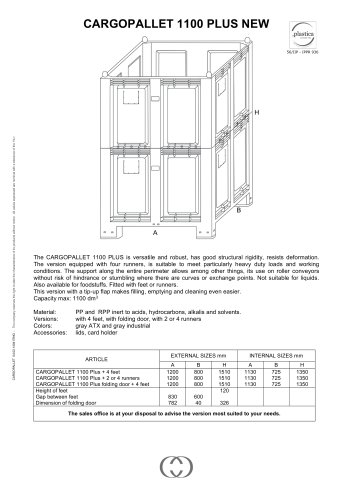 1100 PLUS NEW
1 Page
 My-L / My-L Bis
1 Page
 MEMORIA
1 Page
 Plastic containers and pallets
76 Pages
 700 Cargo Fold grating
2 Pages
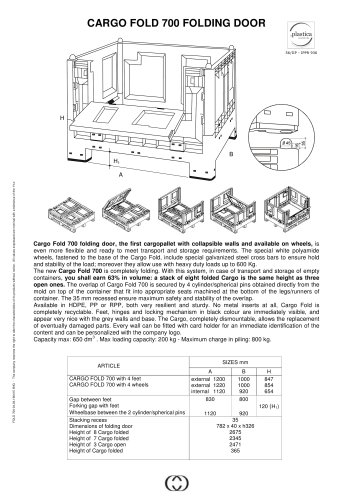 700 Cargo Fold folding door
2 Pages
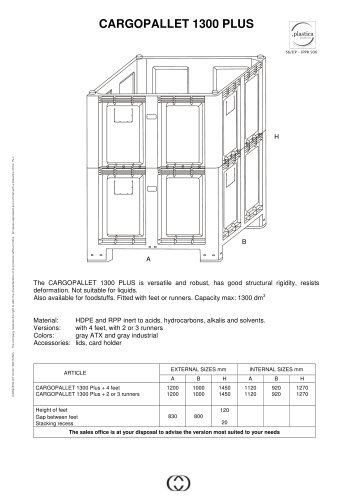 1300 PLUS
1 Page
 600 PLUS LIQUID LINER
1 Page
 Cargopallet 280
1 Page
 My-I Bis 800×1200
1 Page
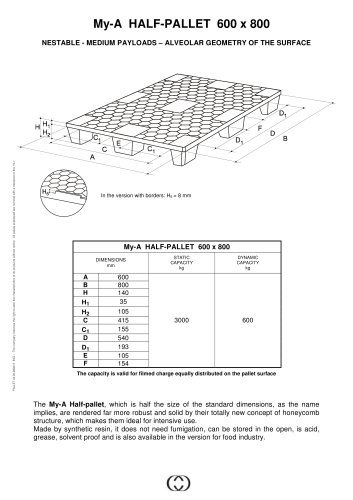 My-A 600×800
1 Page
 My-A 400×600
1 Page
 My-L Bis 1000×1200
1 Page
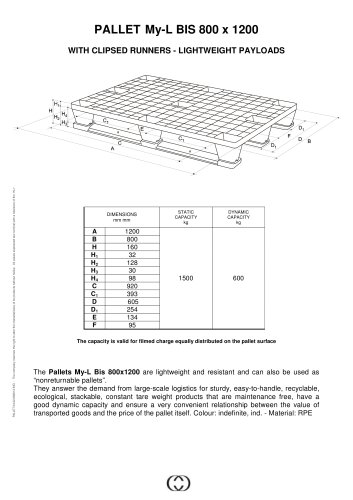 My-L Bis 800×1200
1 Page
 600 Plus grating
1 Page
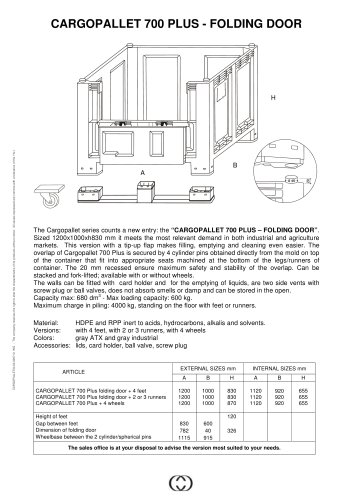 700 Plus folding door
1 Page
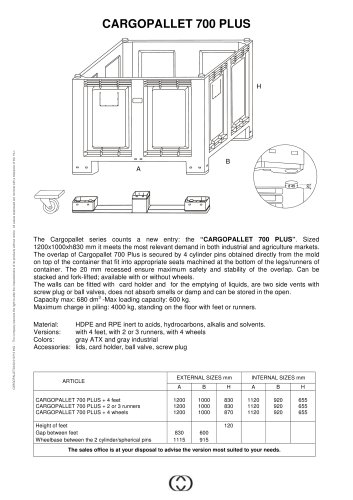 700 Plus
1 Page
 300 Plus
1 Page
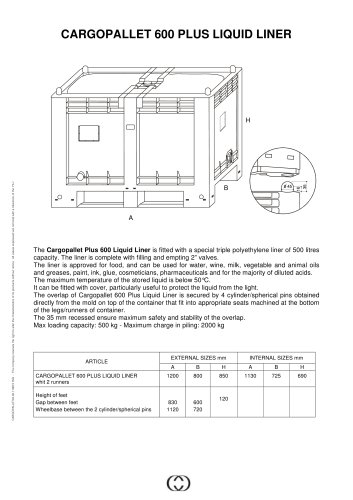 600 Plus Liquid Liner
1 Page
 FLAT / COVER FOR PALLET
1 Page
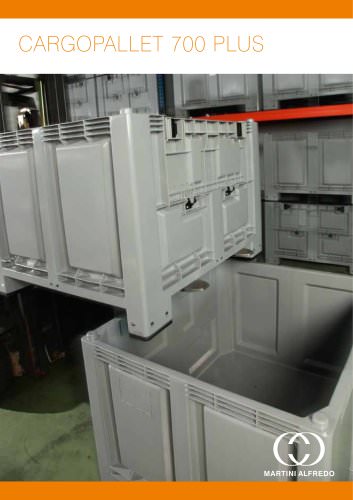 Cargopallet 700 Plus
4 Pages




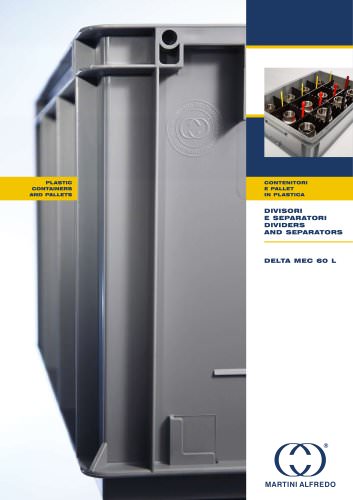
- Storage industrial bin
- Stacking industrial bin
- Pallet box
- Transport industrial bin
- Storage pallet box
- Plastic pallet
- Storage crate
- Plastic crate
- Foldable industrial bin
- Handling industrial bin
- Industrial industrial bin
- Stacking pallet box
- Transport crate
- Stacking crate
- Transport pallet box
- Industrial bin with lid
- Transport pallet
- Waste container
- Plastic pallet box
- Storage pallet