
- Catalogs
- MANN+HUMMEL Filters
- Artikel_Filter-als-Schutz


Artikel_Filter-als-Schutz

Artikel_Filter-als-Schutz
Modern cabin filters, such as those developed by MANN+HUMMEL, provide enhanced comfort and protection for vehicle occupants. These filters incorporate innovative biofunctional coatings that combine natural polyphenols with biostatic products to offer anti-allergen and antimicrobial protection, effectively inactivating over 95% of allergens and germs.
Allergies are a significant global health issue, with high prevalence in industrialized regions. For instance, 59% of South Koreans and 44% of Japanese are treated for allergies. In Germany, 35-40% of the population suffers from allergy-related illnesses, with pollen being a major trigger.
The FreciousPlus cabin filter features multiple layers, including a particle filter, activated carbon layer, and a biofunctional layer. The activated carbon absorbs harmful gases and odorous substances, enhancing both health protection and comfort. The biofunctional layer provides additional protection against allergens and microorganisms.
The filter's polyphenol coating inactivates allergens by binding with proteins, reducing their potential to trigger allergies. The antimicrobial coating prevents the growth of bacteria and mold, ensuring over 98% of these microorganisms are inhibited.
Future developments in cabin filters will focus on improving filtration efficiency, particularly for particles smaller than 1 μm, and enhancing the adsorption capacity of activated carbon. Regular replacement of cabin filters is recommended to maintain their effectiveness.
Catalog excerpts
Released in: MTZ extra, August 2016. Springer Fachmedien Wiesbaden.
Open the catalog to page 1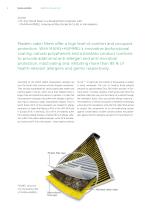
Author ››› Dr.-Ing. David Keerl is a development engineer with MANN+HUMMEL Innenraumfilter GmbH & Co KG in Himmelkron. Modern cabin filters offer a high level of comfort and occupant protection. With MANN+HUMMEL’s innovative biofunctional coating, natural polyphenols and a biostatic product combine to provide additional anti-allergen and anti-microbial protection, inactivating and inhibiting more than 95 % of health-relevant allergens and germs respectively. According to the World Health Organization, allergies are now the fourth most common chronic illnesses worldwide 1. They are also exacerbated...
Open the catalog to page 2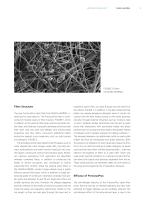
FIGURE 2: Pollen (© MANN+HUMMEL) Filter Structure The new FreciousPlus cabin filter from MANN+HUMMEL is tackling this issue head on. The FreciousPlus filter is constructed of multiple layers of filter medium, FIGURE 1, which in addition to the particle filter layer and the activated carbon layer, also features a specially developed biofunctional filter layer that has both anti-allergen and antimicrobial properties and thus offers consumers additional health protection against micro-organisms such as mold spores and allergens, FIGURE 2. The activated carbon layer absorbs harmful gases such as...
Open the catalog to page 3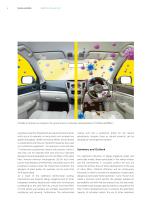
FIGURE 3: Particles can spread in the vehicle interior (schematic representation) (© MANN+HUMMEL) polyphenol coating. Polyphenols are natural phytonutrients, which occur, for example, in many plants such as green tea, apples and grapes. Health-promoting effects are attributed to polyphenols and they are therefore frequently also used as a nutritional supplement – for example in wine and beer 8 . Furthermore, polyphenols interact with proteins, which is why they can for example bind with and thus inactivate allergens that are separated out onto the fibers of the cabin filter. Immuno-chemical investigations...
Open the catalog to page 4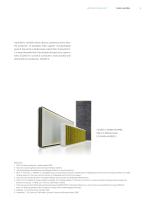
materials to combat certain odorous substances and a reliable protection of dustladen filters against microbiological growth. Due to the multiple tasks a cabin filter must perform, it is recommended that it be replaced at least once a year or every 30,000 km, so that it continues to work properly and afford effective protection, FIGURE 4. FIGURE 4: MANN+HUMMEL filters in different sizes (© MANN+HUMMEL) References 1 HO Air quality guidelines – global update 2005 W 2 http://www.aaaai.org/about-aaaai/newsroom/allergy-statistics 3 http://dgk.de/gesundheit/allergie-haut/allergien/situation-in-deutschland.html...
Open the catalog to page 5All MANN+HUMMEL Filters catalogs and technical brochures
 ProVent² Series
7 Pages
 Air Cleaners
164 Pages
 IQORON-V
4 Pages
 Cathode Air Filters
2 Pages
Archived catalogs
 Degassing Units
2 Pages
- Liquid filter
- Filter with cartridge
- Filter cartridge
- Industrial use filter
- Centrifugal classifier
- Industrial filter cartridge
- Liquids separator
- Fine filter cartridge
- Filtration unit
- Dust separator filter
- Plastic filter cartridge
- Cascade separator
- Panel filter
- Compact pre-filter
- Hydraulic filter
- Vertical centrifuge
- Gas separator filter
- In-line filter
- Air filter cartridge
- Filtration system