

- Company
- Products
- Catalogs
- News & Trends
- Exhibitions
Product documentation SEPREMIUM
Product documentation SEPREMIUM
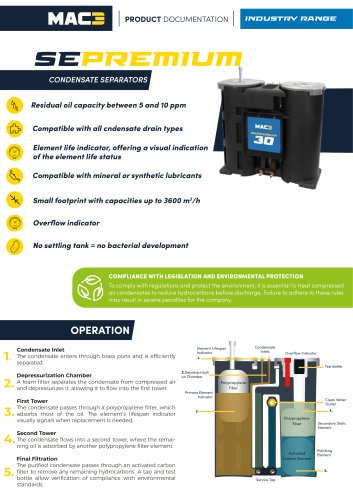
- Condensate enters through brass ports.
- A foam filter in the depressurization chamber separates the condensate from compressed air.
- The first tower uses a polypropylene filter to adsorb most of the oil, with a lifespan indicator for replacement.
- The second tower further adsorbs remaining oil using another polypropylene filter.
- Final filtration through an activated carbon filter ensures removal of remaining hydrocarbons, with a tap and test bottle for compliance verification.
Catalog excerpts
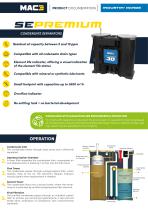
PRODUCT DOCUMENTATION INDUSTRY RANGE SEPREMIUM CONDENSATE SEPARATORS Residual oil capacity between 5 and 10 ppm Compatible with all cndensate drain types Element life indicator, offering a visual indication of the element life status Compatible with mineral or synthetic lubricants Small footprint with capacities up to 3600 m3/h Overflow indicator No settling tank = no bacterial development COMPLIANCE WITH LEGISLATION AND ENVIRONMENTAL PROTECTION To comply with regulations and protect the environment, it is essential to treat compressed air condensates to reduce hydrocarbons before discharge. Failure to adhere to these rules may result in severe penalties for the company. Condensate Inlet The condensate enters through brass ports and is efficiently separated. Depressurization Chamber A foam filter separates the condensate from compressed air and depressurizes it, allowing it to flow into the first tower. First Tower The condensate passes through a polypropylene filter, which adsorbs most of the oil. The element’s lifespan indicator visually signals when replacement is needed. Element Lifespan Indicator 1. Condensate Inlets Overflow Indicator Test Bottle Primary Element Indicator Polypropylene Fiber Clean Water Outlet 4. Polypropylene Fiber Second Tower condensate flows into a second tower, where the remai4. The ning oil is adsorbed by another polypropylene filter element. Final Filtration The purified condensate passes through an activated carbon filter to remove any remaining hydrocarbons. A tap and test bottle allow verification of compliance with environmental standards. Activated Carbon Element Secondary Static Element Polishing Elem
Open the catalog to page 1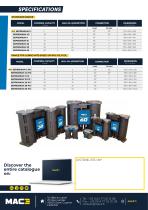
STANDARD RANGE MODEL COMPRES. CAPACITY MAX. OIL ADSORPTION CONNECTION DIMENSIONS RANGE FOR LUBRICANTS BASED ON POLYGLYCOL. MACS 10 allee du canal ZC des Landes 42160 Saint-Cyprien FRANCE
Open the catalog to page 2All MAC3 catalogs and technical brochures
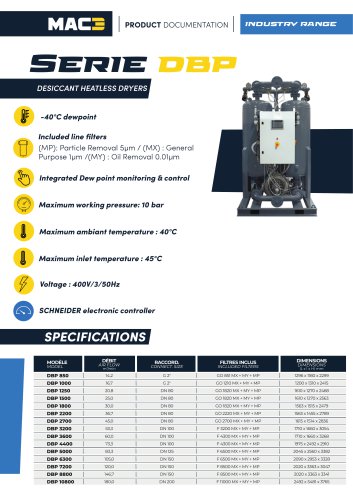 Product documentation DBP
2 Pages
 Product documentation DA
2 Pages
 Product documentation DMD
2 Pages
 Product documentation DK
2 Pages
 Product documentation MSS
2 Pages
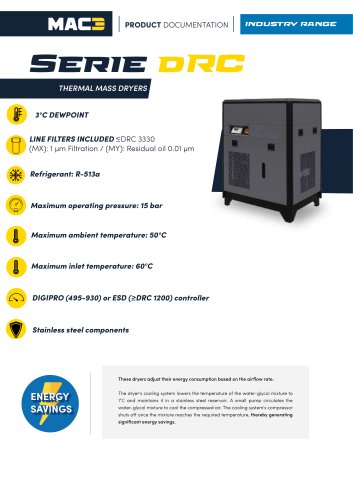 Product documentation DRC
2 Pages
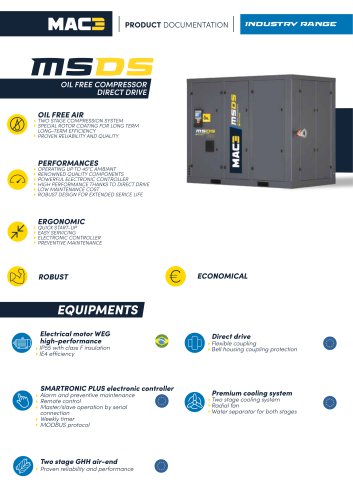 Product documentation MSDS
2 Pages
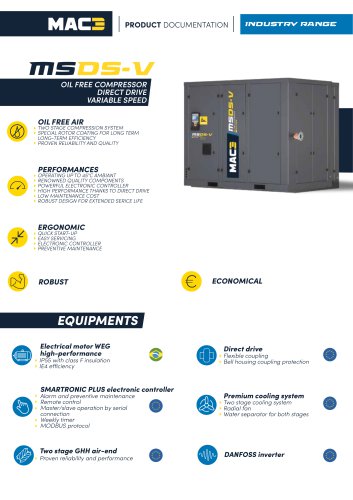 Product documentation MSDS-V
2 Pages
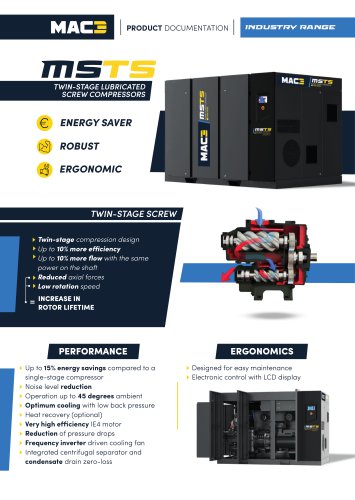 Product documentation MSTS
2 Pages
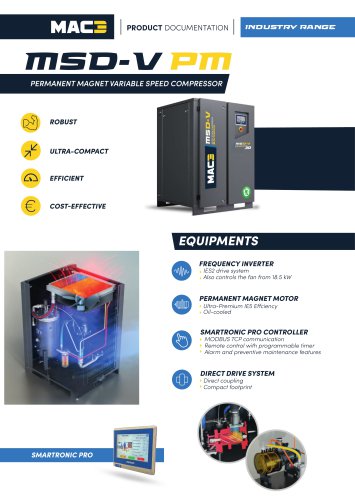 Product documentation MSD
2 Pages
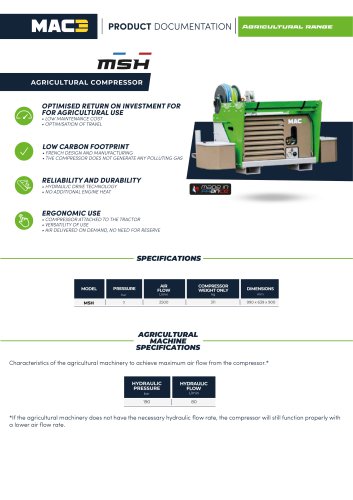 Product documentation MSH
2 Pages
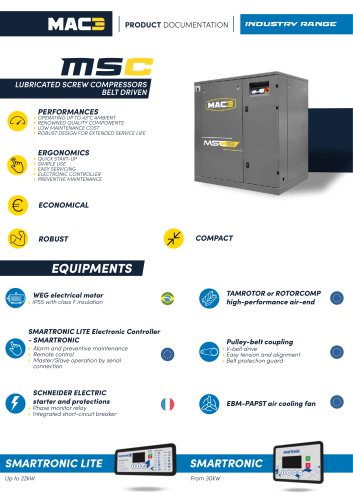 Product documentation MSC
2 Pages
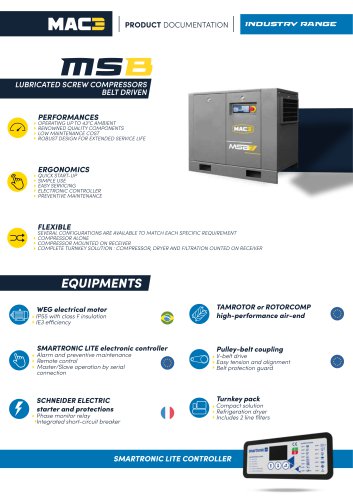 Product documentation MSB
2 Pages
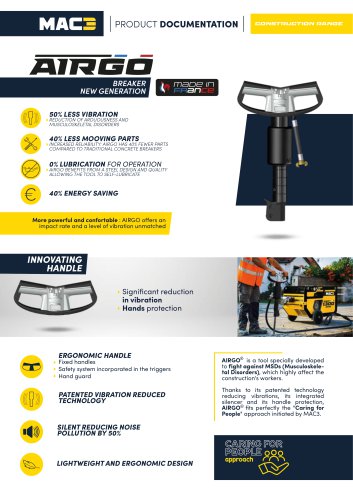 Product documentation AIRGO
2 Pages
- Compressor stage
- Air compressor
- Stationary compressor
- Positive-displacement compressor
- Industrial vacuum cleaner
- Industrial compressor
- Dry vacuum cleaner
- Mobile vacuum cleaner
- Electrically-powered compressor
- Lubricated compressor
- Oil-free compressor
- Dust vacuum cleaner
- Screw compressor
- Compact compressor
- Compact vacuum cleaner
- Liquids separator
- Mobile compressor
- Low-noise compressor
- Tank-mounted compressor
- Compressed air dryer