


Rolling Systems Tools and Knowledge Catalog
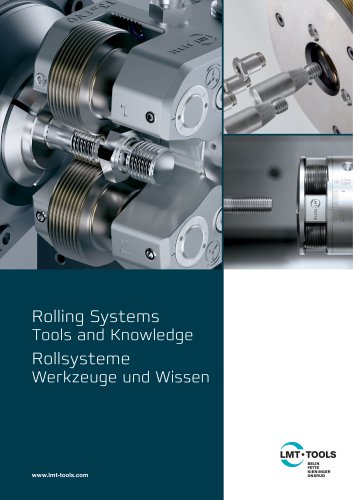
Rolling Systems Tools and Knowledge Catalog
LMT Tools is a global leader in precision tool development and production, specializing in milling, threading, rolling systems, gear cutting, and advanced tools. The company operates worldwide with over 1,000 employees and integrates expertise from brands like LMT Fette, LMT Kieninger, LMT Onsrud, and LMT Belin.
LMT Tools has production sites in Germany, the USA, India, and China, with sales representations across Europe, the Americas, and Asia-Pacific, ensuring comprehensive global support.
The company offers solutions for industries such as transportation, stationary applications, mould & die, pump and valve, and general machining, with precision tools that transform ideas into market successes.
LMT Tools provides extensive training through its Academy, offering theoretical and practical knowledge via online webinars and live sessions conducted by industry experts.
LMT Fette is renowned for its thread rolling technology, offering a wide range of rolling systems certified under DIN EN ISO 9001:2008 and VDA 6.4 standards.
Cold forming threading offers benefits such as high economy, short production times, long tool life, increased thread strength, high surface finish, and consistent accuracy, suitable for various thread forms and materials.
LMT Fette rolling systems produce external threads and profiles with high precision through cold forming, compatible with various machine tools and handling thread diameters from 1.4 mm to 230 mm.
The systems can roll standardized and special threads, including cylindrical, tapered, trapezoidal, round, and buttress threads, and are versatile for rolling endless or short threads on stationary or rotating workpieces.
Different rolling heads, including axial, radial, and tangential, cater to specific feed directions and workpiece requirements, with axial heads handling unlimited profile lengths.
The rolling process offers short machining times and long tool life, leading to low tool costs, with rolling speeds significantly higher than cutting speeds.
LMT Fette provides comprehensive support, including a Center of Competence, trained application engineers, and a customer service department, with additional technical resources available online.
This process involves plastically deforming the material beyond its yield point without cutting, preserving the material's grain structure.
The document discusses the advantages and processes of thread rolling compared to traditional thread cutting, highlighting material savings and chip elimination.
Thread rolling offers high profile accuracy, stronger threads, burnished flanks, and improved wear resistance, enhancing tensile and fatigue strength.
LMT Fette provides axial, radial, and tangential rolling heads to meet various threading needs, with specific capabilities for each type.
Most standard threads, including V, knuckle, and wood screw threads, can be rolled, accommodating diameters from 1.4 mm to 230 mm.
Suitable materials include structural steels, stainless steels, and soft metals like brass and aluminum, with specific elongation and tensile strength requirements.
The rolling process is versatile, requiring proper clamping and positioning, with support for thin-walled pipes.
Rolling heads can be used on various machines, reducing machining time and tool wear compared to cutting.
Thread rolling is used to produce smaller components or reduce workpiece weight, with rolling heads compatible with CNC equipment.
Power needed for thread rolling is generally less than modern machine tool capacity, with specific requirements for axial, radial, and tangential methods.
Rolling heads save machine time by completing threads in one operation, with cold hardening allowing for smaller, lighter workpieces.
Selection criteria depend on machine, component type, and thread length, with charts available for determining the appropriate rolling head and size.
Conventional cutting fluids are suitable for rolling applications, with specific recommendations for emulsions and cutting oils.
Short cycle times are essential in cold forming operations, with higher rolling speeds preferable.
Various examples demonstrate the efficiency of the process, with rolling times often being fractions of a second.
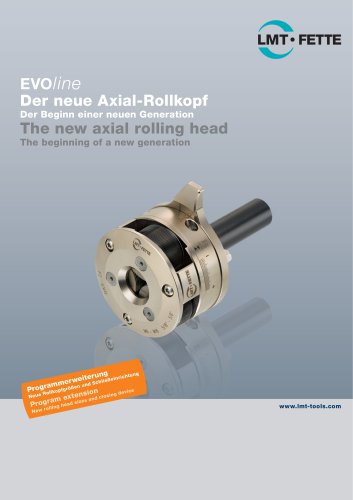
The document provides detailed technical specifications and features of the Axial Rolling Head EVOline, emphasizing modular design, process safety, and user-friendliness.
- Fine Adjustment: The rolling diameter can be precisely adjusted with a patented central adjustment system.
- Chip Guard: Enhances process safety by protecting against chips and contaminants.
- Modular Design: Comprises thread rolls, roller cage, rolling system housing, and a shank with a new adaption.
- New Shank Adaption: Offers precise concentricity and safe torque transmission.
- Easy Assembly: Defined mounting positions and gear markings ensure error-free assembly.
- Closing Device: Allows for the rolling head to be closed during non-productive machine time.
Includes detailed dimensions and specifications for various components and shank types.
Provides detailed information on spare parts for axial type rolling heads, including part descriptions, quantities, and identification numbers necessary for ordering replacements.
Lists various components for each rolling head model, with specific part numbers and quantities required.
Emphasizes the importance of specifying the rolling head type, part number, and identification number when ordering spare parts.
Provides dimensions in both millimeters and inches for the rolling heads, detailing critical measurements.
Outlines the thread dimensions that can be rolled with each set of rolls, highlighting compatibility within specific ranges.
Mentions options for internal stops and accessories like needle bearings.
Emphasizes the importance of specifying the correct rolling head type and part numbers when ordering to avoid errors.
Provides detailed specifications for the Axial Type Rolling Heads F2 EVO and K2 EVO, including dimensions and compatibility with right-hand and left-hand threads.
Outlines the specifications for change shanks, including shank diameters and dimensions.
Lists spare parts for the closing device, including part numbers and descriptions.
Provides information on the rolls and their capacity for the F2 EVO and K2 EVO models.
Lists various thread dimensions, including nominal sizes and pitches for different thread types.
Details spare parts for the F2 EVO rolling head, including part numbers and descriptions.
Provides detailed specifications and parts lists for the Axial type rolling heads F3 EVO, K3 EVO, F34 EVO, and K34 EVO, including components, dimensions, and spare parts.
Outlines the dimensions and specifications for various shank types, including VDI and HSK shanks.
Provides a comprehensive list of components for the rolling heads, including part numbers, descriptions, and quantities.
Details the operational parameters such as the closing angle and inclined position of rolls.
Includes tables with data on nominal sizes, pitches, and identification numbers for various thread types.
Advises on the procedure for ordering spare parts, highlighting the need to specify the rolling head type, part number, and identification number.
Lists various types of shank adaptation screws and their corresponding identification numbers.
Outlines the assembly and setting procedures for axial rolling heads.
Provides recommendations for the use of rolling heads on CNC machines.
Includes tables with nominal sizes, pitches, and identification numbers for various thread types.
Emphasizes the importance of specifying the correct rolling head type, part number, and identification number when ordering spare parts.
Provides detailed specifications for the F3-1RN X129 axial rolling head, including dimensions and weight.
Outlines the procedure for ordering spare parts.
Includes a comprehensive list of nominal sizes and pitches for various thread types.
Provides detailed information on the rolls and capacities for the F3-1RN and F34-1RN models.
Highlights the suitability of the rolling head for right-hand threads, with left-hand threads available upon request.
Provides detailed technical specifications and spare parts information for axial type rolling heads, specifically models F45-1RN X154, F5-1RN X139, and F56-1RN X140.
Lists dimensions in both millimeters and inches for the rolling heads.
Provides a comprehensive list of spare parts, including part numbers, descriptions, and quantities.
Outlines the nominal sizes and pitches for different thread types.
Recommends specifying the rolling head type, part number, and identification number when ordering spare parts.
Provides detailed information on the dimensions and capacities of the rolling heads.
Provides detailed specifications for various UN and UNEF thread sizes.
Outlines the assembly and setting procedures for axial rolling heads.
Recommends using the axial thread rolling heads on conventional machine tools.
Provides part numbers and descriptions for components of the rolling head.
Emphasizes the importance of specifying the correct rolling head type, part number, and identification number when ordering spare parts.
Provides detailed specifications and part lists for various thread types and rolling heads used in industrial applications.
- BSFS, NPT, NPTF, UN, UNEF, UNF, UNC, G, RD, BSW, BSF: Lists nominal sizes, threads per inch (TPI), lead values, and identification numbers for different thread types.
- FU45-1 and FU5-1 Models: Provides detailed part lists for these rolling head models.
- Ordering Instructions: Emphasizes specifying the rolling head type, part number, and identification number when ordering spare parts.
- Rolling Head Dimensions: Includes measurements in both millimeters and inches for various components of the rolling heads.
- Operational Guidelines: Provides instructions on the maximum rolling length, closing angles, and weight specifications for the rolling heads.
- Ensure compatibility of thread dimensions with the rolling head and rolls used.
- Follow the specified tolerances and operational guidelines to maintain efficiency and safety.
- Use the correct identification numbers when ordering parts to avoid errors.
Provides detailed specifications, parts lists, and operational guidelines for axial rolling heads, specifically models FU56-1 and FU6a-1.
- Axial Rolling Head FU56-1: Designed for both right-hand and left-hand threads, usable in stationary or rotating applications.
- Axial Rolling Head FU6a-1: Similar dual-thread capability with specific guidelines for shoulder diameters and thread undercuts.
- When ordering spare parts, specify the rolling head type, part number, and identification number from the parts list.
- For left-hand thread rolling heads, note that the operational direction is reversed compared to right-hand threads.
- Provides detailed parts lists for both FU56-1 and FU6a-1 models.
- Specific instructions for the use of fitting keys, roll pins, and circlips in assembly and maintenance.
- Comprehensive tables listing nominal sizes, pitches, and identification numbers for various thread types.
- Guidelines for rolling thread dimensions combined in one block with a single set of rolls.
- Ensure correct identification of parts and adherence to specified tolerances for optimal performance.
- Regular maintenance and correct assembly using specified spare parts are crucial for the longevity of the rolling heads.
Provides detailed specifications and procedures for using LMT Fette rolling heads for knurling, thread rolling, and other applications.
Knurling can be performed economically using LMT Fette rolling heads, with specifications for pitches and tooth heights provided.
Axial thread rolls are designed with annular profiles and are available in standard long and short leads.
Burnishing operations reduce surface roughness and increase corrosion resistance.
Swaging is described as an economical method using specially designed rolling heads.
Lists accessories for standard axial rolling heads and provides additional technical details.
Provides detailed technical specifications and operational guidelines for Axial Rolling Heads, specifically types AC2 and AC3.
- AC2 and AC3 models are available for both right-hand and left-hand threads.
- Dimensions and weights are provided for each model.
- Rolls and capacities are detailed for various thread sizes and pitches.
- The rolling head is mounted on the turret and moved tangentially to the workpiece center.
- The rolling process occurs axially, and the rolls are withdrawn tangentially after completion.
- Eliminates the need for a closing mechanism, simplifying installation and operation.
- Capable of producing unlimited thread lengths due to the axial rolling principle.
- The helix angle is approximately equal to the lead angle of the thread.
- Thread runout is at least three times the pitch.
- Detailed part numbers and descriptions are provided for ordering spare parts for both AC2 and AC3 models.
Lists spare parts for the AC6 rolling head, including part numbers and descriptions.
The AC-Rolling head can be used for creating annular profiles, grooves, and compact-burnishing without a helix angle.
Provides detailed specifications for different rolling head types, including roll widths and working feed.
Discusses the use of rolling heads on CNC lathes, specifying shank adaptors according to DIN 69 880 standards.
Includes key formulas for calculating feed, feed rate, and rolling time.
Discusses the capabilities of LMT Fette axial and radial rolling heads for thread rolling.
Axial rolling heads are versatile, capable of rolling standard and semi-special threads.
The KR knurling heads are designed for efficient production of windscreen wiper drives.
Radial rolling heads are primarily for short threads with minimal runout.
Lists common thread rolling errors, their causes, and solutions.
The rolling heads are used in various industries, offering benefits like increased fatigue strength and high productivity.
Provides detailed specifications, spare parts lists, and ordering instructions for various models of radial rolling heads.
Outlines the dimensions in both millimeters and inches for each rolling head model.
Emphasizes providing the type, size, Part No., and Ident No. when ordering spare parts.
Provides detailed lists of spare parts for each rolling head model.
Includes tables listing thread sizes and corresponding identification numbers for rolls.
Includes additional spare parts specific to certain models.
Outlines the requirements for machine tools used in thread rolling with radial rolling heads.
Provides formulas for calculating rolling time using spindle speed or rolling speed.
Specifies the maximum rollable thread length and provides guidelines for component dimensions.
Rolling heads are identified by type and size, with various seating options available.
Provides detailed instructions for assembling the thread rolls and adjusting the roll spacing.
Provides detailed instructions for setting up and operating radial rolling heads.
Outlines the steps for assembling the rolls, including positioning the driving plates.
Provides instructions for adjusting the distance between the rolls.
Describes the operation of both rotating and non-rotating rolling heads.
Provides instructions for resetting the rolling head if tripped without rolling a component.
Highlights the importance of selecting the correct blank diameter and ensuring proper alignment.
References are made to figures and tables for part numbers and dimensions related to the setup and operation of the rolling heads.
Provides detailed specifications for various rolling attachments and their components.
Provides instructions for the installation and setup of thread rolls and setting gauges.
Recommends ordering roll widths as specified to avoid delays.
Provides a comprehensive list of spare parts for rolling attachments and holders.
Includes tables listing roll widths for different attachment sizes.
Rolls are designed based on the component type, with specific guidelines for roll width and runout.
Various roll designs are available, each marked with specific codes.
Provides specifications for standard taper threads and non-standard threads.
Provides guidelines for the rolling process, including rolling speed and power requirements.
Specifies requirements for the tangential side rolling method.
Provides guidelines for calculating tangential thrust and ensuring sufficient power.
Provides guidelines for wall thickness testing and feed rate calculation.
Provides instructions for the tangential method and thread rolling on pipes.
Provides guidelines for thread minor diameter and chamfer angle.
Provides instructions for thread roll assembly and adjusting for thread size.
Provides recommendations for rolling speed and coolants.
Provides guidelines for machine power and thread quality.
Provides detailed instructions for mounting thread rolls and adjusting attachment for thread size.
Provides detailed instructions for the installation and setup of tangential rolling heads used for knurling and burnishing.
Provides guidelines for preparing workpieces for knurling and adjusting the rolling head and holder.
Provides formulas to calculate the maximum rollable thread length.
Provides formulas for calculating the required drive power, tangential force, and torque.
Provides guidelines for calculating rolling time and recommended numbers of component revolutions.
Provides detailed specifications and guidelines for the use of LMT Fette tangential rolling attachments on CNC-lathes.
Lists seven tangential attachment sizes and their compatibility with tool holders.
Describes the adjustable tangential rolling attachment holder and its key features.
Provides a table detailing the adjustment range for each attachment size.
Provides detailed dimensions for the basic holder and tool holder with cylindrical shank.
Provides a troubleshooting section addressing common problems encountered during thread rolling.
Provides contact details for LMT staff and a hotline for rolling head inquiries.
Provides detailed specifications for chamfering and rolling operations.
Outlines common problems encountered during rolling operations and their solutions.
Includes tables with technical specifications for various tools and components.
Emphasizes the importance of precise setup and handling to achieve optimal machining conditions.
Serves as a comprehensive guide for troubleshooting and optimizing rolling and chamfering operations.
Provides detailed specifications for UNF, UNEF, BSW, and BSF threads.
Provides examples for designating male threads and left-hand male threads.
Provides guidelines for pre-processing and chamfering the workpiece.
Describes the correct procedure for adjusting the rolling head and checking the rolled profile.
- Maintain the original diameter with a tolerance of ±0.015 mm.
- Ensure the chamfer angle is between 10° and 30°.
- Adjust the rolling head carefully to prevent overpressure and excessive shaping.
Describes three types of thread formations and adjustments for thread rolling.
Provides formulas for calculating the power and torque required for different thread rolling methods.
Provides a formula for calculating the required drive power and torque.
Includes formulas for calculating the necessary drive power and torque.
Provides formulas for calculating the required drive power, tangential force, and torque.
Provides recommended speeds for different thread types and material properties.
Provides guidelines for material suitability for rolling processes.
Outlines the suitability of various materials for rolling processes.
Provides guidelines on the rollability of different materials.
Includes detailed tables listing various materials and their properties.
Provides conversion tables for inch to millimeter and vice versa.
Includes a schematic diagram for turret mounting of rolling attachments.
Provides a checklist and enquiry form for rolling system requests.
Catalog excerpts
Rolling Systems Tools and Knowledge Rollsysteme Werkzeuge und Wissen
Open the catalog to page 1
Imprint Publisher: LMT Tools Global Operations GmbH & Co. KG, Vogesenstrasse 23, 77933 Lahr, Germany, Phone: +49 78 21 943-0 Responsible according to the press law.: Jörn Grindel Design: deckermedia GbR, Graal-Müritz Printed by: Druckerei Weidner GmbH, Rostock For readability reasons, the masculine form is used for personal designations and personal nouns for a general understanding. Corresponding terms apply to all genders for the purpose of equal treatment. Impressum Herausgeber: LMT Tools Global Operations GmbH & Co. KG, Vogesenstrasse 23, 77933 Lahr, Deutschland: +49 78 21 943-0 Verantwortlich...
Open the catalog to page 2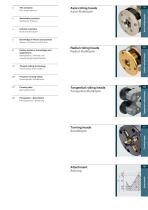
Industry solutions Branchenlösungen Knowledge in theory and practice Wissen in Theorie und Praxis Rolling systems, advantages and applications Rollsysteme, Vorteile und Anwendungsmöglichkeiten Threads rolling technology Technologie beim Rollen Precision turning heads Genauigkeits-Schälköpfe Forming taps Gewindeformen Pictograms – Description Piktogramme – Erklärung Radial rolling heads Radial-Rollköpfe Tangential rolling heads Tangential-Rollköpfe Turning heads Schälköpfe Attachment Anhang Axial rolling heads Radial rolling heads Worldwide presence Weltweite Präsenz Tangential rolling heads Axial...
Open the catalog to page 3
The company Das Unternehmen LMT Tools is one of the leading experts in the development and production of precision tools. With its passionate commitment to precision, the company ensures that its customers in industry apply superior quality at the crucial interface between machine and workpiece. With more than 1,000 employees worldwide, LMT Tools bundles its expertise in the brands LMT Fette, LMT Kieninger, LMT Onsrud and LMT Belin. The company's main product areas are milling & threading, rolling systems, gear cutting and advanced tools. LMT Tools ist einer der fuhrenden Experten fur die Entwicklung...
Open the catalog to page 4
Worldwide presence Weltweite Prasenz • LMT Tools production sites: Germany: Lahr, Schwarzenbek USA: Waukegan India: Pune China: Nanjing Deutschland: Lahr, Schwarzenbek USA: Waukegan Indien: Pune China: Nanjing Europe: Czech Republic, France, Germany, Italy, Romania, Spain, United Kingdom. Americas: Brazil, Mexico, USA. Asia-Pacific: China, India, Korea. Europa: Deutschland, Frankreich, Italien, Rumanien, Spanien, Tschechische Republik, Vereinigtes Konigreich. Amerika: Brasilien, Mexiko, USA. Asien-Pazifik: China, Indien, Korea. Contact us and our experts: www.lmt-tools.com Nehmen Sie Kontakt...
Open the catalog to page 5
Industry solutions Branchenlosungen The key element of the services at LMT Tools is our eye for detail and passion for precision to help our customers implement their visions, ideas and needs. We see precision tools as the key to bringing ideas to life. These ideas then go on to become market successes, driven forward by efficiency and innovative power. The extensive product range combines the competence of the LMT Belin, LMT Fette, LMT Kieninger and LMT Onsrud brands. It offers perfect solutions for various applications in different industries: ■ Transportation & Transmission: automotive, trucks,...
Open the catalog to page 6
Knowledge in theory and practice Wissen in Theorie und Praxis Our Academy is the central training and further education unit of the corporate group. At the LMT Tools Training Center, holistic knowledge in theory and practice is passed on to our employees and customers worldwide in order to quickly provide knowledge in response to continuous global market changes in products and production processes. Unsere Academy ist die zentrale Schulungs- und Weiterbildungseinheit der Unternehmensgruppe. Im LMT Tools Training Center wird ganzheitliches Wissen in der Theorie und Praxis weltweit an unsere Mitarbeiter...
Open the catalog to page 7
LMT Fette Rollsysteme – schnell, sicher, wirtschaftlich LMT Fette rolling systems – fast, reliable, economical Das größte Programm, die größte technische Perfektion Die LMT Fette Rollsysteme stehen anwendungstechnisch in vorderster Linie und haben sich zigtausendfach in aller Welt bewährt. Kein anderer Hersteller bietet Ihnen ein derart umfangreiches Programm: Kaum ein Arbeitsfall, bei dem wir Ihnen nicht helfen können. Seit 1952 hat LMT Fette den technologischen Fortschritt immer weiter forciert und seine Spitzenposition stetig ausgebaut. Unsere Programmbreite, Produktqualität und Serviceleistung...
Open the catalog to page 8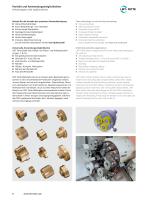
Vorteile und Anwendungsmoglichkeiten Advantages and applicationsNutzen Sie die Vorteile der spanlosen Gewindefertigung: ■ Hohe Wirtschaftlichkeit ■ Kurze Bearbeitungs- und Taktzeiten ■ Extrem lange Standzeiten ... und als weiteren besonderen Vorteil: kein Spaneanfall LMT Fette bietet eine Vielfalt von Rollen- und Rollkopfausfuh-rungen, z. B. fur: ■ Alle gebrauchlichen Gewindearten ■ Viele Sonder- und Spezialprofile ■ Glatten, Kumpeln, Reduzieren ■ Nahezu alle Werkstucke ■ Fast alle Werkstoffe LMT Fette Rollkopfe konnen auf nahezu allen Bearbeitungsma-schinen in den verschiedensten Positionen...
Open the catalog to page 10
Anwendungsbeispiele Application examples LMT Fette Rollköpfe erzeugen Außengewinde aller Art und andere Formgebungen mit hoher Genauigkeit spanlos durch Kaltverformung in sekundenschnelle. LMT Fette rolling systems produce external threads of all types and other profiles with first class precision, by cold forming in a matter of seconds. Anzuwenden auf allen Drehmaschinen und Drehautomaten und für alle Außengewinde von 1,4 mm bis 230 mm Ø. Suitable for use on a wide variety of machine tools, for all external threads from Ø 1.4 to 230 mm (0.55" up to 9.055"). In aller Welt wird das wirtschaftliche...
Open the catalog to page 11
Rollbare Profile Rollable profilesWenn Sie unterschiedlichste Profile rollen wollen! Fast alle genormten Gewinde oder Sondergewinde - von zylin-drischen und kegeligen Spitzgewinden uber Trapez-, Rund- und Halbrundgewinden bis zu zylindrischen Holz- und sogar Sage-gewinden - konnen gerollt werden. ■ Ringprofile ohne Steigung When you want to roll a variety of profiles! Almost all standardized or special threads - from cylindrical and tapered triangular threads, through trapezoidal, round and semiround threads to cylindrical wood threads and even buttress threads - can be rolled. ■ Ring profiles...
Open the catalog to page 12All LMT Tools catalogs and technical brochures
 PCD Tools Brochure
4 Pages
 ChamferCut Brochure
6 Pages
 Rasant Steel Brochure
12 Pages
 UNIFY Brochure
3 Pages
 SpeedCore Hobs Brochure
6 Pages
 CopyMax Brochure
12 Pages
 Nanomold Red Brochure
4 Pages
 SuperFinish Brochure
4 Pages
 Gear Cutting Experts Brochure
12 Pages
 LMT Belin Milling Catalog
38 Pages
 Indexable Mills Catalog
302 Pages
 End Mills Catalog
154 Pages
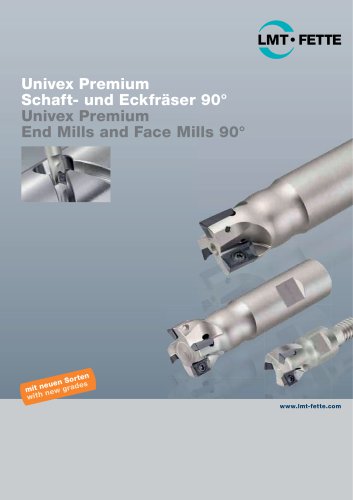 Univex Premium Brochure
20 Pages
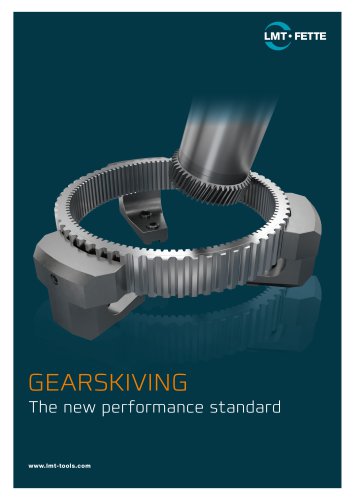 GearSkiving Brochure
6 Pages
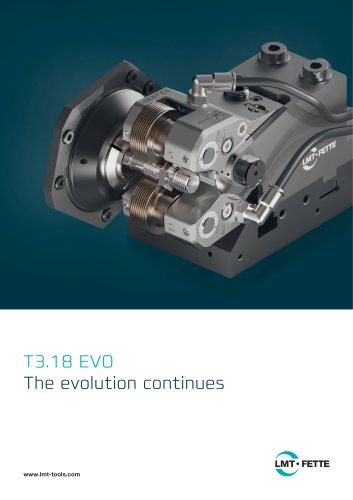 T3.18 EVO Brochure
12 Pages
 HFC – High Feed Cutter Brochure
20 Pages
 EASYMill Brochure
8 Pages
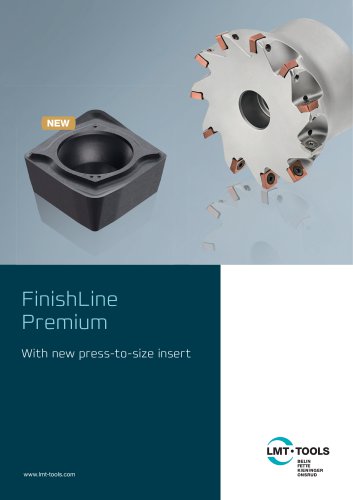 FinishLine Premium Brochure
12 Pages
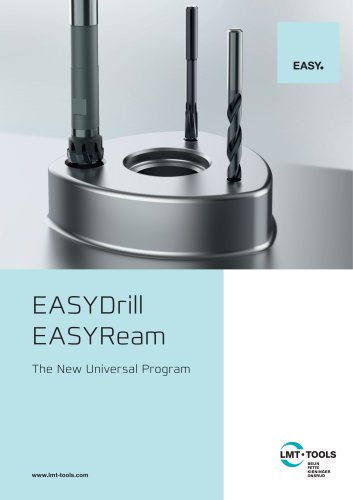 EASYDrill EASYReam Brochure
32 Pages
 EASYTap Brochure
24 Pages
 Automotive Brochure
15 Pages
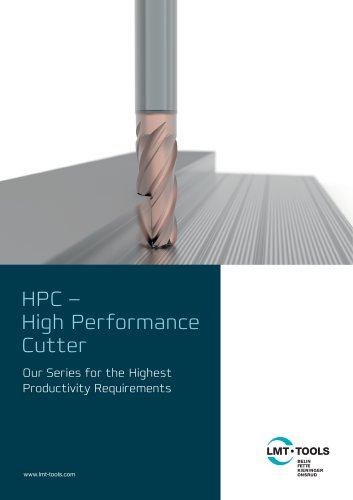
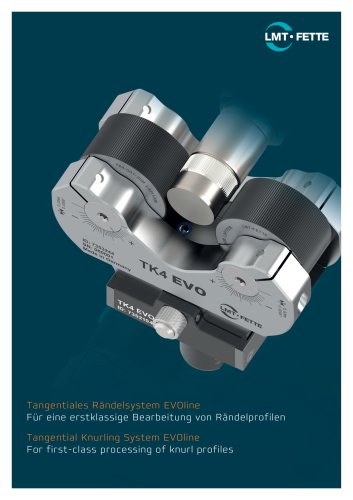
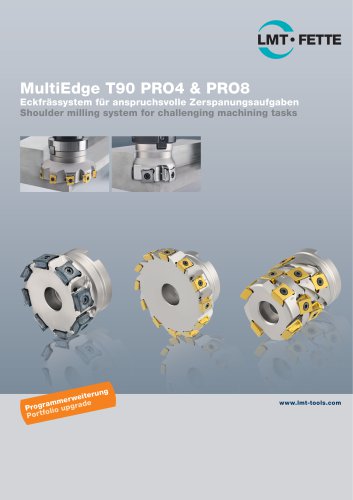

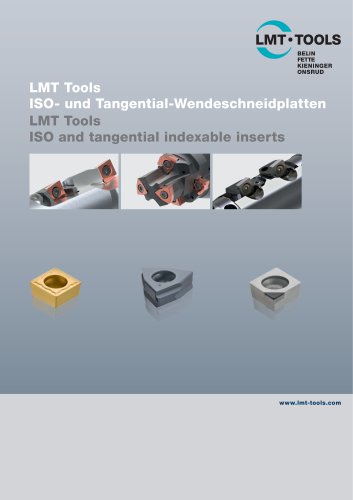
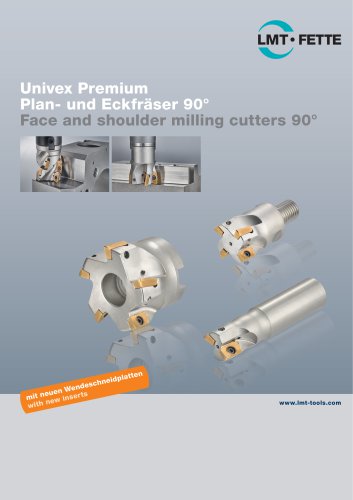
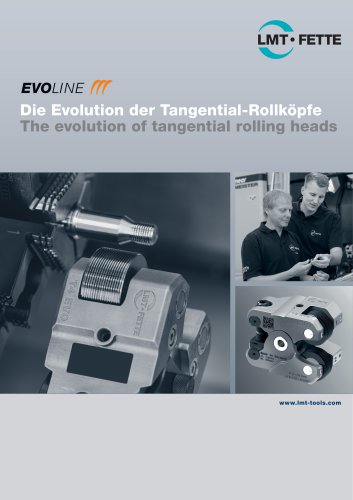
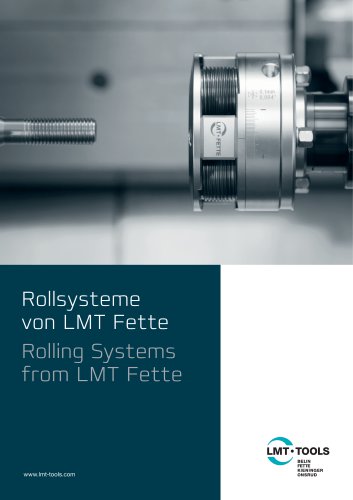


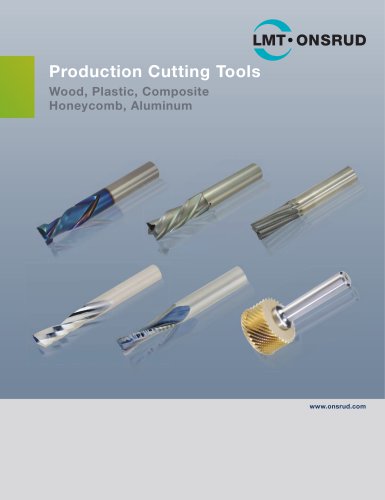
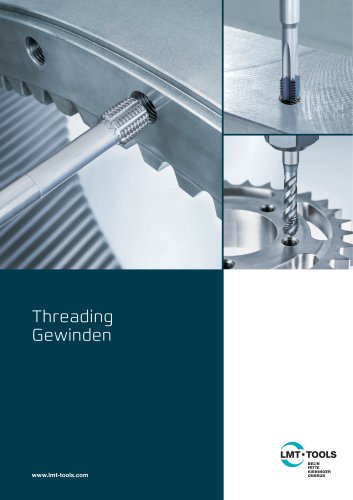
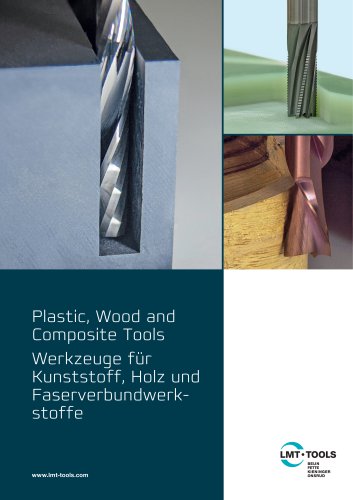
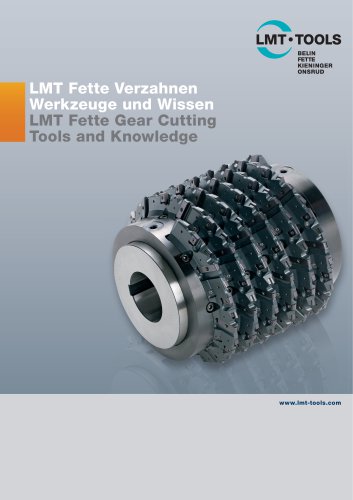
- LMT Tools milling cutter
- LMT Tools solid milling cutter
- Drilling tool
- LMT Tools steel milling cutter
- LMT Tools insert milling cutter
- Solid drill bit
- Metal milling cutter
- LMT Tools clamping milling cutter
- LMT Tools milling cutter with cylindrical shank
- Grade
- End mill
- Cast iron milling cutter
- Face milling cutter
- LMT Tools shell-end milling cutter
- Solid carbide milling cutter
- LMT Tools indexable insert milling cutter
- Ball nose milling cutter
- Multi-purpose drilling tool
- Cutting milling cutter
- Corner radius milling cutter