
- Catalogs
- Lakeland Industries
- PVC Chemical Protective Clothing

PVC Chemical Protective Clothing

PVC Chemical Protective Clothing
- The clothing is made from lightweight PVC fabric weighing 310gsm, which is lighter than most PVC coveralls.
- It features a zip front fastening with a double storm flap and hook & loop closure.
- Certified to EN 14605 Type 3 & 4 for protection against liquid and jet chemical sprays, and anti-static certified to EN 1149-5.
- Stitched and taped sealed seams, tested for up to 20 washes at 30°C.
- Available in sizes S to XXXL and in yellow color.
- Coverall includes a 3-piece respirator-fit hood, crotch gusset, and inset sleeves for better movement.
- Jacket has a respirator-fit drawstring hood and zip front with double storm flap.
- Bib & Brace style pants with adjustable braces and quick-release snaps.
- Tested for abrasion resistance, flex cracking, tear strength, tensile strength, puncture resistance, and seam strength.
- Provides high resistance to various chemicals such as Acetic Acid, Hydrochloric Acid, Phenol/Sodium Hydroxide, Sodium Hydroxide, Sodium Hypochlorite, and Sulphuric Acid.
- Garments contaminated with chemicals should not be washed and re-used.
- Inspect all garments before re-use; damaged or worn garments should not be re-used.
- Consider chemical toxicity, temperature, and application environment when selecting protective clothing.
Catalog excerpts
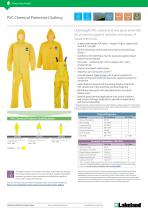
Protect Your People™ PVC Chemical Protective Clothing Download H Download *** I .***. m I Stitched & Taped Seams PVC Chemical Protective Clothing Styles Lightweight PVC coverall and two piece ensemble for protection against splashes and sprays of liquid chemicals • Superior lightweight PVC fabric - weight 310gsm. Lighter than most PVC coveralls • Zip front fastening with double storm flap and hook & loop closure • Certified to EN 14605 Type 3 & 4 for protection against liquid and jet chemical sprays • Anti-static - certified to EN 1149-5: tested to EN 1149-3 (charge decay) • Stitched and taped sealed seams • Tested for up to 20 washes at 30oC* • Coverall features Super-B style with 3-piece respirator-fit hood, crotch gusset and inset sleeves for superior freedom of movement • Jacket features respirator-fit drawstring hood and zip front with double storm flap and hook and loop fastening • Bib & Brace style pants with adjustable braces and quick release snaps • Ideal for petrochemical applications such as tank cleaning and chemical storage applications, agricultural applications and chemical handling * Physical properties and permeation tests conducted before washing. Garments contaminated with chemicals should not be washed and re-used. Inspect all garments before re-use; garments that are damaged or worn should not be re-used. A limited number of chemicals have been tested against Lakeland PVC material. More tests can be conducted on request. ChemMax® garments provide a more comprehensive protection against a much wider range of chemicals. See our full chemical permeation database which can be downloaded at https://www.lakeland.com/europe/resources/documents-gallerv Note that when contaminated a chemical may permeate into the fabric and washing or decontamination may not remove it. In this case when re-using the normalized breakthrough may be lower than indicated by a test. For this reason we do not advise re-use of heavily contaminated garments. Where garments may have been contaminated and are to be re-used additional care must be taken during donning to ensure users do not make contact with any residual contamination that has not been removed. Lakeland Industries Europe Limited
Open the catalog to page 1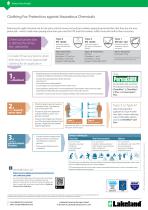
Clothing For Protection against Hazardous Chemicals Selecting the right chemical suit for the job is vital to ensure not only are workers properly protected but that they are not overprotected - which could mean paying more than you need for PPE and that workers suffer more discomfort than necessary. Chemical protection is defined by three key standards: Consider three key factors when selecting the most appropriate clothing for an application 1.The chemical . 2. Which hazard / spray type? 3. Physical / environment factors Type 4 EN 14605 • 'Breakthrough time' provided by (EN 6529 or ASTM F739)...
Open the catalog to page 2All Lakeland Industries catalogs and technical brochures
 midweight-layering.pdf
1 Page
 FR-Protective-Clothing.pdf
33 Pages
 hi-vis_catalog
23 Pages
 indusrial_heat_3
10 Pages
 700series-data-sheet.
1 Page
 300series-data-sheet
1 Page
 Buyers Guide
44 Pages


Archived catalogs
 LAKELAND CATALOG
108 Pages
- Fabric clothing
- Polyester clothing
- Cotton clothing
- Work safety gloves
- Waterproof clothing
- Work jacket
- Chemical protection safety gloves
- Work coveralls
- Thermal protection clothing
- Work pants
- Chemical protection clothing
- Unisex coveralls
- Polyester jacket
- Construction clothing
- Anti-static clothing
- Cold weather clothing
- Clothing with hood
- Unisex jacket
- Fabric jacket
- Zippered jacket