
- Catalogs
- Labthink Instruments Co., Ltd.
- Quality Concerns of Doypacks


Quality Concerns of Doypacks

Quality Concerns of Doypacks
Doypacks, also known as stand-up pouches, are increasingly popular in packaging due to their convenience and effective product presentation. They are designed with a stable bottom, making them easy for consumers to use and appealing on supermarket shelves.
- Reclosable features such as zippers or spouts.
- Easy opening with tear notches or perforations.
- Efficient product display and shelf space maximization.
- Customizable shapes without significant additional costs.
- Reduced transportation and storage costs due to lightweight design.
Doypacks are made from two to four layers of materials, with thicknesses ranging from 70 to 120 mm. The inner layer is polyethylene for resistance and thermo-welding, while the outer layer is polypropylene (BOPP) or lavsan (PET) for printing. An aluminum foil medium layer provides a high barrier against light and moisture, crucial for products like organic coffee and spices.
- Thickness of plastic and laminated films.
- Heat seal properties of the inner layer.
- Barrier properties against moisture, oxygen, and gases.
- Ink abrasion resistance on the printing layer.
- Peel strength between layers.
- Lock and open force of spouts.
- Overall package integrity.
- Coefficient of friction for stacking and filling.
Maintaining an optimum packaging system is essential for cost efficiency and product quality. Labthink Instruments Co., Ltd offers solutions for testing and ensuring the quality of doypacks. They can be contacted via email at [email protected] for further assistance.
Catalog excerpts

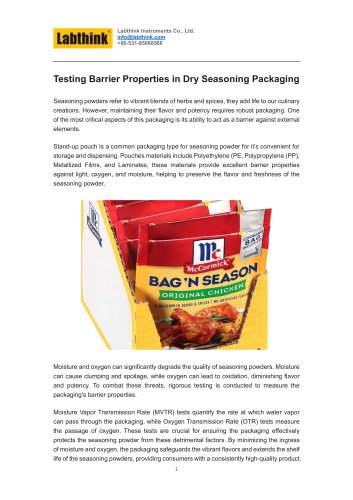
Quality Concerns of Doypacks Packaging is “a silent seller” of the goods. There are more and more producers who think about the design of their product for the customer to choose it among other products in supermarket. A bag with a stable bottom – doy-pack – is a beneficial positioning of product and it is very easy-to-use for the customer. Doypacks also go by the name of stand-up pouches. they obtain more and more customers and manufacturers favorite, because they are convenient: reclosable by adding a zipper or spout easy to be opened, by adding a tear notch or perforation display your products and maximize shelf space shape it in any way without high additional costs Because of small weight and capacity the costs for transportation and storing are less. A bag with a stable bottom consists of two-, three- or four- layered materials whose thickness may be different (from 70 to 120 mm). Inner layer is made of polyethylene and it provides the resistance to the content of the package and it is also thermo-welding layer. Outer layer is made of polypropylene ( BOPP) or lavsan( PET), it is very convenient for deep or flexographic printing. Aluminum foil is used for the medium layer .This layer is high-barrier, it does not pass light and moisture inside what is very important for organic coffee, spices, sauces, juices, etc.
Open the catalog to page 1
Based on the widely usages and constituent of Doypacks, quality control of doypacks should be included but not limited to: Thickness of each layer plastic film and laminated films Heat Seal property of inner layer material films Barrier property of medium layer for Moisture, oxygen and other gases Ink Abrasion Property on printing layer Peel strength among each layer Lock and open force of spout if any Package integrity Coefficient of Friction for piling up and filling In some way, quality control is not to increase the product cost but decrease the production cost. Here I want to show you a...
Open the catalog to page 2All Labthink Instruments Co., Ltd. catalogs and technical brochures
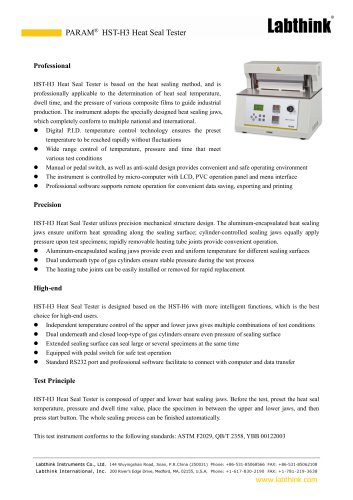 HST-H3 Heat Seal Tester
3 Pages
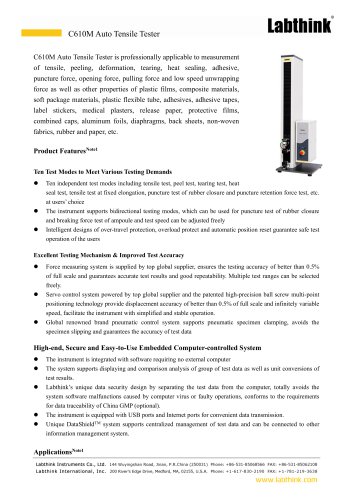
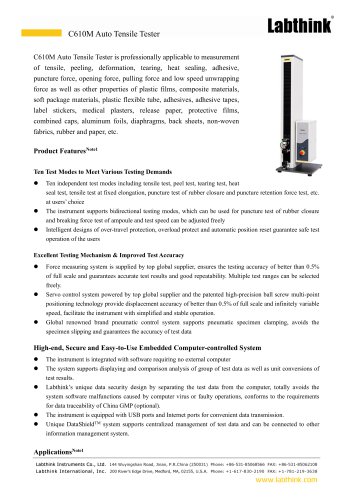 C610M
C610M3 Pages
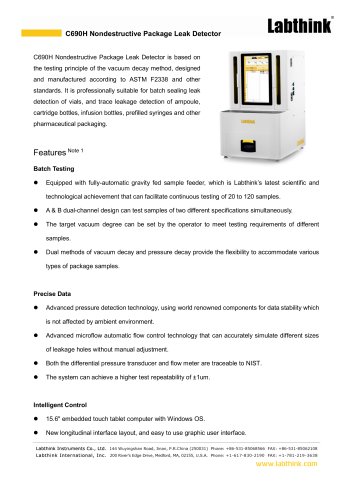
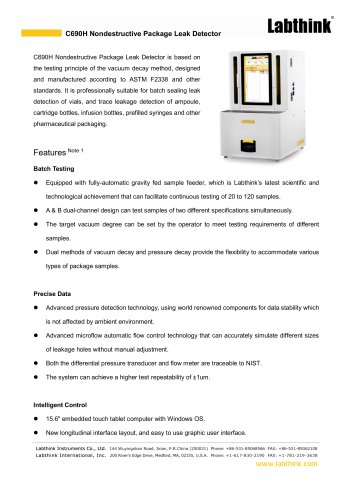 C690H
C690H4 Pages
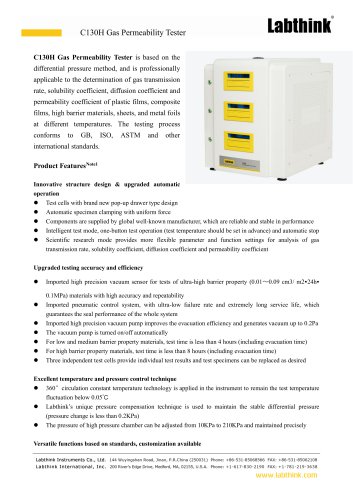 C130H
C130H4 Pages
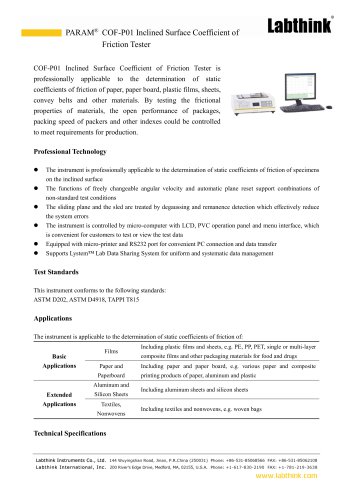 COF-P01
2 Pages
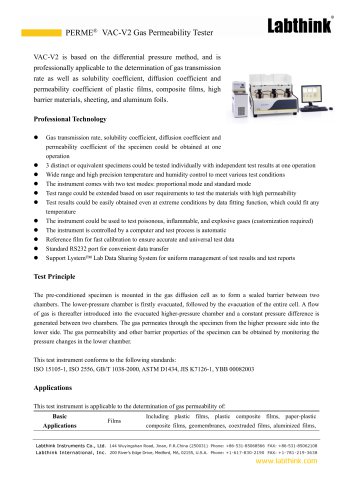 VAC-V2
3 Pages
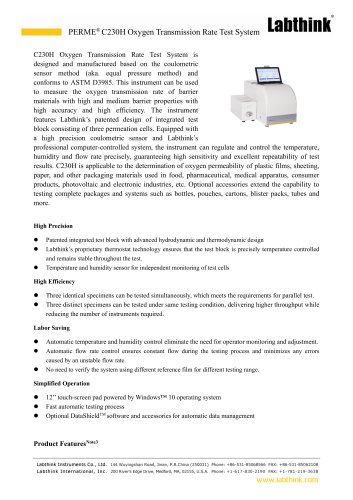 C230H (2025)
4 Pages
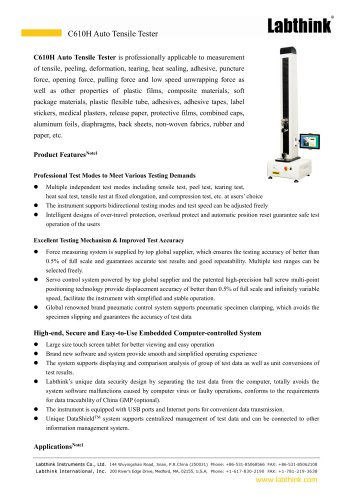 C610H
C610H3 Pages
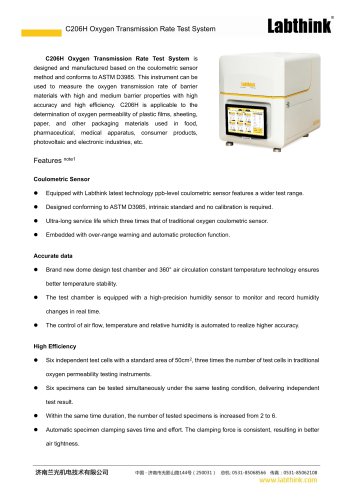
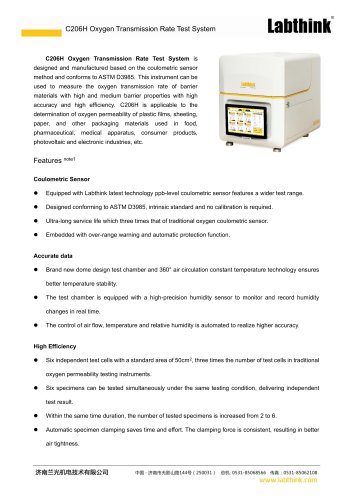 C206H
C206H4 Pages
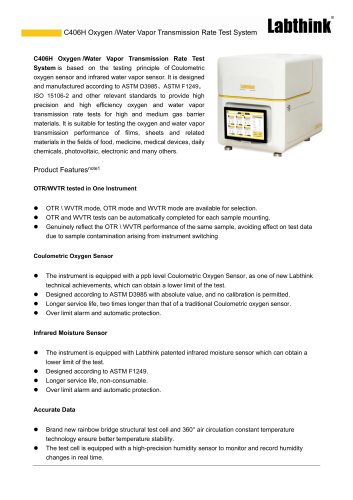
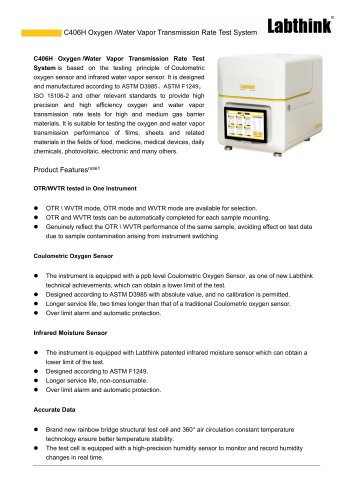
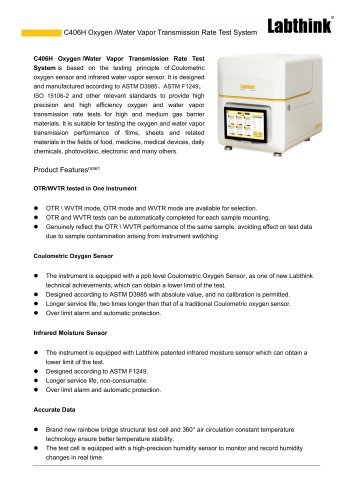
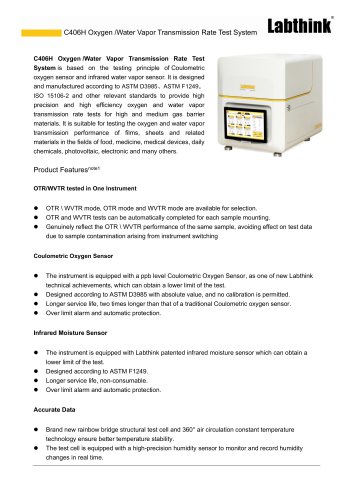
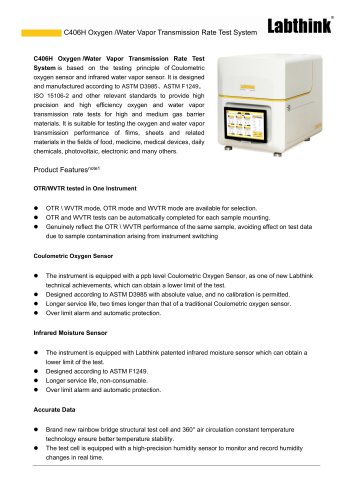
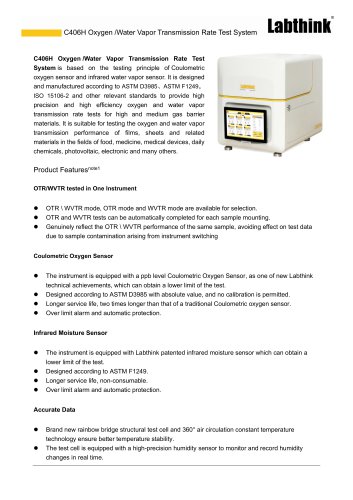
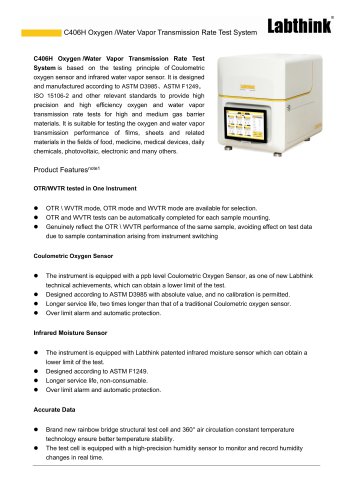
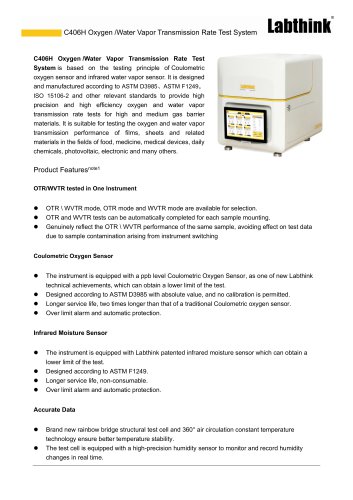
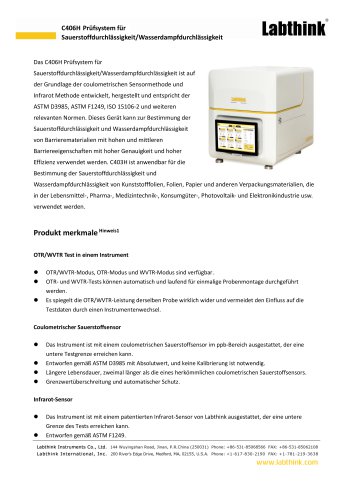
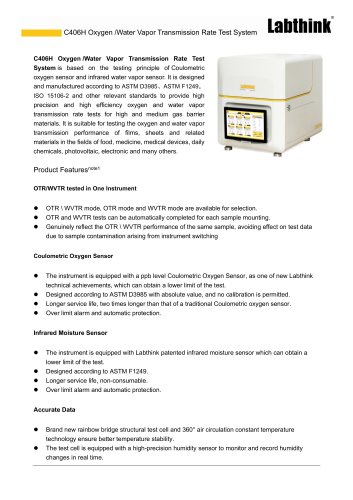 C406H
C406H5 Pages
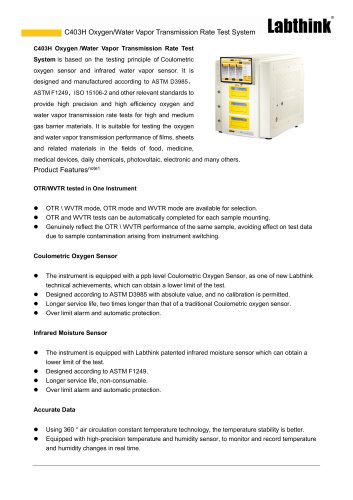
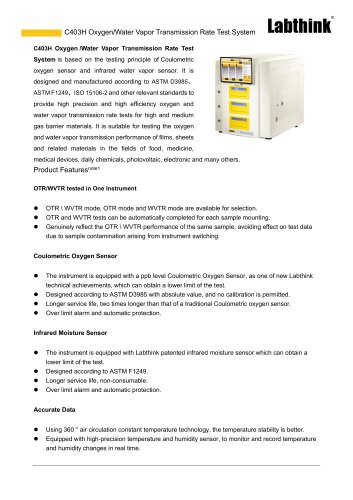 C403H
C403H5 Pages
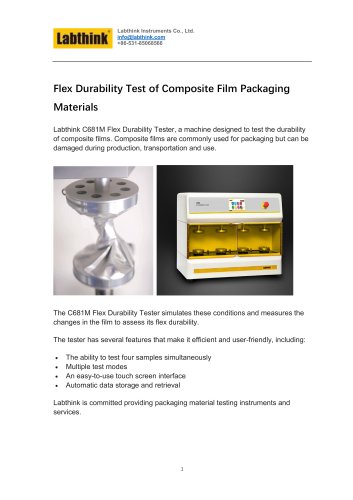 C 681M
1 Page
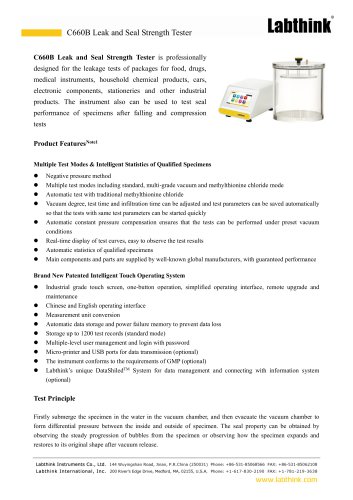 C660B (2025)
3 Pages
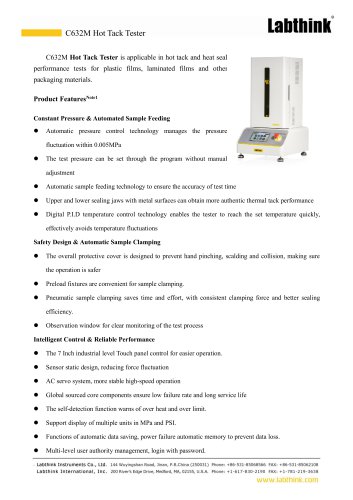 C632M
C632M3 Pages
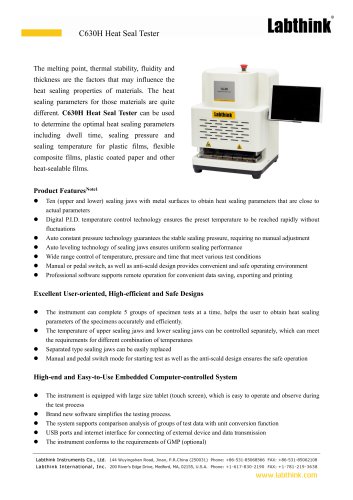 C630H
C630H3 Pages
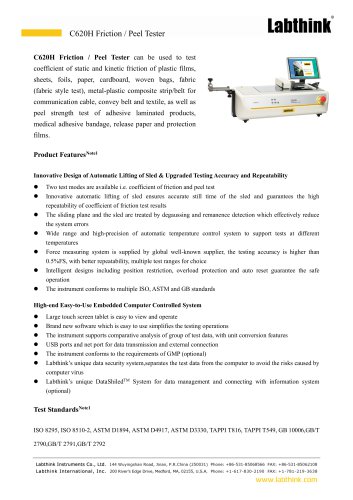 C620H
C620H3 Pages
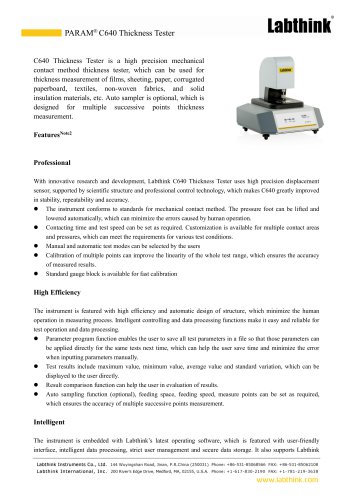 C 640
C 6404 Pages
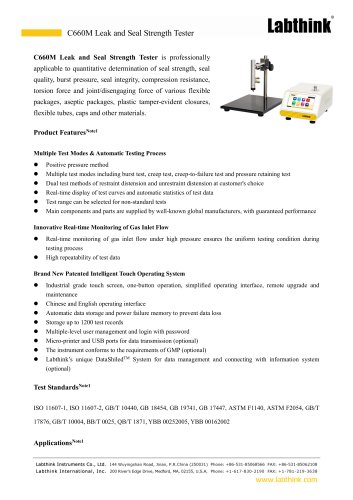
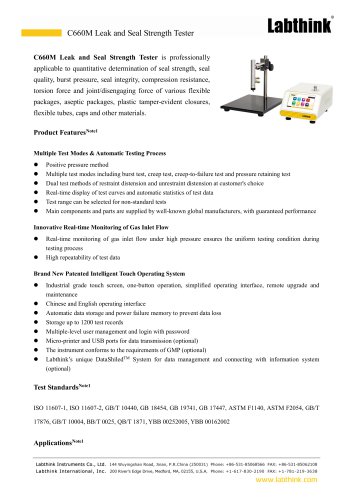
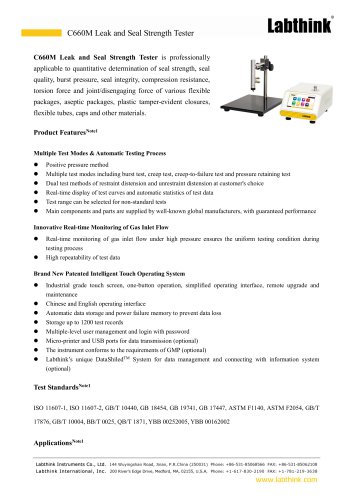
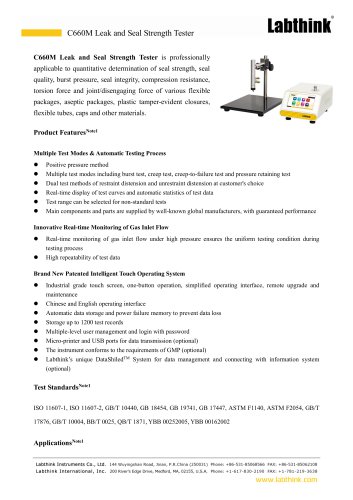 C 660M
3 Pages
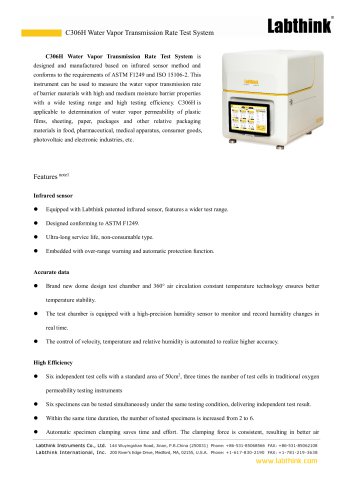 C306H (2025)
4 Pages
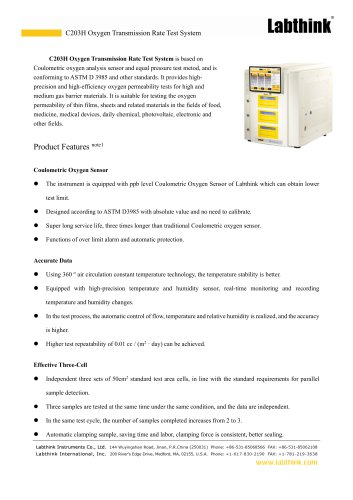 C203H
C203H4 Pages
 Heat seal testing instrument
3 Pages
 Paper Board Thickness Tester
4 Pages
 Film Thickness Meter
4 Pages
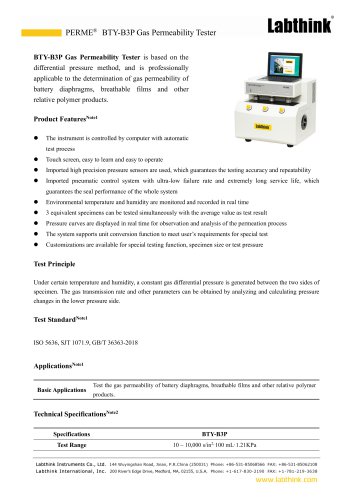 BTY-B3P
2 Pages
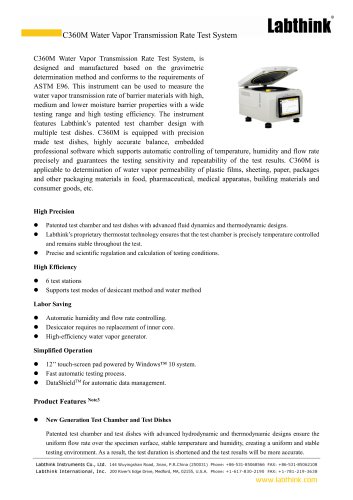 C360M
C360M4 Pages
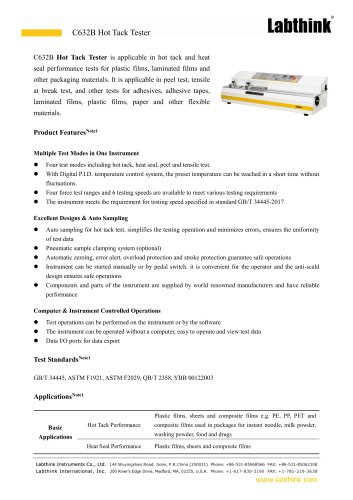 C632B
C632B3 Pages
 C632M Hot tack Tester
3 Pages
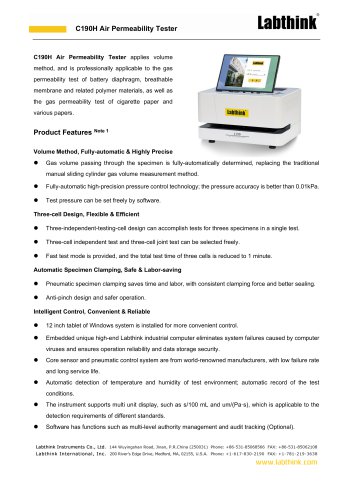 C190H
C190H3 Pages
 C650H Headspace Gas Analyzer
2 Pages
 C390H
C390H4 Pages
 C360H
C360H4 Pages
 C680M Tearing Tester
2 Pages
 C660M
C660M3 Pages
 C620H Friction / Peel Tester
3 Pages
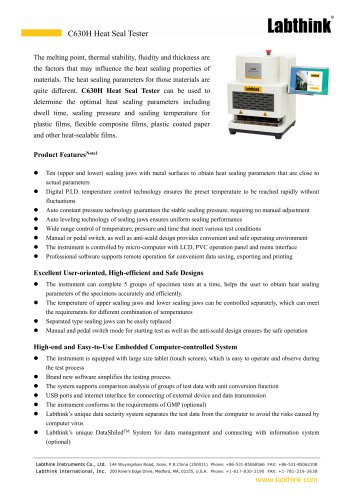 C630H Heat Seal Tester
3 Pages
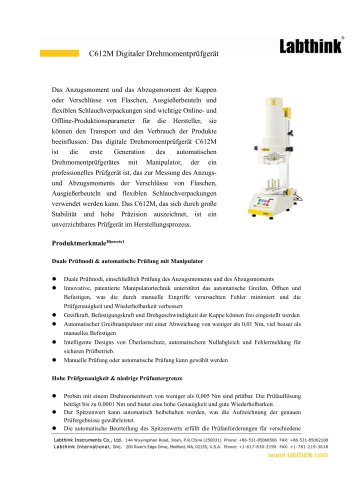
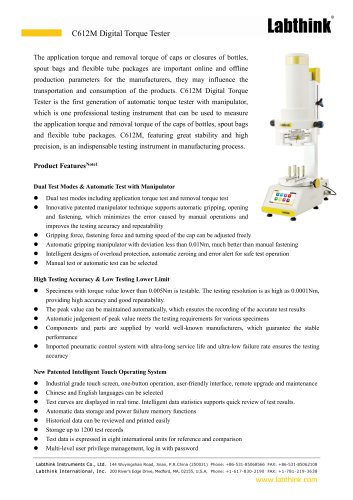 C612M Digitale Torque Tester
3 Pages
 Box Compression Tester
2 Pages
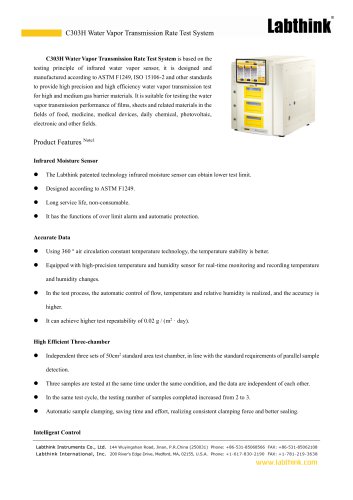 C303H
C303H4 Pages
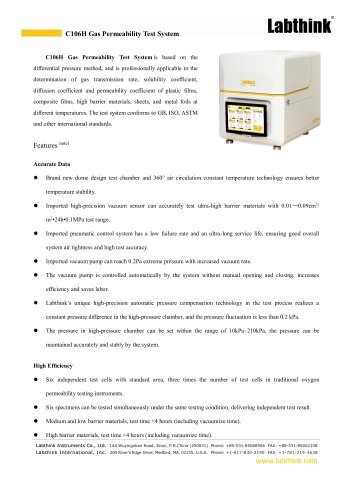 C106H
C106H5 Pages
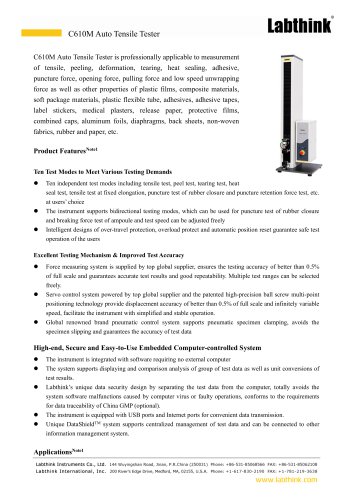 C610M Auto Testing Device
3 Pages
 Bottle Leak Tester Machine
3 Pages
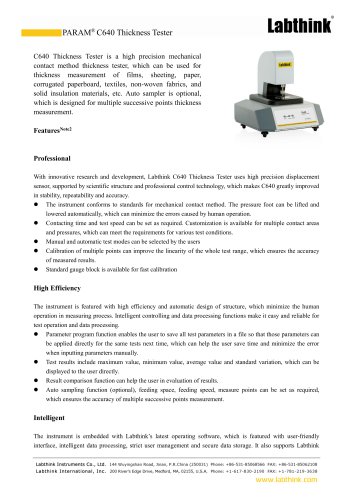
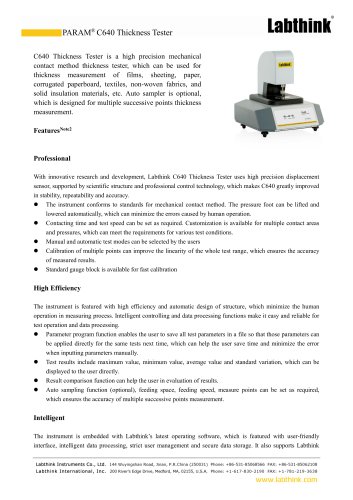 C640 Thickness Tester
4 Pages
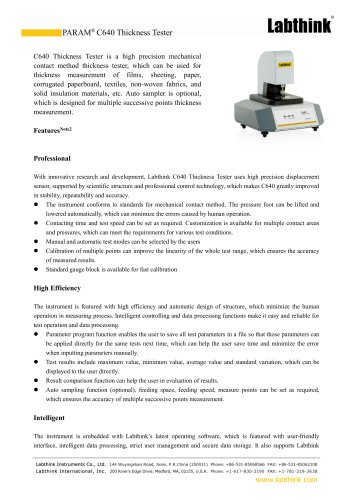 C640
C6404 Pages
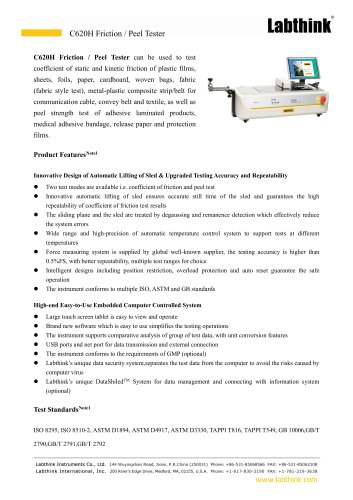 C620H Friction/ Peel Tester
3 Pages
 Pull Off Adhesion Tester
3 Pages
 Torque Measuring Devices
3 Pages
 Bottle Torque Tester
3 Pages
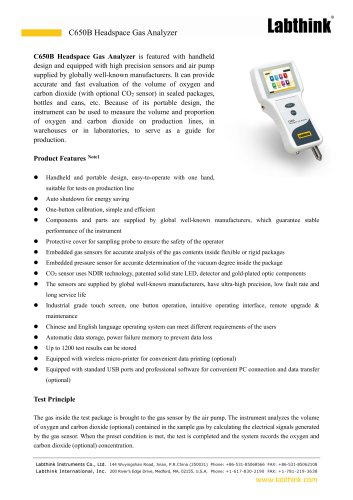 C650B Headspace Gas Analyser
2 Pages
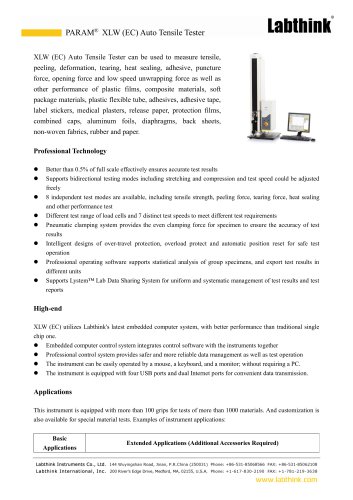 XLW (EC) Auto Tensile Tester
3 Pages
 Torque Strength Measuring
3 Pages
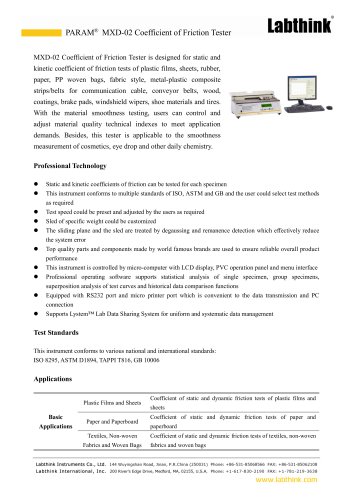
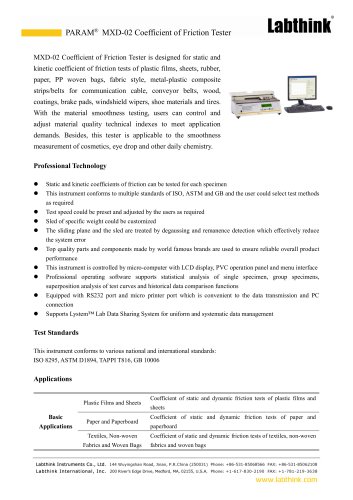 MXD-02
2 Pages
 C612M Digital Torque Tester
3 Pages
 Bag COF Tester
3 Pages
 Labthink Headspace Analyzer
2 Pages
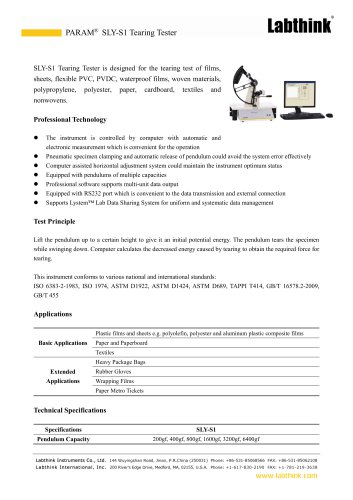 SLY-S1 Tearing Tester
2 Pages
 Sandwich Bag COF Tester
2 Pages
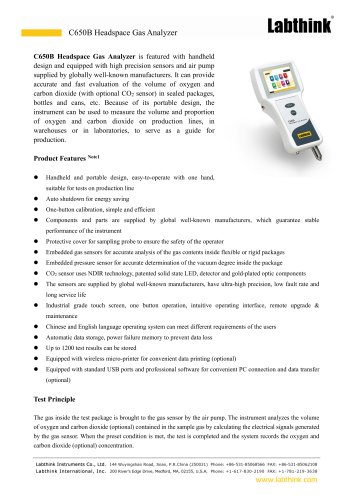 C650B Headspace GAZ Analyzer
2 Pages
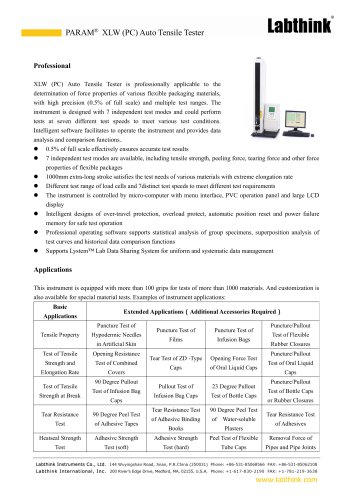 XLW (PC) Auto Tensile Tester
3 Pages
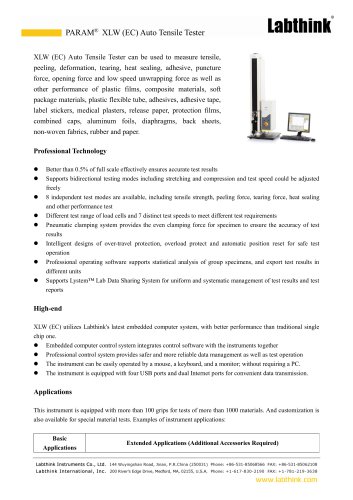 XLW (EC) Auto Testile Tester
3 Pages
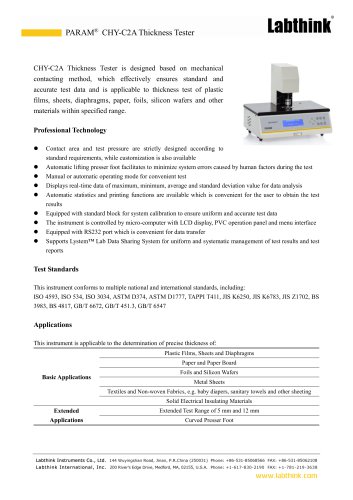 CHY-C2A
2 Pages
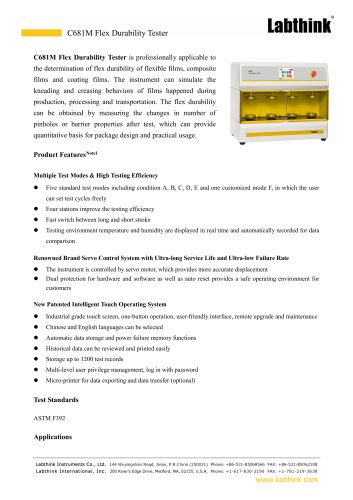 C681M Flex Durability Tester
2 Pages
 Heat Shrink Tester
2 Pages
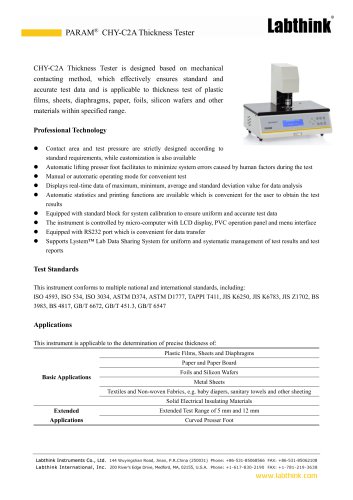 CHY-C2A Thickness Tester
2 Pages
 Tensile Testing Device
3 Pages
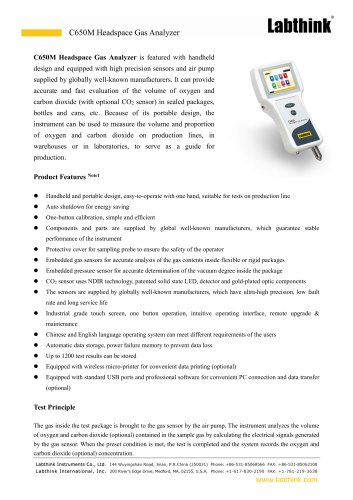 C650m Headspace Gaz Analyser
2 Pages
 MAP Packaging Burst Tester
3 Pages
 MAP Packaging Leak Tester
3 Pages
 Lug Cap Torque Tester
3 Pages
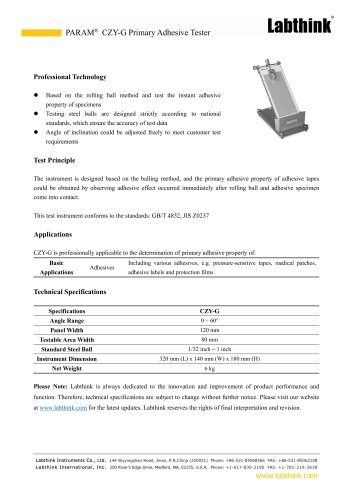 CZY - G Primary Tester
1 Page
 Motorized Pull Test Machine
3 Pages
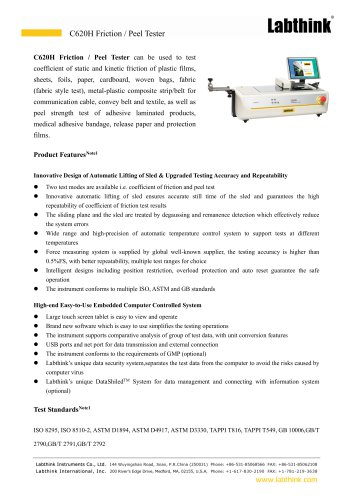 C620H Friction Tester
3 Pages
 Heat Seal Tester
3 Pages
 Roll Tack Tester
1 Page
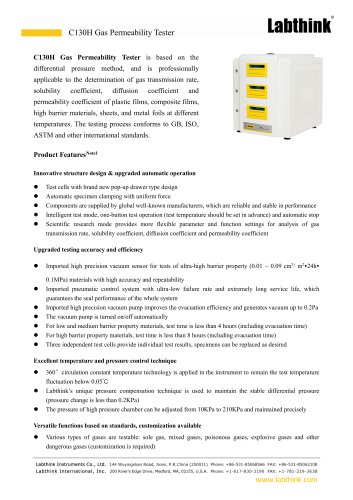 C130 Gas Permeability Tester
4 Pages
 Adhesive Tack Tester
2 Pages
 Vacuum Bag Leak Tester
3 Pages
 Micron Film Thickness Gauge
4 Pages
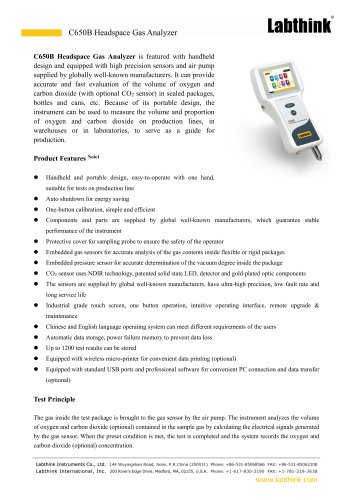 C650B Headspace Gaz Analyser
2 Pages
 Automatic Tube Leak Tester
2 Pages
 Burst Test Equipment
3 Pages
 Elongation Tester
3 Pages
 Box Compression Test Machine
2 Pages
 Adhesion Tester for Sticker
2 Pages
 Ink Rub Lab Equipment
2 Pages
 Friction Testing Machine
3 Pages
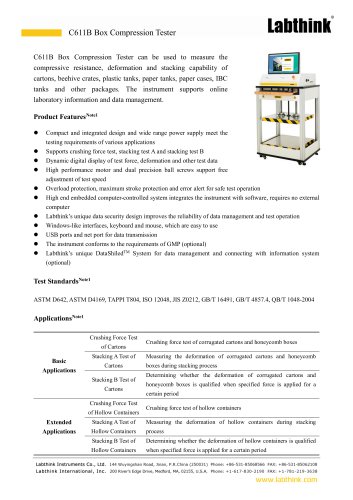 C611B
C611B2 Pages
 Fabric Thickness Measurement
4 Pages
 Snack Bag Leak Detector
3 Pages
 Carton Stacking Test Machine
2 Pages
 Sheet Metal Thickness Gauge
4 Pages
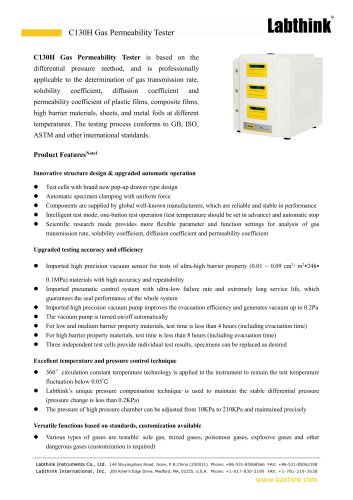 CH130
CH1304 Pages
 Residual oxygen level tester
2 Pages
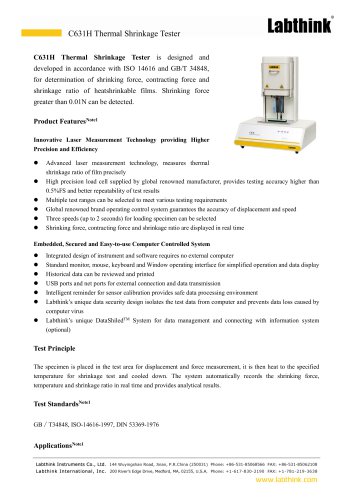 C 631 H
2 Pages
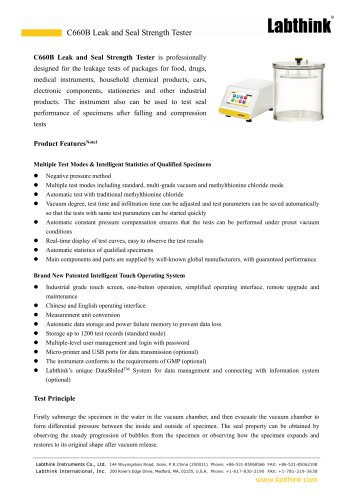 C660 B
3 Pages
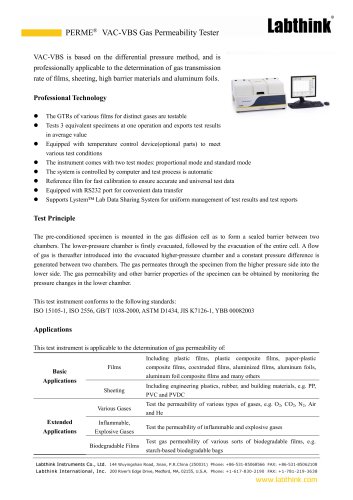 VAC-VBS
3 Pages
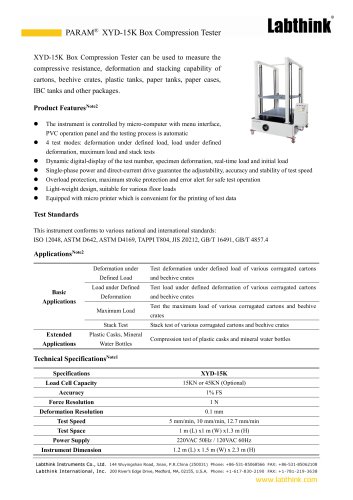 XYD-15K
2 Pages
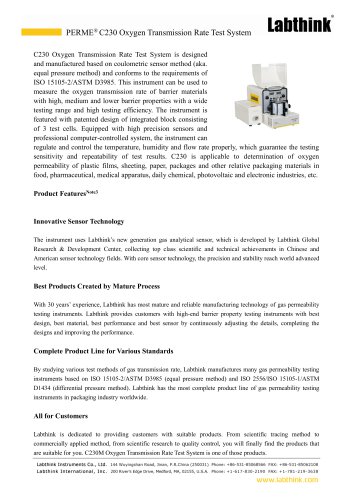 C360
C3604 Pages
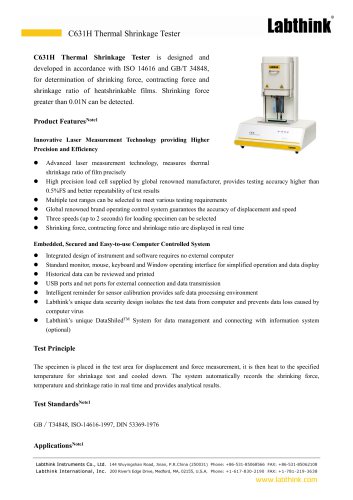 C631 H
2 Pages
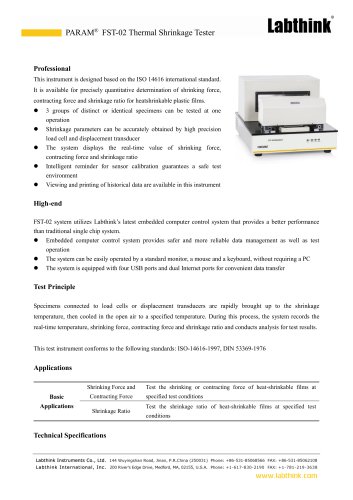 FST-02
2 Pages
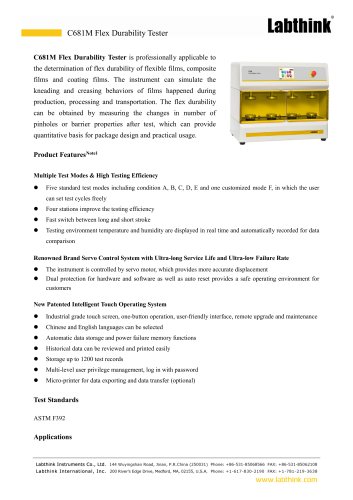 C681 M
2 Pages
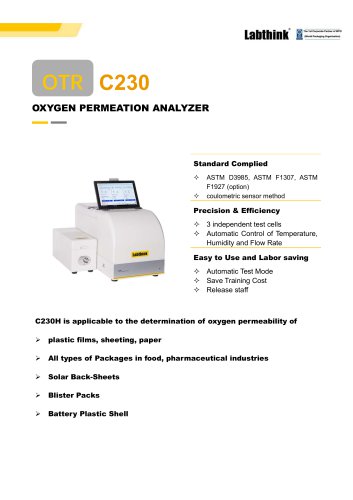
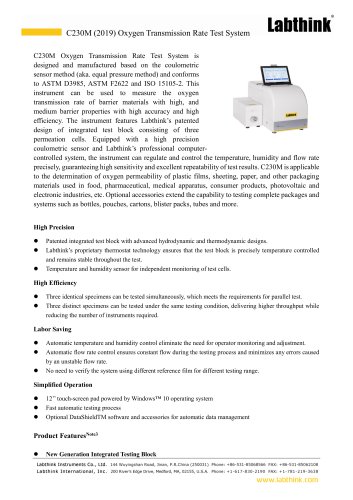
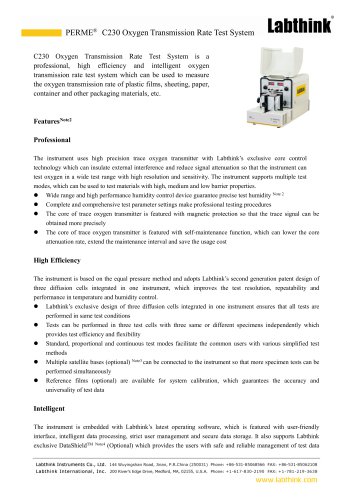 C230
C2304 Pages
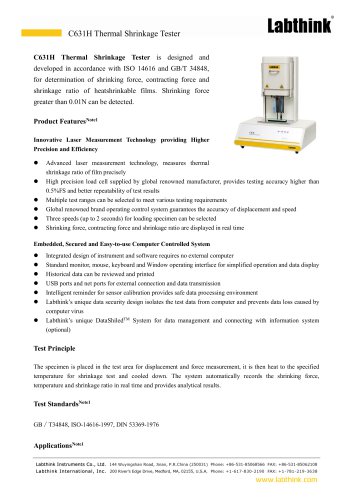 C631H
C631H2 Pages
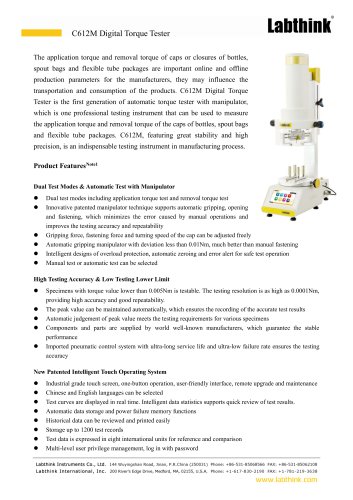 C612M
C612M3 Pages
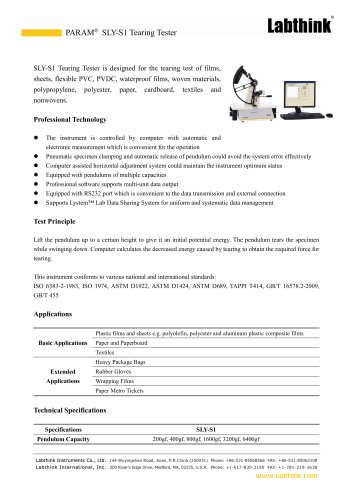 SLY-SI
2 Pages
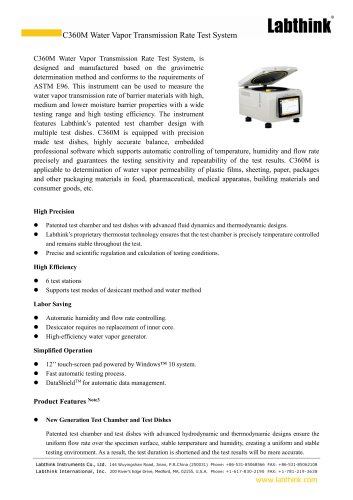 C360 M
4 Pages
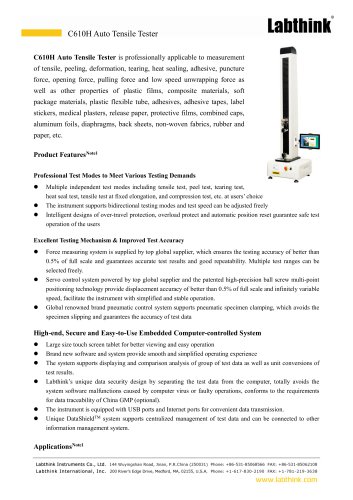
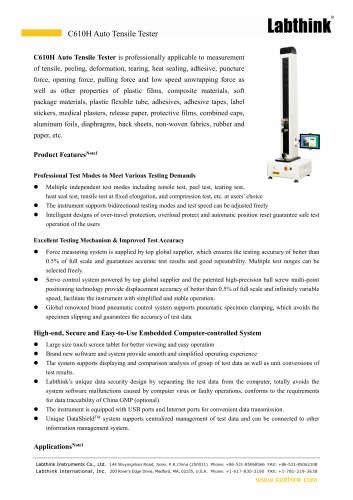 C610H Auto Tensile Tester
3 Pages
 Vacuum Tube Leak Tester
3 Pages
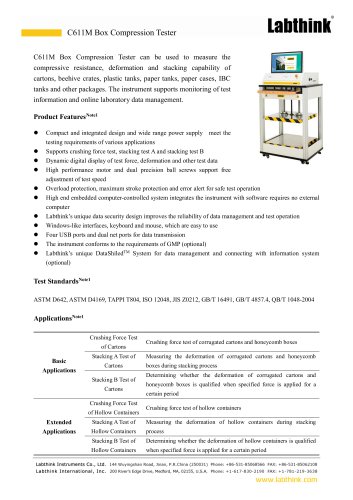 C611M
C611M2 Pages
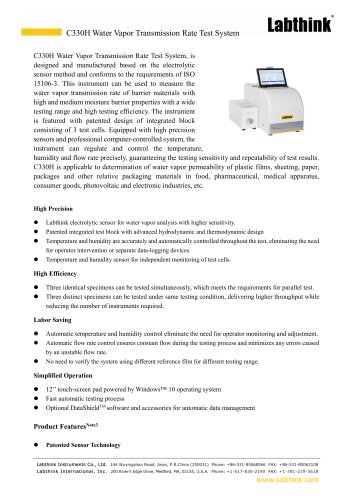
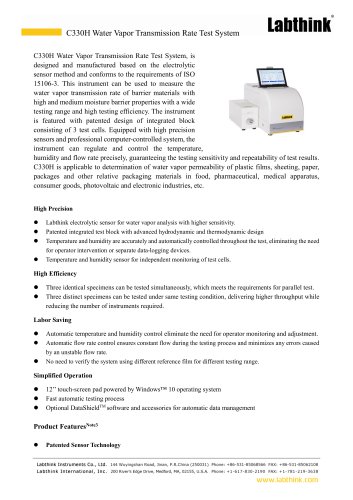 C330H
C330H4 Pages
 leak detector for packaging
3 Pages
 bottle torque tester machine
3 Pages
 micrometer per ASTM D374
4 Pages
 rub tester for wine labels
2 Pages
 LAB THICNESS TESTER
3 Pages
 Peel tester for 180 Degree
5 Pages
 Ball tack tester
5 Pages
 table top thickness gauge
12 Pages
 Tabletop sealing machine
14 Pages
 Film Friction Tester
2 Pages
 Head space Oxygen Analyser
2 Pages
 90 degree peel test Device
3 Pages
 C650M Headspace Gas Analyzer
2 Pages
 C650B Headspace Gas Analyzer
2 Pages
 C620H Friction
3 Pages
 Handheld Headspace Analyzer
2 Pages
 Cap Torque Machine
5 Pages
 Oxygen Permeation Analyser
3 Pages
 Oxygen Permeation Apparatus
3 Pages
 Bottle Cap Leak Tester
4 Pages
 torque meter for PET Bottles
3 Pages
 box compression device
5 Pages
 BLJ-02 Disk Stripping Tester
2 Pages
 RT-01 Rub Tester
2 Pages
 MCJ-01A Rub Tester
2 Pages
 Floor Slip Resistance Tester
5 Pages
 Leak Tester
3 Pages
 Tensile Testers
19 Pages
 Consultative Testing Service
4 Pages
 BOPP Tape Shear Tester
3 Pages
 Bell Jar leak tester
2 Pages
 COF testing of Polymer Films
2 Pages
 labthink MFY-01 Leak Tester
3 Pages
 Tablet Leak Test Apparatus
5 Pages
 Precise Tape Peeling Tester
5 Pages
 BOPP Film Thickness Meter
2 Pages
 Package Headspace Analyzer
5 Pages
 electrical torque meter
5 Pages
 tape peeling tester
5 Pages
 tensile testing instrument
5 Pages
 gas leakage detector LSSD-01
5 Pages
 XLW (G6) Auto Tensile Tester
3 Pages
 XLW (M) Auto Tensile Tester
3 Pages
 XLW (B) Auto Tensile Tester
2 Pages
 XLW Auto Tensile Tester
3 Pages
 CHY-C2 Thickness Tester
2 Pages
 CHY-CA Thickness Tester
2 Pages
 Plastic Film Thickness Test
2 Pages
 Tensile Strength Machine
5 Pages
 fogging testing machine
5 Pages
 heat sealing testing machine
5 Pages
 shrinkage testing machine
5 Pages
 torque testing machine
5 Pages
 Medical Package leak Tester
5 Pages
 Food Package leak Tester
5 Pages
 ink rubbing test machine
5 Pages
 rolling ball tack tester
5 Pages
 Glebo flex tester
5 Pages
 hot tack tester
5 Pages
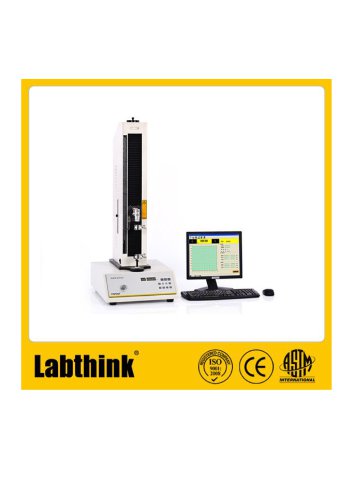 Tensile Strength Tester
5 Pages
 Rolling Ball Tester
5 Pages
 permeability apparatus
5 Pages
 CHY-CB Thickness Tester
2 Pages
 Heat Shrinkage Force Tester
5 Pages
 XLW (EC) Auto Tensile Tester
3 Pages
 gas leakage detector MFY-01
5 Pages
 materials Flex tester
5 Pages
 oxygen headspace analyzer
5 Pages
 cap torque testing machine
5 Pages
 Lasting Ahesion Tester
5 Pages
 Peeling strength tester
5 Pages
 Torque Measurement Equipment
2 Pages
 FDI-01
5 Pages
 Leakage Detector
5 Pages
 film thickness gauge
5 Pages
 rub testing machine
5 Pages
 air leakage tester
5 Pages
 vacuum leak detector
4 Pages
 plastic film testing machine
3 Pages
 carton compression test
5 Pages
 plastic cap torque tester
5 Pages
 manual torque tester
1 Page
 opening torque tester
2 Pages
 Oxygen headspace Analyzer
2 Pages
 Permeability Test System
2 Pages
 DIN 75201
2 Pages
 Tensile strength test bench
5 Pages
 impact testing equipments
2 Pages
 thickness gauge
5 Pages
 vacuum leak testing machine
2 Pages
 paper thickness measurement
5 Pages
 FDT-02 Gelbo Flex Tester
5 Pages
 Friction Coefficient Tester
5 Pages
 Drop Ball Impact Tester
5 Pages
 Dealers wanted
1 Page
 Abrasion Resistance Tester
2 Pages
 FPT-F1 Friction/ Peel Tester
2 Pages
 FT-F1 Fogging Tester
2 Pages
 Material Testing Equipment
2 Pages
 Packaging Testing
2 Pages
 Abrasion Test
2 Pages
 Torque Meter
2 Pages
 pendulum impact tester
2 Pages
 Oxygen Transmission Analyzer
2 Pages
 Friction Tester
2 Pages
 Leak Detector
2 Pages
 Analyzer for MAP
2 Pages
 Adhesive Strength Tester
1 Page
 O2 & CO2 Analyzer
1 Page
 Gas Permeability Tester
2 Pages
 Lasting Adhesive Tester
2 Pages
 Cap Torque Tester
3 Pages
 Lasting Adhesion Tester
2 Pages
 Gradient Heat Seal Tester
4 Pages
 Head space gas Analysis
4 Pages
 Headspace Gas Analyser
3 Pages
 Headspace Gas Analyzer
3 Pages
 Material Tensile Tester
5 Pages
 Ink Rub Tester
2 Pages
 medical packaging tester
3 Pages
 Hot Tack Tester (Data Sheet)
2 Pages
 Heat Sealing tester
2 Pages
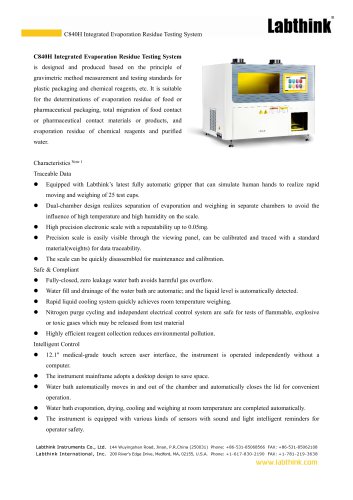
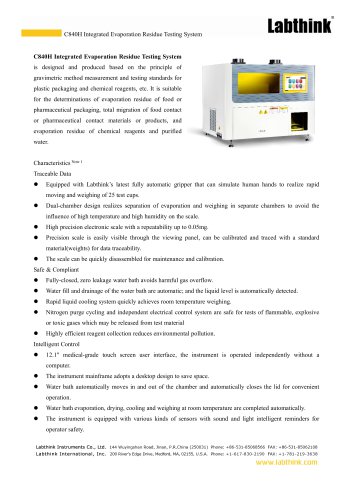
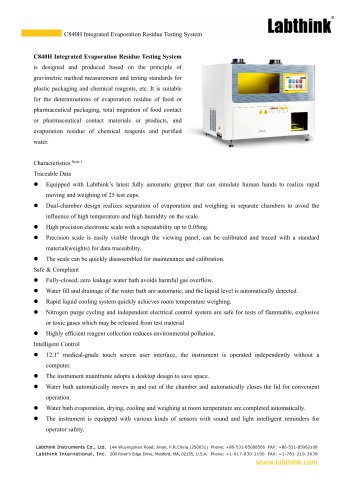
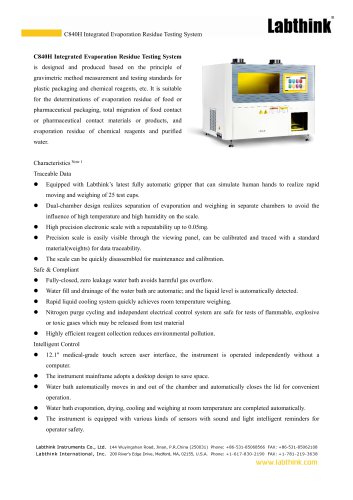
 Evaporation Residue Tester
3 Pages
 Blister Package testing
3 Pages
 Gas Permeability Analyzer
3 Pages
 Tensile Testing Machine
2 Pages
 package integrity tester
2 Pages
 Oxygen permeation Analyzer
2 Pages
 Drop Impact Tester
2 Pages
 Torque tester
2 Pages
 Compression Testing Machine
2 Pages
 Material Testing Machine
3 Pages
 Shrink Film testing
2 Pages
 fogging tester
2 Pages
 Impact tester
2 Pages
 Material Testing
2 Pages
 laboratory heat sealer
2 Pages
 Automated Heat Sealer
1 Page
 analog thickness gauge
1 Page
 Residual Gas Analyzer
1 Page
 digital torque gauge
1 Page
 packaging Industry
2 Pages
 Metrology and Test Equipment
2 Pages
 Tensile Tester
2 Pages
 material moisture monitor
2 Pages
 Gas Analyzer
2 Pages
 Headspace Gas Analyzer
1 Page
 FRICTION/PEEL TESTER
1 Page
 HOLDING TACK TESTER
1 Page
 ROLLING BALL TESTER
1 Page
 BOX COMPRESSION TESTER
1 Page
 INK RUB TESTER
1 Page
 FOGGING TESTER
2 Pages
 Film Shrinkage Tester
1 Page
 THICKNESS TESTER
1 Page
 TOQUE TESTER
1 Page
 Tearing Tester
1 Page
 Gas Permeability Tester
1 Page
 Oxygen Permeability Tester
2 Pages








































































































































Archived catalogs
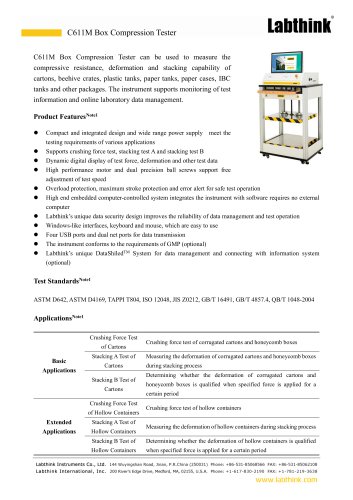 C611M
C611M2 Pages
 C611B Box Compression Tester
2 Pages
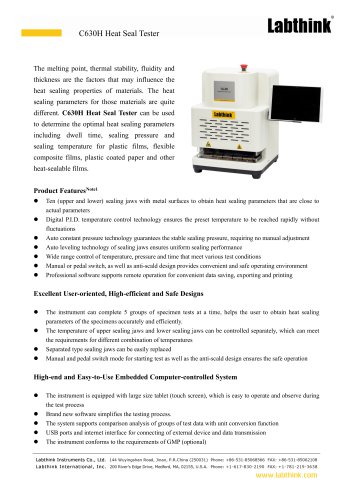 C306H
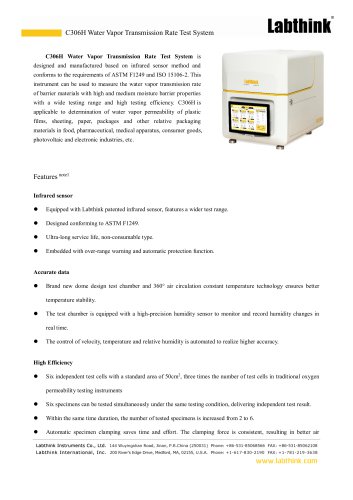
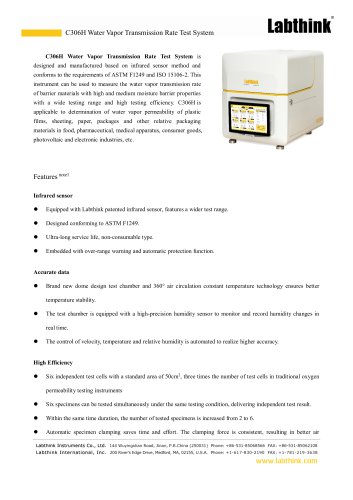
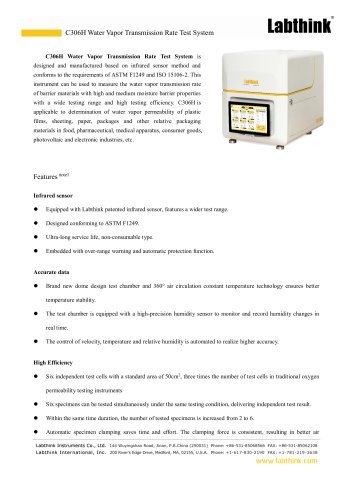
C306H3 Pages
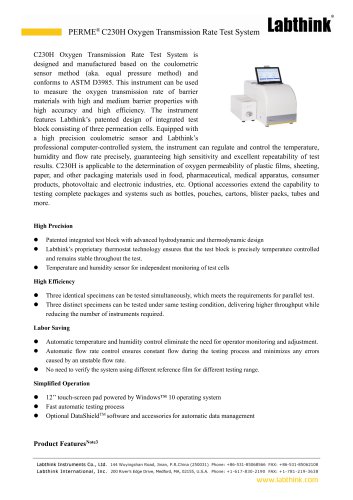
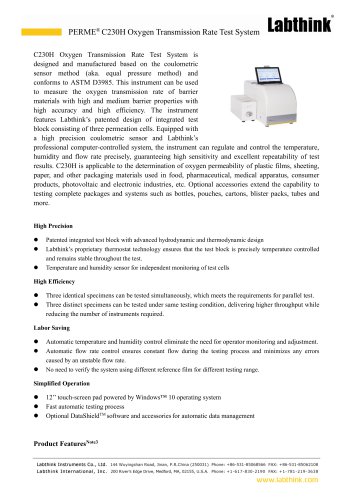
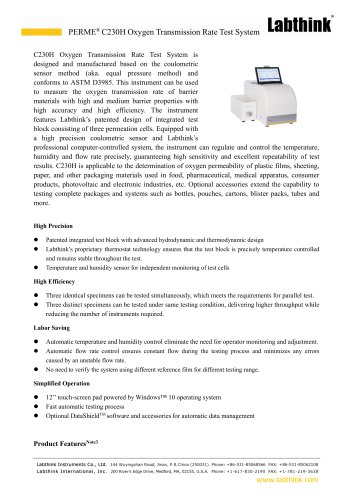
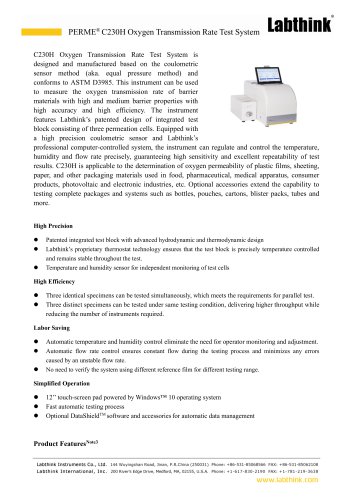
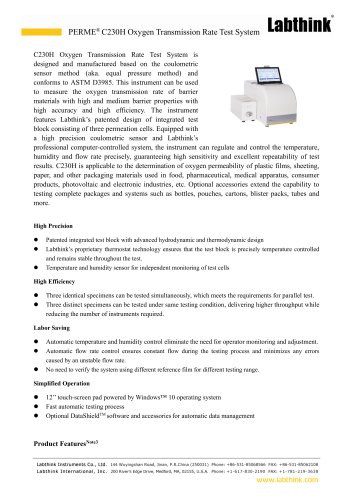
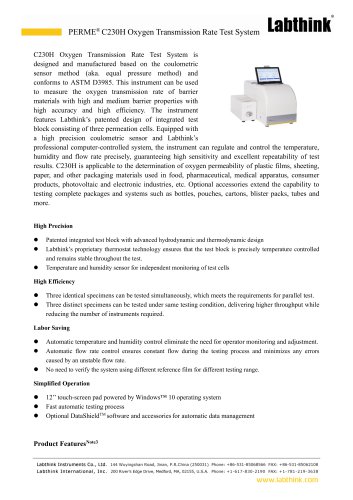
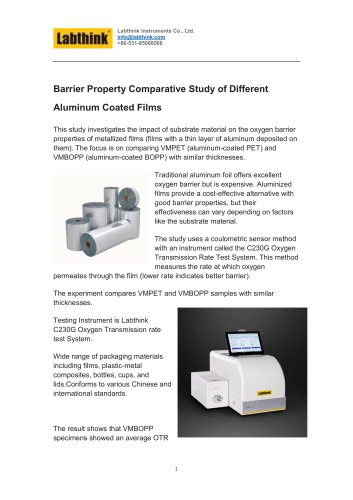
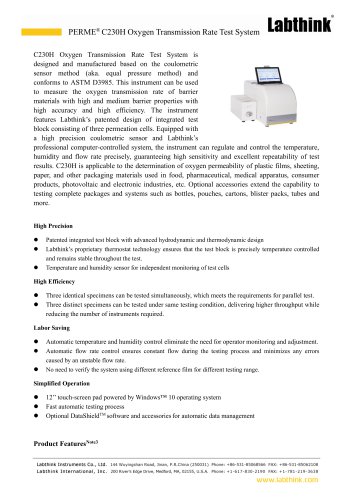 C230H
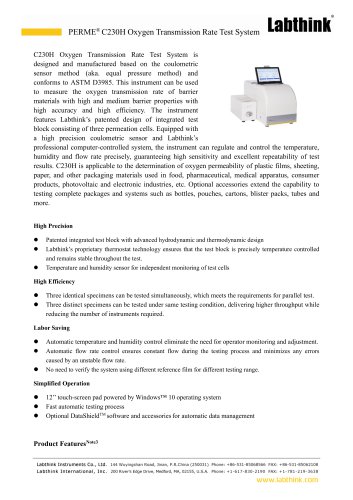
C230H4 Pages
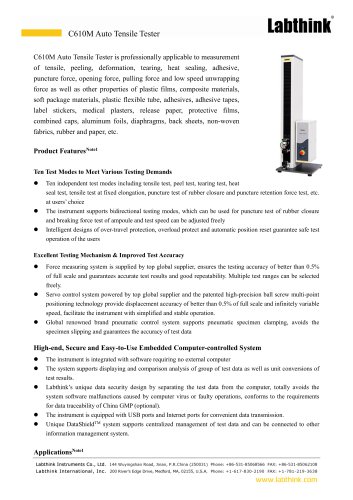
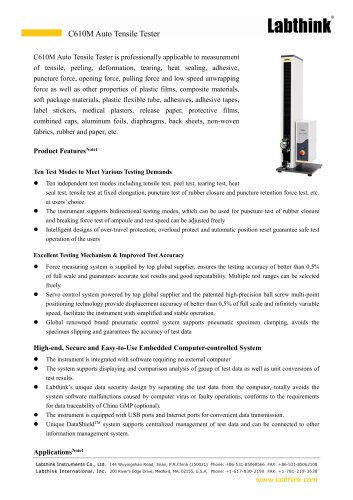 C610M Auto Tensile Tester
3 Pages
 Leak Tester
2 Pages






- Labthink Instruments testing machine
- Labthink Instruments gas analyzer
- Measuring device
- Concentration analyzer
- Monitoring analyzer
- Test stand
- Measuring machine
- Automatic analyser
- Labthink Instruments material testing machine
- Automated testing machine
- Benchtop analyser
- Solids analyser
- Computer-controlled test machine
- Process analyzer
- Portable analyzer
- Compression testing machine
- Continuous analyzer
- Labthink Instruments digital tester
- Industrial testing machine
- Labthink Instruments vertical testing machine