

- Company
- Products
- Catalogs
- News & Trends
- Exhibitions
Non-methane hydrocarbon
Non-methane hydrocarbon
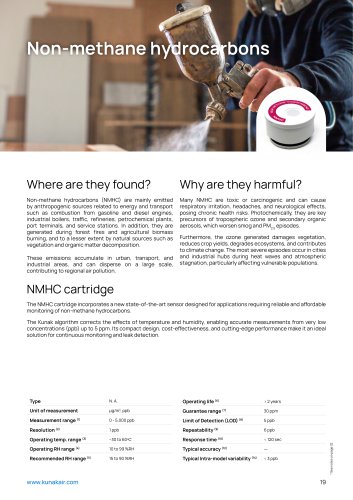
Non-methane hydrocarbons are primarily emitted from anthropogenic sources such as energy and transport sectors, including combustion from gasoline and diesel engines, industrial boilers, traffic, refineries, petrochemical plants, port terminals, and service stations. They are also produced during forest fires and agricultural biomass burning, with minor contributions from natural sources like vegetation and organic matter decomposition. These emissions accumulate in urban, transport, and industrial areas, contributing to regional air pollution.
Many NMHCs are toxic or carcinogenic, causing respiratory irritation, headaches, and neurological effects, posing chronic health risks. They are key precursors of tropospheric ozone and secondary organic aerosols, exacerbating smog and PM2.5 episodes. Ozone generated from NMHCs damages vegetation, reduces crop yields, degrades ecosystems, and contributes to climate change. Severe episodes occur in cities and industrial hubs during heat waves and atmospheric stagnation, particularly affecting vulnerable populations.
- Operating life: > 2 years
- Guarantee range: 30 ppm
- Limit of Detection (LOD): 5 ppb
- Repeatability: 6 ppb
- Response time: < 120 sec
- Typical Intra-model variability: < 3 ppb
- Measurement range: 0 - 5,000 ppb
- Resolution: 1 ppb
- Operating temperature range: -30 to 60ºC
- Operating RH range: 10 to 99 %RH
- Recommended RH range: 15 to 90 %RH
The NMHC cartridge features a state-of-the-art sensor designed for reliable and affordable monitoring of non-methane hydrocarbons. The Kunak algorithm corrects temperature and humidity effects, enabling accurate measurements from very low concentrations (ppb) up to 5 ppm. Its compact design, cost-effectiveness, and cutting-edge performance make it ideal for continuous monitoring and leak detection.
Catalog excerpts

Non-methane hydrocarbons (NMHC) are mainly emitted by anthropogenic sources related to energy and transport such as combustion from gasoline and diesel engines, industrial boilers, traffic, refineries, petrochemical plants, port terminals, and service stations. In addition, they are generated during forest fires and agricultural biomass burning, and to a lesser extent by natural sources such as vegetation and organic matter decomposition. These emissions accumulate in urban, transport, and industrial areas, and can disperse on a large scale, contributing to regional air pollution. Many NMHC are toxic or carcinogenic and can cause respiratory irritation, headaches, and neurological effects, posing chronic health risks. Photochemically, they are key precursors of tropospheric ozone and secondary organic aerosols, which worsen smog and PM2 5 episodes. Furthermore, the ozone generated damages vegetation, reduces crop yields, degrades ecosystems, and contributes to climate change. The most severe episodes occur in cities and industrial hubs during heat waves and atmospheric stagnation, particularly affecting vulnerable populations. The NMHC cartridge incorporates a new state-of-the-art sensor designed for applications requiring reliable and affordable monitoring of non-methane hydrocarbons. The Kunak algorithm corrects the effects of temperature and humidity, enabling accurate measurements from very low concentrations (ppb) up to 5 ppm. Its compact design, cost-effectiveness, and cutting-edge performance make it an ideal solution for continuous monitoring and leak detection. Unit of measurement Measurement range (1) Resolution (2) Operating temp. range (3) Operating RH range (4) Recommended RH range (5) Operating life (6) > 2 years Typical Intra-model variability (14) < 3 ppb
Open the catalog to page 1All Kunak catalogs and technical brochures
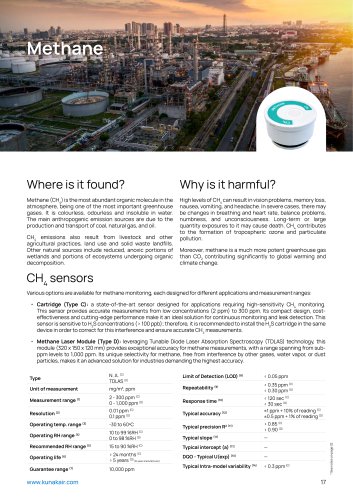 CH4 sensors
1 Page
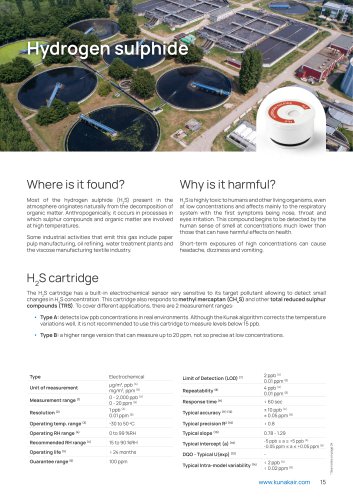 H2 S cartridg
1 Page
 O3 cartridge
1 Page
 NO2 cartridge
1 Page
 CO cartridge
1 Page
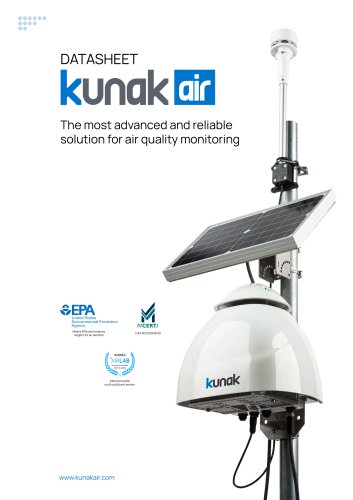 Datasheet Kunak AIR
12 Pages

Archived catalogs
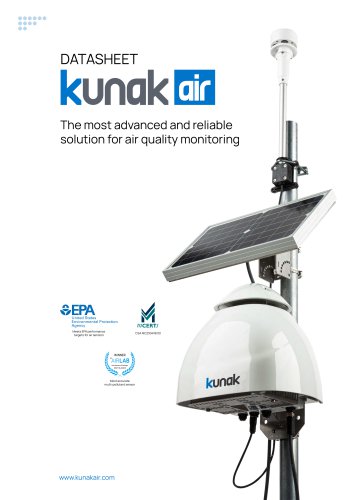 Kunak AIR Datenblatt
12 Pages
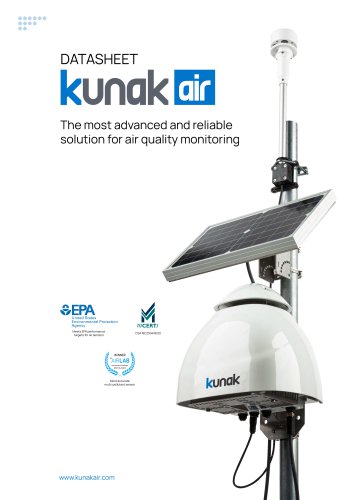 Scheda tecnica Kunak AIR
12 Pages
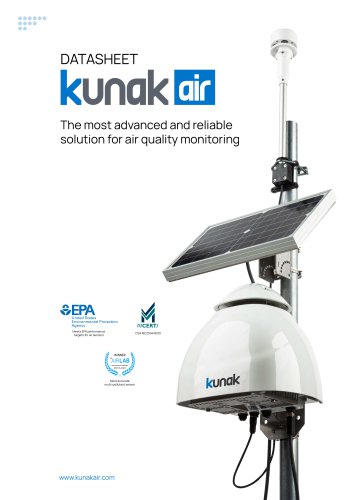 Kunak AIR datasheet
12 Pages
- Management software solution
- Analysis software solution
- Real-time software
- Computer-aided design software
- Cloud-based software
- Design software solution
- Monitoring software solution
- Industrial software
- Measurement software
- Interface software
- Visualization software solution
- Quality software
- Simulation software solution
- Automated software
- Network software
- Creation software
- Data acquisition software
- Calculation software
- Data analysis software
- Oxygen meter