

PC9035
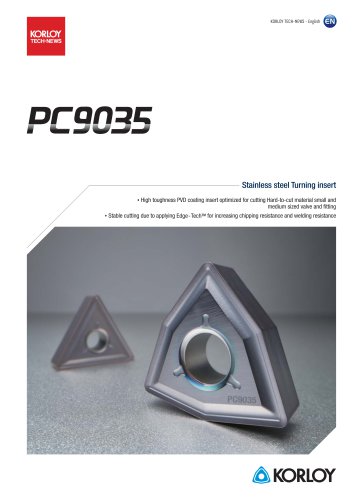
PC9035
PC9035 is a high-performance stainless steel turning insert developed by KORLOY, optimized for cutting hard-to-cut materials such as small and medium-sized valves and fittings. It features a high toughness PVD coating and Edge-TechTM technology to enhance chipping and welding resistance, ensuring stable machining even under interrupted cutting conditions.
The PC9035 insert is designed with TEX-TechTM, a high toughness PVD coating layer technology, providing excellent chipping and fracture resistance. The Edge-TechTM technology further enhances cutting stability by reducing welding and unexpected fractures.
For various stainless steel series, the recommended cutting conditions vary based on the material's Brinell hardness and specific cutting force. For example, for the Austenite series (X5CrNi18-9), a cutting speed (vc) of 80-160 m/min and a feed rate (fn) of 0.05-0.30 mm/rev are suggested.
PC9035 demonstrates superior performance compared to competitors, with up to 50% more material removal and longer tool life. For instance, in cutting stainless steel (X5CrNiMo17-12-2), PC9035 achieved a 46% higher material removal rate than competitors.
PC9035 is suitable for various applications, including valve and fitting machining. It offers a 30% longer tool life in valve applications and a 43% longer tool life in fitting applications compared to competitors.
Operators are advised to use protective gloves and safety glasses, clamp workpieces securely, and manage tool changes properly to prevent injuries and ensure safe machining operations. Fire prevention measures should be in place when using non-water soluble cutting oils.
Catalog excerpts
KORLOY TECH-NEWS - English Stainless steel Turning insert ҁ High toughness PVD coating insert optimized for cutting Hard-to-cut material small and medium sized valve and fitting Stable cutting due to applying Edge - TechTM for increasing chipping resistance and welding resistance
Open the catalog to page 1
Stainless steel Turning insert Stainless steel is a kind of metal materials used for various industries such as food, medical appliance, automobile components and construction due to its excellent corrosion resistance, high hardness and gloss. Especially it is widely used for valve, fitting and pipe components which require corrosion resistance. Because these components are usually produced under the casting process, they have uneven surface and complicated shape. For that reason, impact in unstable approach of cutting and welding characteristic of Stainless steel leads to chipping and fracture...
Open the catalog to page 2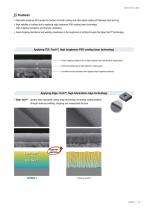
KORLOY TECH - NEWS Optimally designed PVD grade for medium to finish cutting and interrupted cutting of Stainless steel turning High stability of cutting due to applying high toughness PVD coating layer technology with chipping resistance and fracture resistance Good chipping resistance and welding resistance in the beginning of cutting through the Edge-TechTM technology Applying TEX - TechTM, high toughness PVD coating layer technology Good chipping resistance due to high toughness and high elasticity coating layer Enhanced adherence by high adherence coating layer Excellent fracture resistance...
Open the catalog to page 3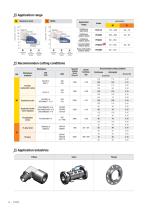
Application range S Cutting speed, vc (m/min) Cutting speed, vc (m/min) Continuous, medium speed Continuous, medium speed Low interrupted, medium speed Heavy interrupted, medium speed Light interrupted cutting Continuous, high speed Application range Heavy interrupted cutting Continuous cutting Light interrupted cutting Heavy interrupted cutting Recommenden cutting conditions Workpiece ISO Workpiece material Specific cutting force (N/mm2) Ferritic/ martensitic series X12Cr13 Austenite series Austenite-ferritic series (duplex) Precipitation series Recommended cutting condition Continuous Application...
Open the catalog to page 4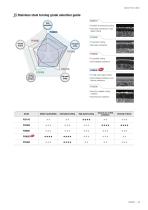
KORLOY TECH - NEWS Stainless steel turning grade selection guide PC8110 Stable machinability Excellent at continuous cutting Good wear resistance in high speed cutting Interrupted cutting Good wear resistance Good chipping resistance High speed cutting For high interrupted cutting Good chipping resistance and fracture resistance Good for unstable cutting condition Good fracture resistance Stable machinability Interrupted cutting High speed cutting
Open the catalog to page 5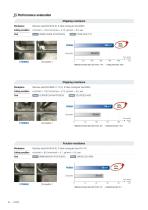
Performance evaluation Chipping resistance Workpiece Stainless steel (X5CrNi18-9), 6 Steel rectangular tube (Ø60) Cutting condition •Material removal rate Q (cm /min) : 14.4 Total material amount (cm3) Chipping resistance Workpiece Stainless steel (X5CrNiMo17-12-2), 6 Steel rectangular tube (Ø60) Cutting condition •Material removal rate Q (cm3/min) : 8.6 Total material amount (cm3) Fracture resistance Workpiece Stainless steel (X5CrNi18-9), 4 Steel rectangular tube (70×70) Cutting condition •Material removal rate Q (cm /min) : 4.8 Total material
Open the catalog to page 6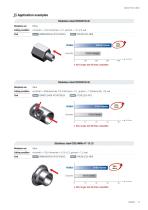
KORLOY TECH - NEWS Application examples Stainless steel (X5CrNi18-9) Workpiece use Cutting condition 43% longer tool life than competitor Stainless steel (X5CrNi18-9) Workpiece use Cutting condition vc (m/min) = 90 (Internal dia. 70), fn (mm/rev) = 0.1, ap (mm) = 1.5 (Internal dia. 1.0), wet 24% longer tool life than competitor Stainless steel (X2CrNiMo17-12-2) Workpiece use Cutting condition 30% longer tool life than competitor
Open the catalog to page 7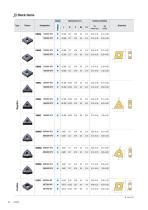
Stock items Type Cutting condition
Open the catalog to page 8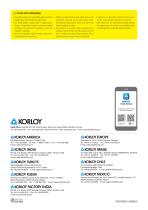
KORLOY TECH - NEWS For the safe metalcutting Use safety supplies such as protective gloves to prevent possible injury while touching the edge of tools. Use safety glasess or safety cover to hedge possible dangers. Inappropriate usage or excessive cutting condition may lead tool's breakage or even the fragment's scattering. Clamp the workpiece tightly enough to prevent its movement while its machining. Properly manage the tool change phase because the inordinately used tool can be easily broken under the excessive cutting load or severe wear, and it may threat the operator's safety. Use safety...
Open the catalog to page 9All KORLOY catalogs and technical brochures
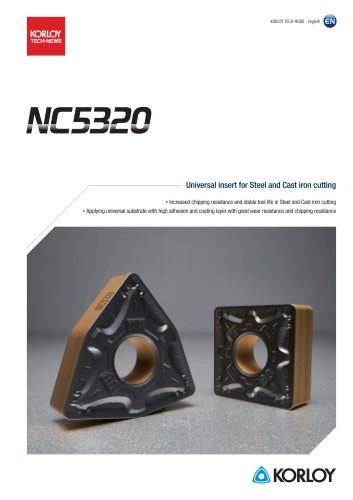 NC5320
9 Pages
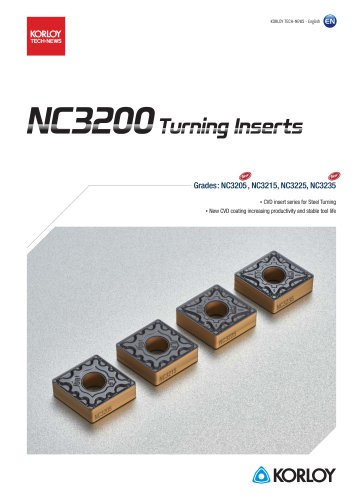 NC3200 Turning Inserts
24 Pages
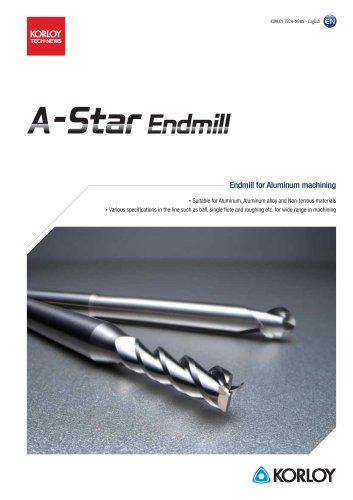 A-Star Endmil
5 Pages
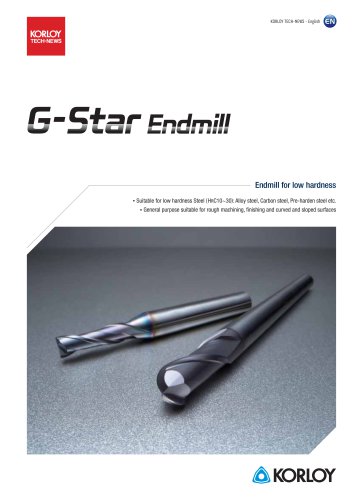 G-Star Endmil
5 Pages
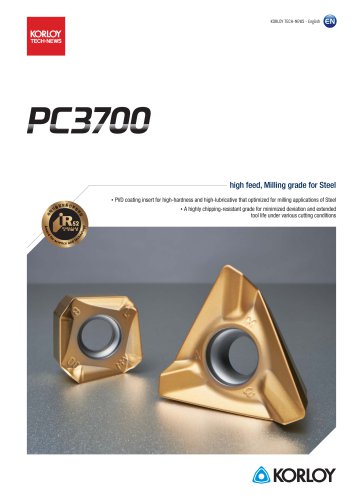 PC3700
14 Pages
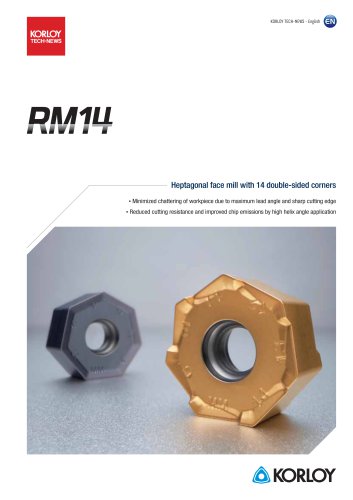 RM14
RM1410 Pages
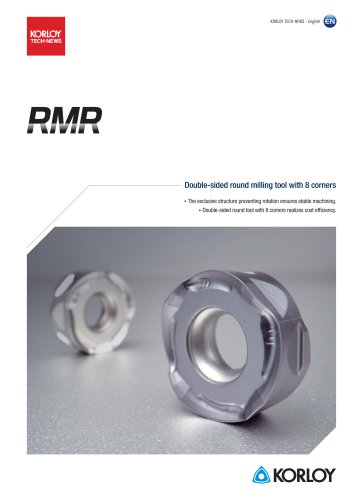 RMR
RMR10 Pages
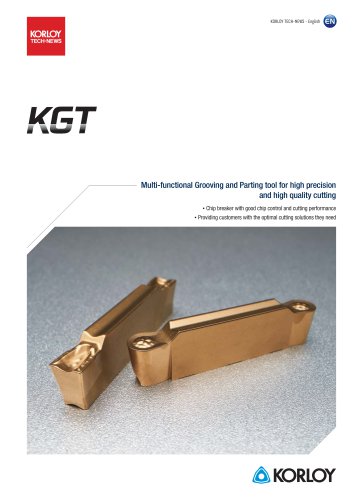 KTG
KTG31 Pages
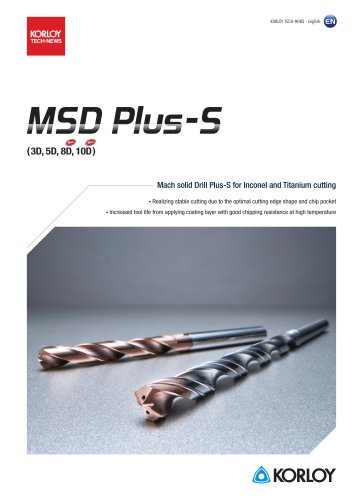 MSD Plus-S
15 Pages
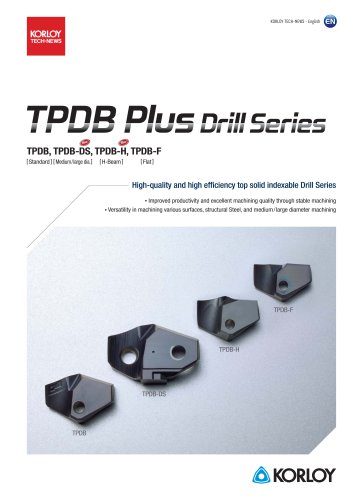 TPDB Plus Drill
40 Pages
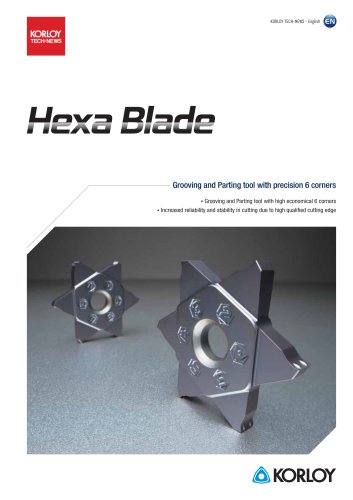 Hexa Blade
10 Pages
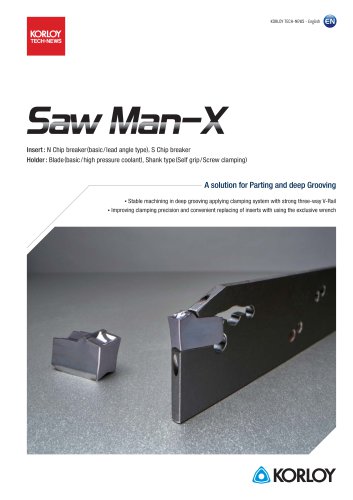 Saw Man-X
14 Pages
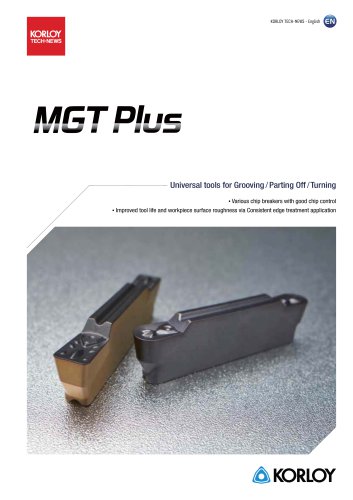 MGT Plus
20 Pages
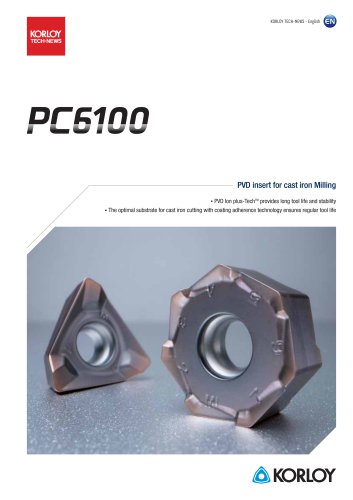 PC6100
13 Pages
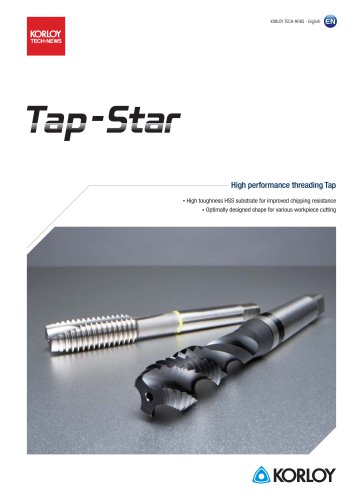 Tap - Star
46 Pages
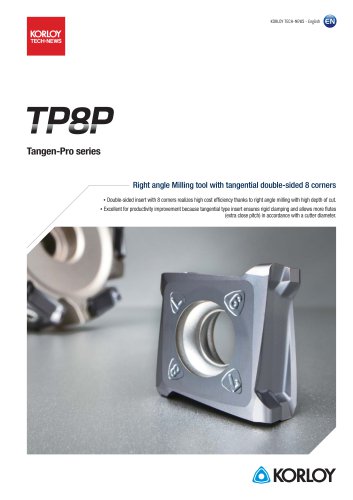 TP8P
TP8P8 Pages
 Hightlight Products
32 Pages
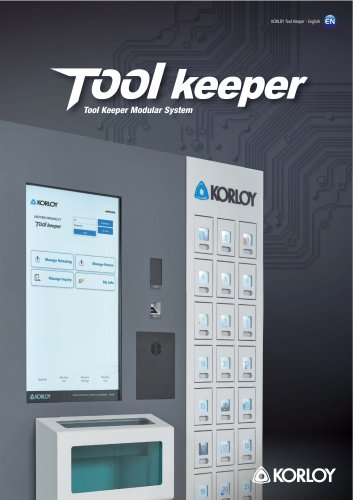 Tool Keeper
6 Pages
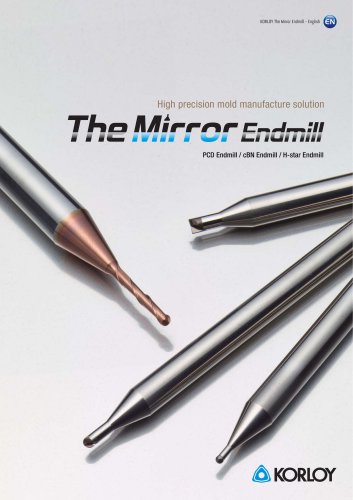 The Mirror Endmill
17 Pages