


Optimizing Airborne Platforms To Support Wireless-In-The-Sky Applications

Optimizing Airborne Platforms To Support Wireless-In-The-Sky Applications
This document examines the deployment of wireless services on commercial aircraft, highlighting opportunities, challenges, and solutions for providing web access, in-flight entertainment, and other Wi-Fi services.
The deployment of broadband Internet and wireless services on aircraft represents a significant market opportunity. Airlines are investing in IP broadband connectivity to enhance passenger experience and generate additional revenue. The challenge is to deploy robust hardware and software platforms that meet bandwidth and service requirements while fitting into existing aircraft constraints.
Airlines face rising operational costs and competition, prompting them to create ancillary revenue streams through services like in-flight Wi-Fi. This service can differentiate airlines and provide passengers with familiar connectivity options.
Wi-Fi on aircraft is similar to public hotspots but offers unique advantages. There is high demand for connectivity among passengers, especially business travelers. Airlines can offer premium content over Wi-Fi, creating new revenue opportunities.
Airlines are implementing Wi-Fi using terrestrial radio towers or satellite-based connections. Key success factors include reliability, performance, cost, maintainability, scalability, and SWaP (Size, Weight, and Power).
The 802.11n standard is ideal for airborne Wi-Fi, offering high capacity, multi-channel flexibility, and backward compatibility. It supports multicast and video-on-demand services efficiently, reducing bandwidth consumption.
Creating a platform for wireless-in-the-sky involves addressing challenges such as fitting into tight spaces and complying with standards like DO-160E and ARINC. The platform must be rugged and maintainable for long-term success.
Implementing wireless services on aircraft requires careful selection of standards and hardware to meet performance and scalability needs. The 802.11n standard and ruggedized platforms provide a solid foundation for delivering reliable in-flight Wi-Fi services.
The document discusses the collaboration between Kontron and Motorola to develop a ruggedized wireless solution for airborne operations, specifically the Cab-n-Connect™ Cabin Wireless Access Point (CWAP).
The CWAP supports flexible deployment of multiple Wi-Fi access points within an aircraft, with configurations ranging from two to eight modules. It uses a 3x3 MIMO radio configuration for dual-band communications and includes a third radio for network management.
All CWAP units and servers comply with RTCA/DO-160E environmental specifications and ARINC standards, ensuring safety, reliability, and easy integration with other systems.
Real-world testing showed excellent performance, with a single CWAP unit capable of streaming real-time video to over 120 wireless clients. The system uses Gigabit Ethernet for communication between CWAP units and centralized server units.
Key challenges include optimizing size, weight, power, and cost. The CWAP unit is designed to be lightweight and cost-effective, with Motorola's software upgradeability features reducing maintenance costs.
The integration of 802.11n wireless technology with ruggedized CWAP/server networks provides a solid foundation for wireless-in-the-sky services, offering airlines a scalable and sustainable solution for generating ancillary revenue.
Kontron is a leader in embedded computing technology, focusing on creating sustainable solutions for OEMs and system integrators.
Catalog excerpts

Optimizing Airborne Platforms To Support Wireless-In-The-Sky Applications by Andy Mason & Eric Tarter, Kontron (formerly AP Avionx)
Open the catalog to page 1
Optimizing Airborne Platforms To Support Wireless-In-The-Sky Applications An Overview of the Opportunities, Challenges & Solutions for Deploying Web Access, Multicast In-flight Entertainment and Other Wi-Fi Services On-Board Commercial Aircraft. Contents Optimizing Airborne Platforms To Support Wireless-In-The-Sky Applications 1 Introduction . . . . . . . . . . . . . . . . . . . . . . . . . . . . . . . . . . . . . . . . . . . . . 2 Contents. . . . . . . . . . . . . . . . . . . . . . . . . . . . . . . . . . . . . . . . . . . . . . . . 2 Overview . . . . . . . . . . . . . . . . . . . . . . . ....
Open the catalog to page 2
Overview Over the past few years, the deployment of broadband Internet access and other wireless services aboard commercial aircraft has moved from just a “pie in the sky” idea to a very real “wireless in the sky” market opportunity. A recent Airline Business/SITA study indicated that some 68% of airlines plan to invest in IP broadband connectivity both to and from aircraft over the next three years. As some of the early experiments have progressed and validated the market opportunity, the scope of potential services has also broadened; from an initial focus on Web browsing and email access to...
Open the catalog to page 3
In addition to opening up new revenue streams, the shifting to standards-based Wi-Fi for disseminating in-flight entertainment also holds the opportunity for cost benefits to the airlines. Instead of having to outfit the aircraft with drop-down video monitors at various points in the passenger cabin or individual seat-back screens, Wi-Fi enables airlines to leverage virtually any of the Wi-Fi enabled devices (laptops, netbooks, PDAs, etc.) that passengers are already bringing on board with them. Of course, airlines also have the option to provide wireless units (for a fee) to those passengers...
Open the catalog to page 4
Optimized Support for Multicast and Video-on-Demand Designing the Optimal Rugged Platform In addition, the 802.11n standard is optimized for supporting Multicast video-streaming operations, as well as Unicast AVOD (Audio-Video-On-Demand). A multicast packet includes a group address that simultaneously delivers the same packet to more than one destination on the network. The use of multicasting greatly reduces overall bandwidth consumption on the network because only the transmission of a single packet is necessary rather than sending packets individually addressed to each node. Creating an optimized...
Open the catalog to page 5
The individual CWAP units throughout the passenger cabin communicate with centralized airborne server units via Gigabit Ethernet. Depending on the specific requirements, one or more server units provide network management, load-balancing, media server functions and handling of the backhaul communications (via satellite or air-to-ground). Robust security layers ensure integrity and privacy of all communications over the local wireless network and the backhaul communication links. CWAP units Fitting into Tight Space Constraints Leveraging years of experience in designing airborne, shipboard, UAV,...
Open the catalog to page 6
client systems. This constitutes a more than 5x performance advantage over competing systems that show measureable degradation of performance at 20+ wireless clients. The Bottom Line Now that the long-held predictions about wireless-in-thesky services and the real-world market opportunities have finally come together, many airlines are moving very quickly to implement their own services. Lured by the lucrative ancillary revenue opportunities and driven by competitive pressures, airlines are looking for proven solutions that can support both rapid-rollout and scalable, sustainable growth over...
Open the catalog to page 7
Kontron is a global leader in embedded computing technology. With more than 30% of its employees in Research and Development, Kontron creates many of the standards that drive the world’s embedded computing platforms. Kontron’s product longevity, local engineering and support, and value-added services, helps create a sustainable and viable embedded solution for OEMs and system integrators. Kontron works closely with its customers on their embedded application-ready platforms and custom solutions, enabling them to focus on their core competencies. The result is an accelerated time-to-market, reduced...
Open the catalog to page 8All Kontron catalogs and technical brochures
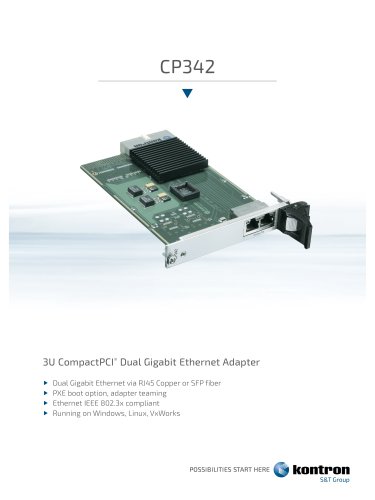 CP342
CP3422 Pages
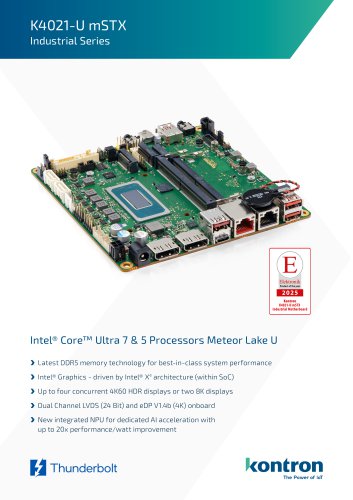 K4021-U mSTX
5 Pages
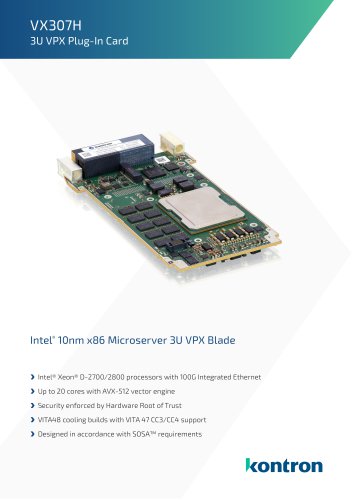 VX307H
6 Pages
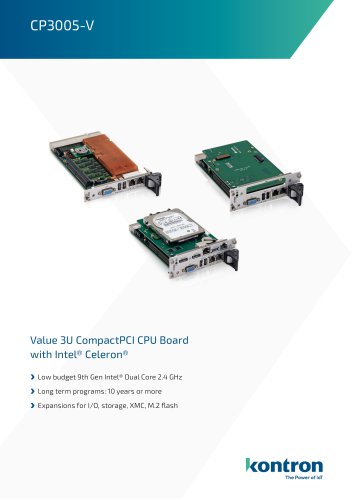 CP3005-V
7 Pages
 CP 6940
4 Pages
 CP-ASM10-PSB
4 Pages
 CP-ASM6
3 Pages
 CP-XL SERIES
2 Pages
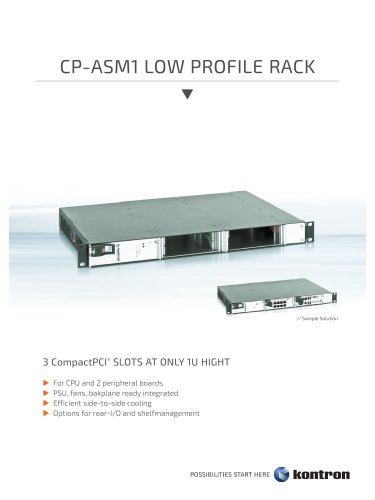 CP-ASM1 LOW PROFILE RACK
2 Pages
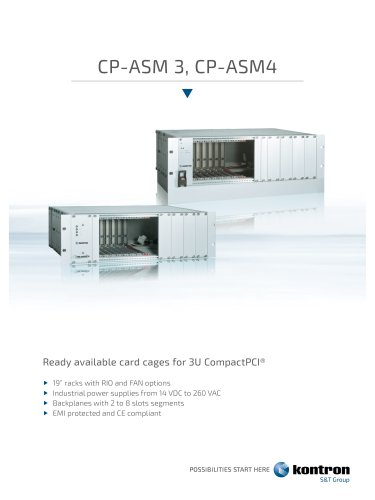 CP-ASM 3, CP-ASM4
4 Pages
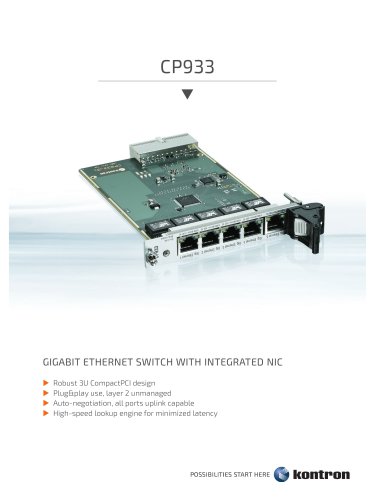 CP933
CP9332 Pages
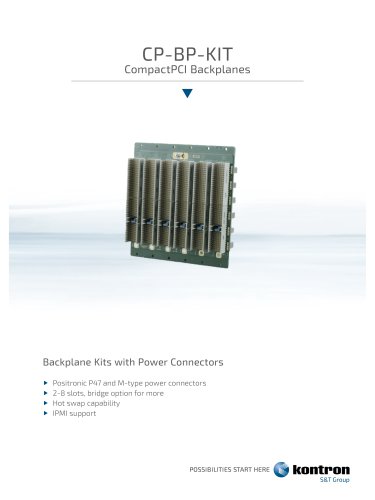 CP-BP-KIT
2 Pages
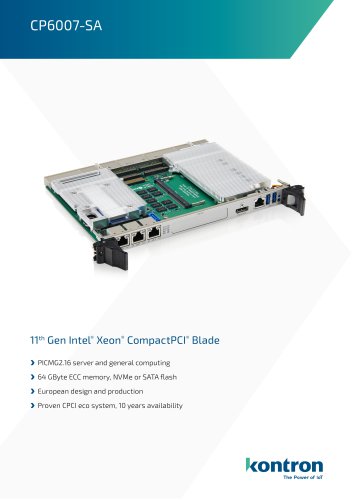 CP6007-SA
4 Pages
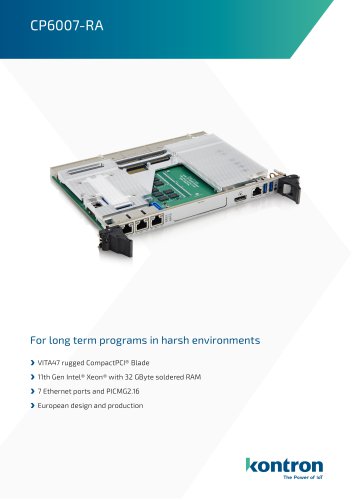 CP6007-RA
4 Pages
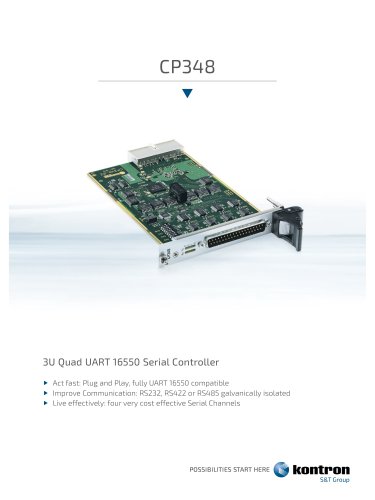 CP348
CP3482 Pages
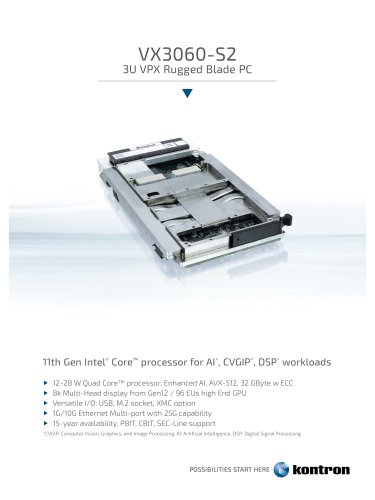 VX3060-S2
4 Pages
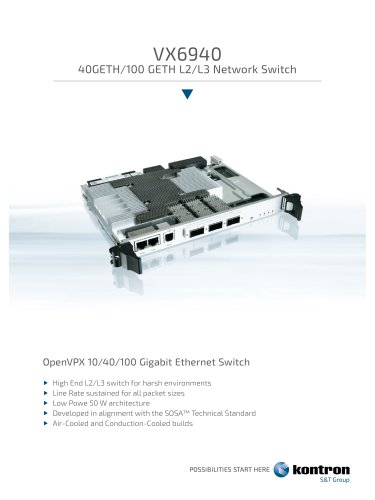 VX6940
4 Pages
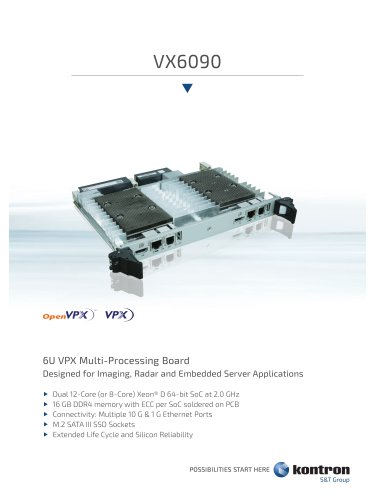 VX6090
4 Pages
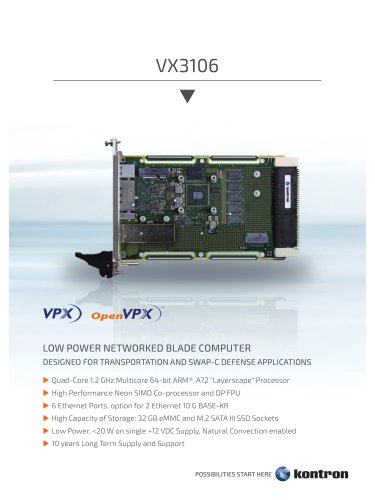 VX3106
2 Pages
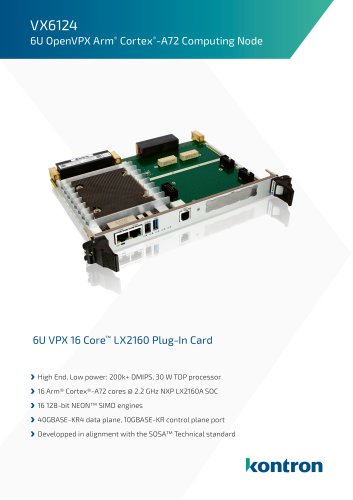 VX6124
5 Pages
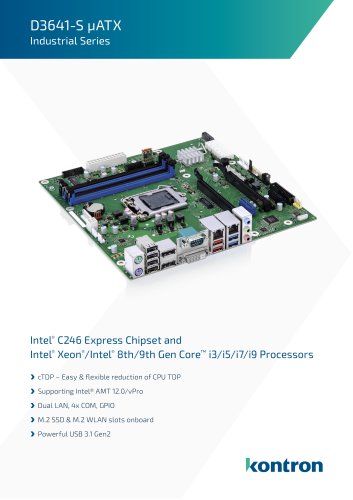 D3641-S μATX
5 Pages
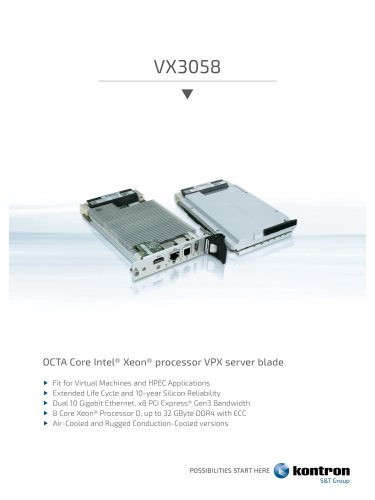 VX3058
4 Pages
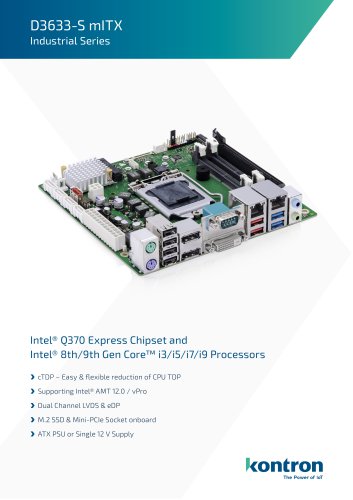 D3633-S mITX
5 Pages
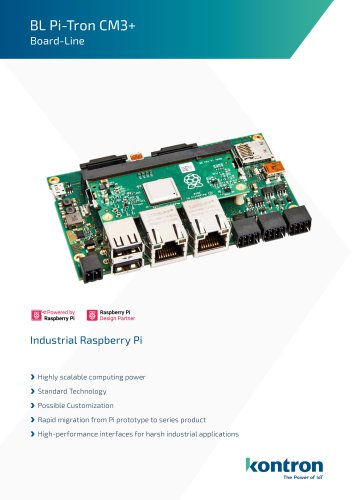 BL Pi-Tron CM3+
4 Pages
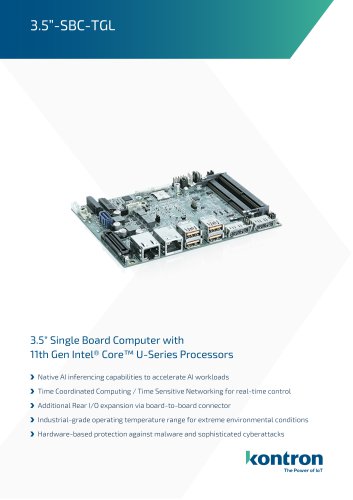 3.5”-SBC-TGL
4 Pages
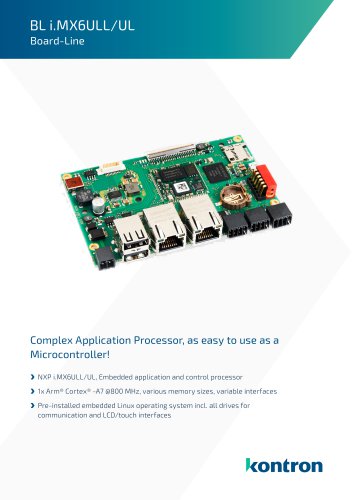 BL i.MX6ULL/UL
4 Pages
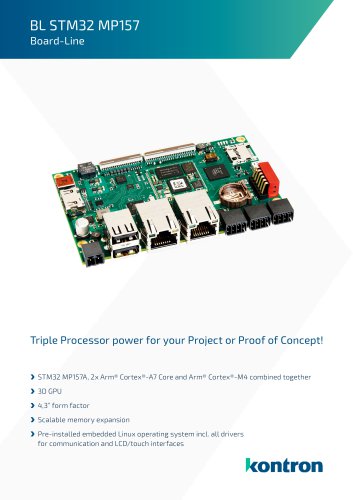 BL STM32 MP157
4 Pages
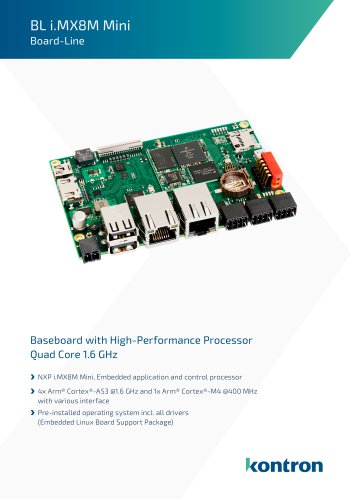 BL i.MX8M Mini
4 Pages
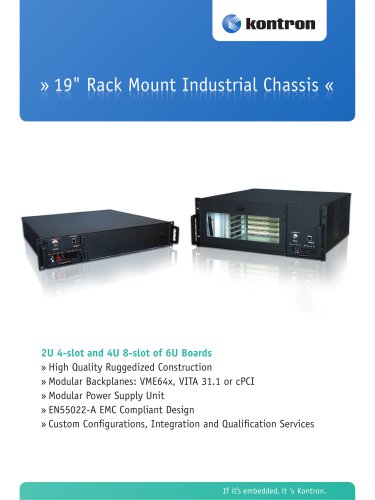 R4U8S/R4U8S
4 Pages
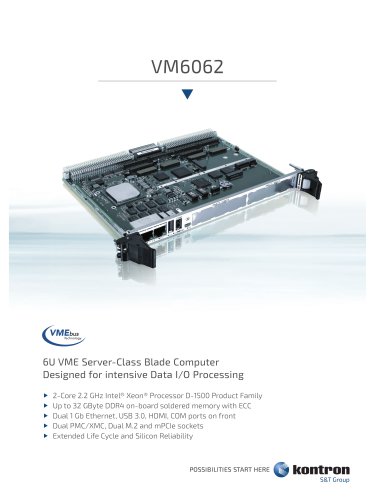 VM6062
4 Pages
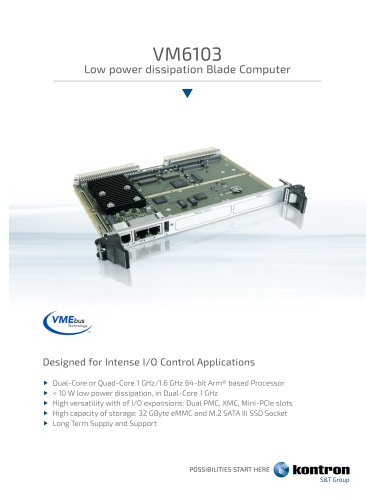 VM6103
5 Pages
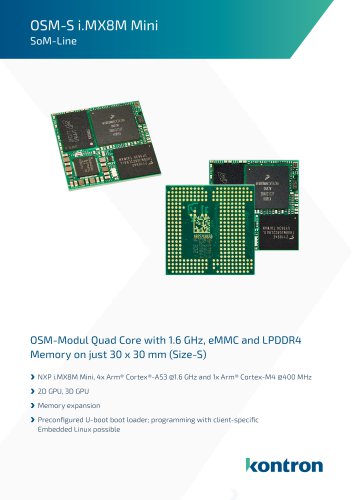 OSM-S i.MX8M Mini
4 Pages
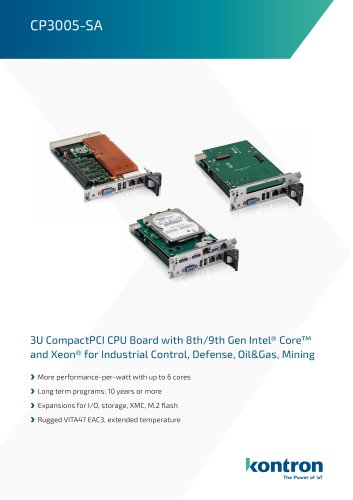 CP3005-SA
7 Pages
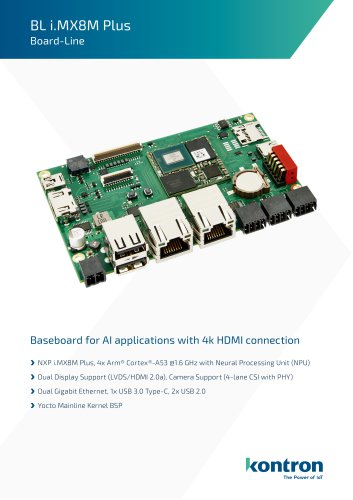 BL i.MX8M Plus
3 Pages
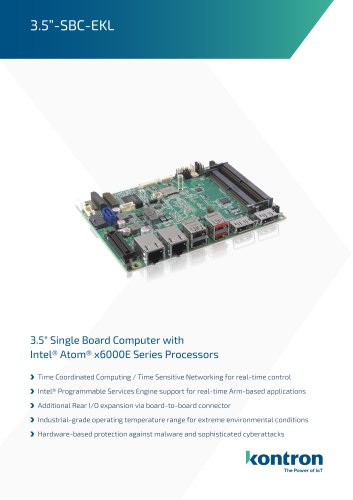 3.5”-SBC-EKL
4 Pages
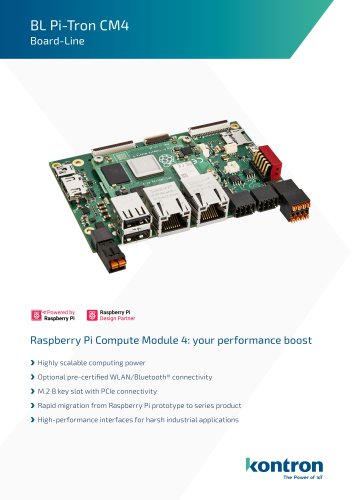 BL Pi-Tron CM4
3 Pages
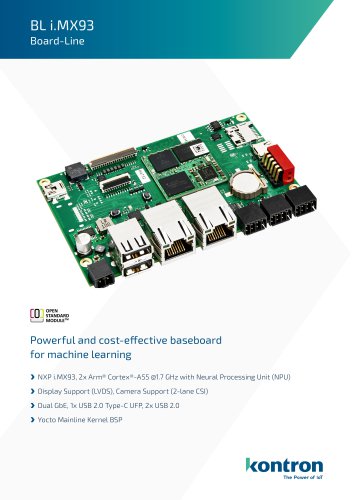 BL i.MX93
3 Pages
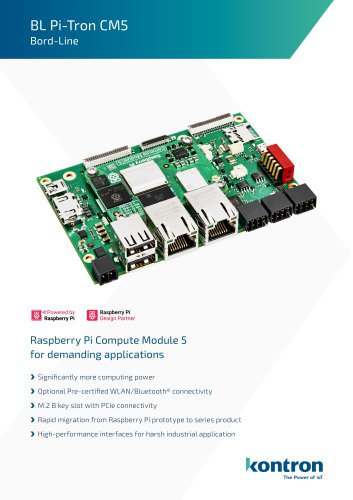 BL Pi-Tron CM5
3 Pages
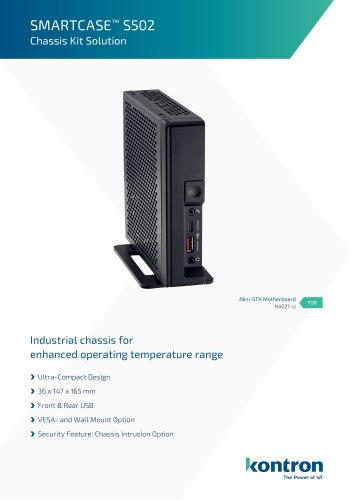 SMARTCASE™ S502
4 Pages
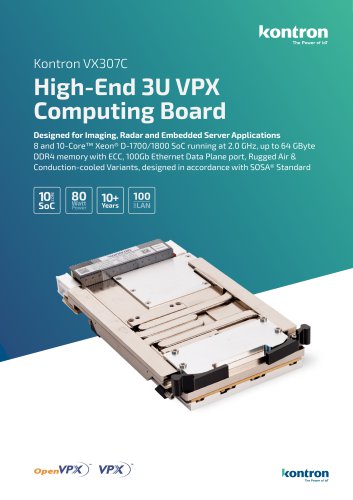 VX307C
7 Pages
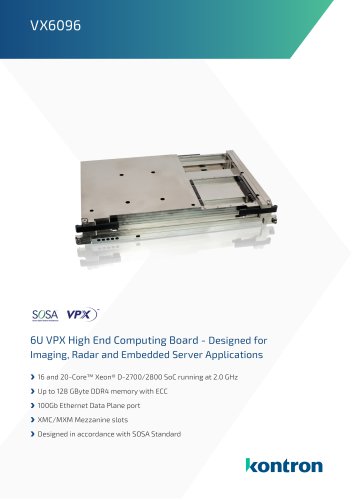 VX6096
4 Pages
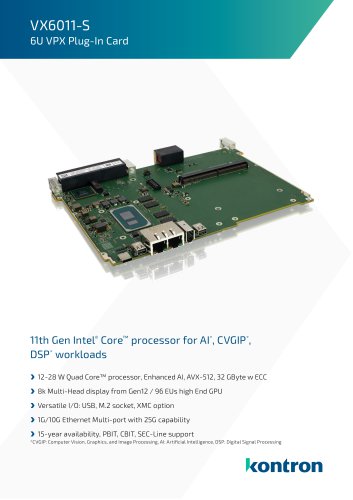 VX6011-S
4 Pages
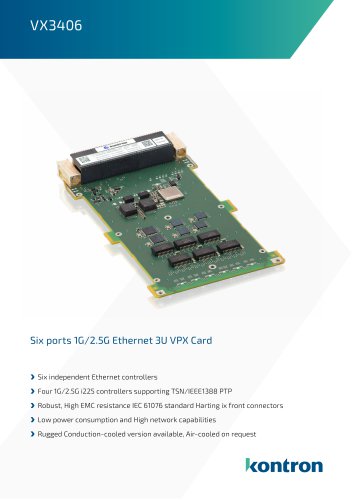 VX3406
3 Pages
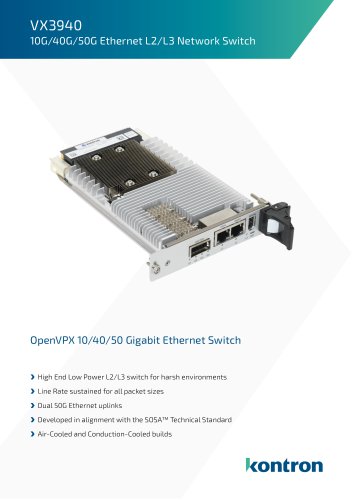 VX3940
3 Pages
 VX3908
3 Pages
 OSM-S i.MX93
3 Pages
 D3544-S mSTX
5 Pages
 CP3-SVE-M180AC
6 Pages
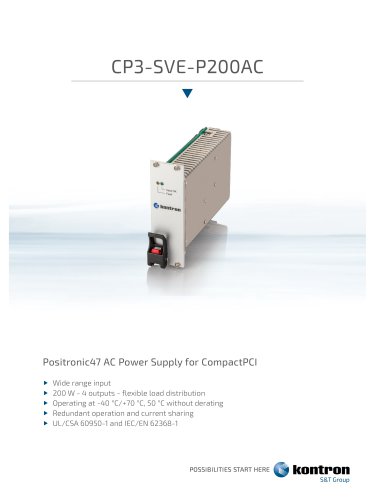 CP3-SVE-P200AC
6 Pages
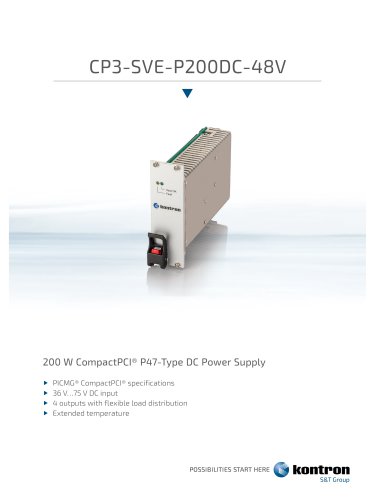 CP3-SVE-P200DC-48V
5 Pages
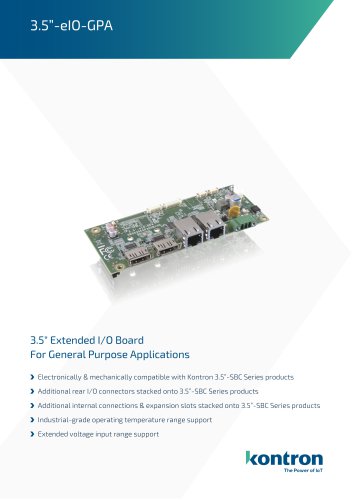 3.5”-eIO-GPA
4 Pages
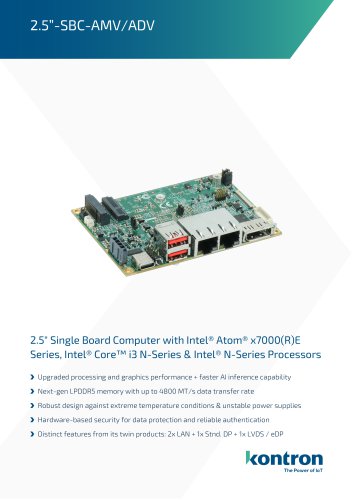 2.5”-SBC-AMV/ADV
4 Pages
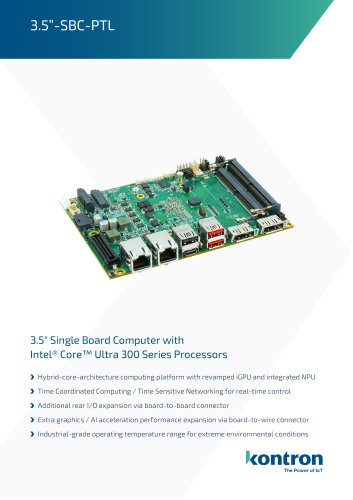 3.5”-SBC-PTL
4 Pages
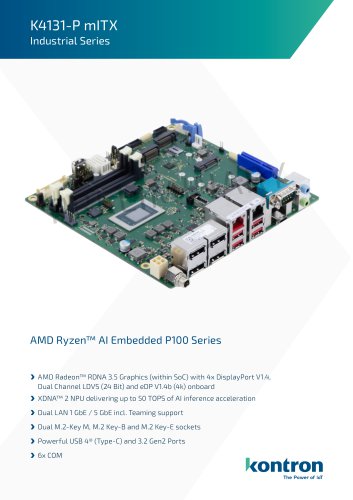 K4131-P mITX
5 Pages
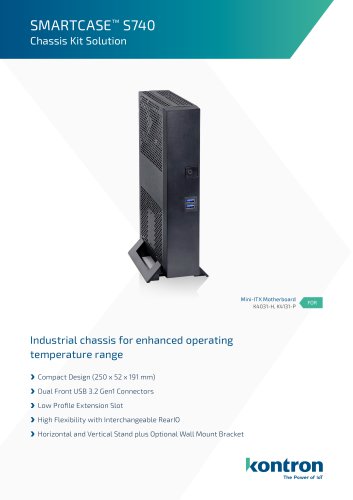 SMARTCASE™ S740
3 Pages
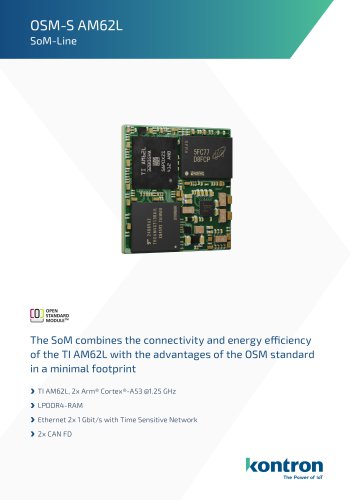 OSM-S AM62L
3 Pages
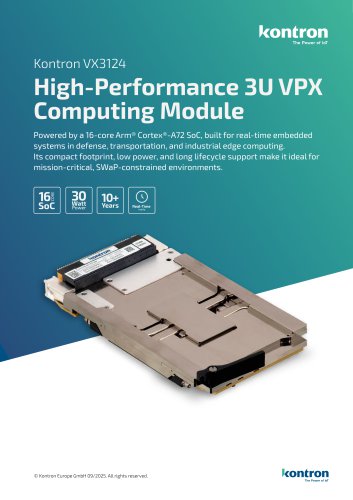 VX3124
6 Pages
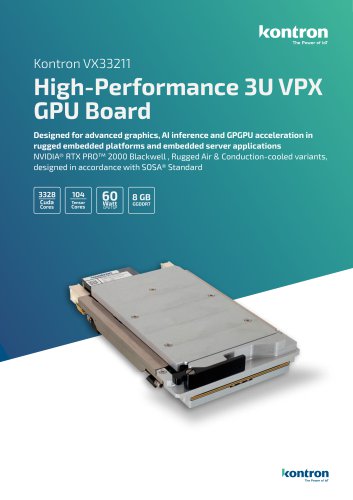 VX33211
6 Pages
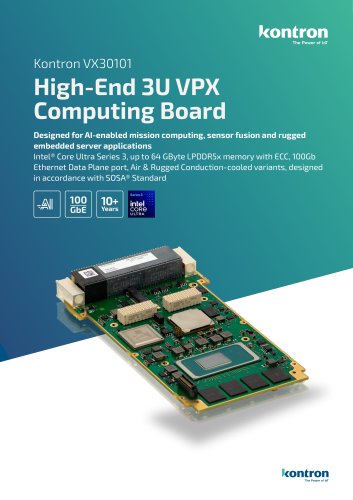 VX30101
6 Pages
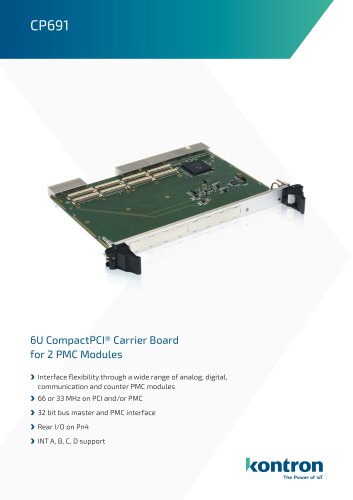 CP691
CP6912 Pages
 MARATON Hazardous HE
3 Pages
 MARATON moderate HE
3 Pages
 XMC403
3 Pages
 XMC-ETH6
3 Pages
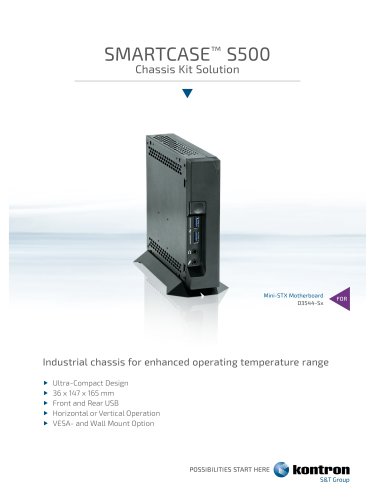 SMARTCASE™ S500
3 Pages
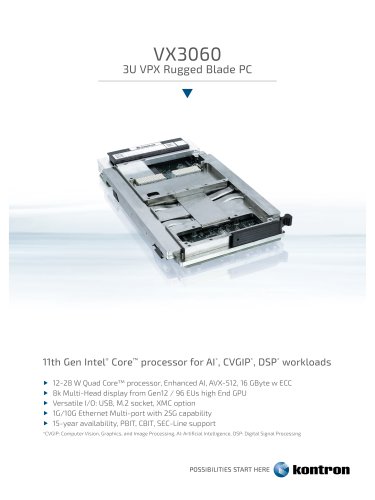 VX3060
4 Pages
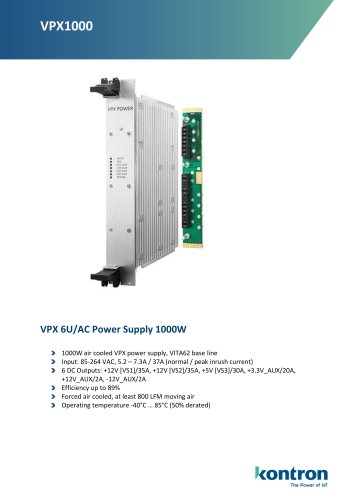 VPX1000
3 Pages
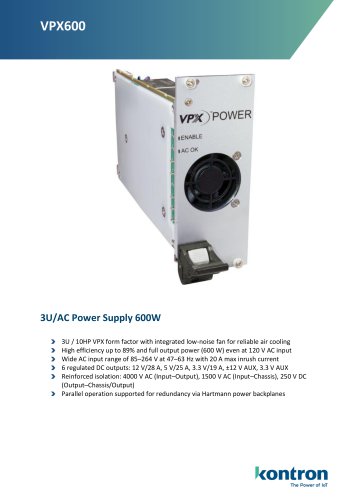 VPX600
3 Pages
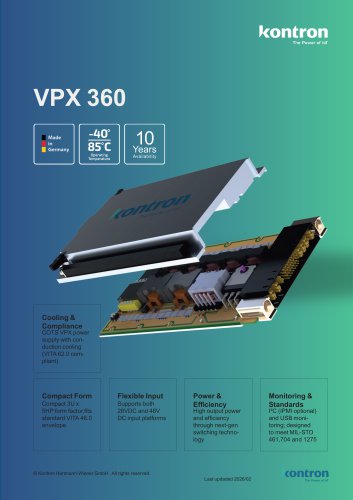 VPX 360
6 Pages
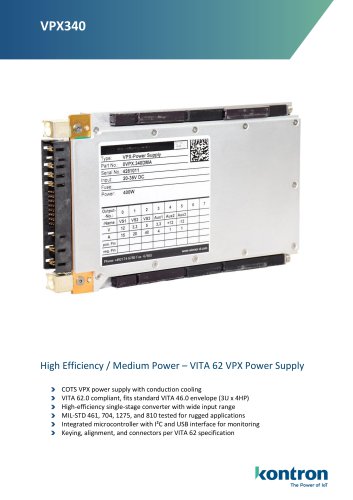 VPX340
5 Pages
 VPX336
5 Pages
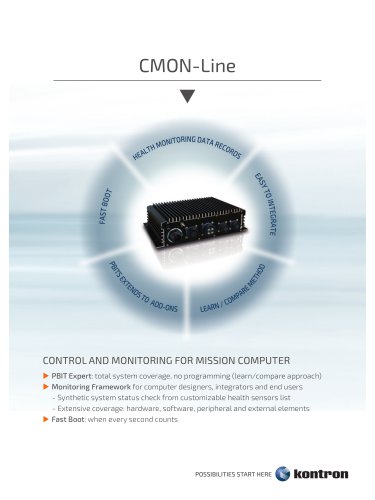 CMON-Line
4 Pages
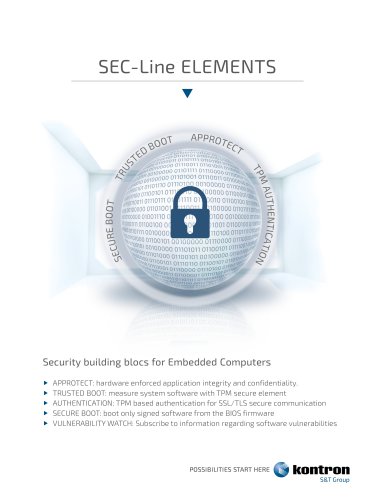 SEC-Line ELEMENTS
4 Pages
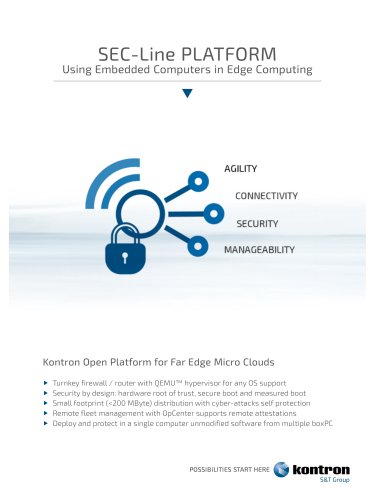 SEC-Line PLATFORM
4 Pages
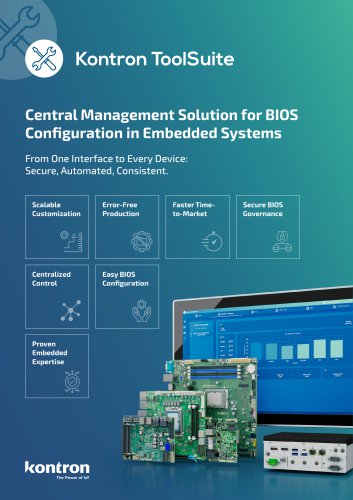 kontron toolsuite
2 Pages
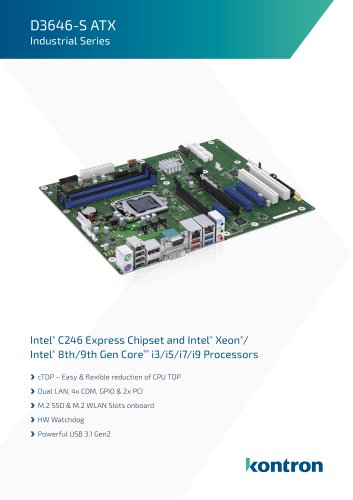 D3646-S ATX
5 Pages
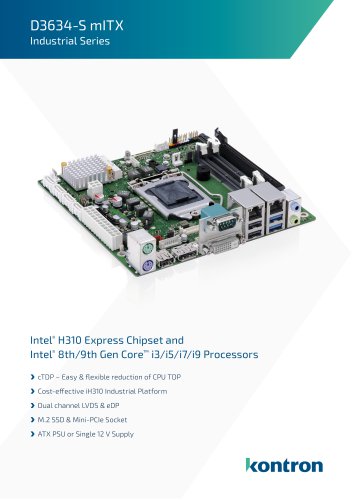 D3634-S mITX
5 Pages
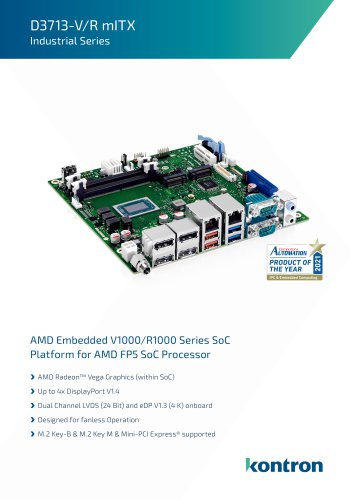 D3713-V/R mITX
5 Pages
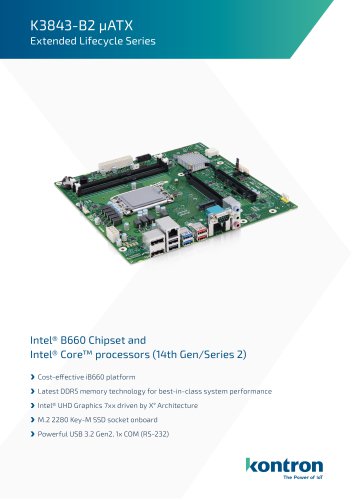 K3843-B2 µATX
5 Pages
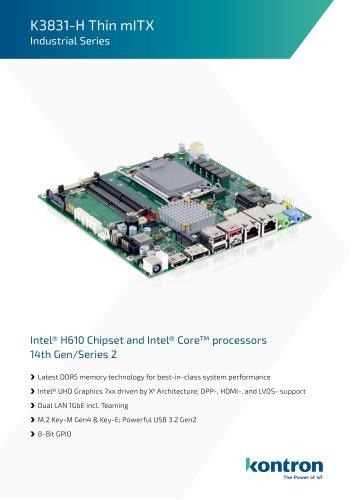 K3831-H Thin mITX
5 Pages
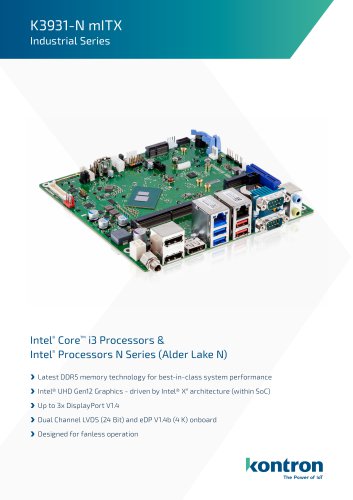 K3931-N mITX
5 Pages
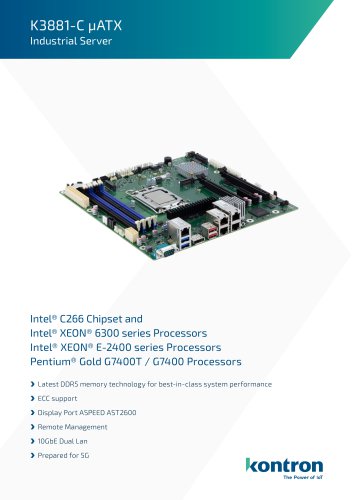 K3881-C µATX
5 Pages
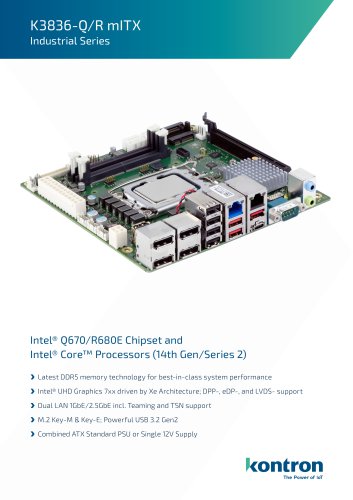 K3836-Q/R mITX
5 Pages
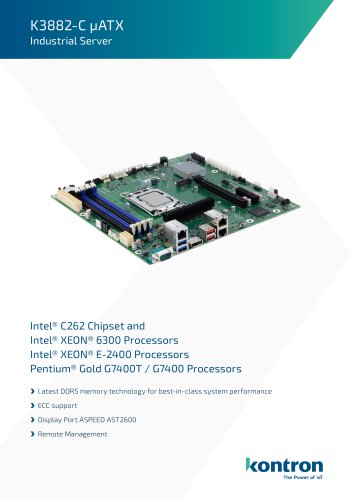 K3882-C µATX
5 Pages
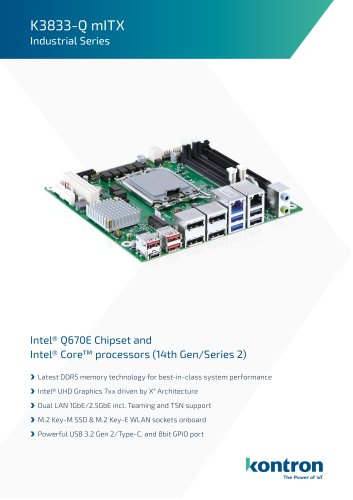 K3833-Q mITX
4 Pages
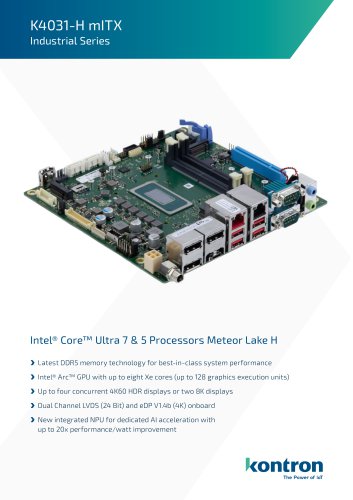 K4031-H mITX
5 Pages
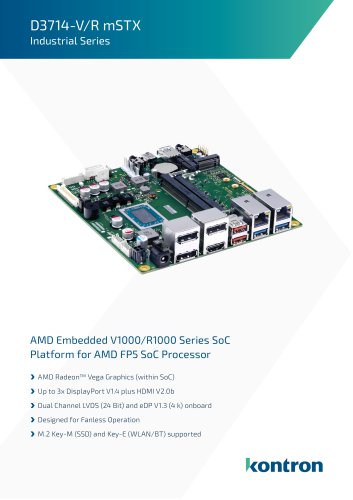 D3714-V/R mSTX
5 Pages
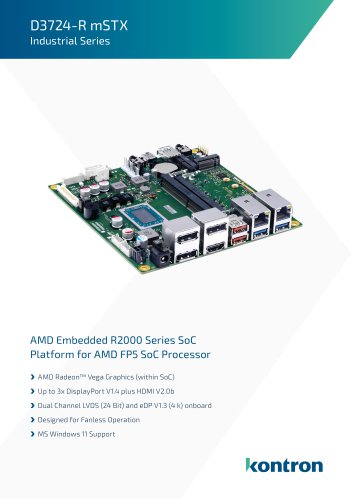 D3724-R mSTX
5 Pages
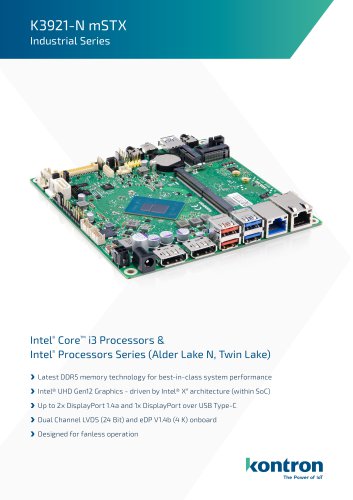 K3921-N mSTX
5 Pages
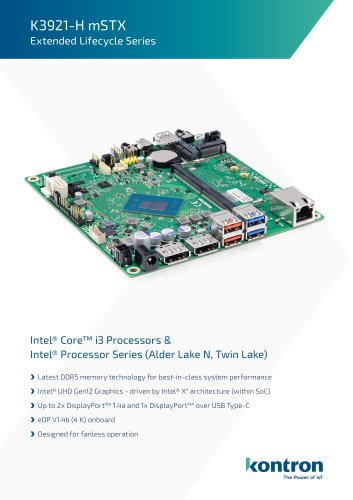 K3921-H mSTX
5 Pages
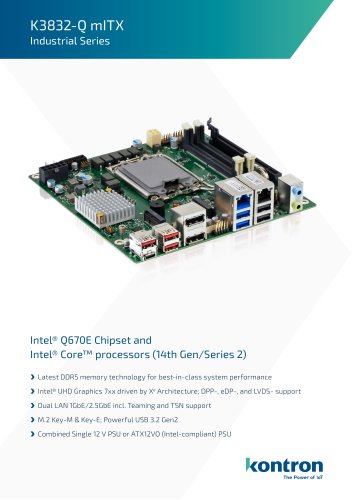 K3832-Q mITX
5 Pages
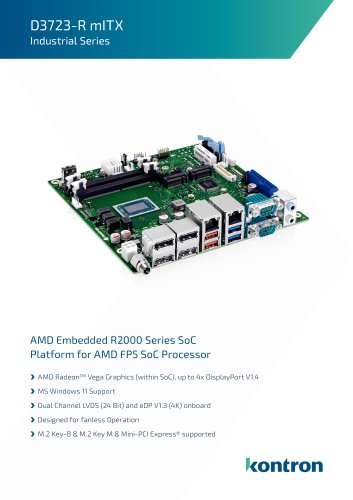 D3723-R mITX
5 Pages
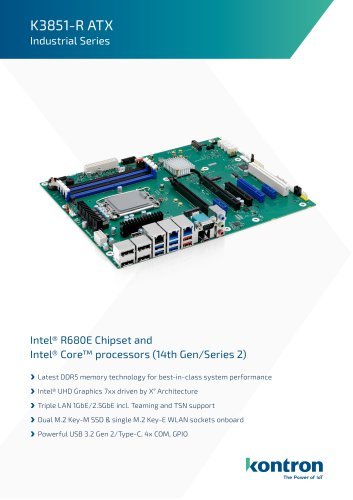 K3851-R ATX
5 Pages
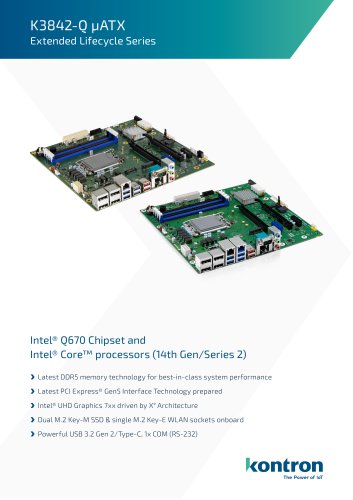 K3842-Q μATX
5 Pages
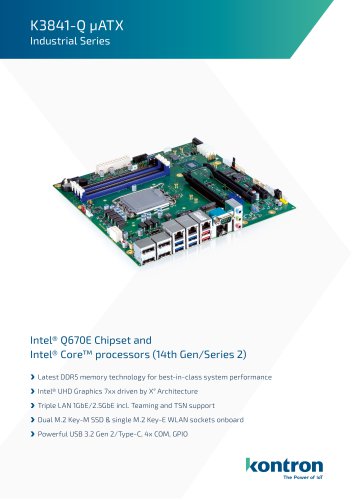 K3841-Q μATX
5 Pages
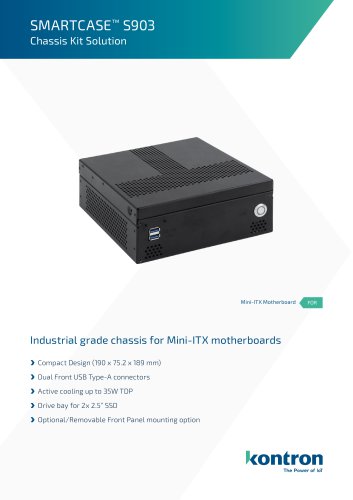 SMARTCASE S903
4 Pages
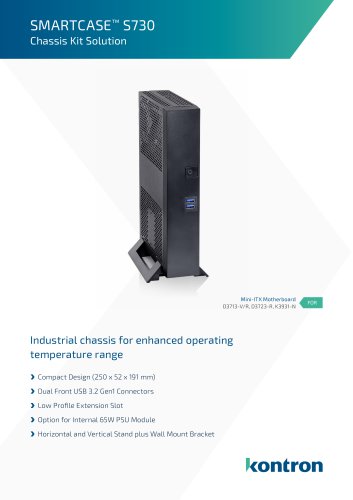 SMARTCASE S730
3 Pages
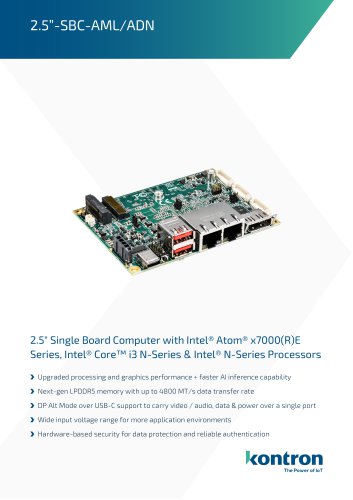 2.5"-SBC-AML/ADN
4 Pages
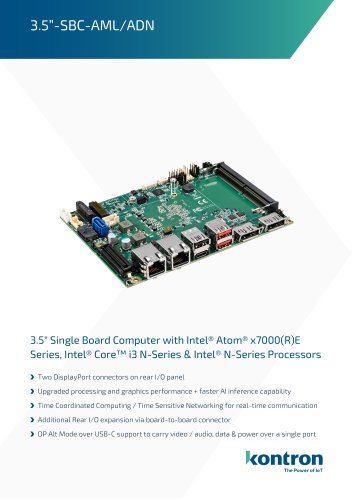 3.5"-SBC-AML/ADN
4 Pages
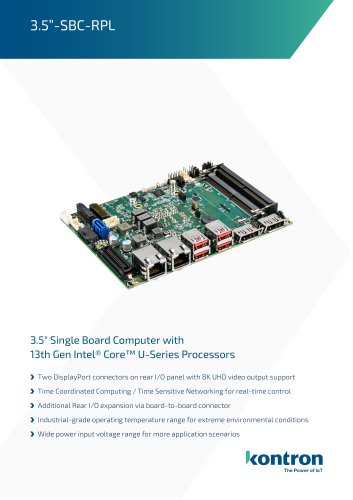 3.5"-SBC-RPL
4 Pages
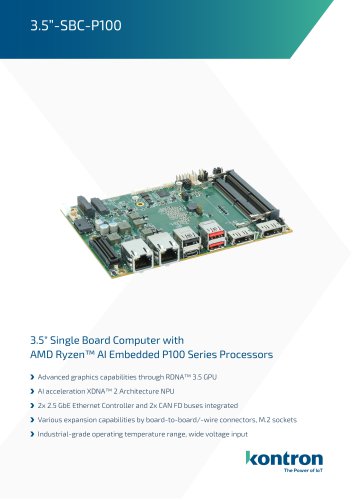 3.5"-SBC-P100
4 Pages
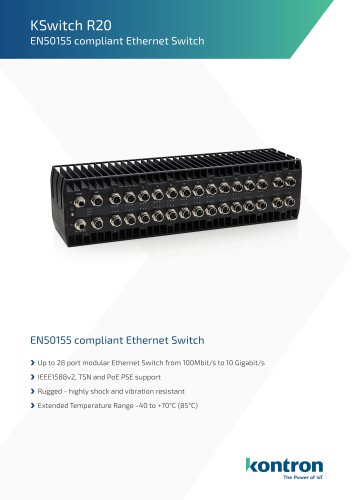 KSwitch R20
4 Pages
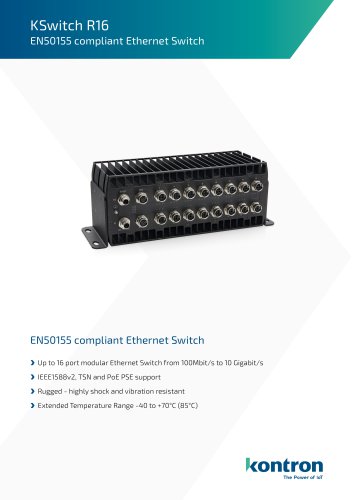 KSwitch R16
4 Pages
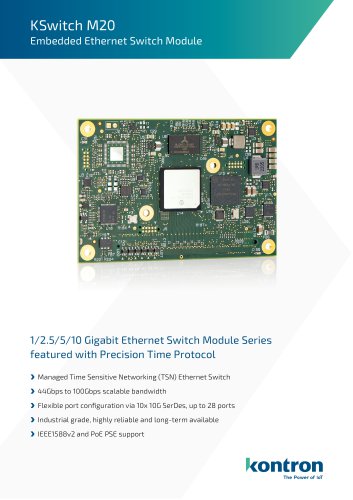 KSwitch M20
4 Pages
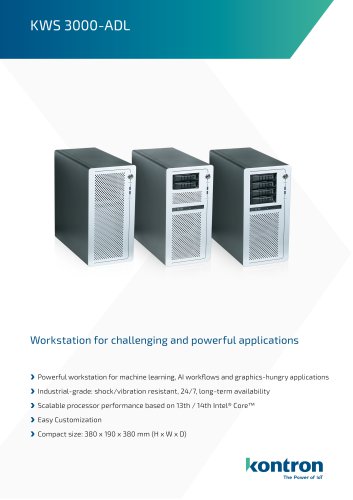 KWS 3000 ADL
4 Pages
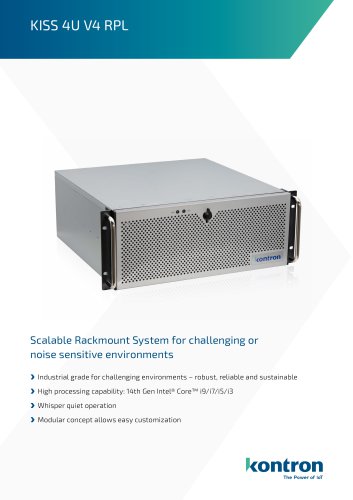 KISS 4U V4 RPL
2 Pages
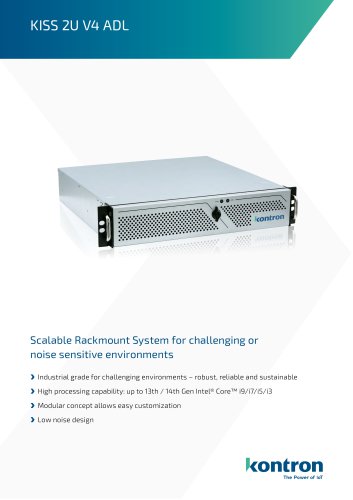 KISS 2U V4 ADL
2 Pages
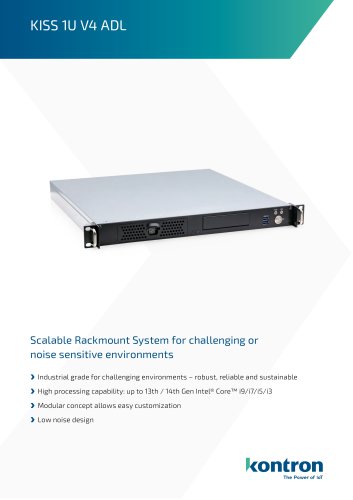 KISS 1U V4-ADL
3 Pages
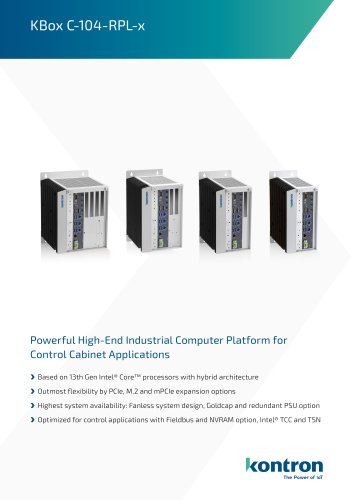 KBox C-104-RPL
4 Pages
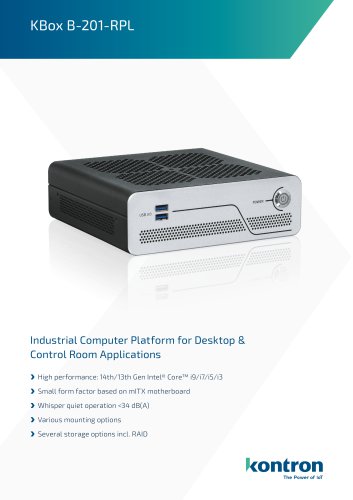 KBox B-201-RPL
4 Pages
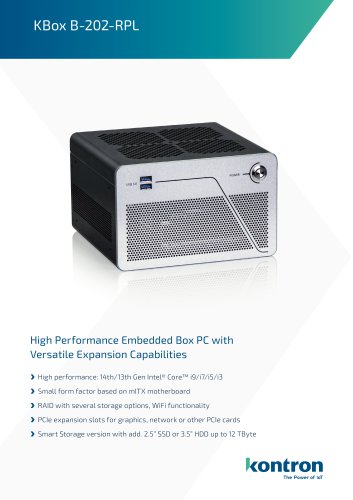 KBox B-202-RPL
4 Pages
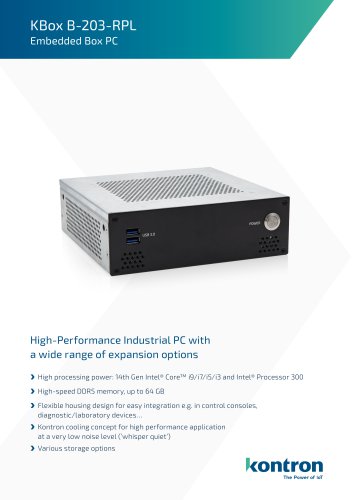 KBox B-203-RPL
4 Pages
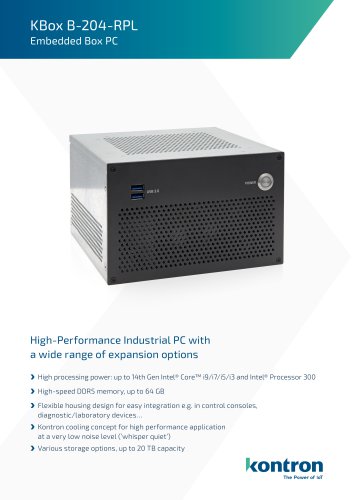 KBox B-204-RPL
4 Pages
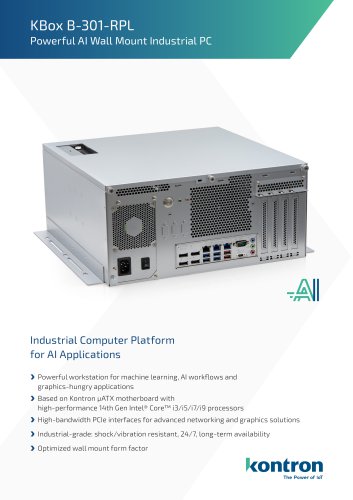 KBox B-301-RPL
3 Pages
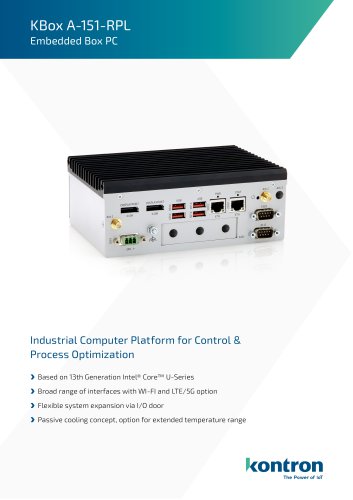 KBox A-151-RPL
5 Pages
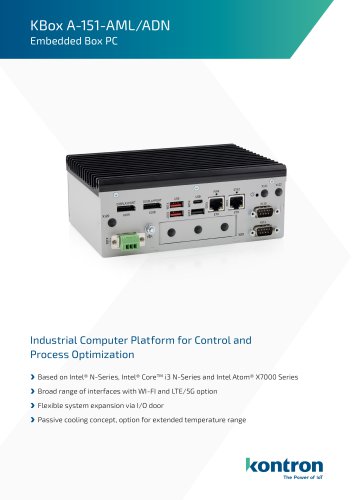 KBox A-151-AML/ADN
4 Pages
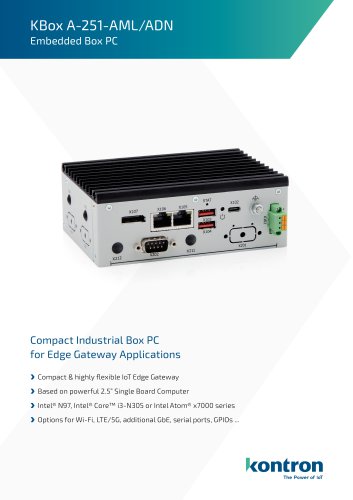 KBox A-151-AML/ADN
3 Pages
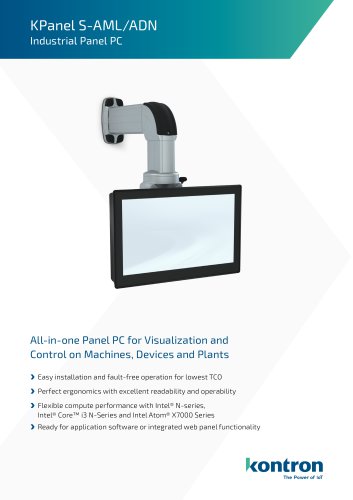 KPanel S-AML/ADN
4 Pages
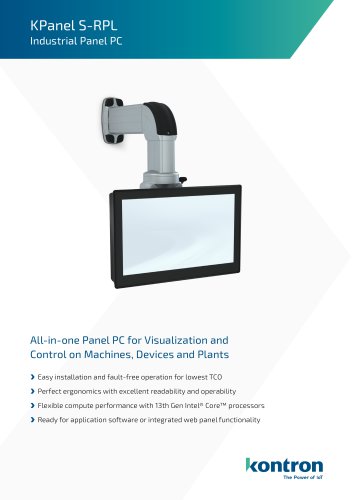 KPanel S-RPL
4 Pages
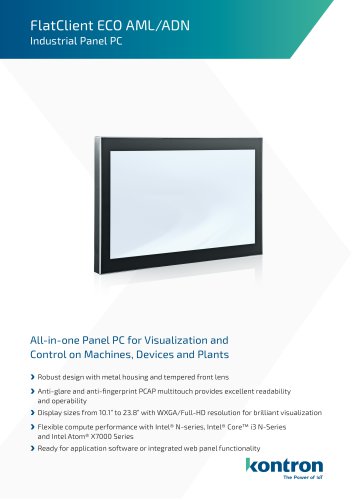 Flat Client ECO-AML/ADN
2 Pages
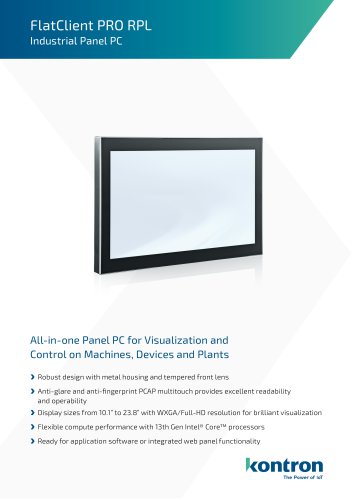 FlatClient PRO-RPL
2 Pages
 FlatView
3 Pages
 Open-frame
4 Pages
 Overview HMI Series
2 Pages
 web-panel
3 Pages
 CP
CP3 Pages
 RAILWAY EMBEDDED COMPUTING
2 Pages
 KONTRON TRANSPORTATION
1 Page
 VX305H-40G
4 Pages
 EvoTRAC-P101
2 Pages
 EvoTRAC-P201
2 Pages
 EvoTRAC™G103
2 Pages
 S2000 DEVELOPMENT PLATFORM
2 Pages
Archived catalogs
 SMARC-sXBT
2 Pages
 mitx-e38
4 Pages
 TRACe LoRa-MQTT
4 Pages
 IN-VEHICLE SERVER
2 Pages
 vehicle-server-cellular-ds
2 Pages
 Qseven-Q7AMX8X
2 Pages
 Kbox
Kbox2 Pages
 COMe-cBW6
2 Pages
 END-TO-END IOT SOLUTIONS
16 Pages
 pITX-E38
4 Pages
 KTAM3874/pITX
2 Pages
 vx3030-datasheet-08-14
4 Pages
 vmpx_accessories
2 Pages
 vmp3_datasheet
4 Pages
 datasheet_cp-hdd-s-kit
2 Pages
 ds_cp371_052011
2 Pages
 MARS Concept Brochure
6 Pages
 VME Product Catalog
6 Pages
 CompactPCI Product Brochure
8 Pages
 VPX products & Solutions
9 Pages
 COM Express® Concept Folder
6 Pages
 Fanless Box PCs - CB Series
3 Pages
 Product Highlights
4 Pages
 Motherboards & SBCs
11 Pages
 Kontron Services
2 Pages
 Medical Catalog
8 Pages
 Commercial Avionics
2 Pages
 Embedded Boards
31 Pages
 Open Communication Platforms
32 Pages
 Military Defense
8 Pages
 Kontron Highlight Folder
16 Pages
 Box PC
2 Pages
 Transportation Folder
11 Pages
 MicroTCA
2 Pages
 Industrial Automation Catalog
11 Pages
 hmi_global_2012
8 Pages
 m2m_platforms
2 Pages


- Kontron power supply
- Kontron panel PC
- Kontron DC power supply
- Kontron industrial panel PC
- Kontron panel PC with touch screen
- AC/DC power supply
- Fanless panel PC
- Touch monitor
- Kontron LCD panel PC
- Ethernet switch
- LCD screen
- Industrial monitor
- Management software solution
- VESA mounting panel PC
- Kontron Intel® Core™ PC
- Kontron Intel® Core™ panel PC
- Kontron IP65 panel PC
- HDMI monitor
- Kontron industrial PC
- Kontron fanless PC