

TF16VN
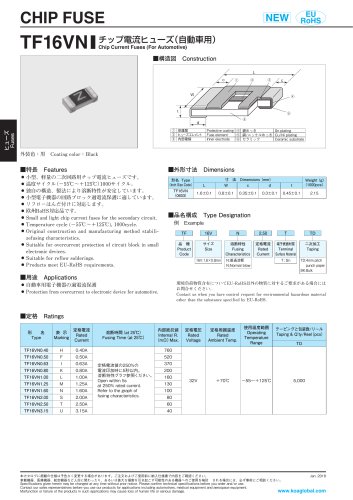
TF16VN
Overview
This document provides detailed technical specifications and usage guidelines for the TF16VN series chip current fuses designed primarily for automotive applications. The fuses comply with EU RoHS standards and are suitable for protecting secondary circuits in small electronic devices.
Specifications
- Dimensions: 1.6mm x 0.8mm (0603 size code), weight approx. 2.15g per 1000 pieces.
- Construction: Composed of a ceramic substrate, fuse element, inner electrode, Sn plating, Cu/Ni plating, and protective coating.
- Rated Voltage: 32V
- Operating Temperature Range: -55°C to +125°C
- Rated Ambient Temperature: +70°C
- Fusing Characteristics: Normal blow type with stable and reliable fusing performance due to proprietary construction and manufacturing methods.
- Current Ratings: Range from 0.40A to 3.15A with corresponding internal resistance values decreasing as current rating increases.
Features
- Small and lightweight suitable for secondary circuit protection.
- Capable of withstanding 1000 temperature cycles between -55°C and +125°C.
- Compatible with reflow soldering processes.
- Stable fusing characteristics ensured by unique design and manufacturing.
- Compliant with EU RoHS environmental standards.
Applications
Primarily intended for overcurrent protection in automotive electronic devices. Suitable for small electronic circuit blocks requiring reliable current protection.
Performance and Testing
- Fusing Time: Opens within 5 seconds at 250% of rated current at 25°C.
- Mechanical Strength: No electrode peeling or disconnection after bending test (90mm span, 2mm bend, 1 cycle).
- Solder Heat Resistance: Withstands reflow soldering conditions (preheat at 150°C for 90±30s, main heat at ≥230°C for 30±10s, max 260°C).
- Solderability: At least 95% coverage with new solder after testing at 245°C ±3°C for 3s ±0.5s.
- Load Life: 1000 hours at 70°C with rated current cycling (1.5h ON/0.5h OFF).
- Moisture Load Life: 1000 hours at 85°C, 85% RH with 10% rated current cycling.
- Rapid Temperature Change: 1000 cycles between -55°C and +125°C (30 minutes each).
- Solvent Resistance: No damage to protective coating or markings, compliant with MIL-STD-202F.
- Residual Resistance: ≥10kΩ after fuse operation.
Derating and Usage Guidelines
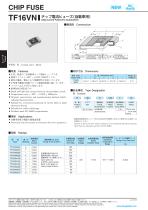
- Rated current must be derated when operating above 70°C ambient temperature; refer to provided derating curve.
- For repeated pulse currents, use the peak current value for rating considerations.
- The fuse substrate is ceramic; avoid exposure to acidic gases or liquids to prevent degradation of mechanical strength and performance.
- Suitable for reflow soldering only; not designed for flow soldering.
- Consult KOA sales representatives before use in critical applications such as automotive, medical, or aerospace equipment due to potential risks of malfunction.
Type Designation and Marking
The product code includes size, fusing characteristics (normal blow), rated current, terminal surface material (Sn plating), and packaging type (taping with 4mm pitch or bulk). Markings on the fuse indicate the rated current for easy identification.
Important Notices
- Specifications are subject to change without prior notice; always confirm with the latest technical specifications before ordering or use.
- Use in life-critical or high-risk equipment requires prior consultation with the manufacturer.
- Environmental hazardous substances other than EU RoHS regulated ones require separate inquiry.
Catalog excerpts
CHIP FUSE チップ電流ヒューズ 自動車用 Chip Current Fuses (For Automotive) Protective coating ④ 錫めっき Sn plating Fuse element ⑤ 銅/ニッケルめっき Cu/Ni plating Inner electrode ⑥ セラミック Ceramic substrate 外装色黒 Coating colorBlack 小 型、軽量の二次回路用チップ電流ヒューズです。 温 度サイクル −55℃125℃ 1000サイクル。 独 自の構造、製法により溶断特性が安定しています。 小 型電子機器の回路ブロック過電流保護に適しています。 リ フローはんだ付けに対応します。 欧 州RoHS対応品です。 S mall and light chip current fuses for the secondary circuit. T emperature cycle (−55℃125℃), 1000cycle. O riginal construction and manufacturing method stabilizefusing characteristics. S uitable for overcurrent protection of circuit block in small electronic devices. S uitable for reflow solderings. P roducts meet EU-RoHS requirements. 形名 Type Inch Size Code TF16VN 0603 ■品名構成 Type Designation 例 Example TF 溶断特性 Fusing Characteristics 定格電流 Rated Current 端子表面材質 Terminal Surface Material 二次加工 Taping TD:4mm pitch punch paper BK:Bulk 16V:1.6×0.8mm N:普通溶断 N:Normal blow 環境負荷物質含有についてEU-RoHS以外の物質に対するご要求がある場合には お問合せください。 Contact us when you have control request for environmental hazardous material other than the substance specified by EU-RoHS. 自 動車用電子機器の過電流保護 Protection from overcurrent to electronic device for automotive. ■定格 Ratings 形 名 Type 定格電流 Rated Current 溶断時間 at 25℃ Fusing Time at 25℃ 定格電圧 Rated Voltage 定格周囲温度 Rated Ambient Temp. 使用温度範囲 Operating Temperature Range テーピングと包装数/リール Taping & Q'ty/Reel pcs
Open the catalog to page 1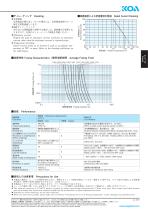
■周囲温度による定格電流の軽減 Rated Current Derating 定 常電流 常電流が繰り返しパルスの場合には、定常電流波形のピーク 定 値を定常電流値とします。 ● 度ディレーティング 温 0℃以上の周囲温度で使用する場合には、温度補正が必要とな 7 りますので、右図のディレーティング係数を考慮ください。 ● tationary current S egard the peak of stationary current waveform as stationary R current value when the stationary current is repeated pulse. ● emperature Derating T ated Current needs to be derated if used at an ambient temR perature of 70℃ or more. Refer to the derating coefficient on the right figure. Percent Rated Current 溶断時間 Fusing Times 1 10 溶断電流値 Fusing Current A ■性能 Performance 試験項目 Test Items 規格値 Performance Requirements...
Open the catalog to page 2All KOA catalogs and technical brochures


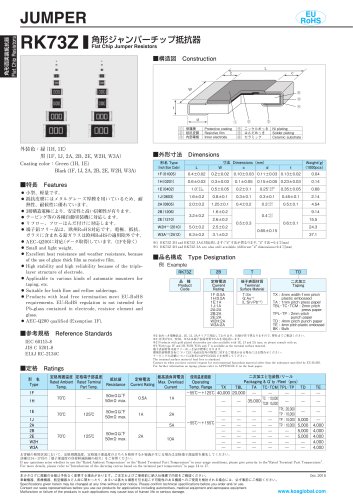




Archived catalogs
- Temperature probe
- Resistance temperature sensor
- Compact temperature probe
- Wire-wound resistor
- Board-mount resistor
- Power resistor
- Housed resistor
- Thin-film resistor
- Thermistor
- Platinum resistive temperature sensor
- SMD resistor
- RoHS resistor
- Thick-film resistor
- Thin-film temperature sensor
- Voltage resistor
- High-power resistor
- High-voltage resistor
- Miniature fuse
- NTC thermistor
- Non-inductive resistor