
- Catalogs
- KAYA YAPI IC MIMARLIK A.S.
- Kaya Safety 2017-2018

Kaya Safety 2017-2018

Kaya Safety 2017-2018
Musa is a seasoned Occupational Safety Training team leader at Kaya Safety, with extensive experience in training over 5000 individuals. Kaya Safety, founded in 1996, is renowned for its expertise in designing and manufacturing safety equipment for work at height, catering to sectors such as Defense, Firefighting, Oil & Gas, Construction, and Telecommunication.
Kaya Safety offers advanced training facilities and technical support to ensure the proper use of safety equipment. Kaya Ropes, a division of Kaya Safety, focuses on manufacturing ropes for various industries, prioritizing innovation and adherence to international standards.
Kaya Training and Kaya Consulting provide strategic management consulting and occupational health and safety services globally. They collaborate with international organizations like IOSH, NSC, and IRATA to deliver comprehensive training and safety solutions.
Working at height is a significant cause of workplace injuries. Employers are required to conduct risk assessments and ensure employees receive training under competent supervision. Factors influencing falls include user weight, fall length, and position relative to the anchor.
Prompt rescue is essential to prevent suspension trauma and panic. Restraint systems prevent falls, while fall arrest systems limit arresting forces to 6 kN. Work positioning systems allow hands-free work at heights, necessitating a secondary fall arrest system.
Telecom Sector: Utilizes vertical lifelines and double-legged shock absorbing lanyards for safe tower climbing.
Energy Sector: Employs similar safety measures as telecom, with a focus on work positioning and retractable fall arresters for electrical insulator access.
Kaya Safety underscores the importance of proper training, equipment use, and rescue operations to ensure safety in high-risk work environments.
- Falls from roofs can occur from edges, gaps, or fragile materials. Horizontal Lifeline Systems provide continuous, hands-free movement for workers, ensuring safe access across roof areas.
- Precautions against the pendulum effect are necessary when working near roof edges. Lifelines should be installed on edges, and fall arrest equipment or safety rails should be used.
- Used when no permanent lifeline is available, these systems must be installed by a competent person.
- Work restraining lanyards or retractable fall arresters can be used for safe operation.
- Confined spaces are areas not designed for continuous occupancy, with limited entry/exit.
- A tripod with a retractable fall arrester block and recovery mechanism is recommended for safety.
- Rescue pulleys and cantilever arms provide additional safety and rescue options.
- Mobile Horizontal Lifeline (MHL-20) is used for safe work in steel structures.
- Fall protection systems must be attached to secure points on scaffolding or structures.
- Detailed steps for rescuing suspended workers using a rescue pole and descent control systems are provided.
- Rope access is a safe method for working at height, requiring trained personnel and suitable equipment.
- It involves using two ropes for access and backup, with harnesses and other devices for positioning.
- Various harnesses, carabiners, lanyards, and other safety equipment are described, emphasizing their features and standards.
- Fall arrest and work positioning suspension harnesses are designed for comfort and safety, with multiple attachment points and fall indicators.
- Harnesses are available in sizes S/M, L/XL, and XXL.
- Key standards include EN 361 for fall arrest, EN 358 for work positioning, EN 813 for rope access, and EN 12277 for climbing harnesses.
- Multiple attachment points for various applications, including dorsal and sternal D-rings for fall arrest, ventral D-rings for rope access, and lateral D-rings for work positioning.
- Comfort features include breathable, antibacterial, and ergonomic pads for waist, leg, and shoulder areas.
- Quick-connect aluminum and steel buckles with visual locking indicators for ease of use.
- UV-resistant, high-strength sewing yarns with contrastive color stitching for quick visual inspection.
- Protective cases for information tags to facilitate annual inspections.
- Carabiners, lanyards, shock absorbers, pulleys, ascenders, descenders, helmets, retractable and mobile fall arresters, rescue devices, stretchers, ropes, bags, and accessories.
- Safety nets, edge protection, vertical and horizontal lifelines, tripods, cantilever arms, lifting equipment, and anchorages.
- Bosun's Chair for extended suspension work, equipped with gear loops and adjustable buckles.
- Suspension trauma straps designed to prevent health impacts during prolonged suspension.
- Rescue harnesses and triangles with easy adjustment features and multiple connection points.
- Forrester and fireman belts with heat-resistant materials and high visibility features.
- Steel Carabiners: Designed for challenging environments, these carabiners offer multi-purpose use with strengths ranging from 25 kN to 50 kN. They feature a keylock system to prevent snagging and a red indicator for visual warning when unlocked. Models include K-2, K-30, and K-14 series.
- Aluminum Carabiners: Lightweight and versatile, these carabiners are suitable for various applications with strengths up to 24 kN. They also include a keylock system and visual indicators. Models include K-7, K-9, and K-13 series.
- Special Carabiners: These include wide-mouthed and double action carabiners designed for large metallic structures and special anchorage needs. Models include K-4 and F-4 series.
- Rescue Hauler Pulley: The R-ALF Pulley features an over-speed brake for locking during falls and can be used in mechanical advantage systems. It is made of aluminum and supports ropes up to 11mm in diameter.
- HaulerBiner Rescue Kit: A compact rescue kit for pick-off rescues, offering a 7:1 mechanical advantage. It is lightweight and easy to deploy, with models varying in length.
- High Strength Pulleys: Made from aluminum or stainless steel, these pulleys are designed for durability and versatility, suitable for prusik knots and various lifting applications.
- Mobile Small Pulley: Lightweight and compact, with a strength of 24 kN, suitable for ropes up to 11 mm.
- Big Double Aluminum Pulley: High performance with a strength of 30 kN, for ropes up to 16 mm.
- Stainless Steel Pulleys: Available in single, double, triple, and quad sheave configurations, each offering a strength of 50 kN for ropes up to 16 mm.
- Designed for rescue operations and work at height.
- Features include quick release buckle, adjustable chinstrap, removable headband, and headlamp clips.
- Available in multiple colors and adjustable sizes (55/63 cm).
- Complies with EN 397:2012 standards, offering protection against lateral deformation, low temperatures, and molten steel.
- Accessories include short and long visors.
- Devices like RP-500 Rocker and RP-892 RED allow hands-free movement on ropes and can be used for work positioning.
- Made from lightweight aluminum, compatible with ropes certified to EN 1891 Type A.
- Standards include CE EN 12841, CE EN 353-2, and EN 358.
- Used for accessing difficult-to-reach locations, compatible with various profiles.
- Features a telescopic remote pole made of carbon fiber, available in 6 & 12 meters.
- Includes energy absorber to limit impact during falls.
- Complies with EN 353-2 standards.
- Designed for use on mobile cranes and elevated platforms.
- Features include automatic lowering facility, recovery mechanism, and high tenacity steel wire rope.
- Complies with EN 360 and CNB 11.060: 2008 standards.
- The fall arrest blocks are available in different series (HWPB, HPS, H, HRA, HAS) with varying lengths and weights. They are equipped with features like aluminum or plastic housing, steel rope lifelines, and double action hooks.
- Standards: EN 360, CNB 11.060 2008 Sharp Edge Type A, EN 1496, EN 341.
- Some models include recovery mechanisms and controlled descent features.
- Devices like the IKAR BISON and FAVORIT ABS are designed for emergency rescue and evacuation, featuring automatic speed regulation and rescue hoisting functions.
- Standards: EN 341, EN 1496.
- These devices are tested for high functional safety and are resistant to environmental factors like damp, heat, and cold.
- Various types of stretchers are described, including conic, Neil Robertson, scoop, basket, and spine board stretchers.
- They are designed for different rescue scenarios, such as confined spaces and helicopter hoisting.
- Materials used include high-strength polyethylene and stainless steel for durability and safety.
- All devices are designed to meet specific safety standards and are tested for reliability and durability.
- They include features like automatic lowering, recovery mechanisms, and controlled descent to ensure user safety.
- Load capacities and operational speeds are specified for each device, ensuring they meet the needs of various rescue and safety operations.
- Intermittent Systems: Designed as permanent anchor points, these systems allow transitions using a double leg lanyard. They are tested for wall and floor assembly and do not require a special shock absorber as the AP-40E anchor post serves this function. The maximum gap between anchors is 15 meters, and the system can support up to 6 users simultaneously. Components include AP-40E Main anchor, ES-300U Rope finisher, FS-14 Tensioner, P-11 Pulley, and LL-200B Wire rope.
- Continuous Systems: These systems use the SRY-50 slider for transitions without exiting the line. Similar to intermittent systems, they are tested for wall and floor assembly and support up to 6 users. Components include AP-40 Anchor post, ANB-100A Main anchor, ARB-100B Intermediate anchor, and LL-200C Wire rope.
- Standard Systems: These systems provide hands-free fall protection for climbing ladders and other vertical structures. They are made of 316 Grade Stainless Steel and include components like AP-300A Top anchorage bracket, FS-40 Turnbuckle, and LL-150 Wire rope. The system must be used with the F-5A Rope Grab and complies with EN 353-1:2014.
- Extended Top Bracket Systems: Similar to standard systems but with an extended top bracket for additional flexibility. They also comply with EN 353-1:2014 and include similar components.
- Ropes and Gloves: High tenacity polyamide fiber ropes designed for rescue operations with excellent abrasion and UV resistance. Available in various diameters and lengths, meeting EN 1891 standards.
- Helmets: Industrial helmets with adjustable chinstraps and ventilation, made of thermo ABS and polystyrene EPS foam, compliant with EN 397.
- Stretchers: High-strength polyethylene stretchers for confined space and technical rescue, equipped with slings and karabiners, compliant with EN 1865.
- Carrying Bags: Waterproof fabric bags with adjustable straps and carrying handles, designed for fast rope and technical equipment.
- Safety Nets: Helicopter safety nets made of high tenacity webbing, designed for navy and offshore operations, compliant with NATO and military specifications.
- Lifting Equipment: Polyester eye slings and endless round slings with color-coded capacities, compliant with EN 1492-1+A1:2010.
- Usage: Products are designed for specific applications such as rescue operations, work positioning, and fall arrest. Ensure compatibility with relevant standards and specifications.
- Maintenance: Regular inspection and maintenance are recommended to ensure safety and performance. Replace equipment if fall indicators are visible or if any damage is detected.
- Products comply with various international standards such as EN 12841, EN 795, EN 358, EN 397, EN 1865, and MIL-F-44422.
- Ensure all equipment is used in accordance with the specified standards to maintain safety and effectiveness.
- High durability and resistance to environmental conditions.
- Lightweight and compact designs for ease of use and transport.
- Color-coded systems for easy identification of load capacities and specifications.
- Breaking strengths and load capacities are specified for each product, ensuring they meet the required safety factors.
- Products are designed for specific environments and applications, such as industrial, rescue, and military operations.
- Rope Dia: Ø 16 mm, Standard: EN 353-2 for fall arresters.
- Retractable fall arresters with lengths ranging from 2.1 m to 23 m, Standard: EN 360.
- Basket stretchers with carrying capacities up to 300 kg, Standard: EN 1865.
- Tripods with a loading capacity of 300 kg, Standard: EN 795-Class B.
- Vertical lifelines with integrated shock absorbers, Standard: EN 353-1:2014.
- IOSH Trainings: Includes 'Managing Safely' and 'Working Safely' courses aimed at improving safety management skills.
- NSC Trainings: Covers a wide range of safety topics such as incident investigation, ergonomics, industrial hygiene, and safety management techniques.
- IRATA Trainings: Focuses on rope access techniques with three levels of technician training.
- KAYA Trainings: Offers sector-specific work at height training, rescue training, scaffolding training, and various occupational health and safety courses tailored to specific industries like wind turbines and electric plants.
- European Standards for Fall Protection: Lists standards such as EN 363 for personal fall protection equipment and EN 361 for protective equipment against falls from height.
- Protective Gloves Standards: Includes EN 388 for mechanical risks and EN 407 for thermal risks.
- Head Protection Standards: EN 397 for industrial safety helmets.
- Lifting Equipment Standards: EN 1492 for textile slings.
- Canadian and American Standards: CSA Z259.10 for full body harnesses and ANSI Z89.1 for industrial head protection.
Catalog excerpts

WORKING AT HEIGHT AND RESCUE EQUIPMENT
Open the catalog to page 1
MEET MUSA It is an ordinary day for Musa at 26 meters above the ground. He is a fully certified Occupational Safety Training team leader. He has been a part of the Kaya Safety team for eight years and has trained over 5000 people during this time. Every day Musa spends a good deal of his time at heights that would make most people dizzy. And he does not do this alone... Like all of us, he carries his loved ones on his mind, in his heart, and often on his shoulders. His 4 year old son, Kuzey, and his wife, Duygu, are the main reason why he needs to go home every day, without a scratch. Musa has...
Open the catalog to page 3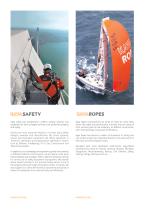
KAVASAFETV Kaya safety was established in 1996 to design systems and equipment for work at height activities to be performed properly and safely. Having the most advanced facility in its field, Kaya Safety designs, develops and manufactures fall arrest systems, rescue and evacuation equipment and lifting equipment in Turkey for institutions and organizations operating in sectors such as Defense, Firefighting, Oil & Gas, Construction and Telecommunication. In addition to our knowledge and experience gained from working in different fields for over 18 years, we are aware of the issue that employees...
Open the catalog to page 5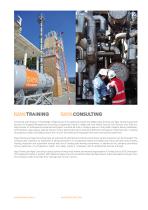
Combining with 30 years of knowledge of Kaya Group in Occupational Health and Safety; Kaya Training and Kaya Consulting provide solutions in Strategic Management Consulting, Occupational Health & Safety and Joint Health Security Unit Services since 2001 to a large number of multinational companies and projects in almost all cities in Turkey as well as in Iraq, Gabon, Nigeria, Russia, Kazakhstan, Turkmenistan, Libya, Algeria, Albania, Kosovo, Tunisia, Saudi Arabia, Syria, Ukraine and Morocco and plays an important role in creating Occupational Health and Safety culture with its over 40 professional...
Open the catalog to page 6
WORKING AT HEIGHT GENERAL PRINCIPLES OF WORKING AT HEIGHT 8-11 DIFFICULT TO REACH LOCATIONS (ROPE ACCESS) 32-33 LANYARDS AND SHOCK ABSORBERS- 56-77 MOBILE FALL ARRESTERS 118-123 RETRACTABLE FALL ARRESTERS 124-131 TRIPOD AND CANTILEVER ARMS - 168-187 ROCK PRODUCT GROUP - 244-273
Open the catalog to page 7
PRINCIPLES OF WORKING AT HEIGHT TRAINING Working at height is one of the biggest causes of workplace fatalities and major injuries. Employers must ensure that a sufficient risk assessment is carried out so that all risks of working at height are effectively identified, controlled and managed. Every employer must also ensure that employees are appropriately trained under careful and competent supervision to ensure that they can carry out their work safely. Please contact KAYA TRAINING division of our company for more information about working at height training programs. E-mail: [email protected] GENERAL...
Open the catalog to page 9
PRINCIPLES OF WORKING AT HEIGHT Restraint System allows workers to perform their task without the possibility of losing contact with the walking / working surface. 2. FALL ARREST SYSTEM (A) Fall Arrest System is designed to stop the free fall of a user and limit the maximum arresting forces imposed on the user to 6 kN or less. A fall arrest system provides maximum freedom of movement for workers to conduct their duties by connecting to the (A) safe attachment point.
Open the catalog to page 10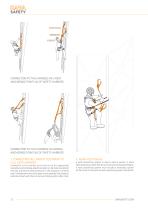
CONNECTION TO THE HARNESS VIA CHEST ANCHORAGE POINT (A) OF SAFETY HARNESS ÇİZİM 6 LANYARDIN SIRTTAN KULLANIMINDA DÜŞÜŞ CONNECTION TO THE HARNESS VIA DORSAL ANCHORAGE POINT (A) OF SAFETY HARNESS 3. CONNECTING FALL ARREST EQUIPMENT TO FULL BODY HARNESS Connection to the harness must only be via the appropriate connection points (dorsal attachment point or the chest connection) that will provide the best protection in the situation it is being used. Consideration should be given to the potential fall distance, potential impact with the structure and body position after a fall. A work positioning...
Open the catalog to page 11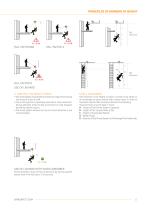
PRINCIPLES OF WORKING AT HEIGHT Fall Clearence Fall Clearence USE OF LANYARD 5. LIMITING THE IMPACT FORCE • Fall arrest system must limit the maximum impact force during the arrest of a fall to 6 KN. • Fall arrest system is generally used with a shock absorber. Energy absorber limits the fall arrest force in a fall situation by tearing specific seams. • Fall arrest system without the use of a shock absorber is not recommended. Fall clearance is the height at which a worker must attach to an anchorage to avoid contact with a lower level. In order to calculate required fall clearance distance the...
Open the catalog to page 12
TELECOM SECTOR KMSAFETY 1. ASCENDING WITH VERTICAL LIFELINE MonopoLe or Lattice towers are widely used in telecommunication sector. The safest way to climb up and down these towers is to use permanent vertical lifeline system installed on ladder (if such ladder exist). User is connected to a vertical lifeline by a wire rope grab which is attached to the (A) chest attachment point of full body harness. When the user moves (up or down), it slides along the life line. In the event of a fall, the device stops the fall instantly on the cable. 2. ASCENDING WITH DOUBLE LEGGED SHOCK ABSORBING LANYARD If...
Open the catalog to page 14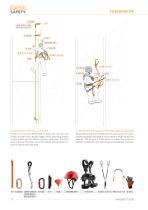
LUPA STATIC 11 MM LUPA STATİK WITH SPLICED EYE 11 MM GÖZLÜ 3. CREATING VERTICAL LIFELINE If there is no vertical lifeline fixed on tower, the first user who climbs up tower with a double-legged shock absorbing lanyard creates mobile vertical lifeline on tower using rope. The other users climb up the tower using this mobile vertical lifeline by help of appropriate rope grab. F-7 K-30/3A LUPA® STATIC 11 MM WITH SPLICED EYE 4. WORK POSITIONING WITH ADJUSTABLE LANYARD Adjustable lanyards are designed to be used as part of a work positioning system and enable users to work at height hands-free position....
Open the catalog to page 15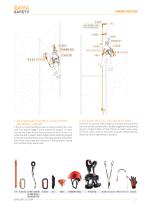
ENERGY SECTOR LUPA LUPA STATİK STATIC 11 MM WITH 11 MM GÖZLÜ SPLICED EYE 1. ASCENDING WITH DOUBLE-LEGGED SHOCK ABSORBING LANYARD 2. CREATING VERTICAL LIFELINE WITH ROPE If there is no vertical lifeline fixed on energy towers then user uses the double-legged shock absorbing lanyard to move around the tower whilst being connected at all times. It is recommended to attach double-legged shock absorbing lanyard to the (A) chest attachment point of full body harness. Connection from chest anchorage point prevents a falling worker hitting from surface facing toward user. F-7 K-30/3A LUPA® STATIC 11...
Open the catalog to page 18All KAYA YAPI IC MIMARLIK A.S. catalogs and technical brochures
 KAYA SAFETY 2020
114 Pages
 LUPA STATIC 11
6 Pages
 TURTLE
1 Page
 K-2010 A
1 Page
 Kaya Training & Consulting 2016
166 Pages
 Kaya Ropes Leisure Marine 2016
104 Pages
 Kaya Defence 2016
76 Pages
 Kaya Adventure 2016
50 Pages
 Kaya Safety
156 Pages
 Kaya Ropes
75 Pages