


juba warkwear

juba warkwear
The document describes JUBA's online shop, highlighting its user-friendly design for autonomous purchasing. Key features include real-time stock checking, price consultation, invoicing, and ordering. The platform offers resources like interactive graphics and manuals to enhance user experience. Registration via email is required for full access.
JUBA complies with ISO 9001 for quality management and ISO 14001 for environmental management, ensuring adherence to customer and legislative requirements. The company is also certified under ISO 45001:2018 for occupational health and safety, maintaining high standards beyond current legislation.
The document details various materials used in JUBA's workwear, including natural cotton, nylon, polyester, acrylic, and elastane, chosen for properties like durability, comfort, moisture-wicking, and environmental resistance.
JUBA's workwear meets several international standards for protective clothing, such as EN ISO 13688:2013 for general requirements, EN ISO 11611:2015 for welding protection, and EN ISO 11612:2015 for heat and flame protection. The document outlines classifications and performance criteria for each standard, ensuring safety and comfort in various risk environments.
The document categorizes PPE risks into three categories, detailing specific hazards each addresses. It also outlines requirements for knee protection and clothing for cold environments, adhering to standards like EN 342:2017 and EN 14058:2017.
This section outlines various international standards and regulations related to protective clothing, focusing on different types of workwear and their specific requirements.
According to EN ISO 20471:2013+A1:2016, high visibility clothing must ensure visibility in daylight and artificial light at night, specifying minimum areas of fluorescent and reflective materials required for certification.
EN 1073-2:2002 outlines requirements for non-ventilated protective clothing against radioactive particles, focusing on the nominal protection factor (100TIL A).
EN ISO 13982-1:2004+A1:2010 specifies minimum requirements for clothing resistant to airborne solid particles (Type 5).
EN 14605:2005+A1:2009 defines requirements for garments against liquid chemicals in stream (Type 3) or spray form (Type 4), considering prolonged exposure in emergencies.
UNE EN ISO 13998:2004 specifies requirements for clothing used with hand knives, with different protection levels for various tasks.
EN 14126:2003 details clothing requirements for protection against biological agents, ensuring safety in environments with potential skin contact with hazardous agents.
EN ISO 14325:2018 classifies materials based on resistance to abrasion, tearing, traction, and perforation, crucial for chemical protective clothing.
EN 343:2019 establishes standards for waterproof and breathable materials used in rain protection clothing, focusing on water penetration resistance (Wp) and vapor resistance (Ret).
EN 342:2017 and EN 14058:2017 specify requirements for garments protecting against cold, emphasizing thermal insulation and air permeability.
EN ISO 11612:2015 and EN ISO 11611:2015 outline requirements for clothing protecting against heat, flame, and welding hazards, specifying performance levels for various heat exposures.
EN 1149-5:2008 specifies requirements for clothing with electrostatic properties to prevent discharge-related fires.
EN ISO 13688:2013 provides general performance requirements for protective clothing, ensuring ergonomics, safety, and comfort.
This section outlines specifications for clothing designed to protect against hazardous infective agents like viruses, bacteria, or fungi, classified according to risk assessment.
This standard specifies test methods and performance classification for chemical protective clothing materials, seams, joins, and assemblages, with key resistance tests including abrasion, trapezoidal tearing, traction, and perforation.
This document specifies minimum safety requirements for protective clothing to ensure limited protection against liquid chemicals, including resistance to permeation and water resistance classifications.
This standard applies to protective clothing materials and seams used in wet conditions, classifying garments based on water penetration resistance and breathability.
These standards provide classifications for protective clothing based on the average value of content loss to the outside and nominal protection factors.
Juba has developed an organic cotton polo, with part of the sales proceeds going to the Ecomar Foundation, supporting environmental education and recovery projects in Portugal and Spain.
The document includes detailed descriptions of various workwear items, such as polos, vests, pullovers, and jackets, with material composition, features like breathability, water resistance, and design elements such as pockets and zippers. Sizes range from S to 3XL, and products are available in various colors.
- Fabric Properties: Workwear features waterproof and breathable fabrics with a breathability rating of 1000 MVP and a waterproof rating of 8000 MM, using materials like cotton, polyester, and elastane for elasticity and comfort.
- Design Features: Clothing items include multi-pocket designs, elastic waists, and reinforced seams for durability, with some garments having reflective details for visibility.
- Material Composition: Fabric compositions vary, with common blends being 97% cotton and 3% elastane or 68% cotton, 30% polyester, and 2% elastane.
- Jeans and Trousers: Available in various styles, including denim with zip and button fastening, multi-pocket designs, and elastic waists for better fit, with some trousers featuring openings for kneepads and extra reinforcement in high-wear areas.
- Jackets and Vests: Multi-pocket jackets with elastic cuffs and waists, front zippers, and Velcro closures, with vests including elastic sides for better fit and reflective strips for safety.
- Polos and Shirts: Available in short and long sleeves, made from cotton and elastane blends, featuring chest pockets and Velcro closures.
- Size Range: XS to 3XL, accommodating a wide range of body sizes.
- Color Options: Various color combinations, including navy blue, black, grey, and brown, often with contrasting details.
- Durability: Reinforced seams and strong linings ensure long-lasting wear.
- Comfort: High elasticity and ergonomic designs provide comfort during extended use.
- Functionality: Multiple pockets and adjustable features enhance practicality for work environments.
- Usage: Suitable for work environments requiring durable and functional clothing.
- Care Instructions: Follow specific washing and maintenance guidelines to preserve fabric properties and garment longevity.
The document details various workwear items made from materials such as 600d polyester/PU, 100% cotton, and blends of polyester and cotton, with weights ranging from 140 g/m² to 280 g/m², indicating different levels of durability and comfort.
The document describes a range of workwear including jackets, trousers, polos, T-shirts, and overalls, featuring attributes like multi-pocket designs, elastic waists, and reflective stripes for high visibility. Sizes range from XS to 3XL, accommodating a wide range of body types.
The workwear is available in various color combinations such as Royal blue-Black, Beige-Black, Navy blue-Black, and high-visibility colors like Fluor yellow and Fluor orange.
Many items are designed to be breathable, elastic, and moisture-resistant, enhancing comfort during use. High-visibility items comply with EN ISO 20471:2013 standards, ensuring safety in low-light conditions.
Jackets and trousers often include features like elastic cuffs, waistbands, and additional reinforcement in high-wear areas. Polos and T-shirts are available in both short and long sleeves, with options for chest pockets.
High-visibility clothing is certified according to EN ISO 20471:2013, ensuring compliance with safety standards for visibility.
The document targets industries requiring durable and functional workwear, emphasizing lightness and resistance suitable for industrial environments.
The document outlines various high visibility workwear items, including reversible vests, polar fleece jackets, sweaters, detachable jackets, and rain suits, equipped with 3M® Scotchlite™ reflective stripes for enhanced visibility. Materials include 100% polyester, polyester Oxford/PU, and polyester padding, with specific weights and compositions detailed for each garment.
The garments are designed with features such as front zippers, inner and outer pockets, elastic cuffs, adjustable cords, and detachable sleeves, providing functionality and comfort for the wearer.
All items comply with EN ISO 20471:2013+A1:2016 standards for high visibility clothing, with some items also meeting additional standards such as EN 343:2003+A1:2007 for waterproofing and EN 1149-5:2008 for electrostatic protection.
The document suggests using these garments in environments where high visibility is crucial for safety. The reversible and detachable features offer versatility, allowing the garments to be adapted to different weather conditions and work environments.
- High visibility with 3M® Scotchlite™ reflective stripes.
- Waterproof and breathable fabrics with specific ratings for waterproofing and breathability.
- Versatile designs with reversible and detachable options.
- Compliance with international safety standards.
The garments are available in a range of sizes from XS to 3XL, with specific care instructions implied to maintain the integrity and functionality of the reflective materials and waterproof coatings.
This document provides detailed specifications and descriptions of various workwear items, focusing on parkas, fleeces, and sweaters, with key features including waterproofing, breathability, windproof capabilities, and material composition.
- Waterproofing: Ranges from 5000 MM to 8000 MM, with MVP ratings between 600 and 1000.
- Breathability: Ranges from 5000 MM to 8000 MM, with MVP ratings between 600 and 1000.
- Materials: Common materials include polyester, elastane, TPU membranes, and PVC coatings.
- Design Features: Includes elastic cuffs, Velcro fasteners, detachable sleeves, and reflective details.
- Windproof Jackets: Typically feature triple-layer construction with TPU membranes, multiple pockets, and adjustable elements like cuffs and hoods.
- Padded Parkas: Offer additional warmth with polyester padding and often include features like hidden hoods and multiple pockets.
- Fleece Jackets: Made with polar fleece lining for thermal insulation, often with elastic cuffs and adjustable waist cords.
- Windproof and Breathable: Many items are designed to be both windproof and breathable, ensuring comfort in various weather conditions.
- Waterproof Fabrics: Utilized across products to provide protection against rain and moisture.
- Reflective Details: Enhance visibility and safety in low-light conditions.
- Choose products based on specific needs for waterproofing, breathability, and thermal insulation.
- Consider additional features like detachable sleeves and adjustable elements for versatility.
The document provides detailed descriptions of various multi-pocket vests and rain suits designed for professional and industrial use, characterized by functional features such as multiple pockets, adjustable waists, and protective elements like windbreakers and water repellency.
- PROFESIONAL 837: Multi-pocket vest with four front pockets, elastic side bands, and an opening for printing, made from Polyester Oxford/PU with a polyester lining.
- Elastic Fabric Vest: Features include a front zip fastener, reflective strips, and a longer back, made from a cotton-polyester-elastane blend.
- 833 DALLAS: Includes four front pockets with velcro, one with a zip, and an inner pocket, made from polyester pongee with PVC coating.
- 834 WING: Padded vest with front zipper closure, three outer pockets, and two inside pockets, made from polyester pongee coated with PVC.
- FALCÓN 862: Multi-pocket vest with wind protection features and a phone pocket, made from polyester pongee with ripstop finish.
The vests are constructed from durable materials such as polyester, cotton, and elastane blends, often with additional coatings for water repellency and wind protection. Many vests feature padded linings for added warmth and comfort.
Adjustable waists and elastic elements for better fit and comfort, reflective strips for enhanced visibility in low-light conditions, and windbreaker and water-repellent properties for protection against harsh weather.
The garments are available in a wide range of sizes from XS to 3XL, accommodating various body types.
Some vests are designed specifically for the food industry with thermo-sealed seams and special materials for hygiene and safety. High visibility options are available with reflective tapes and photoluminescent features.
The garments comply with various standards such as EN14058:2017 and EN343:2019, ensuring quality and safety in professional environments.
The document outlines a comprehensive range of workwear designed for functionality, durability, and safety, suitable for various professional settings.
- Partial protection (type PB6) against chemical agents such as Sodium Hydroxide (10%), Sulfuric Acid (30%), Xylene, and Butanol, complying with EN 13034:2005+A1:2009 standards.
- Materials used include 87% PVC and 13% polyester for certain products, and 75% PVC and 25% polyester for others.
- Products are made in Spain and available in various sizes, including unique sizes and standard sizes like M, L, XL, XXL, and 3XL.
- Aprons with cord fastening, suitable for alimentary use, measuring 105 cm x 70 cm.
- Overalls with elastic braces and waist, suitable for food use.
- Sleeves with elastic sides for better adjustment, suitable for chemical and alimentary use.
- Breathable T-shirts and trousers with elastic cuffs and ankles, made from a blend of cotton, synthetic fibers, and elastane.
- Thermal underwear with antibacterial ionized silver fabric for odor elimination, featuring seamless structure and ergonomic design.
- Products are available in various colors and sizes, including options for extreme cold and mid-season cold conditions.
- Split leather jackets and trousers with Velcro closures, available in natural and brown colors.
- Products tested according to IEC 61482-1-2:14 for electric arc exposure, classified as Class 1.
- Multi-pocket trousers with extra reinforcement, made from 100% cotton.
- Disposable coveralls for chemical risks, providing protection against biological agents, antistatic properties, and radioactive contamination.
- Suitable for various industrial applications, including maintenance, chemical handling, and jobs with biological risks.
- Made from polypropylene and polyethylene, featuring front zip closure, elastic fittings, and thermo-sealed seams.
The document provides detailed specifications and applications for various types of disposable protective coveralls under the STEELGEN brand, designed for chemical risk protection, with specific features and compliance with international standards.
- Types of coveralls include STEELGEN 1000, 1000FR, 500, and 500B, each offering different levels of protection against chemical risks, heat, flames, and radioactive contamination.
- Materials used include SMS Polypropylene and combinations of Polypropylene and Polyethylene, with specific treatments for fire resistance and breathability.
- Elastic fittings are provided on hoods, belts, cuffs, and ankles for a secure fit, along with front zip closures with stick-down flaps.
- EN 1149-5: Electrostatic properties.
- EN 1073-2: Protection against radioactive contamination.
- EN 14126: Protection against infective agents.
- EN 13034 and EN ISO 13982-1: Chemical protection types 5 and 6.
- EN ISO 14116: Protection against heat and flames.
- Suitable for maintenance tasks in swimming pools, workshops, and nautical environments.
- Effective for handling particles such as fiberglass, toxic dust, and asbestos.
- Used in cleaning, painting, and environments with low hazard chemical products, especially where there is a fire risk.
- CHEMTAPE CT54: Adhesive tape for sealing joints in protective clothing, tested for resistance against various chemicals.
- Disposable accessories such as caps, gowns, and shoe covers are also available, made from Polypropylene.
- CHEMTAPE CT54 provides over 480 minutes of protection against most chemicals listed, including Acetone, Methanol, and Sulfuric Acid.
This document provides an index of workwear products, categorized into various sections such as jackets, trousers, waterproof clothing, thermal clothing, and more. Each product is listed with a reference code and page number for easy navigation.
- Jackets and Parkas: Includes various models like 2894, 2898, and 2967, with specific color options and page references.
- Vests and Trousers: Lists products such as 848AZ and HVFR2666, with details on page numbers for each variant.
- Shorts and Bib & Brace Trousers: Features items like 981 and 991, providing page references for each.
- Waterproof and Thermal Clothing: Includes products like 1188B56FR and 802RHAZUL, with page numbers for detailed information.
- Aprons and Sleeves: Lists items such as 452A and CHAL925A, with corresponding page numbers.
The document also includes contact information for JUBA Personal Protective Equipment S.L., highlighting their focus on safety evolution and high visibility workwear. It mentions various product lines like CHOIVA for thermal clothing and STEELGEN for waterproof clothing.
Catalog excerpts

FRANÇAIS / ENGLISH www.jubappe.fr www.jubappe.com
Open the catalog to page 1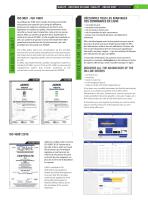
QUALITÉ - BOUTIQUE EN LIGNE / QUALITY - ONLINE SHOP · WORKWEAR La politique de JUBA tient compte de toutes les activités nécessaires pour garantir qu'au long des différents processus, les exigences requises par les clients et la législation en matière de qualité, d'environnement et de sécurité au travail soient respectées. Juba a mis en oeuvre, depuis 2000, un système de gestion de la qualité dans le cadre de la norme ISO 9001, et elle a également implanté en 2012 un système de gestion environnementale ISO 14001 garantissant la protection de l'environnement, qui a été actuellement renouvelé avec...
Open the catalog to page 3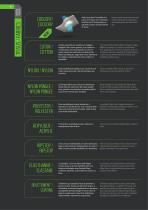
TISSUS / FABRICS WORK WEAR Aide à expulser l'humidité et la sueur de la peau vers l'extérieur, facilitant ainsi l'évaporation et gardant toujours la peau fraîche et sèche. Helps to wick away moisture and sweat, helping the evaporation and keeping the skin fresh and dry. La fibre naturelle par excellence, d'origine végétale. Dans notre gamme, il est utilisé en combinaison avec du polyester ou seul. Le coton naturel est associé à la résistance des fibres synthétiques, apportant à nos vêtements le meilleur comportement entre confort et durabilité. The natural fibre par excellence of plant origin....
Open the catalog to page 4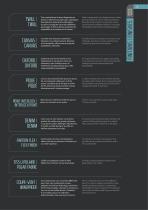
Tissu caractérisé par la trame diagonale qui donne au vêtement un aspect plus sophistiqué. Normalement utilisé dans les fabrications en coton ou polyester-coton dans différents grammages. Il offre de bonnes propriétés de respirabilité et de résistance à la traction. Fabric categorised by its diagonal weave which gives the garment a more sophisticated look. Normally used in cotton or polyester-cotton constructions in different weights. It has good breathability and tensile strength properties. CANVAS / CANVAS Il confère une résistance maximale à l'abrasion et au rétrécissement. Résistant aux intempéries,...
Open the catalog to page 5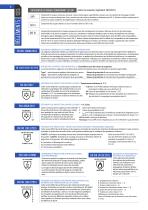
WORK WEAR 6 CATÉGORIES DE RISQUES CONCERNANT LES EPI (selon le nouveau règlement 2016/425) Comprend les risques minimaux suivants : lésions mécaniques superficielles, contact avec du matériel de nettoyage, à faible action ou contact prolongé avec l'eau, contact avec des surfaces chaudes ne dépassant pas 50 ºC, lésions oculaires causées par la lumière du soleil, conditions atmosphériques n'étant pas de nature extrême. Comprend des risques distincts à ceux énumérés dans les CAT I et III.. Comprend exclusivement les risques qui peuvent avoir des conséquences très graves, telles que la mort ou des...
Open the catalog to page 6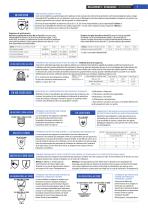
RÈGLEMENTS / STANDARDS · WORKWEAR PROTECTION CONTRE LA PLUIE Cette norme établit les caractéristiques des matériaux et des coutures des vêtements de protection contre les précipitations (pluie, neige), le brouillard et l'humidité du sol. Les vêtements sont conçus et fabriqués à partir de matériaux imperméables et respirants, en portant une attention particulière aux coutures, afin de garantir un confort optimal. A niveau d'imperméabilité du vêtement (classe de 1 à 3). (Du moins imperméable au plus imperméable).Tableau 1. B classe de respirabilité du vêtement (en option) (classe de 1 à 3) (Du moins...
Open the catalog to page 7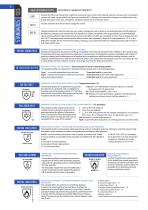
WORK WEAR Includes the following minimal risks: superficial mechanical injury, contact with cleaning materials of weak action or prolonged contact with water, contact with hot surfaces not exceeding 50 °C, damage to the eyes due to exposure to sunlight (other than during observation of the sun), atmospheric conditions that are not of an extreme nature. Includes risks other than those listed in Categories I and III. Includes exclusively the risks that may cause very serious consequences such as death or irreversible damage to health relating to the following: substances and mixtures which are hazardous...
Open the catalog to page 8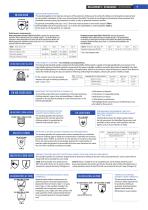
RÈGLEMENTS / STANDARDS · WORKWEAR PROTECTION AGAINST RAIN This standard applies to the materials and seams of the protective clothing used to combat the influence of atmospheres characterised by the possible combination of rain, snow, fog and ground humidity. The garments are designed and produced using waterproof and breathable materials, paying close attention to seams, in order to guarantee maximum comfort. A garment permeability level (class 1 to 3). (From least water resistant to most water resistant).Table 1. B breathability class of the garment (class 1 to 3). (From least breathable to...
Open the catalog to page 9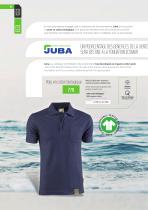
WORK WEAR En tant qu’entreprise engagée dans la protection de l’environnement, Juba a mis au point un polo en coton biologique. Une partie des bénéfices tirés de la vente de cet article sera destinée à la Fondation Ecomar et continuera donc à collaborer avec ce grand projet. SAFETY EVOLUTION UN POURCENTAGE DES BENEFICES DE LA VENTE SERA DESTINE A LA FONDATION ECOMAR Juba as a company committed to the environment has developed an organic cotton polo. . Part of the benefits obtained from the sale of this article will be allocated to the Ecomar Foundation and thus continue collaborating with this...
Open the catalog to page 10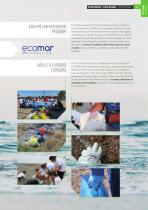
Juba est une entreprise engagée E Juba is a comitted company En 2018 nous avons donné les premier pas pour collaborer avec la fondation ECOMAR pour leur projet d’éducation, soin et récupération de l’environnement des côtes de Portugal et de l’Espagne. Ce projet, focalisé principalement pour enfants et jeunes, essaie de faire prendre conscience grâce aux sports maritimes, de la nécessité de protéger l’environnement avec des actions, comme la collecte des résidus dans les eaux et côtes. Depuis 2019 nous sommes parrainages de cette fondation. In 2018 we have started to collaborate with the foundation...
Open the catalog to page 11All Juba catalogs and technical brochures
 MASK020B
1 Page
 MASK020GY
1 Page
 VESTS - HV717 ELBRUS
2 Pages
 VESTS - 860 WESTPORT
1 Page
 PARKAS - CH322 CHOIVA
2 Pages
 GLOVE CRYOKIT® - CRYOPLUS
2 Pages
 GLOVE JUBA - 530 JUBA
2 Pages
 GLOVE JUBA - 4400 POWER CUT
2 Pages
 GLOVE JUBA - 252 WINTER JUBA
2 Pages
 GLOVE JUBA - BPU1400 ECO-PU
2 Pages
 GLOVE JUBA - 206BDA38 JUBA
2 Pages
 214IGPN
2 Pages
 2897DN KARAVIA
1 Page
 670 FLEX
1 Page
 613 BÁSICO
1 Page
 353S
353S2 Pages
 213 DRIVER
2 Pages
 208 TUFF
2 Pages
 206BDA38
2 Pages
 451C
451C1 Page
 251H
251H1 Page
 2892 OBEROI
1 Page
 data sheet BPU1400
2 Pages


- Fabric clothing
- Mechanical protection protection gloves
- Polyester clothing
- Cotton clothing
- Work safety gloves
- Work jacket
- Chemical protection safety gloves
- Handling protection gloves
- Work coveralls
- Plastic glove
- Thermal protection clothing
- Anti-cut safety gloves
- Work pants
- Thermal protection safety gloves
- Face mask
- Nitrile glove
- Unisex coveralls
- Polyester jacket