Overview: The document is a comprehensive catalog for Koyo Ball Bearing Units, detailing their structure, features, types, and technical specifications. It is intended to assist in the selection and use of these units in various industrial applications.
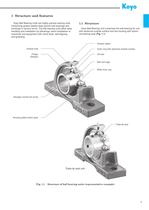
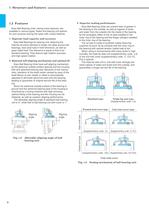
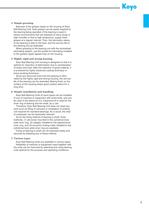
Structure and Features: Koyo Ball Bearing Units are precision-engineered, comprising grease-sealed deep groove ball bearings and various housing forms. They are designed for easy installation and self-alignment, featuring a spherical outside surface and housing seat. Key features include high load capacity, accuracy, and superior sealing performance to prevent grease leakage and ingress of dust and water.
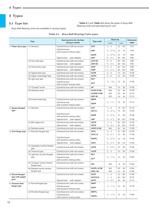
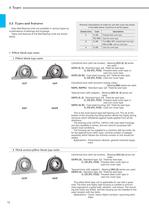
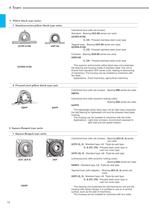
Types: The catalog lists various types of ball bearing units, including pillow block, square-flanged, oval flange, round-flanged with spigot joint, pressed steel flange, take-up, cartridge, and hanger types. Each type is designed for specific applications and environments.
Selection of Unit: Guidelines are provided for selecting the appropriate bearing unit based on type, specifications, and maintenance considerations. Factors such as load capacity, rotational speed, and operating temperature are crucial in the selection process.
Technical Specifications: Detailed technical information includes bearing life calculations, load distribution, allowable rotational speeds, and housing strength. The document also covers design considerations for shafts and bases, tolerances, and material specifications.
Performance and Handling: The catalog discusses the performance aspects of the bearings, including friction torque, temperature increase, and sealing effectiveness. Handling instructions cover installation, test run inspections, periodic maintenance, and grease supply.
Supplementary Information: The document includes tables for tightening torques, machining dimensions, and conversion factors. It also provides references for mechanical properties of materials and standards for screws, bolts, and nuts.
Conclusion: The catalog serves as a valuable resource for selecting and maintaining Koyo Ball Bearing Units, emphasizing their high performance, reliability, and adaptability to various industrial needs.
Specifications and Features: The Koyo Ball Bearing Units are designed to minimize deformation due to stress centralization. They are manufactured using advanced casting or press working techniques, ensuring high rigidity and strength. The units feature a baking finish for long-lasting surface quality.
Installation and Handling: These units are easy to install with bolts and do not require additional lubrication or sealing units, reducing manpower requirements. There are three methods for fixing the bearing to the shaft: set screw, adapter, and eccentric locking collar.
Applications: The units are suitable for a wide range of applications, including transmission devices, industrial equipment, cranes, conveyors, and machinery exposed to light loads or corrosive conditions.
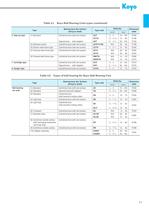
Data Tables: The document includes tables detailing the types of Koyo Ball Bearing Units, their dimensions, and specifications, providing a comprehensive guide for selecting the appropriate unit for specific needs.
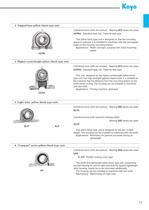
Rhombic-Flanged Type Units: These units are compatible with square-flanged units due to identical bolt hole centers. They allow angle adjustment and are suitable for environments with limited mounting space. Types include standard, triple-lip seal, and lightweight versions.
Three-Bolt Flange Type Units: Designed for vertical surfaces and limited spaces, these units use three bolts for installation and are available in standard and triple-lip seal types.
Light Duty Units: These are lightweight rhombic-flanged units designed for light loads, using two bolts for installation. They are suitable for light-duty conveyors and low-speed applications.
Compact Series Units: Small and lightweight, these units do not require additional lubrication and are used in machinery for light loads.
Stainless-Series Units: Made of stainless steel for superior corrosion resistance, these units are thinner than standard units and are used in food and agricultural machinery.
Round-Flanged Types with Spigot Joint: These units provide excellent mounting accuracy and are used in applications requiring precise alignment, such as rotating drums and rollers.
Pressed Steel Flange Type Units: Lightweight and requiring less mounting space, these units are used in light-duty conveyors.
Take-Up Type Units: Allow angle adjustment and are used in belt conveyors where shaft center adjustment is necessary. Stainless versions are available for corrosive environments.
Other Units: Includes cartridge and hanger type units for specific applications like screw conveyors.
Ball Bearings for Units: Various types of ball bearings are detailed, including UC, UK, NA, SB, SA, SU, ER, and RB types, each with specific features like set screws, locking collars, and sealing mechanisms.
Special Use Units: JTEKT offers units for special environments or conditions, including triple-lip seal units for enhanced protection against dust and water ingress.
Triple-Lip Seal Unit: The triple-lip seal is designed to fit the outer ring of the bearing, allowing it to be handled like standard types. It prevents uneven contact with the shaft and maintains stable sealing performance over time. This unit improves upon conventional dust and water prevention methods, offering energy savings and cost efficiency. It is compatible with UC and UK type bearings.
Unit with Cover: This unit features a double sealing structure with a standard housing and either a pressed steel or cast iron cover. It is designed for long service life in harsh environments, such as those with dust and mud water. Available in open and closed end types, it ensures durability under severe conditions.
Heat and Cold Resistant Units: These units are designed for extreme temperatures beyond the standard range of -20°C to 100°C. The heat resistant unit (D1K2) operates from -40°C to 180°C, while the cold resistant unit (D2K2) functions from -50°C to 120°C. Specifications include different grease and oil seal materials to accommodate these conditions.
High Speed Unit: The high speed unit (K3) is optimized for high speed rotation and low torque, using a non-contact type oil seal. It is suitable for applications requiring high speed and low heat, such as textile and printing machinery.
Unit for Blower: Designed for high speed, low heat, low vibration, and low noise, the blower unit (S5) uses a non-contact oil seal and improved machining accuracy, ideal for blower applications.
Compact Series Unit: This unit is designed for machinery downsizing, featuring a set screw method for easy shaft installation. It offers superior dustproof and waterproof performance due to its rubber-coated cover surface.
Stainless-Series Unit: Intended for food machinery, this series offers waterproof performance with stainless steel bearings and housings. It includes USDA H1 certified grease for food-related applications, with an operating temperature range of -20°C to +100°C.
Selection of Unit: The selection process involves considering the structure of machinery, operating conditions, and required performance. Factors such as environment, temperature, and load conditions are crucial in selecting the appropriate bearing unit. Maintenance and periodic checks are recommended for units used in critical or special environments.
Life of Bearing: The life of a ball bearing unit is determined by the fatigue of bearing material and grease degradation. The basic rating life and load are calculated to ensure the bearing meets operational demands. Proper selection, handling, installation, and lubrication are essential to prevent premature failure.
Ball Bearing Specifications and Procedures:
Correction of Basic Rating Load for High Temperature Use: Ball bearings used at high temperatures experience changes in material structure, reducing hardness and dynamic load rating. For temperatures of 150°C or more, the basic rating load must be corrected using a temperature factor from Table 4.1. Long-term use at 120°C or more may increase dimensional fluctuations, requiring consultation with JTEKT.
Corrected Rating Life: The corrected rating life (Lna) accounts for reliability, bearing characteristics, and operating conditions. It is calculated using Formula (4.6) with factors for reliability (a1), bearing characterization (a2), and operating conditions (a3). Table 4.2 provides values for the reliability factor a1.
Recommended Service Life: Service life recommendations vary by application and operating conditions, as shown in Table 4.3. For example, home appliances have a recommended life of 4,000-8,000 hours, while continuous operation in power plants suggests 100,000-200,000 hours.
Grease Life: Grease life is influenced by load, speed, and temperature. Formula (4.7) calculates grease life under appropriate conditions, with specific parameters for temperature and speed. If conditions exceed specified limits, consultation with JTEKT is advised.
Bearing Load: Load factors account for vibration and impact, with Table 5.1 providing load factors for different operating conditions. Belt and chain transmissions require additional factors (fb) for accurate load calculations, as detailed in Table 5.2.
Dynamic Equivalent Load: Dynamic equivalent load (Pr) is calculated for bearings under fluctuating loads using Formula (5.9). Table 5.4 provides radial and axial load factors. Mean dynamic equivalent load is determined for fluctuated conditions using methods in Table 5.5.
Specifications and Load Ratings: The document outlines the calculation of dynamic and static load ratings for bearings. The mean dynamic equivalent load (Pm) is calculated based on various dynamic equivalent loads (P1, P2, ..., Pn) acting over different time periods and rotational speeds. The basic static load rating is defined as the static load that causes a specific contact stress on the bearing's raceway and rolling element, leading to permanent deformation. Different types of bearings have specific static load ratings, such as self-aligning ball bearings (4,600 MPa) and roller bearings (4,000 MPa).
Static Equivalent Load and Safety Factor: The static equivalent load (P0r) is a virtual load that generates the same contact stress as the actual load conditions. It is calculated using radial (Fr) and axial loads (Fa). The safety factor (fs) is used to assess the safety of the basic static load rating, considering conventional experiences and operating conditions. Recommended safety factors vary based on conditions, such as 2 for high rotating accuracy and 0.5 for standard conditions with oscillation.
Examples of Load Calculations: Several examples illustrate the calculation of loads on bearings under different conditions, such as distributing loads between bearings, calculating loads from V-belt transmissions, and determining dynamic equivalent radial loads. These examples provide formulas and step-by-step calculations to find the loads applied to bearings A and B, considering factors like radial and axial loads, load factors, and speed factors.
Bearing Life and Grease Life Calculations: The document provides methods to calculate bearing life (L10h) and grease life under various conditions, including high temperatures and non-lubrication scenarios. Formulas are provided to determine the dynamic radial load rating (Cr) and the bearing life based on rotational speed, load factors, and operating temperatures. The grease life is calculated using specific formulas that consider factors like operating temperature and load ratings.
Allowable Rotational Speed: The allowable rotational speed of a bearing is influenced by friction heat, dimensions, oil seal type, and fitting conditions. A table provides standard allowable rotational speeds for different bearing types and sizes. The document also discusses the correction of allowable rotational speed based on fitting factors, which depend on the shaft tolerance class and the type of bearing unit.
Operating Temperature and Specifications: The operating temperature range of a ball bearing unit is determined by the type of grease, oil seal material, and internal clearance. Special codes are available for heat and cold-resistant units, allowing for optimal selection based on operating temperature requirements.
Operating Temperature and Internal Clearance of Bearing: The document discusses the impact of high temperatures on bearing life, emphasizing that increased temperature differences between the inner and outer rings can reduce internal clearance, leading to early breakage. A formula (7.1) is provided to calculate the decrease in internal clearance based on temperature differences. It is crucial to select the appropriate internal clearance for bearings used at high temperatures to prevent abnormal axial loads and potential breakage.
Strength of Housing: The housing for Koyo Ball Bearing Units is designed to withstand standard operating conditions. However, under great or impact loads at low speeds, the strength must be examined. The document highlights the importance of considering the direction of load and the rigidity of the base. Various types of housings, such as cast iron, cast steel, and stainless steel, are discussed with their respective safety factors and static destruction strengths.
Strength of Cast Iron Housing: Gray cast iron is noted for its fragility against impact loads. The document provides safety factors for static, vibrational, and impact loads, and outlines static destruction strengths for different housing types.
Strength of Cast Steel Housing: Cast steel housings offer high destruction strength and impact resistance. Safety factors for static, vibrational, and impact loads are provided, along with static destruction strengths for cast steel pillow block type housings.
Strength of Steel and Stainless Steel Housing: Pressed steel housings are highly rigid but deform significantly under load. Allowable loads are specified, and safety factors for stainless steel products are provided.
Strength of "Compact" Series Housing: The "compact" series housing, made of zinc alloy die-cast, is discussed with safety factors for static, vibrational, and impact loads.
Design of Shaft and Base: The document emphasizes the importance of selecting an optimal shaft for ball bearing units, considering factors like rigidity and fitting tolerances. Various tables provide guidelines for shaft tolerances based on different bearing types and conditions, including cylindrical bore bearings with set screws, tapered bore bearings, and bearings with eccentric locking collars.
Dimensions of Shouldered Shaft: For environments with significant axial loads or vibrations, the use of a shouldered shaft is recommended. The document provides dimensions for shoulder diameter and fillet radius for different bearing bore sizes.
Specifications and Procedures: The document provides detailed specifications and procedures for the installation and maintenance of ball bearing units, focusing on countermeasures against heat and the design of shafts and bases. It emphasizes the importance of proper installation to prevent premature bearing failure due to thermal expansion.
Countermeasures Against Heat: When a shaft is exposed to heat, it expands axially, which can lead to excessive axial load on the bearing and premature failure. To mitigate this, the document recommends installing one bearing unit on the fixed side and another on the free side to absorb expansion. The formula for calculating shaft expansion due to temperature increase is provided.
Installation Recommendations: 1. Use a full dog point set screw on the free side to allow axial movement of the shaft. 2. For high rotational speeds or vibration-prone environments, use a cartridge type unit on the free side.
Design of Base: The base must have sufficient rigidity and flatness to prevent vibration and noise, which can lead to bearing failure. Recommended flatness values for the mounting surface are provided.
Mounting Bore and Tolerances: The document specifies tolerance classes for cylindrical bores and provides recommended tolerances for different nominal bore diameters. It also includes dimensions for installing take-up type units and machining dimensions for housing dowel pins.
Unit Numbering and Codes: The document explains the structure of nominal numbers for Koyo Ball Bearing Units, including bearing type codes, housing type codes, and supplementary codes. Tables provide detailed descriptions of each code.
Tolerances and Internal Clearance: Tolerances for ball bearing units are specified according to JIS standards. The document includes tables showing permissible values for inner and outer rings of ball bearings, emphasizing higher accuracy for blower units.
Key Tables and Figures: - Table 9.7: Dimensions of key groove for full dog point set screw. - Table 9.8: Tolerance of cylindrical bore for mounting cartridge type unit. - Table 9.9: Dimensions for installation of take-up type unit. - Various tables detailing codes for bearing and housing types, diameter series, bore diameters, and fitting codes.
Tolerances and Specifications: The document outlines the tolerances and permissible values for tapered bore bearings, specifying deviations and variations in bore diameter and radial runout. It includes detailed tables for nominal bearing bore diameters ranging from 10 mm to 180 mm, with specific upper and lower limits for deviations and variations.
Housing Tolerances: The tolerances for housing diameters are specified, with different classes (H7, J7, K7) allowing for various fitting types. The document provides guidelines for selecting the appropriate tolerance class based on installation priorities and operational conditions.
Internal Clearance: Internal clearance for ball bearings is crucial for performance, affecting rolling fatigue life, heat, noise, and vibration. The document provides tables for standard internal clearance values and adjustments based on load and temperature conditions.
Materials: The materials used for bearings and housings are specified, including high carbon chromium steel for bearing rings and balls, and various steel and iron materials for housings. The document emphasizes the importance of material properties such as hardness, wear resistance, and dimensional stability.
Performance: Friction torque and temperature increase in bearings are discussed, with formulas provided for calculating friction torque based on load and rotational speed. The document highlights the impact of friction on bearing temperature and performance.
Tables and Figures: The document includes numerous tables detailing tolerances, material compositions, and mechanical properties, as well as figures illustrating installation dimensions and friction torque measurements.
Temperature and Performance of Ball Bearing Units: The temperature of ball bearing units increases gradually after startup, reaching a maximum after one to two hours, then stabilizes if no abnormalities occur. The temperature is influenced by environmental conditions and the type of oil seal used. Non-contact seal types exhibit lower temperature increases compared to standard and triple-lip seal types.
Dustproof and Waterproof Performance: JTEKT conducts various tests to evaluate the dustproof and waterproof performance of ball bearing units. The dust sprinkle rotating test and dust bury rotating test show that triple-lip seal and covered types have superior dust prevention compared to standard types. In waterproof tests, rust appears on standard types after 1,000 hours, while triple-lip and covered types show similar rust levels after 2,500 hours.
Handling and Installation: The installation of ball bearing units involves several steps to ensure proper fitting and performance. Key procedures include inspecting the unit, fitting it to the shaft, and securing it with set screws or adapters. Different installation methods are used depending on the type of locking mechanism, such as set screws, adapters, or eccentric locking collars. Proper installation is crucial to prevent premature breakage and ensure optimal performance.
Installation Procedures: 1. Inspect the unit for base rigidity and shaft condition. 2. Fit the bearing unit to the shaft and secure it in position. 3. Use appropriate methods for tight fitting, such as press-fit, cold-fit, or shrink-fit. 4. Secure the unit with bolts and tighten set screws or locknuts with specified torque. 5. Check for abnormalities in the rotating status of the bearing.
Test Run Inspection: After installation, a test run inspection is necessary to ensure the bearing unit operates correctly without abnormalities.
Test Run Inspection Procedures: 1. Manually rotate the shaft to ensure smooth bearing rotation. Any jamming, vibration, or uneven rotation indicates a faulty bearing. 2. Conduct a power run without load at low speed to check for abnormal noise and vibration. 3. Perform a power run under specified conditions to monitor for noise, vibration, and temperature increases.
Main Faults and Causes: - Excessive Torque: Caused by faulty installation, inappropriate handling, or excessive tightening.
- Abnormal Noise/Vibration: Due to insufficient tightening, large internal clearance, or shaft issues.
- Temperature Increase: Results from small internal clearance, inappropriate installation, or excessive load.
Periodic Inspection: While Koyo Ball Bearing Units typically do not require inspection, periodic checks are recommended for critical applications. Inspections should focus on appearance, screw tightness, vibration, noise, temperature, and grease supply.
Grease Supply and Maintenance: 1. Grease life is long under standard conditions, but periodic supply is necessary in harsh environments. 2. Recommended grease supply intervals vary based on operating temperature and environmental conditions. 3. Use the same type of grease as initially packed to avoid performance degradation.
Replacing Bearings: If a bearing is faulty, it can be replaced without replacing the housing. Follow specific procedures for removal and installation.
Specification Tables: The document includes detailed specification tables for various types of ball bearing units, including pillow block, flange, and take-up types.
Specifications and Components: The document provides detailed specifications for various bearing units, including dimensions, part numbers, and types of covers (pressed steel and cast iron) for UC and UK type bearings. It includes tables listing part numbers for different shaft diameters and types of covers, both open and closed ends.
Grease Nipples and Reducing Sockets: Specifications for grease nipples and reducing sockets are provided, detailing nominal numbers, dimensions, and screw codes. The document includes tables for A, B, and C type grease nipples and reducing socket codes.
Allen Key Wrench Dimensions: Details on the nominal numbers and dimensions of Allen key wrenches are included, specifying applicable set screws and approximate dimensions.
Applications and Use Cases: The document outlines various applications of Koyo Ball Bearing units in different industries, such as automatic warehouse systems, delivery centers, soft drink plants, noodle manufacturing, tea processing, agricultural machinery, and construction machinery. It highlights the benefits of using these bearings, such as automation, energy-saving, and high performance.
Tightening Torques: Recommended tightening torques for mounting bolts, set screws, and adapter lock nuts are provided, with tables specifying nominal sizes and applicable bearings.
Supplementary Information: The document includes supplementary tables with additional technical data, such as tightening torques, machining dimensions, shaft tolerances, and conversion factors. It also provides a simplified chart of ball bearing unit combinations and references to mechanical properties of metal materials.
Overview: This document provides contact information for various KOYO and JTEKT Corporation offices, manufacturing plants, and technical centers worldwide. It includes details for locations in Europe, North America, Latin America, Asia, and the Middle East.
Key Sections:
- Offices: Lists contact details for regional offices in France, Spain, Italy, Japan, Canada, USA, Mexico, Panama, Brazil, India, Thailand, Indonesia, Singapore, UAE, and more.
- Bearing Plants: Provides addresses and contact numbers for manufacturing plants in Canada, USA, Thailand, Philippines, Korea, China, and other countries.
- Technical Centers: Includes information on technical and research centers in the USA, China, Netherlands, Germany, and Czech Republic.
Product Information: The document mentions 'General Bearings' and 'Ball Bearing Units' with a catalog number B2007E-1, indicating a focus on these products.
Publication Details: The document was printed in Japan in June 2012, with a catalog number B2007E-1.




 ONI Flyer
 EasyFit NC-Ball Bearing Units
 Ball Bearing Units
 Ball & Roller Bearings
 INSERT BEARING UNITS
 Spherical Roller Bearings
 Ceramic bearings
 B1011E Traction Drive Unit
 B1005E EXSEV Product Guidebook
 Agriculture and Construction
 catb2018e
 DRIVE SHAFTS for INDUSTRY
 Ball & Roller Bearings
 Ceramic&Exsev bearing
 OIL SEALS & O-RINGS
 TAPERED ROLLER BEARINGS
 LARGE SIZE BALL & ROLLER BEARINGS


 Needle Roller Bearings
 NEEDLE ROLLER BEARINGS_2010
 CERAMIC & EXSEV BEARINGS
 Ball & Roller Bearings
 High Performance Bearings
 Miniature Bearings
 Miniature One Way Clutch
 Roll Neck Bearings
 Sprag Clutches
 Exsev Bearings
 Ceramic Bearings
 Oil Seals & O-Rings
