
- Catalogs
- Jinan Saicheng Electronic Technology Co.,LTD
- How do you choose the right peel test method for an adhesive?


- Company
- Products
- Catalogs
- News & Trends
- Exhibitions
How do you choose the right peel test method for an adhesive?
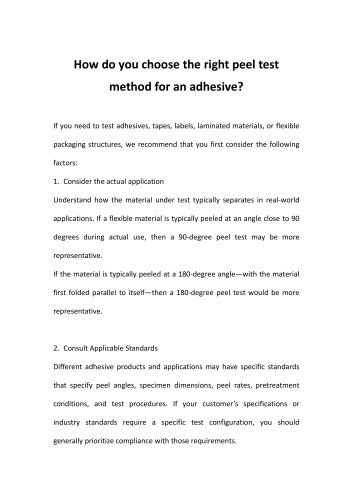
How do you choose the right peel test method for an adhesive?
Choosing the right peel test method for adhesives involves several considerations to ensure accurate and representative results. This summary outlines the key factors to consider when selecting a peel test method for adhesives, tapes, labels, laminated materials, or flexible packaging structures.
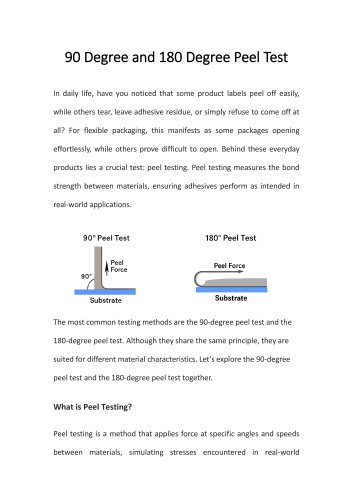
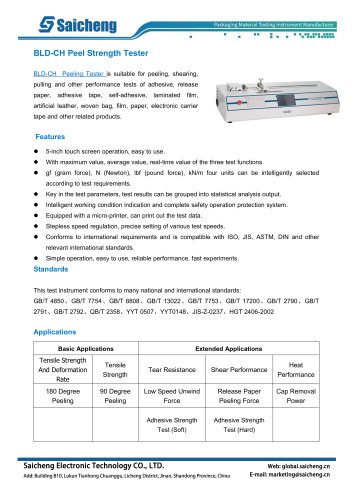
Understand the typical separation angle in real-world applications. If the material is usually peeled at a 90-degree angle, a 90-degree peel test is more appropriate. Conversely, if the material is peeled at a 180-degree angle, a 180-degree peel test should be used.
Adhesive products may have specific standards dictating peel angles, specimen dimensions, peel rates, pretreatment conditions, and test procedures. Compliance with customer specifications or industry standards is crucial.
Different levels of material flexibility can affect peel test results. In a 180-degree configuration, the material's thickness and bending stiffness influence test behavior.
Peel testing should not only focus on obtaining a single numerical value. Observing the stability of the curve during the test and documenting the failure mode are also important.
The choice between 90° and 180° peel tests is just one aspect of selecting a peel test method. The goal is to choose a method that provides meaningful and repeatable data for the specific adhesive system being evaluated.
Catalog excerpts

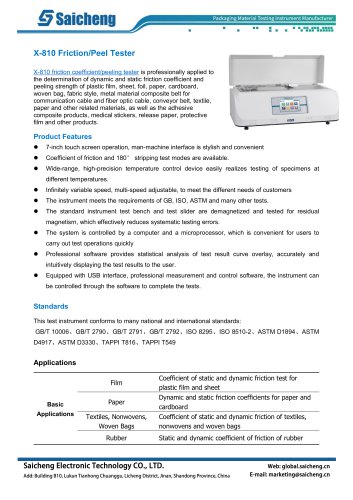
How do you choose the right peel test method for an adhesive? If you need to test adhesives, tapes, labels, laminated materials, or flexible packaging structures, we recommend that you first consider the following factors: 1. Consider the actual application Understand how the material under test typically separates in real-world applications. If a flexible material is typically peeled at an angle close to 90 degrees during actual use, then a 90-degree peel test may be more representative. If the material is typically peeled at a 180-degree angle—with the material first folded parallel to itself—then a 180-degree peel test would be more representative. 2. Consult Applicable Standards Different adhesive products and applications may have specific standards that specify peel angles, specimen dimensions, peel rates, pretreatment conditions, and test procedures. If your customer’s specifications or industry standards require a specific test configuration, you should generally prioritize compliance with those requiremen
Open the catalog to page 1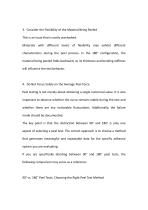
3. Consider the Flexibility of the Material Being Peeled This is an issue that is easily overlooked. Materials with different levels of flexibility may exhibit different characteristics during the peel process. In the 180° configuration, the material being peeled folds backward, so its thickness and bending stiffness will influence the test behavior. 4. Do Not Focus Solely on the Average Peel Force Peel testing is not merely about obtaining a single numerical value. It is also important to observe whether the curve remains stable during the test and whether there are any noticeable fluctuations....
Open the catalog to page 2All Jinan Saicheng Electronic Technology Co.,LTD catalogs and technical brochures
 ASTM F2096
4 Pages
 Saicheng ASTM D3078 Standard
3 Pages
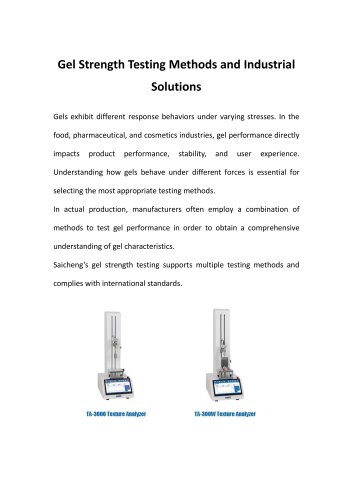
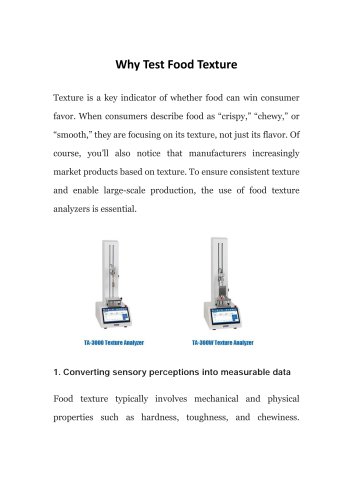 Why Test Food Texture
3 Pages
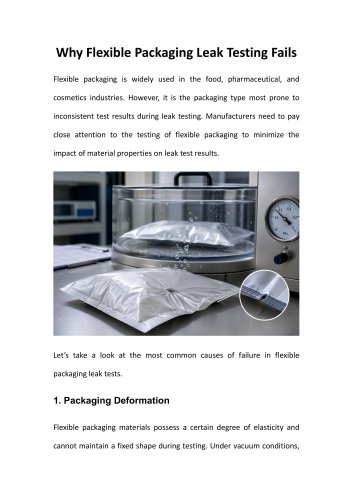
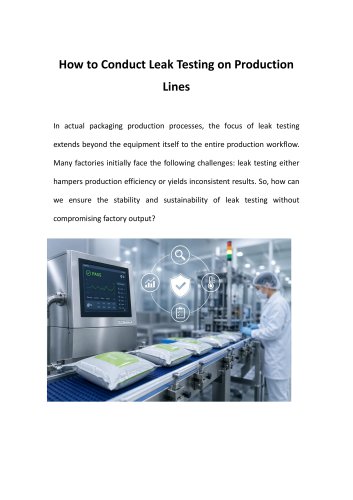
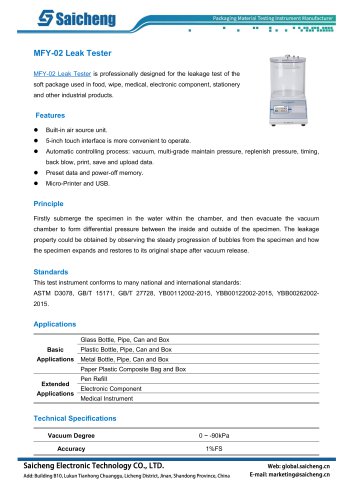 Saicheng Leak Tester MFY-02
2 Pages
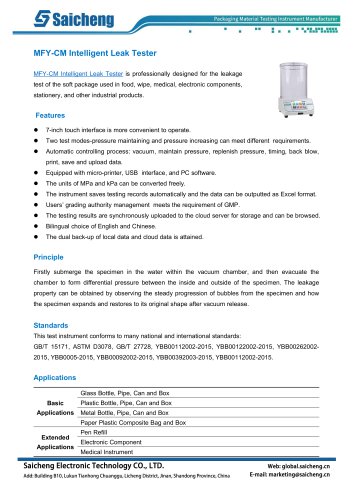 Saicheng Leak Tester MFY-CM
2 Pages
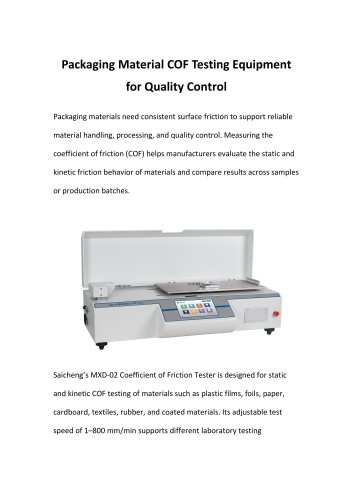


- Test machine
- Gas analyzer
- Concentration analyzer
- Automatic analyser
- Material test machine
- Automated testing machine
- Computer-controlled test machine
- Portable analyzer
- Continuous analyzer
- Digital tester
- Industrial testing machine
- Vertical testing machine
- Automatic tester
- Real-time analyzer
- Laboratory analyzer
- Industrial tester
- Tensile testing machine
- Laboratory testing machine
- Universal testing machine
- Compact analyzer