
- Catalogs
- Jiangsu Xinrongplas Machinery Co., Ltd
- How to distinguish the quality of PPR pipe


- Company
- Products
- Catalogs
- News & Trends
- Exhibitions
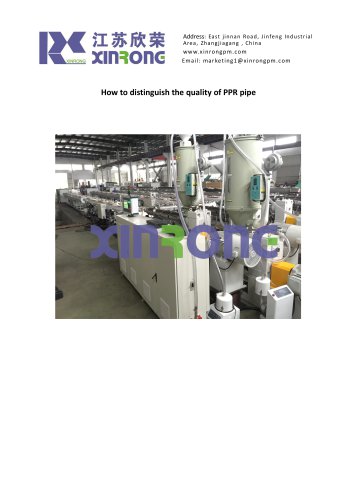
How to distinguish the quality of PPR pipe
1 / 1 PageView full catalog
How to distinguish the quality of PPR pipe
Product catalog summary
Overview
This document provides guidance on how to distinguish the quality of PPR (Polypropylene Random Copolymer) pipes, commonly used in plumbing and industrial applications.
Key Quality Indicators for PPR Pipes
- Material Composition: High-quality PPR pipes are made from pure polypropylene random copolymer without impurities or recycled materials, ensuring durability and safety.
- Surface Finish: The pipe surface should be smooth and uniform without bubbles, cracks, or discoloration, indicating good manufacturing processes.
- Wall Thickness: Consistent and adequate wall thickness is critical for pressure resistance and longevity. Variations can indicate poor quality.
- Flexibility and Strength: Quality pipes exhibit good flexibility without cracking and have high tensile strength to withstand pressure and temperature variations.
- Markings and Certifications: Authentic pipes usually have clear markings including manufacturer details, standards compliance (such as ISO or national standards), and production date.
Testing and Standards
Reliable PPR pipes comply with recognized industry standards and undergo rigorous testing for pressure resistance, temperature tolerance, and chemical stability. Checking for certifications and test reports is recommended.
Recommendations for Buyers
- Purchase from reputable manufacturers or suppliers with transparent quality assurance processes.
- Request sample testing or certification documents before bulk purchase.
- Inspect physical characteristics such as weight, color, and surface finish.
- Be cautious of unusually low prices which may indicate substandard materials.
See more
Catalog excerpts
Address: East jin n a n Ro a d , Ji nfe n g In d u st r ia l Are a, Zh an g ji agan g , Ch i n a ww w.x inron gpm .com Email : marke ti ng1 @ xin ron gp m.com How to distinguish the quality of PPR pipe
Open the catalog to page 1All Jiangsu Xinrongplas Machinery Co., Ltd catalogs and technical brochures
 Jiangsu Xinrongplas
1 Page








Related Searches
- Automatic cleaning system
- Water cleaning system
- Extrusion line
- Screw extruder
- Thermoplastic extrusion line
- Pelletizer
- Stainless steel cleaning system
- Process cleaning system
- Compact cleaning system
- Plastic pelletizing system
- Single screw extruder
- Tube extrusion line
- Panel extrusion line
- Multilayer extrusion line
- Waste granulator
- PP extruder
- PVC extrusion line
- PP extrusion line
- PE extrusion line
- PE extruder
*Prices are pre-tax. They exclude delivery charges and customs duties and do not include additional charges for installation or activation options. Prices are indicative only and may vary by country, with changes to the cost of raw materials and exchange rates.
About DirectIndustry
DirectIndustry is a marketplace that offers B2B players a complete experience, from product sourcing to purchase. DirectIndustry is an entity of VirtualExpo Group.
Are you a buyer?
Are you a supplier?