
- Catalogs
- Jiangsu Xinrongplas Machinery Co., Ltd
- Extruder classification and its structure


- Company
- Products
- Catalogs
- News & Trends
- Exhibitions
Extruder classification and its structure
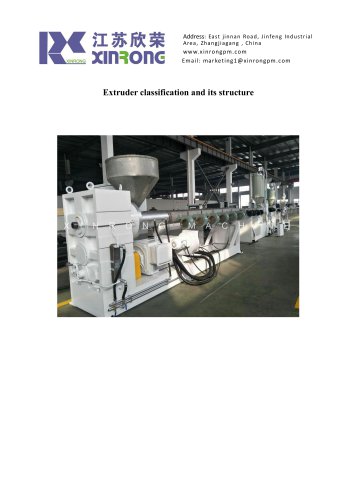
Extruder classification and its structure
Extruder Classification and Structure
This document provides an overview of extruder types and their structural components. It begins by classifying extruders based on their design and application, followed by a detailed description of their mechanical structure.
Extruder Classification
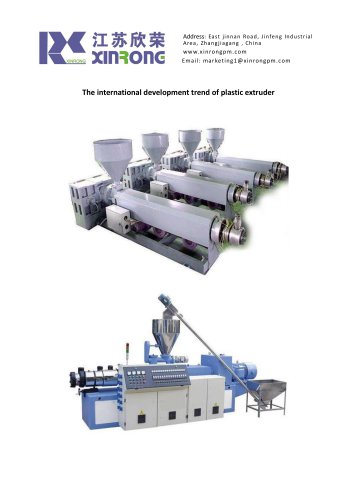
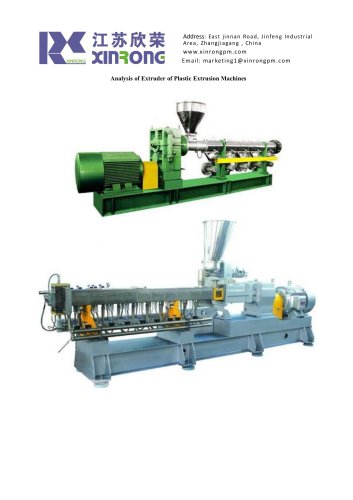
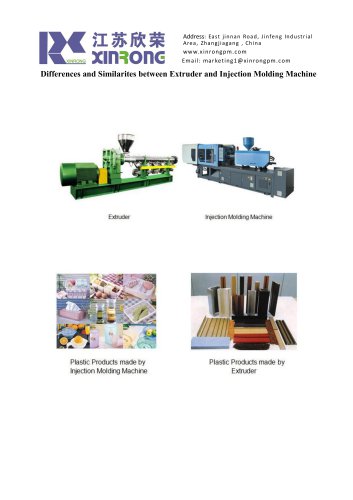
Extruders are categorized primarily by their screw configuration and operational purpose. Common classifications include single-screw and twin-screw extruders, each suited for different processing needs. Single-screw extruders are typically used for simpler, homogeneous materials, while twin-screw extruders handle more complex or composite materials due to better mixing capabilities.
Extruder Structure
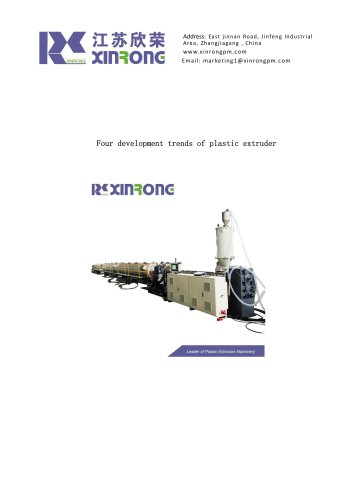
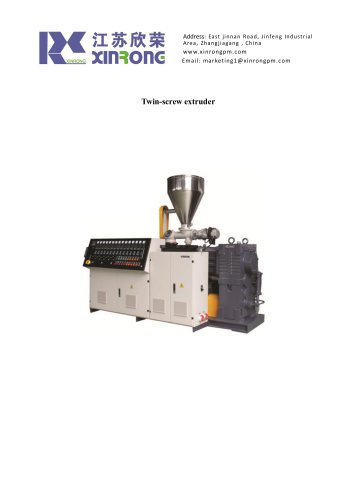
The structural components of an extruder include the feeding system, barrel, screw(s), drive system, and die. The feeding system introduces raw material into the barrel, where the screw(s) convey, compress, and melt the material. The drive system powers the screw rotation, and the die shapes the extruded product.
Key structural considerations involve material selection for durability, thermal management to maintain processing temperatures, and mechanical design to ensure efficient material flow and mixing.
Contact Information
The document also provides contact details for further inquiries:
Address: East Jinnan Road, Jinfeng Industrial Area, Zhangjiagang, China
Website: www.xinrongpm.com
Email: [email protected]
Catalog excerpts

Address: East jin n a n Ro a d , Ji nfe n g In d u st r ia l Are a, Zh an g ji agan g , Ch i n a ww w.x inron gpm .com Email : marke ti ng1 @ xin ron gp m.com Extruder classification and its structure
Open the catalog to page 1All Jiangsu Xinrongplas Machinery Co., Ltd catalogs and technical brochures
 Jiangsu Xinrongplas
1 Page








- Automatic cleaning system
- Water cleaning system
- Extrusion line
- Thermoplastic extrusion line
- Pelletizer
- Stainless steel cleaning system
- Process cleaning system
- Compact cleaning system
- Plastic pelletizing system
- Single screw extruder
- Tube extrusion line
- Panel extrusion line
- Multilayer extrusion line
- Waste granulator
- PP extruder
- PVC extrusion line
- PP extrusion line
- PE extrusion line
- PE extruder