

THE LEED®ASSESSMENT SYSTEM

THE LEED®ASSESSMENT SYSTEM
Isolgomma is dedicated to eco-sustainability by utilizing recycled materials, with at least 92% of their raw materials being recycled. They comply with environmental management systems like UNI EN ISO 14001 and safety systems such as OHSAS 18001. Their Life Cycle Assessment (LCA) approach ensures minimal environmental impact throughout the product lifecycle.
LEED (Leadership in Energy and Environmental Design) is a certification system for sustainable buildings, focusing on energy efficiency, water efficiency, site sustainability, materials, and indoor environmental quality. Introduced by the US Green Building Council in 1993, LEED is used globally to promote sustainable building practices.
LEED certifications are categorized into four levels based on points: Standard (40-49), Silver (50-59), Gold (60-79), and Platinum (80+). These levels reflect the building's sustainability performance.
Product mapping involves analyzing products for their energy and environmental sustainability according to LEED standards. Isolgomma's products are mapped to demonstrate compliance with LEED requirements, enhancing their market competitiveness.
- Roll Line: Acoustic insulation for floors, using recycled SBR rubber for impact sound insulation.
- Grei Line: High-quality sound insulation for floors, utilizing EPDM rubber for mechanical and acoustic performance.
- Upgrei Line: Sound and thermal insulation for thick floors, combining EPDM rubber and polyester fiber.
- Syl Range: High-density rubber products for acoustic insulation under floating floors.
- Sylcer Line: Acoustic upgrading for ceramic tiled floors, using recycled rubber mats.
- Sylwood Line: Acoustic upgrading for wooden floors, using rubber mats with cork granules.
- Mustwall Products: Acoustic insulation for walls, using semi-rigid panels of SBR rubber granules.
- Biwall Products: Acoustic and thermal insulation for walls, combining SBR and EPDM rubber with polyester fiber.
- Trywall Line: Acoustic and thermal insulation for light wall systems, using high-density SBR rubber and polyester fiber plates.
Isolgomma's products contribute significantly to achieving LEED credits, supporting sustainable building practices and enhancing the environmental performance of construction projects.
- Fybro: Polyester fibre panels for acoustic and thermal insulation, suitable for cavity walls, plasterboard walls, and false ceilings.
- Rewall: Laminated panels with plasterboard and high-density rubber for acoustic restoration of existing walls, eco-friendly and easy to install.
- Stywall: SBR rubber granules for sound insulation of walls and floors, available in strips or bundles.
- Sylencer: Ventilation gap silencers made of EPP polypropylene and polyester fibre, designed to prevent noise transmission while allowing air exchange.
- Megamat: Panels for vibration insulation in industrial and construction settings, made with SBR and EPDM rubber.
- Energy & Atmosphere (EA): Products contribute to LEED® credits by improving energy performance and meeting minimum energy efficiency standards. Options for achieving credits include simplified procedures and dynamic energy simulations.
- Materials & Resources (MR): Focus on construction waste management, requiring recycling or recovery of non-hazardous waste with a minimum of 30% by weight or volume.
- Acoustic and thermal insulation for various wall types and ceilings.
- Improvement of sound and heat insulation in domestic partition walls.
- Vibration insulation for building foundations and industrial machinery.
- Products meet UNI EN 12667 standards for thermal resistance.
- Compliance with ASHRAE 90.1-2007 and Italian Legislative Decrees for energy performance.
This document outlines the LEED® certification requirements and credits for various construction projects, focusing on waste management, recycled materials, regional materials, and indoor environmental quality. It highlights the role of Isolgomma products in meeting these standards.
The aim is to divert waste from landfills by recycling and recovering non-hazardous waste from construction and demolition activities. A site waste management plan is required, and suppliers must provide recyclable packaging. Points are awarded based on the percentage of waste recycled or recovered.
The goal is to increase the use of materials with recycled content to reduce the impact of raw material extraction. Materials must contain a certain percentage of post-consumer and pre-consumer recycled content, with points awarded based on the percentage of recycled content used.
This section encourages the use of materials extracted and processed within a specific distance from the project site to reduce transportation impacts. Points are awarded based on the percentage of regional materials used.
Focuses on acoustic performance in schools, requiring sound absorption materials and designs that meet specific standards. Isolgomma products contribute to achieving these credits by providing high acoustic insulation.
The process involves online registration, preparation and submission of documentation, revision, and certification. The document emphasizes the benefits of LEED-certified buildings, including healthier living spaces and reduced environmental impact.
LEED-certified homes prioritize the health of their inhabitants by ensuring superior air quality compared to traditional homes. This is particularly valued by buyers who are sensitive to health and environmental issues. Healthier indoor environments contribute to better quality of life.
LEED homes use materials that are recycled, natural, or regenerable. They optimize natural light through strategic window placement and use heat-insulating materials to reduce energy needs for heating and cooling.
These homes require significantly less energy for heating, air conditioning, and lighting, consuming 30% to 80% less energy than traditional buildings.
LEED certification enhances the marketability of homes, as it demonstrates compliance with strict ecological standards verified by an independent third party. This certification can increase the economic value of the property, benefiting both buyers and construction companies.
Catalog excerpts
THE LEED® ASSESSMENT SYSTEM MAPPING OF ISOLGOMMA PRODUCTS
Open the catalog to page 1
HOW DOES ISOLGOMMA CONTRIBUTE TOWARDS ECO-SUSTAINABILITY The materials used in construction are increasingly required to fulfil eco-sustainable requirements in order to minimise the environmental impact. Isolgomma has always been at the forefront in the use of regenerated and recycled materials selected through rigorous processes: indeed, our raw materials are made up of recycled materials for at least 92%. These materials guarantee solutions with limited environmental impact and promote sustainable development, while preserving the natural environment and the quality of life. Isolgomma implements...
Open the catalog to page 2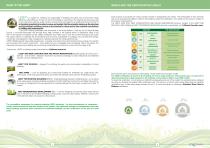
WHICH ARE THE CERTIFICATION LEVELS LEED® is a system for certifying the sustainability of buildings that takes into account their energy efficiency, water efficiency, the site on which the building is constructed, the materials and resources used for its construction and the quality of indoor environments with regard to air quality and thermal comfort. Jt is therefore important to be able to prove and explain that the products making up the structure and the building’s outfitting conform to the standard’s criteria and/or their potential contributions in fulfilling said requirements. The LEED®...
Open the catalog to page 3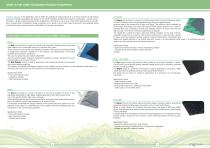
WHAT IS THE LEED® STANDARD PRODUCTS MAPPING “Product mapping” is the expression used to define the analysis of single products of a company in terms of their energy and environmental sustainability with respect to the LEED® standard. It practically consists in a verification – carried out by a third party – aimed at demonstrating that the single product conforms to one or more of the LEED requirements and credits. Each company that is interested in being competitive on a market in which LEED maps its products must gradually adopt a production system geared towards sustainability and energy saving...
Open the catalog to page 4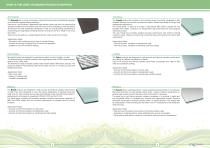
WHAT IS THE LEED® STANDARD PRODUCTS MAPPING The Sylwood line is a range of innovative, high performance products specifically designed to acoustically upgrade existing buildings. Sylwood is a low thickness, regenerated high-density rubber mat with cork granules that dampens footfall noise transmission that will comply with local Building Control standards. The product has been specifically developed to meet any soundproofing requirements in restructuring and upgrading of existing flooring involving the normal or ready to use wood floor finish. Sylwood can be easily dry or glued applied directly...
Open the catalog to page 5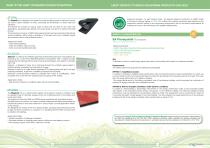
WHAT IS THE LEED® STANDARD PRODUCTS MAPPING STYWALL The Stywall line is designed to increase the sound-insulating power of walls and improve the sound impact insulation of floors, preventing the transmission of aerial noise and vibrations. The Stywall line consists of various types of strips that are ideal for the under wall applications, guarantee high elasticity and quick laying, and allow for perfect structural junction. The products are made up of SBR rubber granules that have been pressed at high density and are available in either rolled up bundles or in flat strips and come in different...
Open the catalog to page 6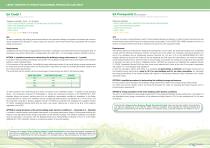
EA Credit 1 Optimisation of energy performance Reference standard: (from 1 to 19 points) - LEED® 2009 FOR NEW CONSTRUCTION AND MAJOR RENOVATIONS - LEED® FOR EXISTING BUILDINGS - LEED® FOR SCHOOLS - LEED® ITALIA - LEED® GBC HOME (from 1 to 27 points) Aim To attain increasingly high energy performance levels for the proposed buildings and systems that exceed the minimum values specified in the standard, in order to reduce the economic and environmental impact associated with excessive energy consumption. Requirements I progettisti che documentano il raggiungimento del credito 1 soddisfano automaticamente...
Open the catalog to page 7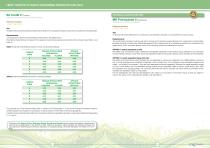
EA Credit 2 (2 points) Advanced performance of the opaque envelope Reference standard: - LEED® GBC HOME Management of construction waste OPAQUE STRUCTURES OPAQUE HORIZONTAL STRUCTURES CEILINGS FLOORS VERTICAL CLIMATE ZONE Aim To obtain improved thermophysical performance levels for the opaque envelope components compared to the prerequisite. Requirements It is necessary to attain the transmittance levels listed in the tables below. The thermal transmittance (U) values of the opaque components are grouped according to the climate zones (Table 1 and Table 2) Table 1: thermal transmittance...
Open the catalog to page 8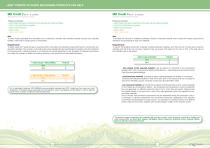
MR Credit 2 (from 1 to 2 points) Management of construction waste Reference standard: - LEED® 2009 FOR NEW CONSTRUCTION AND MAJOR RENOVATIONS - LEED® FOR EXISTING BUILDINGS - LEED® FOR SCHOOLS - LEED® ITALIA - LEED® GBC HOME Aim To direct waste generated from demolition and construction activities (site activities) towards recovery and recycling facilities, rather than to waste dumps or incinerators. Requirements To direct waste from waste dumps by recycling and/or recovering non-hazardous waste deriving from construction and demolition activities. The company must draft a site waste management...
Open the catalog to page 9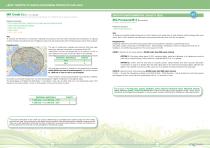
MR Credit 5 (from 1 to 2 points) Materials that are extracted, processed and produced at a limited distance (regional materials) Reference standard - LEED® 2009 FOR NEW CONSTRUCTION AND MAJOR RENOVATIONS - LEED® FOR EXISTING BUILDINGS - LEED® FOR SCHOOLS - LEED® ITALIA - LEED® GBC HOME Aim To increase the demand for construction materials and products that have been extracted and processed in a regional context, thereby promoting the use of indigenous resources and reducing the environmental impact due to their transport. The use of construction materials and products that have been extracted,...
Open the catalog to page 10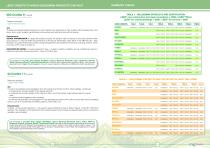
SUMMARY TABLES IEQ Credito 9 (1 points) Advanced acoustic performance Reference standard: - LEED® FOR SCHOOLS Aim To design acoustically isolated classrooms in which teachers can speak freely to their students without keeping their voice down, and in which students can effectively communicate with each other and with the teacher. Requirements SOUND TRANSMISSION: to design the building envelope, the partition walls of classrooms and other partitions within study spaces in a way that fulfils the requirements of the Sound Transmission Class (STC) of the ANSI S12.60 - 2002 Standard, Acoustical Performance...
Open the catalog to page 11All Isolgomma catalogs and technical brochures
 Technical catalogue
226 Pages
 Wooden structures
20 Pages
 Anti-vibration mats
8 Pages
 Rail Profiles
8 Pages
 Sleeper Pads
8 Pages
 Solutions for vibrations control
12 Pages
 Pavimentazione
16 Pages
 Catalogo Correzione Acustica
12 Pages
 Catalogo Edilizia
40 Pages
 Point catalogue
6 Pages
 Building catalogue
40 Pages
