- Catalogs
- Infranor Group
- AN_Controller_gains_scheduling_for_improved_performances_25.06


AN_Controller_gains_scheduling_for_improved_performances_25.06
AN_Controller_gains_scheduling_for_improved_performances_25.06
Controller gain scheduling is a technique used to optimize servo loop performance by adjusting the controller gain based on operating conditions. This approach addresses limitations caused by factors such as position sensor resolution, noise, and mechanical disturbances. Two main scheduling functions are discussed: tuning level scheduling and high-speed gain scheduling.
Tuning Level Scheduling
This method involves reducing the controller tuning level at standstill to decrease motor noise and increase stability, while maintaining high dynamic performance during movement. It is particularly useful when dealing with low-resolution or noisy position sensors. The scheduling operation applies different tuning levels based on the axis's movement state, with specific parameters like velocity threshold and switching delay to manage transitions.
High-Speed Gain Scheduling
This function reduces controller gains at high speeds to mitigate current ripples caused by resolver feedback errors. By lowering the servo loop gain and filter cut-off frequency, motor heating and mechanical vibrations are minimized, while maintaining stiffness at standstill.
Application Examples
Tuning Level Scheduling: Demonstrates how adjusting the tuning level can balance between fast positioning with low tracking error and quiet, stable behavior at standstill.
High-Speed Gain Scheduling: Illustrates the reduction of current ripple amplitude at high speeds while maintaining stiffness and stability at standstill.
Conclusion
Gain scheduling enhances servo loop performance by dynamically adjusting gain values based on operating conditions, effectively overcoming limitations due to sensor and mechanical issues. The document provides practical examples showcasing improvements in dynamic performance.
Catalog excerpts
Application note Controller gain scheduling for improved performances
Open the catalog to page 1
Controller gain scheduling
Open the catalog to page 2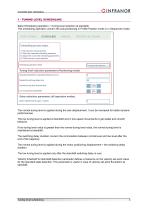
Controller gain scheduling 1 - TUNING LEVEL SCHEDULING Select Scheduling operation = Tuning level reduction at standstill. This scheduling operation concern the axis positioning in Profile Position mode or in Sequences mode. The normal tuning level is applied during the axis displacement. It can be increased for better dynamic performances. The low tuning level is applied at standstill and in low-speed movements to get stable and smooth behavior. If low tuning level value is greater than the normal tuning level value, the normal tuning level is maintained at standstill. The switching delay duration...
Open the catalog to page 3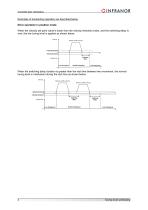
Controller gain scheduling Examples of scheduling operation are described below. Drive operation in position mode: When the velocity set point value is lower than the velocity threshold value, and the switching delay is over, the low tuning level is applied as shown below. When the switching delay duration is greater than the rest time between two movement, the normal tuning level is maintained during the rest time as shown below. Tuning level scheduling
Open the catalog to page 4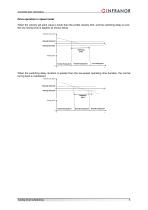
Controller gain scheduling Drive operation in speed mode: When the velocity set point value is lower than the profile velocity limit, and the switching delay is over, the low tuning level is applied as shown below. When the switching delay duration is greater than the low-speed operating time duration, the normal tuning level is maintained. Tuning level scheduling
Open the catalog to page 5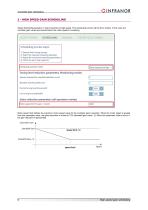
Controller gain scheduling 2 - HIGH SPEED GAIN SCHEDULING Select Scheduling operation = Gains reduction at high speed. This scheduling concern all the drive modes. In this case, the controller gain values are reduced when the motor speed is increasing. Motor speed limit defines the maximum motor speed value for the controller gains reduction. When the motor speed is greater than this parameter value, the gains reduction is limited to 75% (standstill gain value / 4). When this parameter value is set to 0, the gain reduction is deactivated. High speed gain scheduling
Open the catalog to page 6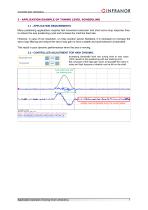
Controller gain scheduling 3 - APPLICATION EXAMPLE OF TUNING LEVEL SCHEDULING 3.1 - APPLICATION REQUIREMENTS Many positioning applications requires fast movement execution and short servo loop response time, to reduce the axis positioning cycle and increase the machine feed rate. However, in case of low resolution, or noisy position sensor feedback, it is necessary to increase the servo loop filtering and reduce the servo loop gain to have a stable and quiet behavior at standstill. This result in poor dynamic performances when the axis is moving. 3.2 - CONTROLLER ADJUSTMENT FOR HIGH DYNAMIC Increasing...
Open the catalog to page 7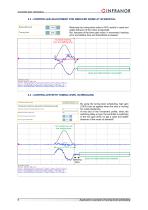
Controller gain scheduling OINFRANOR3.3 - CONTROLLER ADJUSTMENT FOR REDUCED NOISE AT STANDSTILL Reducing the tuning level value to 40% results in quiet and stable behavior of the motor at standstill. But, because of the lower gain value, in movement, tracking error and settling time are dramatically increased. T Scheduling operation select Tuning level reduction parameters (Positioning mode) Velocity threshold for standstill detection (inc/s) [Standstill switching delay (ms) l Normal tuning level (movement) By using the tuning level scheduling, high gain (100%) can be applied when the axis is...
Open the catalog to page 8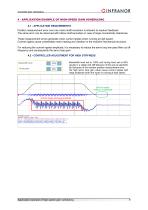
Controller gain scheduling OINFRANOR 4 - APPLICATION EXAMPLE OF HIGH-SPEED GAIN SCHEDULING Position measurement error over one motor shaft revolution is inherent to resolver feedback. The same error can be observed with hallow shaft encoders in case of large concentricity tolerances. These measurement errors generate motor current ripples when running at high speed. Current ripples cause undesirable motor heating and vibration in the machine mechanical structure. For reducing the current ripples amplitude, it is necessary to reduce the servo loop low pass filter cut off frequency and consequently...
Open the catalog to page 9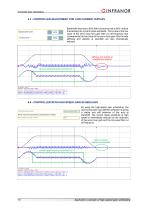
Controller gain scheduling 4.3 - CONTROLLER ADJUSTMENT FOR LOW CURRENT RIPPLES Bandwidth level set to 60% with tuning level set to 60% reduce dramatically the current ripple amplitude. This is due to the low value of the servo loop low pass filter cut off frequency and consequently the low value of the servo loop gain. But the axis stiffness and stability at standstill are also dramatically reduced. Stiffness and stability at standstill are reduced Current ripple amplitude is divided by 4 4.4 - CONTROLLER WITH HIGH-SPEED GAIN SCHEDULING By using the high-speed gain scheduling, the auto-tuning...
Open the catalog to page 10
Controller gain scheduling 5 - CONCLUSION The “Gain scheduling” feature on the servo loop tuning allows to improve the servo loop performances in case of controller gain limitation due to the position sensor resolution, position sensor noise, position sensor error, or mechanical disturbances (backlashes, elasticity, frictions). The optimal gain value is switched in the controller according to the drive operating condition: standstill / movement, or high speed / low speed. Application examples described in this document have shown the real gain in the servo drive dynamic performances.
Open the catalog to page 11All Infranor Group catalogs and technical brochures
 XtrapulsPac_EN
4 Pages
 SMTBSi-2Tz_en_2.1
43 Pages
 PacSimBox_d_1
1 Page
 Pac-SF01_flyer_en_18.02
4 Pages
 Pac_User_1.2.1.218
253 Pages
 Pac_Templates_en_1.9
27 Pages
 Pac_STO_Installation_en_2.2
13 Pages
 Pac_SF01_operating_en_1.6
63 Pages
 Pac_SF01_EN
4 Pages
 Pac_Installation_en_2.23
82 Pages
 Pac_flyer_en_17.12
4 Pages
 Option_CT_EMF
6 Pages
 MOVINOR_LH055_LH086_LH097_LH142
23 Pages
 ma_series
6 Pages
 GemSafeTorqueOff_en_1.1
12 Pages
 CD1pm_e_1.2(old)
18 Pages
 CD1pInst_e_7.2(old)
35 Pages
 CD1kInst_e_4.1(old)
40 Pages
 CD1k_CANopenProtocol_e_1.3(old)
86 Pages
 CD1a_e_7.1(old)
45 Pages
 Catalogue gamme SMT-BD1
11 Pages
 BM20A(F)v3_0
20 Pages
 BM20A(D)v3_0
20 Pages
 BF400(GB)v2_2
21 Pages
 BF400(D)v2_2
21 Pages
 BF230(GB)v2_0
23 Pages
 BF230(F)v2_0
23 Pages
 BD2m_e_2.2
69 Pages
 BD2m(GB)2.0
70 Pages
 BD2_e_3.2
53 Pages
 BD2(GB)3.1
53 Pages
 BD2(D)3.1
54 Pages
 Movinor_LH_e
4 Pages
 ma_series
6 Pages
 BD1t(GB)3.1
81 Pages
 BD1t(F)3.0
85 Pages
 BD1pInst(GB)3.0
25 Pages
 BD1pInst(F)3.0
23 Pages
 BD1pInst(D)3.0
24 Pages
 BD1pCD1pUse_e_2.4
57 Pages
 BD1m(GB)5.0
58 Pages
 BD1m(F)5.0
57 Pages
 BD1m(D)v3_3
64 Pages
 BD1k(GB)2.1
35 Pages
 BD1k(F)2.1
36 Pages
 BD1j(GB)v2_41
19 Pages
 BD1j(F)v2_4
21 Pages
 BD1i(GB)v2_21
23 Pages
 BD1i(F)v2_2
27 Pages
 BD1h(F)3.0
65 Pages
 BD1h(D)3.0
59 Pages
 BD1g(GB)v3_0
28 Pages
 BD1g(F)v3_0
28 Pages
 BD1a400(GB)v2_3
43 Pages
 BD1a400(F)v2_3
44 Pages
 BD1a400(D)v2_3
45 Pages
 BD1(GB)7.1_noPW
45 Pages
 BD1(GB)7.1
45 Pages
 BD1(F)7.1_noPW
47 Pages
 BD1(F)7.1
47 Pages
 BD1(D)7.1
45 Pages
 BD1 Katalog
11 Pages
 Easy_User_5.0.1.60.2
190 Pages
 01ma_smv_e_01953
40 Pages
 PacHP-SF_Flyer_en_23.06
4 Pages
 IRD_User_Manual_en_1.2.XX.54.rev_b
216 Pages
 PacHP_User_en_1.2.8.100.b
280 Pages
 PacHP_SF02_operating_en_1.6
103 Pages
 PacHP_SF01_operating_en_2.0
63 Pages
 PacHP_Installation_en_2.9
91 Pages
 PacHP_Series_Brochure
8 Pages
 PacHP_Flyer_us_20.10
4 Pages
 IRD_Installation_en_1.5
42 Pages
 Easy_STO_en_1.4
14 Pages
 Easy_DB_STO_en_1.2
14 Pages
 Easy_DB_Installation_en_1.4
36 Pages
 CD1pmUser_en_4.2
55 Pages
 CD1pmInst_en_8.15
40 Pages
 CD1k_CANopenProtocol_en_2.10.1.1
108 Pages
 CD1pm_ProfibusProtocol_en_1.5
50 Pages
 CD1kUser_en_2.3
26 Pages
 CD1a_en_8.17
62 Pages
 CD1kInst_en_5.16
46 Pages
 CD1_STO_en_1.8
16 Pages
 CD1_flyer_en_14.09
4 Pages
 Braking_Resistors_en_1.5
10 Pages
 XtracontrolDC2_EN
4 Pages
 Flyer_VisiTouchCNC_EN_V1.1-1
2 Pages
 XtraforsWashdown_EN-2024
2 Pages
 DataSheet_CybIO_CNC_V1.0
6 Pages
 XtraforsPrime_EN-2024
2 Pages
 XtraforsMSS_EN
4 Pages
 XtraforsMSA_EN_2024
2 Pages
 XtraforsEx_EN-2024
2 Pages
 XtraforsBR_EN-2024
2 Pages
 XtraforsBL_EN-2024
2 Pages
 XtraforsBC-ed01-vs3
4 Pages
 Manual_XtraforsPrime
46 Pages
 Drawing_1
1 Page
 Datasheet_MSS
5 Pages
 Datasheet_2
2 Pages
 Datasheet_1
4 Pages
 BLSBLT_series
2 Pages
 BL220221
2 Pages
 BL270
BL2702 Pages
 BL190
BL1902 Pages
 bl100_series
6 Pages
 bl40_series
6 Pages
 BL30
BL302 Pages
 2019-01_XtraforsFP-DSL_FR
4 Pages
 Movinor_T_EN
4 Pages
 Movinor_N_EN
4 Pages
 Movinor_Low_Voltage_EN
4 Pages
 Manual Movinor T 03-2026
46 Pages
 Manual Movinor N 03-2026
63 Pages
 XtrapulsEasy™ AC servo-drive
4 Pages
 XtrapulsCD1 AC servo-drives
4 Pages
 CybIO
CybIO6 Pages
 AC SERVOMOTORS
2 Pages
 Movinor® N AC Servomotors
4 Pages


Archived catalogs
 AN_CD1ak_AbsoluteEncoder_en_2.0
10 Pages
 AN_CD1ak_SinCosTracks_e_1.0
7 Pages
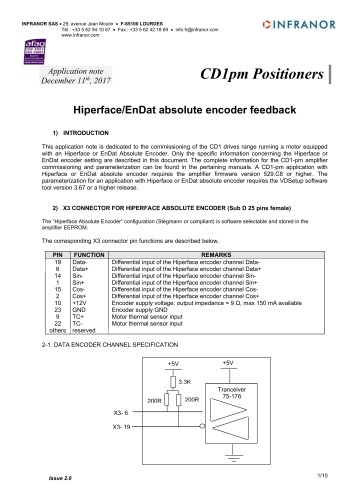 AN_CD1pm_AbsoluteEncoder_en_2.0
10 Pages
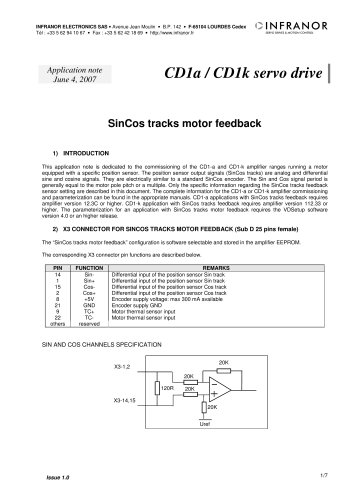 AN_CD1pm_SinCosTracks_e_1.0
7 Pages
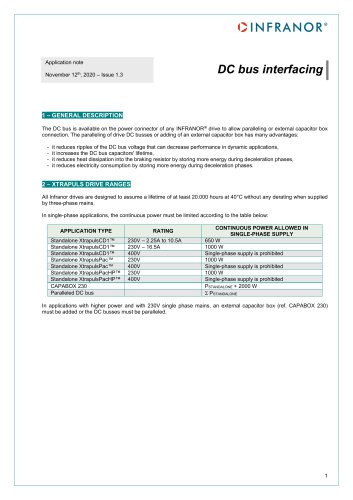 AN_DC_bus_interfacing_en_1.3
5 Pages
 CD1_EC_conformity_24.05
1 Page
 CD1_STO_conformity_19.02
2 Pages
 EtherCAT Interface_en_1.3
20 Pages
 Easy_EC_Conformity_24_10
1 Page
 GDPS_EC_conformity_24.07
1 Page
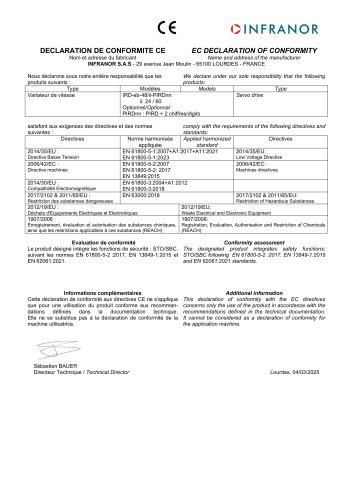 IRD_EC_Conformity_25.03
1 Page
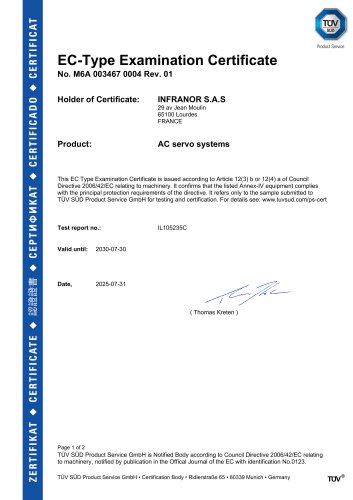 PacHP_TÜV_certificate_25.07
2 Pages
 BD1c(F)v2_01
19 Pages
 BD1c(GB)v2_01
19 Pages
 BD1d(F)v2_01
25 Pages
 BD1d(GB)v2_01
25 Pages
 BD1e(F)v2_01
22 Pages
 BD1f(F)v2_01
17 Pages
 BD1f(GB)v2_01
18 Pages
 Pac_EC_conformity_25.04
1 Page