
- Catalogs
- Infineon Technologies AG
- Microcontroller Product Guide


Microcontroller Product Guide

Microcontroller Product Guide
1. Overview and Contact Information
This pocket guide, published by Infineon Technologies AG in 2012, provides a comprehensive technical reference for selecting microcontrollers. Headquarters contact is available in Munich (+49 89 234 65555) with international toll-free support (0(0)800 951 951 951). Further information can be found at www.infineon.com/microcontrollers.
2. Microcontroller Families and Input Voltage Ranges
- XC800 Family: 3.0 – 5.5 V, 8/16-bit microcontrollers for automotive and industrial applications.
- XE166/XC2000 Families: 3.0 – 5.5 V, 16/32-bit automotive microcontrollers with various series targeting body and safety applications.
- TriCore™ Family: 1.5 – 3.3 V, high-performance 32-bit microcontrollers with integrated co-processors for automotive and industrial use.
- XMC4000 Family: 3.3 V, 32-bit microcontrollers designed for industrial and multi-market applications.
3. Key Parameters and Features
The guide tabulates critical specifications across families, including:
- Max Clock Frequency: 10 MHz to 300 MHz, scaling from low-end to high-performance devices.
- Program Memory: 0 KB to 4000 KB (4 MB), accommodating diverse application needs.
- SRAM (including Cache): 1.25 KB to 320 KB.
- Co-Processors: MAC (Multiply-Accumulate Unit), FPU (Floating Point Unit), PCP (Peripheral Control Processor), VC (Vector Computer).
- Digital I/O Lines: 9 to 252 lines.
- ADC Channels: 0 to 72 channels.
- Timed I/O Channels: PWM, CAPCOM, GPTA ranging up to 138 channels.
- External Bus Interface: Available on many models for expanded connectivity.
- CAN Nodes: Up to 6 nodes supported.
- Communication Interfaces: USIC (Universal Serial Interface Channel), SPI, LIN, FlexRay, Ethernet (10/100 Mbit/s), USB, ASC, SSC, MSC, MLI, SENT, BSL, SDLM.
- Temperature Ranges: Codes B, F, X, K, A, L, H representing ambient operating temperatures from 0°C to 150°C.
- Package Types: PG-LQFP, PG-VQFN, PG-TSSOP, PG-LFBGA, PG-BGA with pin counts from 38 to 516.
- Additional Features: Embedded Voltage Regulators (EVR), Memory Management Units (MMU), High Current Pads (HCP), Touchpad Libraries (TP), ROM/OTP memory options.
4. Microcontroller Series Highlights
XC2000 Family (Automotive Applications)
- Models such as XC226x and XC228x with max clock frequencies up to 128 MHz.
- Program memory ranges from 32 KB to 1600 KB.
- Co-processors primarily MAC units.
- Communication includes up to 10 USIC channels and FlexRay on higher-end models.
XC2300 Series (Safety Applications)
- Safety-focused models like XC2365 and XC2387.
- Max clock frequency around 66 MHz.
- Program memory up to 576 KB.
XMC4000 Series (Industrial and Multi-Market)
- Max clock frequency of 120 MHz with Floating Point Units.
- Program memory up to 1024 KB and SRAM up to 160 KB.
- Communication interfaces include Ethernet 10/100 Mbit/s and USB.
- Embedded Voltage Regulators included.
TriCore™ Family (Automotive and Industrial)
- Wide clock frequency range from 66 MHz to 300 MHz.
- Program memory up to 4000 KB.
- Co-processors include FPU and PCP.
- Rich communication interfaces: ASC, SSC, MSC, MLI, FlexRay, SENT.
- Temperature ratings up to 150°C and packages up to 516 pins.
XC800 Family (Automotive and Industrial)
- 8-bit and 16-bit microcontrollers with clock frequencies from 10 MHz to 27 MHz.
- Program memory up to 64 KB and SRAM up to 3 KB.
- Communication interfaces include UART, SCC, LIN, USART, SSC, and I2C.
- Various packaging options including MQFP, TSSOP, VQFN, LQFP, and DSO.
C166 Family
- 16-bit microcontrollers with clock speeds from 20 MHz to 40 MHz.
- Program memory up to 256 KB and SRAM up to 16 KB.
- Includes MAC co-processors and communication interfaces such as ASC, SSC, I2C, UART, and J1850.
XE166 Real Time Signal Controller
- Multiple series with clock frequencies from 40 MHz to 80 MHz.
- Program memory from 32 KB to 768 KB and SRAM from 8 KB to 82 KB.
- MAC co-processors and USIC communication interfaces.
- Packaging includes LQFP, TSSOP, and VQFN.
5. Communication Interfaces and Temperature Codes
Communication Interfaces Explained:
- USIC: Supports ASC, SSC, LIN, I2C, I2S protocols.
- ASC: Asynchronous Serial Channel.
- SSC: Synchronous Serial Channel.
- LIN: Local Interconnect Network.
- SPI: Serial Peripheral Interface.
- FlexRay: High-speed automotive network protocol.
- Ethernet: 10/100 Mbit/s support in XMC4000 devices.
- USB: Universal Serial Bus support in selected devices.
Temperature Range Codes:
- B: 0 to 70°C
- F: -40 to 85°C
- X: -40 to 105°C
- K: -40 to 125°C
- A: -40 to 140°C
- L: -40 to 150°C
- H: -40 to 110°C
6. Additional Features and Remarks
- Embedded Voltage Regulators (EVR) available on some models.
- Memory Management Units (MMU), Touchpad Libraries (TP), High Current Pads (HCP), and One Time Programmable (OTP) memory options noted.
- Super Set devices are highlighted as recommended for sampling.
7. Summary of Key Parameters for Selected Series
- XE162xM (M-Series): 80 MHz clock, 384-576 KB program memory, 24-50 KB SRAM, MAC co-processor, 40 digital I/O lines, 9 ADC channels, 23 timed I/O channels, 6xUSIC interfaces, temperature range F,K, PG-LQFP-64 package.
- XC228xH (H-Series): 100 MHz clock, 1600 KB program memory, 138 KB SRAM, MAC co-processor, 119 digital I/O lines, 24 ADC channels, 44 timed I/O channels, 10xUSIC, 2xFlexRay interfaces, temperature range F,K, PG-LQFP-144 package.
- TC1798F-512F300EP (AUDO-MAX Family): 300 MHz clock, 4000 KB program memory, 288 KB SRAM, FPU and PCP co-processors, 252 digital I/O lines, 72 ADC channels, 138 timed I/O channels, multiple communication interfaces including ASC, SSC, MSC, MLI, SENT, FlexRay, temperature range K, PG-BGA-516 package.
8. Conclusion
This pocket guide is a detailed technical reference enabling engineers to select Infineon microcontrollers tailored to specific application requirements. It covers a broad spectrum from low-power 8-bit devices to high-performance 32-bit and TriCore™ processors, addressing automotive, industrial, safety-critical, and multi-market needs. The guide emphasizes scalability, communication capabilities, environmental tolerance, and packaging diversity, making it a valuable resource for embedded system design.
Catalog excerpts
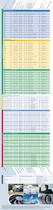
XC2000 Family - 16/32-bit Microcontrollers for Automotive Applications Bold = SuperSet device recommended for sampling « VC = Vector Computer (MDU + CORDIC), MDU = Multiply Divide Unit, MAC = Multiply-Accumulate-Unit (DSP), FPU = Floating Point Unit, PCP = Peripheral Control Processor 2) I2C= Inter-Integrated Circuit, USART= Universal Synchronous Asynchronous Receiver Transmitter, UART= Universal Asynchronous Receiver Transmitter, SSC= Synchronous Serial Channel, ASC = Asynchronous Serial Channel, MU = Micro Link Interface, MSC = Micro Second Channel, UN = Local Interconnect Network, BSL = Boot...
Open the catalog to page 2All Infineon Technologies AG catalogs and technical brochures
 IPB60R045P7
14 Pages
 IPD900P06NM
10 Pages
 Every switch needs a driver
10 Pages
 CoolMOS™ 7 - CoolSiC™ - CoolGaN™
28 Pages
 IPAN60R360P7S
14 Pages
 IPAN60R180P7S
14 Pages
 IPP60R160P7
14 Pages
 IPZA60R045P7
14 Pages
 BSZ063N04LS6
11 Pages
 BAW78.../BAW79...
6 Pages
 Automotive Power Selection Guide
114 Pages
 Custom Made Blanking Line
9 Pages
 XC800 Family
54 Pages
 IFBIP-Company-Brochure
11 Pages
 Shortform Catalog 2013
212 Pages
 Efficient Lighting Brochure 2013
24 Pages
 Industrial Automation Brochure
52 Pages
 Transceiver Brochure
16 Pages
 Automotive Application Guide
54 Pages
 ESD/Surge Protection Diodes
43 Pages
 IGBT Selection Guide
6 Pages
 Payment
5 Pages
 Absolute Pressure Sensor
24 Pages
 Schottky Diodes
7 Pages
 Silicon Switching Diode
6 Pages
 Dual Ic
8 Pages
 PrimePACK™ IGBT Modules
2 Pages


Archived catalogs
 Linear Voltage Regulators
17 Pages
 ModSTACK™ HD
2 Pages
 8-Bit Microcontrollers
20 Pages
 Sense & Control Selection Guide
24 Pages
 Communication Brochure
8 Pages
 COM Image Brochure
12 Pages


- Power supply unit
- DC power supply
- AC/DC power supply
- Switched-mode power supply
- DC-DC converter
- Regulated power supply
- Infineon transistor
- Industrial DC/DC converter module
- Magnetic sensor
- Infineon switching transistor
- SMD DC-DC converter
- Infineon MOSFET transistor
- Open frame power supply
- CE DC/DC converter module
- Current rectifier
- Bipolar transistor
- Switching DC-DC converter
- Hall effect magnetic sensor
- Development kit