1. Catalogs
  2. ifm electronic
  3. Food Industry - Automation Technology 2021/2022

Food Industry - Automation Technology 2021/2022

Food Industry - Automation Technology 2021/2022
1 / 156 PagesView full catalog

Food Industry - Automation Technology 2021/2022

Product catalog summary
Overview: The document provides an extensive overview of ifm's automation technology solutions tailored for the food industry. With over 50 years of experience, ifm offers a wide range of sensors and control systems designed to enhance process reliability and plant uptime. Their products include position, level, temperature, and pressure sensors, as well as diagnostic systems that are resistant to high temperatures and cleaning processes.
Company Profile: ifm is a global company with a presence in 185 countries, emphasizing close customer relationships and support. They offer a comprehensive product portfolio with over 7,800 articles, ensuring flexibility and compatibility for various automation needs. The company prides itself on German engineering, innovation, and reliability, offering a 5-year warranty on products.
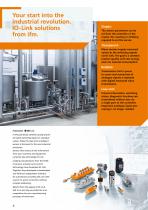
Product Features: The document highlights the IO-Link technology, which facilitates digital communication between sensors and control systems, enhancing process transparency and efficiency. IO-Link eliminates the need for complex wiring and allows for easy sensor replacement and diagnostics.
Software Solutions: ifm's moneo software suite is introduced as a tool for industrial digitization, offering features like real-time monitoring, parameter setting, and maintenance planning. The software is designed to be user-friendly and adaptable to specific customer needs, promoting efficient and cost-effective production processes.
Testing and Standards: ifm products undergo rigorous testing to ensure durability and compliance with industry standards. Tests include thermal shock, vibration, and high-pressure cleaning to simulate harsh industrial environments. Many sensors are Ecolab certified, ensuring they meet high standards for use in washdown environments.
Conclusion: ifm provides a robust solution for the automation needs of the food industry, combining high-quality products with innovative software solutions to optimize production processes and ensure reliability.
Product Specifications: The document lists numerous products with their respective order numbers, approvals (such as CE, cULus, EAC, FDA, etc.), and the page numbers where they can be found in the catalogue. Products include sensors, connectors, and IO-Link modules, among others.
Approvals and Standards: Products are approved under various international standards and certifications, including CE, cULus, EAC, FDA, 3-A, EHEDG, and more. These approvals ensure compliance with safety, health, and environmental protection standards.
Key Features: The document highlights features such as high ingress protection ratings (up to IP 69K), resistance to industrial cleaning agents, and suitability for extreme environments, particularly in the food and beverage industry.
Product Categories: The catalogue is organized into sections for different types of products, including:
  • IO-Link components and masters
  • Inductive, capacitive, and magnetic sensors
  • Pressure, level, and temperature sensors
  • Connectors and process adapters
Applications: The products are designed for use in demanding environments, such as food processing, where hygiene and durability are critical. They are resistant to steam cleaning, temperature shocks, and aggressive cleaning agents.
Additional Information: The document provides links to further product selectors and detailed information available on the ifm website. It also mentions the availability of industry-specific catalogues for download.
Specifications and Materials: The document outlines various sensor types and their specifications. Key materials include PP (polypropylene) for housing, EPDM for sealing, and MPPE for cables. The sensors operate within a voltage range of 10-36 DC and 50-60 AC, with temperature tolerances from -25 to 80°C. Protection ratings include IP 65, IP 67, IP 68, and IP 69K, indicating high resistance to dust and water.
Sensor Types and Applications: The document details different sensors used in industrial applications, such as capacitive sensors for monitoring flour levels in pipes and tanks, photoelectric sensors for material flow on conveyor belts, and distance sensors for position detection. These sensors are crucial for automation in production processes, ensuring high productivity and reliability.
Innovative Sensor Features: Capacitive sensors feature a 12-point LED display for precise switch point settings, while photoelectric sensors offer noise-immune background suppression and automatic sensitivity compensation. Distance sensors use time-of-flight technology for accurate measurements, and flow sensors provide high accuracy and temperature monitoring.
Industry Applications: The document highlights the use of sensors in the production of crisp bread at Leksands Knäckebröd in Sweden. The sensors ensure efficient automation and process monitoring, contributing to a high productivity rate of 99.6%.
Future Developments: Leksands Knäckebröd plans to continue using ifm sensors for future automation challenges, focusing on developing sensors that can detect different bread colors and shades.
Additional Products: The document also mentions valve sensors for position feedback, encoders for motion control, and pressure sensors for hygienic applications. These products are designed for durability and high performance in demanding environments.
Pressure Sensors: The document lists several pressure sensors with different process connections and measuring ranges. Key specifications include:
  • Analogue display with 4-digit alphanumeric readout.
  • Various pressure ranges from -0.0124 to 10 bar.
  • Overload and bursting pressure ratings provided for each model.
  • Operating voltage range between 18 to 32 V DC.
Level Sensors: The level sensors are designed for monitoring liquids, viscous media, and powders. They feature:
  • High-frequency capacitance spectrum profiling technology to handle deposits and foam.
  • Stainless steel construction for chemical compatibility.
  • Protection ratings of IP 68 and IP 69K.
Temperature Sensors: These sensors offer high precision and fast response times, suitable for hygienic environments. Features include:
  • Pt1000 measuring element for high accuracy.
  • Temperature range from -40 to 150 °C.
  • Analogue output and IO-Link for data transmission and diagnostics.
Conductivity Sensors: Designed for hygienic applications, these sensors differentiate between media based on conductivity values. Key points include:
  • Measuring range from 100 to 1,000,000 μS/cm.
  • Accuracy of 2% MV ± 25 μS/cm.
  • Temperature range from -25 to 150 °C.
Accessories and System Components: The document also lists various accessories such as IO-Link masters and connecting cables, emphasizing their compatibility and ease of integration with the sensors.
Specifications: The document lists multiple sensors with their dimensions, sensing ranges, materials, voltage requirements, protection ratings (IP65, IP67, IP68, IP69K), and order numbers. For example, capacitive sensors are available in stainless steel and plastic, with sensing ranges from 0.5 to 40 mm and voltage requirements of 10 to 36 V.
Procedures and Features: The sensors are designed for non-contact detection and level monitoring. Capacitive sensors can detect both metallic and non-metallic materials, while ultrasonic sensors are suitable for detecting objects regardless of color or surface shine. Photoelectric sensors offer reliable background suppression and color-independent detection.
Standards and Recommendations: The document emphasizes the high noise immunity and operational reliability of the sensors. It recommends using protective brackets and mounting accessories for easy installation and enhanced durability in various environments, including hygienic and wet areas.
Key Data from Tables: The tables provide detailed specifications for each sensor type, including dimensions, sensing ranges, materials, voltage, protection ratings, and order numbers. For instance, the ultrasonic sensors have a sensing range of up to 2.2 meters and are housed in robust stainless steel for demanding applications.
Critical Information: The document highlights the advantages of using these sensors, such as wear-free operation, high switching frequencies, and the ability to function in weak magnetic fields. It also notes the importance of selecting the appropriate sensor type and mounting accessories for specific applications to ensure optimal performance.
Mounting Adapter Specifications: The mounting adapter for photoelectric level sensors is made of stainless steel (1.4404 / 316L) with FKM sealing. It includes a PMMA transparent protective cover, stainless steel screws, and washers.
Sensor Types and Functions:
  • Colour Sensors: Detect objects based on colour with five selectable tolerance steps for permissible colour differences. Adjustments are made via pushbuttons.
  • Contrast Sensors: Detect registration marks or printed colour bars by determining the difference between the target and the background.
  • Transparent Object Sensors: Detect transparent objects like film, glass, and PET bottles, which normal photoelectric sensors cannot detect.
Sensor Specifications:
  • Colour Sensor: Operating range of 15-19 mm, voltage 10-36 V, current consumption 50 mA, sampling rate 2000 Hz.
  • Contrast Sensor: Operating range of 18-22 mm, red light, spot diameter 1.5 x 5 mm.
  • Transparent Object Sensor: Polarisation filter, range 0-3 m, red light, spot diameter 80 mm.
Encoders and Motion Control: Encoders provide accuracy and robustness with a wide voltage range of 4.75-30 V DC. They include features for speed monitoring, counter functions, and direction detection. Diagnostic data is transferred via IO-Link.
Pressure Sensors: Robust sensors with high protection ratings for harsh environments. They use a ceramic-capacitive measuring principle and are suitable for pneumatic and compressed air applications. They feature a 4-digit display with colour change and are overload protected.
3D Sensors for Completeness Control: 3D sensors use time-of-flight technology for completeness monitoring in packaging. They compare handling units with taught models and signal deviations via a switching output.
1D/2D Code Readers: Multicode readers detect 1D and 2D codes under various conditions. They can evaluate multiple codes in milliseconds and are configurable via Vision Assistant software.
Vision Sensors for Quality Assurance: Vision sensors inspect objects based on defined shapes and contours. They are used in production and quality control, featuring robust housing for industrial environments.
RFID Systems: The DTE100 RFID system is designed for identification tasks in production and conveying, often used for quality assurance. It includes an evaluation unit, antennas, and transponders with memory sizes from a few bits to several Kbytes.
RFID Systems: The RFID systems operate at 13.56 MHz and are designed for traceability in the food industry, such as identifying chocolate moulds. Key components include RFID evaluation units and antennas with IP 67 protection, suitable for temperatures ranging from -20 to 60°C.
IO-Link Components: The io-key system connects IO-Link sensors to the cloud via GSM, allowing for remote monitoring and alerts via email or text when limits are exceeded. This system is ideal for applications not requiring real-time data transmission.
Process Sensors:
  • Pressure Sensors: These sensors are robust, suitable for hydraulic and pneumatic applications, and feature IO-Link for easy parameter setting. They can handle pressures up to 400 bar.
  • Flow Sensors: Compact and wear-free, these sensors use a calorimetric measuring principle and are suitable for monitoring liquids and gases. They offer easy parameter setting and flexible mounting options.
  • Inline Flow Sensors: Designed for precise measurement of liquids up to 900 l/min, these sensors provide volumetric flow, total quantity, and temperature indications.
Compressed Air Meters: The SD compressed air meter integrates sensors for pressure and temperature, providing comprehensive data for energy management. It supports inline and screw-in versions for various pipe diameters and transmits data via IO-Link.
Conclusion: The document emphasizes the importance of these systems in maintaining high production quality and efficiency, particularly in environments requiring stringent monitoring and traceability.
Specifications and Product Information: The document provides detailed specifications for various connectors, calibration certificates, and diagnostic electronics used in vibration monitoring systems. It includes information on M12 connectors with normally open/closed output functions, ISO and DAkkS calibration certificates, and diagnostic electronics for vibration sensors with Ethernet connectivity.
Vibration Monitoring Systems: The document highlights the importance of continuous vibration diagnosis for rotating plant parts, emphasizing condition-based maintenance to increase plant uptime and reduce operating costs. It describes the use of vibration diagnostic systems in food processing to detect unbalance in machine parts, with alarm outputs and data transfer capabilities via Ethernet.
Diagnostic Electronics and Sensors: Details are provided on various diagnostic electronics models (VSE101, VSE150, VSE151, etc.) and their specifications, including the number of inputs and outputs, frequency range, and ambient temperature. The document also lists different types of accelerometers and vibration sensors, specifying their measuring range, frequency range, and protection ratings.
Case Study: Hassia Mineralquellen: The document includes a case study on Hassia Mineralquellen, a mineral water bottling company, which implemented permanent electronic vibration diagnostics to prevent unplanned machine downtimes. The system uses VSA001 vibration sensors and VSE100 evaluation units to monitor machine vibrations and predict wear limits, allowing timely maintenance and avoiding costly downtimes.
AS-Interface and Safety Technology: The document briefly mentions the AS-Interface, a standard for connecting actuators and sensors, highlighting its benefits in simplifying system installation and complementing different fieldbuses or industrial Ethernet systems.
AS-i Gateways and Controllers: Various gateways are listed, including EtherNet/IP and PROFINET gateways, each with specific order numbers and descriptions.
I/O Modules: Details on input/output modules for control cabinets and hazardous areas, including digital and analog inputs/outputs, with specific order numbers.
ProcessLine and ClassicLine Modules: Information on splitter modules and pneumatic modules designed for different environmental protection levels (IP ratings).
Power Supplies: Specifications for AS-i switch power supplies and 24 V DC power supplies, including current, output voltage, nominal voltage, and efficiency.
Safety Technology: Describes safety monitors, safety light curtains, safety light grids, and safety relays, emphasizing their role in ensuring safe operations and compliance with safety standards (SIL ratings).
Accessories: Lists various accessories such as flat cables, connectors, and protective caps, with corresponding order numbers.
Critical Information:
  • AS-i Safety at Work: The safety monitor ensures safe states in case of data transmission disruption or system activation, replacing traditional safety relays.
  • Safety Sensors: RFID-coded and magnetically coded safety sensors are detailed, including their dimensions, sensing range, and protection levels.
  • Efficiency and Protection Ratings: The document provides efficiency percentages and IP ratings for various components, indicating their performance and environmental protection capabilities.
Conclusion: The document serves as a comprehensive guide for selecting and implementing AS-i technology in industrial settings, focusing on communication efficiency and safety compliance.
See more

Catalog excerpts

Food Industry - Automation Technology 2021/2022-1

FOOD INDUSTRY AUTOMATION TECHNOLOGY

 Open the catalog to page 1
Food Industry - Automation Technology 2021/2022-2

Clean solutions for your applications FOOD INDUSTRY · Automation technology With over 50 years of experience in sensors and control systems we know how to achieve maximum process reliability and plant uptime: our portfolio covers innovative, high-quality position sensors, level, temperature and pressure sensors as well as diagnostic systems with high temperature and cleaning resistance, which comply with the required standards and directives. In addition, connectors, also with the protection rating IP 68 / 69K. In a total of 185 countries worldwide, ifm’s customers are supported by independent...

 Open the catalog to page 2
Food Industry - Automation Technology 2021/2022-3

IO-Link features moneo. The all-you-want software for industrial evolution Production environment Industrial communication AS-i / Safety technology Application report Leksands Knäckebröd Application report staedler automation AG Application report Hassia Mineralquellen This industry-specific catalogue is available for download on our website at: ifm.com/gb/food

 Open the catalog to page 3
Food Industry - Automation Technology 2021/2022-4

ifm – the company matching your requirements close to you: Our worldwide sales and service team is here to help you at any time. Engineering “Made in Germany”: German engineering available worldwide. Flexible: Not only our service but our broad product portfolio perfectly suit the most varying requirements. Innovative: More than 1,000 patents and in 2020 about 90 patent applications. Reliable: 5-year warranty on ifm products. System instead of just components ifm provides you with a broad portfolio for flexible automation of your production. Our range of more than 7,800 articles guarantees flexibility...

 Open the catalog to page 4
Food Industry - Automation Technology 2021/2022-5

We are there for you Close contact with our customers is part of our success. We have consistently developed our sales network right from the start. Today the ifm group of companies is represented in more than 95 countries – according to the motto “ifm – close to you!” Your personal application support and service are at the heart of our operation. For the introduction of new products and technologies we support you with workshops and seminars in our training centres or in your plant. Security by success Since its foundation in 1969, the ifm group has constantly grown, now having more than 7,300...

 Open the catalog to page 5
Food Industry - Automation Technology 2021/2022-6

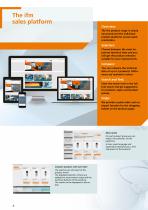
The ifm sales platform Overview: The ifm product range is clearly structured and the individual product platforms ensure quick orientation. Selectors: Choose between the most important technical data and you will get the product selection suitable for your requirements. Compare: You can compare the technical data of up to 3 products. Differences are marked in colour. Search and find: Enter the search term in the full text search and get suggestions for products, topics and product groups. Order: We provide a quick-order and csv import function for the shopping basket on the product pages. More...

 Open the catalog to page 6
Food Industry - Automation Technology 2021/2022-7

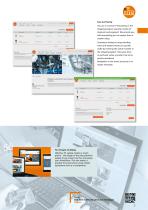
Easy purchasing You are in control of everything in the shopping basket: quantity, modes of shipment and payment. We provide you with everything you can expect from a modern shop. Customers relying on long-standing tried-and-tested articles can quickly order by entering the article number in the shopping basket. This saves time, in particular when a product has to be quickly reordered. Navigation in the menu structure is no longer necessary. For all types of display Whether PC, laptop, tablet or smartphone – the design of the sales platform adapts to any screen size thus increasing user-friendliness....

 Open the catalog to page 7
Food Industry - Automation Technology 2021/2022-8

Your start into the industrial revolution. IO-Link solutions from ifm. Simple: The sensor parameters can be set from the controller or the master. No crawling or climbing required to set the sensor. Transparent: Many sensors supply measured values to the switching signals via IO-Link. The goal is a constant product quality with less energy and raw material consumption. Reliable: Transmission that is prone to errors and conversion of analogue signals is replaced with digital measured value transmission. Low-cost: Process information, switching status, diagnostic functions are transmitted without...

 Open the catalog to page 8
Food Industry - Automation Technology 2021/2022-9

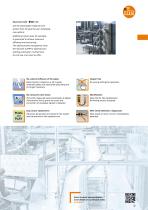
Head start with Use the advantages! Today IO-Link sensors from ifm give the user completely new options. Additional sensor data, for example, is generated to achieve maximum efficiency and cost saving. This allows process transparency from the machine to ERP to optimise your existing automation. Furthermore IO-Link has a lot more to offer: No external influence of the signal Tamper free Data transfer is based on a 24 V signal. Screened cables and associated grounding are no longer necessary. No wrong settings by operators. No measured value losses The entire measured value transmission is digital....

 Open the catalog to page 9
Food Industry - Automation Technology 2021/2022-10

Who says we can only do hardware? moneo. The all-you-want software for industrial evolution. One thing is clear: proper industrial digitisation example because the level is running low or begins with the sensor and extends into the the vibration on a fan rotor is dangerously IT structure. If you are already using IO-Link in increasing, moneo wil immediately alert and your plant, you have taken the first important inform you by e-mail. This allows you to step towards more efficiency and less unplanned schedule maintenance in good time or initiate downtime. And you are ready for the second manual...

 Open the catalog to page 10
Food Industry - Automation Technology 2021/2022-11

moneo|starterkit brings hardware component that is precisely tailored to the require- motors on fans, pumps and ments of the software and acts as a many other machines to a new level. powerful, reliable node in the network The complete package based on well- infrastructure. It provides the software coordinated hardware and software modules with the necessary computing power, stores and backs up data and condition of your system and to plan serves as an interface for software up- maintenance requirements in advance. dates and system maintenance. And it's more user-friendly and conve- moneo|appliance...

 Open the catalog to page 11
Food Industry - Automation Technology 2021/2022-12

moneo|OS is the convenient software basis and management tool for all software products of the moneo IIoT toolkit. In moneo|OS, you can easily manage your moneo licences. In addition, the intelligent, easy-to-use data flow model enables you to combine individual pieces of sensor data into meaningful values. This makes it possible to quickly analyse and optimise your processes.

 Open the catalog to page 12

Archived catalogs

  1. ifm pumps

    4  Pages

  2. ifm fans

    4  Pages

  3. ifmpressions

    18  Pages

  4. DF1214

    2  Pages

  5. DF2212

    2  Pages

  6. DF1212

    2  Pages

  7. DF1100

    2  Pages

*Prices are pre-tax. They exclude delivery charges and customs duties and do not include additional charges for installation or activation options. Prices are indicative only and may vary by country, with changes to the cost of raw materials and exchange rates.