


- Company
- Products
- Catalogs
- News & Trends
- Exhibitions
Wine

Wine
The document discusses the use of HILLER decanter centrifuges in the wine industry, highlighting their efficiency and cost-effectiveness compared to traditional press systems. These centrifuges enable continuous and hygienic processing of grapes, resulting in premium wines with enhanced flavors and aromas.
Key Benefits
- High-quality wines with intense flavor, aroma, and color.
- Increased yield and maximum reduction in cloudiness.
- Reduced operating costs due to savings on chemicals, filtration aids, water, and personnel.
- Minimal cleaning required, approximately 2 hours, due to automated CIP cleaning.
- Continuous and gentle processing with maximum hygiene due to a closed design.
- Homogeneous must quality and reduced oxidation of preliminary aroma stages.
- Versatile use at different product stages, such as juice production and cloudiness preparation.
- Lower phenol content due to short dwell time in the decanter.
Continuous Wine Production with HILLER Decanters
The document provides a schematic diagram of a HILLER DecaFood centrifuge system for white/rose wine production, outlining the process steps:
- De-stemming of grapes with optional enzyme addition.
- Enzyme effect in the mash container.
- Must production with optional gelatin addition and simultaneous flotation in the decanter.
- Removal of pomace and grape must.
- Further processing into wine through fermentation, fining, filtration, etc.
Applications
- Grape juicing to produce must for white and rosé wines.
- Grape must production for concentrate or sweet reserve.
- Red wine production from fermented mash.
- Lees preparation and thermo-vinified red wine production.
- Wine tartrate separation and stabilization.
- Wastewater preparation and double salt removal.
Catalog excerpts

DECANTER CENTRIFUGES & PLANTS FOR SOLID/LIQUID SEPARATION ■ best quality with more intense flavour, aroma and colour intensity ■ high yields ■ maximum cloudiness reduction ■ reduction in operating costs thanks to savings on chemicals, filtration aids, water and personnel CONTINUOUS WINE PRODUCTION WITH HILLER DECANTERS HILLER PROCESS The use of the HILLER decanter in the wine industry permits a continuous and efficient working method. Thanks to the enormous savings on personnel and working time for monitoring and cleaning the machine, the operating costs are considerably reduced in comparison to other press systems. ■ minimal cleaning required (approx. 2 hours) thanks to automated CIP cleaning ■ continuous and gentle processing ■ maximum hygiene thanks to closed design ■ homogeneous must quality ■ extreme shortening of the process time The gentle and hygienic processing of grapes with maximum yield and solids separation results in premium wines with intense colours and a more complex flavours and aromas. The option of simultaneous use for cloudiness preparation saves time and other additional process stages. ■ lower oxidation of preliminary aroma stages thanks to closed system ■ use of a machine at different product stages (e.g. juice production and cloudiness preparation) ■ lower phenol content thanks to short dwell time of the product in the decanter
Open the catalog to page 1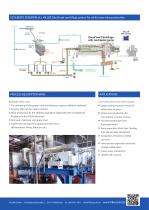
SCHEMATIC DIAGRAM of a HILLER DecaFood centrifuge system for white/rose wine production PROCESS DESCRIPTION WINE Example: White wine 1. De-stemming of the grapes with simultaneous enzyme addition (optional) 2. Enzyme effect in the mash container 3. Must production by the addition of gelatine (optional) with simultaneous floatation in the HILLER decanter 4. Removal of pomace and grape must 5. Further processing of the grape must into wine (fermentation, fining, filtration, etc.) APPLICATIONS Use of decanters in the wine industry ■ grape juicing to product must for white wine and rosé ■ grape must...
Open the catalog to page 2All Hiller GmbH catalogs and technical brochures
 Image brochure
24 Pages
 Service brochure
12 Pages
 Tunnel building
2 Pages
 Biodiesel
2 Pages
 Hiller Centrate Monitoring
2 Pages
 Hiller DecaPress
4 Pages
 Decanter vs. Screw Press
2 Pages
 Compact Unit DecaSmart DP31
2 Pages
 Compact unit DecaSmart DP45n
2 Pages
 Turnkey Decanter Plants
2 Pages
 ECO-Jet Weir Plates
2 Pages
 3-Phases TricaPress
2 Pages
 Hiller SEE-Control pro
2 Pages
 Extracting vegetable oils
2 Pages
 Fruit Juice
2 Pages
 purée and smoothies
2 Pages
 Hiller Conditioner
2 Pages
 Fish Industry
2 Pages
 Root Vegetables
2 Pages
 Palm Oil
2 Pages
 Hiller Remote Monitoring
2 Pages


- Horizontal decanter
- Industrial decanter
- Decanter for the food industry
- 2-phase decanter
- 3-phase decanter
- Wastewater decanter
- Sludge dewatering decanter
- Olive oil decanter
- Dehydration decanter
- Vertical decanter
- Decanter for the chemical industry
- High-volume decanter
- Sludge thickening decanter
- Containerized decanter
- Decanter for the beverage industry