


- Company
- Products
- Catalogs
- News & Trends
- Exhibitions
R-line

R-line
Catalog excerpts

mwSECESPDL »> eFFective heat transFer »>
Open the catalog to page 1
TECHNICAL PARAMETERS R-line heat exchangers are cooper brazed exchangers designed for use in cooling or heating installations as refrigerant evaporators or condensers. Special corrugation pattern of the plates ensures proper evaporation or condensation process. This is a proven solution in heat pumps or refrigeration systems. RH version enables work with pressure up to 45 bar / 653 psi. The refrigerant distribution system DMF - enable efficient evaporation of media avoiding its overheating on the plates further away from the connections thus improving heating exchange process. ■ CONSTRUCTION...
Open the catalog to page 2All HEXONIC CZ s.r.o. catalogs and technical brochures
 CIP
CIP13 Pages
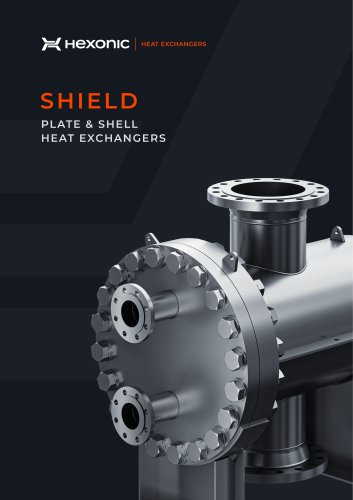 JAG SHIELD
7 Pages
 Custom heat exchangers
15 Pages
 HEXONIC KATALOG (EN)
17 Pages
 HEAT EXCHANGERS POOL
15 Pages
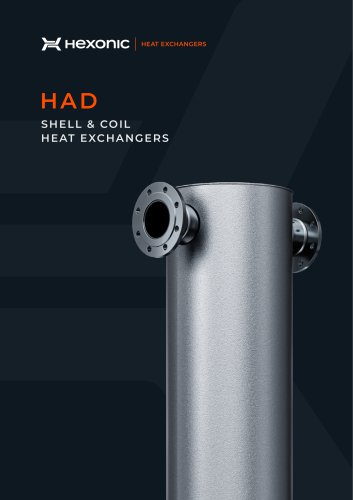 HAD SHELL & COIL
7 Pages
 Economizer HEXONIC DNA ECO
9 Pages
 Heat exchangers HEXONIC RAD
5 Pages
 JAD
JAD13 Pages
 DNA
DNA5 Pages
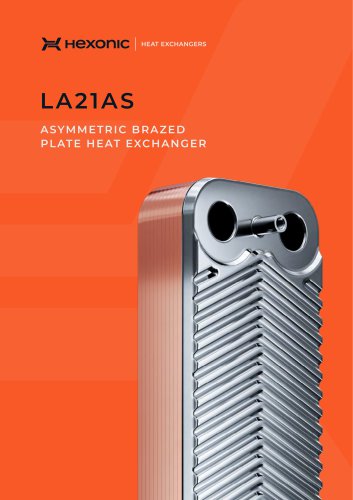 LA21AS
5 Pages
 Dry coolers (EN)
11 Pages
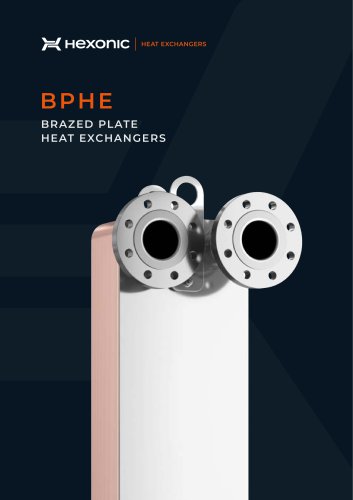

Archived catalogs
 Technical card Luna
2 Pages
 Technical card R
3 Pages
 BRAZED PLATE HEAT EXCHANGERS
15 Pages
 Shell and tube
3 Pages
 Industrial
7 Pages
 Oil Coolers
11 Pages
 ST
ST3 Pages
 Pool Heat Exchanger 2021
15 Pages
 BRAZED PLATE HEAT EXCHANGERS
13 Pages
 SHELL AND COIL HEAY EXCHANGE
7 Pages
 JAD 2021
15 Pages
 JAG PLATE HEAT EXCHANGER
13 Pages
 Dry cooler
11 Pages
 Pool Heat Exchanger 2020
15 Pages
 DNA ECO
1 Page
 Custom
3 Pages
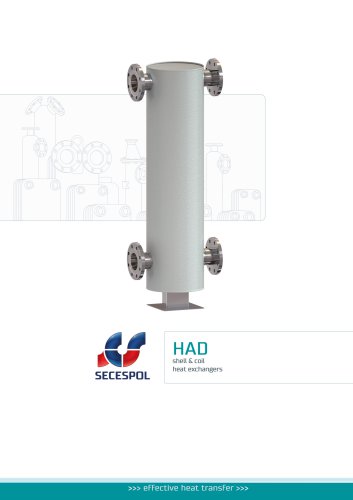 HAD 2020
3 Pages
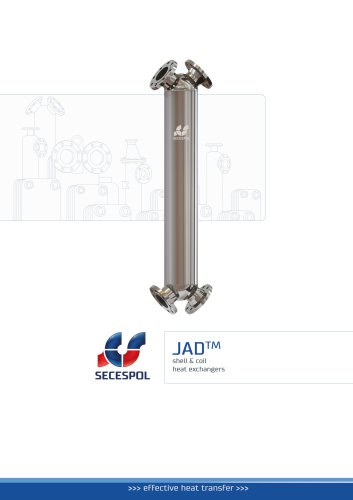 JAD 2020
3 Pages
 P-line
3 Pages
 PHE
PHE3 Pages
 Luna
Luna3 Pages
 Safe plate
3 Pages
 L-line
3 Pages


- HEXONIC liquid/liquid heat exchanger
- HEXONIC plate heat exchanger
- HEXONIC tubular heat exchanger
- HEXONIC stainless steel heat exchanger
- HEXONIC industrial heat exchanger
- HEXONIC compact heat exchanger
- Copper heat exchanger
- HEXONIC water/water heat exchanger
- Heat exchanger for the food industry
- HEXONIC brazed plate heat exchanger
- HEXONIC shell and tube heat exchanger
- Technology heat exchanger
- Pressure heat exchanger
- Titanium heat exchanger
- Custom-made heat exchanger
- Heat exchanger for the chemical industry
- Steel heat exchanger
- Heat exchanger for the pharmaceutical industry
- Corrosion-resistant heat exchanger