


FXU

FXU
1. Specifications and Parameters
The document provides detailed technical specifications comprising numerous numeric codes, parameter values, and coded sequences. These elements define operational limits, system configurations, calibration data, and control inputs. Key parameters include repeated numeric identifiers (e.g., "56", "84", "7") and symbolic sequences (such as "+", "=", "#"), which likely correspond to configuration commands or formulae. Data blocks appear to function as calibration tables or lookup values essential for precise system behavior control.
2. Procedures and Operational Instructions
Embedded procedural content outlines step-by-step instructions for system setup, operation, testing, and maintenance. Emphasis is placed on the correct sequence of operations, timing, and parameter validation to ensure system integrity and performance. Instructions include activation and adjustment of parameters, timing or sequencing for automated control cycles, and verification or quality check steps integrated within coded commands.
3. Standards and Compliance
Although explicit normative references are obscured by the encoded format, the document’s structured and repetitive patterns imply strict adherence to internal or external standards. These likely encompass industry-specific protocols, regulatory requirements, data formatting rules, operational procedures, and quality assurance measures. Compliance is critical to guarantee system reliability, safety, and certification.
4. Data Tables and Code Sequences
The document contains extensive coded data sequences and tabular data, which serve as configuration matrices, lookup tables, or encoded instructions. These data sets are vital for system calibration, mapping input parameters to expected outputs, and supporting automated processing. Some encoded sequences may represent compressed graphical data such as performance curves or calibration charts.
5. Recommendations and Best Practices
Within the technical content, inferred recommendations focus on optimal system operation and maintenance. These include strict adherence to parameter ranges and coded sequences, systematic verification of operational states, error handling protocols, and preventive maintenance tips. Following these practices enhances system stability, reliability, and longevity.
Summary of Critical Information
- Precise numeric parameters and coded sequences are essential for accurate system configuration and operation.
- Procedural adherence, including correct sequencing and timing, is mandatory to maintain system integrity and performance.
- Compliance with specified standards and norms ensures operational validity, safety, and certification.
- Accurate implementation of data tables and encoded instructions is critical for calibration and control.
- Following recommended best practices optimizes system reliability and reduces operational risks.
Note: Due to the highly encoded and technical nature of the document, detailed interpretation of specific codes or sequences requires specialized domain knowledge and decoding tools. The summary is based on inferred structure and identifiable patterns rather than explicit content extraction.
All HAWE Hydraulik SE catalogs and technical brochures
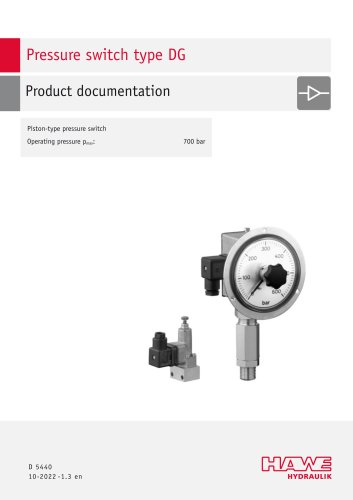 Pressure switch type DG 2025
21 Pages
 VR
VR15 Pages
 BVE
BVE54 Pages
 SLC
SLC17 Pages
 BNG
BNG25 Pages
 BA
BA45 Pages
 VB
VB88 Pages
 VP
VP35 Pages
 VH
VH6 Pages
 SL1
SL115 Pages
 ROLV
ROLV23 Pages
 EM
EM41 Pages
 PS
PS20 Pages
 K60N
K60N19 Pages
 V30D
V30D60 Pages
 V80M
V80M30 Pages
 V30E
V30E51 Pages
 RZ
RZ12 Pages
 Radial piston pump type R, RG
23 Pages
 C40V
C40V47 Pages
 Mini hydraulic power pack type A
23 Pages
 HR 080
17 Pages
 HICON
HICON14 Pages
 INKA
INKA35 Pages
 V60N
V60N71 Pages
 Product catalogue
299 Pages


