
- Catalogs
- HANSA FLEX AG
- Hose Technology


Hose Technology

Hose Technology
HANSA-FLEX is a comprehensive system partner for hydraulics, offering a wide range of services and products related to hose technology. Their services include a 24-hour hose replacement service, industrial maintenance, power unit construction, an online shop, and a hose management system called X-CODE.
HANSA-FLEX provides a rapid response service with 280 service vans available 24/7 for on-site hose replacement, ensuring minimal downtime for machinery across various sectors.
The company offers preventative maintenance services to optimize machinery uptime and reduce costs, including advice on hydraulic components and plant optimization.
Specializes in the engineering of hydraulic power units, providing services from planning and design to installation and commissioning.
The online shop offers a wide range of hydraulic products, including hoses, fittings, couplings, and valves, available for convenient 24/7 shopping.
This system allows users to manage hose lines effectively by providing technical data, manufacturing dates, and maintenance schedules, facilitating proactive maintenance.
The catalogue includes detailed sections on various types of hoses, fittings, couplings, and measuring equipment. Key categories include hydraulic hoses, industrial hoses, hose fittings, and couplings.
The document provides safety guidelines and detailed instructions on the assembly, operation, maintenance, and inspection of hose lines. It emphasizes the importance of proper selection, installation, and maintenance to ensure safety and longevity.
Key safety measures include ensuring hoses are assembled by qualified personnel, avoiding tension and torsion, adhering to bending radius limits, and protecting hoses from external damage. Regular inspections and adherence to legal safety frameworks are also stressed.
Guidelines cover the selection of appropriate hose lines based on resistance, temperature, pressure, and environmental conditions. Maintenance involves regular inspections, checking for damage, and ensuring proper storage conditions.
The document outlines the temperature range for hose lines, from -40°C to +100°C, with brief exposure up to +120°C. It highlights the impact of temperature on rubber materials, noting that low temperatures can cause brittleness due to the glass transition temperature, while high temperatures can lead to premature aging. Environmental factors like ozone and UV radiation can also degrade the outer layer of rubber hoses.
The maximum working pressure influences the hose structure, with options including textile braiding, wire braiding, and metal or PTFE hoses. The inside diameter is crucial in hydraulic systems to minimize pressure loss, and larger diameters are recommended to reduce flow velocity and pressure losses.
Twisting a hose line significantly reduces its service life, and a twist of 7° can reduce it by 80%. The minimum bending radius must be adhered to, as exceeding it can cause damage and reduce the hose's load-bearing capacity. Proper installation and fittings can help avoid these issues.
Abrasion can occur if hoses are laid over edges or too close together, leading to wear and potential failure. Tensile loads should be avoided to maintain secure connections, and hoses should be laid with some slack to accommodate pressure-induced shortening.
Proper storage conditions are essential to maintain hose integrity, including cool, dry, and dust-free environments away from direct sunlight and heat sources. Regular inspections are necessary to ensure safe operation, with specific criteria for hose replacement outlined, such as damage to the outer layer, leaks, and deformations.
Cleaning should be done with gentle agents, avoiding solvents and abrasive tools. Repairs involving the reuse of hoses or fittings are not permitted, and recoating violates identification requirements.
The document provides detailed specifications and applications for various types of hydraulic hoses, including compact, spiral, and textile hoses. Each hose type is designed for specific pressure ranges and environmental conditions, with detailed technical specifications provided for each.
- KP 200 NO (2SC): Designed for medium pressure circuits in restricted spaces and extreme conditions. Features oil-resistant synthetic rubber, two high-tensile steel wire braids, and a synthetic rubber outer layer with high ozone, abrasion, and weather resistance. Operating temperature ranges from -40°C to 100°C.
- KP 200 PRO (2SC): Similar to KP 200 NO but with a narrow bending radius and extremely abrasion-resistant top cover. Suitable for mineral oil, polyglycol-based oil, and water-oil emulsions.
- KP 200 S: Exceeds EN 857 2SC standards, pulse-tested up to 1 million cycles, and suitable for glycol, water-oil emulsions, and mineral oil.
- HD 400 (4SP): For high-pressure circuits, featuring four high-tensile steel wire spiral inserts and a synthetic rubber outer layer with high temperature, ozone, and abrasion resistance.
- HDB 400 (4SP): Approved for mining, with flame retardant properties and suitable for extreme usage conditions.
- HD 500 (4SH): Designed for high-pressure circuits, with four high-tensile steel wire spiral inserts and a synthetic rubber outer layer.
- HD 600 (R13): Suitable for high-pressure circuits with high loads, featuring six high-tensile steel wire spiral inserts.
- HD 700 (R15): For high-pressure circuits with high loads, suitable for shipbuilding and mining, with extremely abrasion-resistant outer cover.
- HD 800: For mineral oil-based high-pressure hydraulic systems, with a narrow bending radius and high abrasion resistance.
- MD 100: For low and medium pressure circuits, featuring one textile braided insert and one steel wire braid, suitable for mineral oil, polyglycol-based oil, and water-oil emulsions.
- TE 100 (1TE): A low-pressure hose for general applications, featuring one braided textile insert and oil-resistant synthetic rubber.
- Working pressure, test pressure, and burst pressure vary across different hose types and sizes.
- Temperature range for most hoses is from -40°C to 100°C, with some extending to 121°C.
- Hoses are designed to meet various standards such as EN 857, EN 856, and SAE 100 R15.
The document provides comprehensive technical details for selecting the appropriate hydraulic hose based on application requirements, pressure ratings, and environmental conditions.
The document provides detailed specifications and applications for various types of low-pressure and suction hoses used in hydraulic systems. The hoses are categorized based on their construction, material, and intended use, with specific focus on their pressure ratings, temperature ranges, and media compatibility.
- Material: The hoses are primarily made from oil-resistant synthetic rubber with textile braided inserts. Some variants include flame retardant and weatherproof outer layers.
- Temperature Range: Most hoses operate between -40°C and 100°C, with some high-temperature variants extending up to 150°C.
- Pressure Ratings: Working pressures range from 17 bar to 160 bar, with burst pressures up to 640 bar depending on the hose type and size.
- Media Compatibility: The hoses are compatible with mineral oil, glycol, water (0°C to +70°C), water-oil emulsions, and air (up to +70°C).
- General Applications: Low-pressure hoses are suitable for general hydraulic applications, including return lines and pneumatic controllers.
- Suction and Return Lines: Suction hoses are designed for systems with restricted installation space and are suitable for mineral oil and water-glycol emulsions.
- High-Temperature Applications: Certain hoses are designed for high-temperature environments, utilizing synthetic PKR rubber for enhanced performance.
- Hoses conform to standards such as EN 854 2TE and 3TE, with some variants fire-tested to DIN 54 837.
- Testing includes pressure tests to EN ISO 1402, ensuring reliability under specified conditions.
- Hoses feature high tensile textile inserts and, in some cases, embedded steel spirals for added strength.
- Outer layers are designed to resist ozone, abrasion, and weather conditions.
- Color coding (e.g., black, blue, green, red) is used for easy identification of hose types and applications.
- Some hoses are unsuitable for pressure surges or critical applications.
- Recommended flow velocity for media in suction hoses is a maximum of 1m/s.
The document provides detailed specifications and applications for various types of thermoplastic high-pressure hoses used in hydraulic systems. The hoses are categorized based on their design, material composition, and intended use, with specific focus on their pressure ratings, temperature ranges, and structural features.
The document lists multiple hose types, each identified by a unique code (e.g., NY 104, NYZ 104, TAF 104). Key specifications include nominal diameter (DN), internal and external diameters, working and burst pressures, and minimum bending radius. These specifications are crucial for selecting the appropriate hose for specific applications.
The hoses are designed for medium to high-pressure circuits, including high-pressure lubrication lines, agricultural machinery, and forklift trucks. Some hoses are specifically tailored for paint spraying applications, offering electrical conductivity and resistance to various chemicals.
The hoses feature different inner and outer layers, typically made from polyester elastomer, polyamide, or polyurethane. Inserts are often high tensile steel or polyester braided, with some hoses incorporating copper braids for electrostatic charge dissipation.
The hoses exhibit high resistance to ozone, abrasion, and chemical exposure. They are designed to withstand a wide range of temperatures, typically from -60°C to 100°C, with specific elongation properties under pressure.
The hoses are tested according to EN ISO 1402 standards to determine changes in length at maximum working pressure. Some hoses comply with SAE 100 R 7 standards, ensuring reliability and safety in demanding environments.
The document emphasizes the importance of following fitting guidelines, especially for paint spraying hoses, which must adhere to specific safety standards (ZH 1-406). Proper installation and maintenance are critical to ensure optimal performance and longevity of the hoses.
The document provides detailed specifications and applications for various types of thermoplastic and PTFE hoses, including high pressure, extreme pressure, and hot water hoses. It also covers hose protection solutions such as antikink protection.
- Applications: Suitable for high pressure circuits and general applications.
- Features: High ozone and abrasion resistance, no swelling or brittleness with solvents or alkaline media, good reverse bending fatigue strength.
- Standards: SAE 100 R8.
- Materials: Polyester elastomer inner layer, aramide braided insert, polyurethane outer layer.
- Temperature Range: -40°C to 100°C.
- Media Compatibility: Mineral oil, synthetic oils, water, and water-oil emulsions.
- Applications: Designed for extreme pressure applications, high pressure tools, and emergency rescue systems.
- Features: Extremely kink-resistant, good flexibility at low temperatures.
- Materials: Polyamide inner layer, aramide and steel wire braided inserts, polyurethane outer layer.
- Temperature Range: -40°C to 100°C.
- Media Compatibility: Mineral oil, synthetic oils, water, and water-oil emulsions.
- Applications: Suitable for medium pressure applications with hydraulic fluids and aggressive media in the chemical industry.
- Design: Smooth inliner in white PTFE with one or two braidings.
- Temperature Range: -70°C to 260°C.
- Material: PTFE (polytetrafluoroethylene).
- Note: Not recommended for high dynamic pressure loads; pressure reduction factor applies above 120°C.
- Applications: Used in high pressure cleaning equipment.
- Standards: EN 853 1 SN and 2 SN.
- Materials: Water, oil, and heat resistant synthetic rubber with steel wire braided inserts.
- Temperature Range: -10°C to 150°C.
- Media Compatibility: Water, mineral oil, and water-oil emulsions.
- Antikink Protection: Prevents hoses from kinking behind the ferrule, made from rubber or spring steel.
- Materials: Rubber and electro-galvanised steel.
This document provides detailed specifications and applications for various types of hose protection products offered by Hansa-Flex. The products are categorized into heat protection, abrasion protection, shrink hoses, hose bundling, and safety technology.
- Silicate Fabric Heat Protection Hose (FBS): Designed for high-temperature environments such as foundries and steelworks. It offers excellent resistance to liquid metals and flying sparks, with a temperature range from -25°C to 750°C. Made from calcium silicate fibers, it is abrasion-resistant and asbestos-free.
- Silicate, Silicone Heat Protection Hose (FBSB): Suitable for similar applications with a temperature range from -65°C to 260°C. It provides protection against liquid metals and is UV and weatherproof.
- Glass-Fibre, Silicone Heat Protection Hose (FBSS): Offers protection against liquid metals with a temperature range from -60°C to 250°C. It is compliant with IEC standards.
- Plastic Abrasion Protection (SSK): Protects hoses from external abrasion, suitable for retrofitting and bundling. Made from polyamide 6, it withstands temperatures up to 120°C.
- Protective Braiding (SGF): Zinc-plated steel wire braiding for protection against external damage like flying sparks.
- Flat Abrasion Protection (SSF): Uses a flat spring steel band to protect against abrasion.
- Round Abrasion Protection (SSR): Features a round spring steel wire helix for extreme abrasion protection.
- Shrink Hose (SST): Flame-retardant, suitable for a wide range of applications with a temperature range from -55°C to 135°C.
- Shrink Hose with Adhesive Coating (SSTK): Provides additional protection against climatic influences, with a minimum shrinking temperature of 110°C.
- Hose Bundling (TGF BAND): Uses high tensile nylon fabric with Velcro fasteners for bundling multiple hose lines.
- Hose Bundling with Velcro (TGF ISO K): Extremely abrasion-resistant and flame-retardant, suitable for simple fitting or retrofitting.
- Stopflex Hose Clamp (STOP FS): High tensile steel clip with rubber insert for personal protection against whipping hoses.
- Stopflex Mounting (STOP ROV): Uses a steel cable anchored with a STOP-FS clamp to prevent hose whipping.
- Stopflex Fittings (STOP SAE): Similar to STOP ROV, designed for flange fittings.
- Protective Hose (TGF ISO): Made from interweaved nylon threads, it is extremely abrasion-resistant and flame-retardant, designed to atomize hazardous oil jets from burst hoses.
This document provides detailed specifications and applications for various types of swage nipples used in hose fittings, specifically for HD 100 to HD 400, KP, and TE hoses. The document categorizes these fittings based on their design and application, including different angles and sealing forms.
The document lists swage nipples with various identification codes, sizes, and dimensions. Each entry includes details such as DN (Diameter Nominal), size in inches, thread type (G1), and dimensions (L1, L2, S1). The fittings are categorized by their angle (e.g., 45°, 90°) and sealing form (e.g., flat, with O-ring).
The swage nipples are primarily made of steel and are electro-galvanized for surface protection. They conform to standards such as ISO 8434-6 and BS 5200, ensuring compatibility and reliability in various applications.
These fittings are designed for use with BSP nut threads and are suitable for a range of hose types, including TE, KP, and HD series hoses. The document emphasizes the importance of selecting the appropriate ferrule based on the hose type to ensure proper fitting and sealing.
The document details different product versions, including those made from stainless steel for enhanced durability and corrosion resistance. Variants are available for different angles and sealing forms, providing flexibility for various installation requirements.
Users are advised to choose the appropriate ferrule based on the hose type to ensure optimal performance and sealing. The document provides links to online catalogs for further reference and detailed specifications.
This document is a technical catalogue detailing various swage nipples and hose fittings for HD 100 to HD 400, KP, and TE hoses. It includes specifications for different types of connections, sealing forms, materials, and surface treatments.
- Application: Swage nipples are designed for HD 100 to HD 400, KP, and TE hoses.
- Connection Types: BSP nut thread, BSP external thread, BSPT conical external threads, NPT external threads, UN/UNF nut threads.
- Sealing Forms: Flat sealing (DKR flat, AGR flat), thread seal (AGR-K), 74° inner cone (DKJ), 74° outer cone (AGJ).
- Materials: Steel, with options for stainless steel (VA versions).
- Surface Treatment: Electro galvanised.
- Swage Nipple, DKR-Flat: Available in angles 45° and 90°.
- Swage Nipple, AGR-Flat: Designed for flat sealing with cylindrical threads.
- Swage Nipple, AGR-K: Features conical threads for thread sealing.
- Swage Nipple, AGN: Includes additional 60° inner cone for sealing.
- Swage Nipple, DKJ: Available in angles 45° and 90°, with a 74° inner cone.
- Swage Nipple, AGJ: Features a 74° outer cone for sealing.
- DN (Nominal Diameter): Ranges from 4 to 50 mm.
- Size: Various sizes in inches, corresponding to different thread standards.
- G1, L1, L2, S1: Dimensions provided for each product version, indicating thread size, length, and spanner size.
- Choose the appropriate ferrule based on the hose type to ensure proper fitting and sealing.
- ISO 8434-2 for DKJ and AGJ fittings.
The catalogue provides detailed tables for each product version, specifying dimensions and thread types for precise selection and application.
This document provides detailed specifications and applications for various swage nipples and hose fittings used in conjunction with HD 100 to HD 400 hoses. The fittings are categorized based on their angles and flange connections, suitable for different industrial applications.
The document lists swage nipples with different angles (straight, 45°, and 90°) and their corresponding dimensions, including diameter (D), height (H), and lengths (L1, L2). The fittings are designed for SAE flange connections with pressure ratings of 3000 PSI and 6000 PSI, depending on the type.
All swage nipples are made of electro-galvanized steel, ensuring durability and resistance to corrosion. They conform to standards such as SAE J518 and ISO 6162-1/2, ensuring compatibility and reliability in various applications.
These fittings are primarily used for connecting hoses in hydraulic systems, specifically for HD 100 to HD 400, KP, and TE hoses. They are suitable for high-pressure applications and are compatible with Caterpillar and Komatsu equipment.
The document advises selecting the appropriate ferrule based on the hose type to ensure a secure and leak-proof connection. It also emphasizes the importance of adhering to the specified standards for optimal performance.
The tables provide a comprehensive list of product versions, including identification numbers, nominal diameters (DN), sizes in inches, flange sizes, and detailed dimensions. This data is crucial for selecting the correct fitting for specific applications.
This document provides detailed specifications and applications for various hose fittings designed for HD 400 and HD 500 hoses, focusing on interlock fittings with pull-out protection. The fittings are categorized based on their connection types, angles, and standards.
- Swage Fittings for HD 400 Hoses: These include JIC, AGJ, ORFS, and SFL types, each with specific thread types and sealing forms. The fittings are made of steel and electro-galvanized for durability.
- Swage Fittings for HD 500 Hoses: These include DKOL and CEL types, featuring metric nut threads and 24° outer cones with O-rings for sealing. They are also made of steel and electro-galvanized.
- Each fitting type is designed for specific hose diameters and pressure ratings, ensuring compatibility and safety in hydraulic systems.
- Installation involves using swage nipples and ferrules to secure the fittings to the hoses, providing a reliable connection with pull-out protection.
- Fittings conform to ISO 8434 standards, ensuring international compatibility and performance reliability.
- SAE J518 and ISO 6162 standards are followed for flange connections, supporting high-pressure applications up to 6000 PSI.
- Tables provide dimensions and specifications for each fitting type, including diameter (DN), thread size (G1), length (L1, L2), and sealing options (S1, OR).
- Angles of fittings range from straight to 135°, accommodating various installation requirements.
- Ensure compatibility of fittings with hose types and pressure ratings to maintain system integrity.
- Follow installation guidelines to prevent leaks and ensure long-term performance.
This document provides detailed specifications and descriptions of various swage fittings used for HD 500, HD 600, and HD 700 hoses. These fittings are designed for different types of connections, including SAE flange, BSP, NPT, JIC, and metric series, and are suitable for high-pressure applications.
- Material: All fittings are made of steel and are electro-galvanized for corrosion resistance.
- Design: Each fitting includes a swage nipple and swage ferrule, with pull-out protection (interlock) to ensure secure connections.
- Standards: The fittings comply with various international standards such as ISO 8434, SAE J518, and BS 5200.
- Swage Fitting for HD 500 Hoses: Includes SAE flange connection with a flat seal and SF O-ring, suitable for 6000 PSI applications.
- Swage Fitting for HD 600 Hoses: Available in multiple configurations including DKOR, AGR, AGN, DKOJ, and SFL, with angles of 45° and 90°.
- Swage Fitting for HD 700 Hoses: Includes DKOL and CEL/CES fittings, designed for metric series with 24° outer cone and O-ring sealing.
These fittings are used in hydraulic systems requiring robust and reliable connections under high pressure. They are suitable for use in various industrial applications, including construction machinery and heavy equipment.
- High-pressure resistance up to 6000 PSI.
- Interlock design for enhanced safety and reliability.
- Compliance with international standards ensures compatibility and performance.
The document provides comprehensive information on the specifications, applications, and standards of swage fittings for different hose types, ensuring users can select the appropriate fitting for their specific needs.
This document is a technical catalogue detailing various types of hose fittings and plug-in nipples used for low-pressure applications. The fittings are categorized based on their design, material, and standards they adhere to. The document includes specifications for different series such as DKL, DKOL, CEL, BEL, BES, DKR, AGR, and others, each with specific dimensions and connection types.
- Material: Most fittings are made of steel and are electro-galvanised for corrosion resistance.
- Standards: The fittings conform to various international standards such as ISO 8434-1, ISO 8434-2, ISO 8434-3, and BS 5200.
- Connection Types: The document lists fittings with metric nut threads, BSP threads, UN/UNF threads, and NPT threads, each designed for specific sealing forms like 24° outer cone, 60° outer cone, and flat sealing.
- Undamaged nipples can be reused, which is a consistent recommendation across all fitting types.
- For certain fittings like the BEL/BES series, it is advised not to use them for new designs, recommending alternatives like the AOL series instead.
- Each fitting type is identified by a nominal diameter (DN), size in inches, and specific thread dimensions (e.g., M 12 x 1.5, G 1/4" -19).
- Dimensions such as L1, L2, S1, and OR are provided for each fitting, indicating length and size specifications critical for installation and compatibility.
- Fittings are designed for specific applications, such as hose connections, banjo fittings for metric hollow screws, and hose ferrules for thermoplastic hoses.
- Materials used include steel and brass, with a focus on durability and resistance to environmental factors.
This catalogue serves as a comprehensive guide for selecting appropriate hose fittings for low-pressure applications, providing detailed specifications and recommendations to ensure compatibility and performance.
This document is a technical catalogue from Hansa-Flex, dated June 2014, detailing various types of hydraulic couplings, including quick release and pipe couplings, along with their specifications, accessories, and spare parts.
- Fixed Halves: These couplings are designed for external pipe diameters ranging from 6mm to 25mm, with working pressures up to 315 bar. They feature flat seal tappets to minimize oil leakage and are suitable for harsh conditions.
- Loose Halves: Similar specifications to fixed halves, with additional accessories like dummy sockets and dust protection containers. They are designed to automatically uncouple under excessive tensile load.
- Fixed Halves: Available for pipe diameters from 6mm to 32mm, these couplings can handle pressures up to 420 bar and temperatures between -40°C and 100°C. They are electro-galvanized for durability.
- Loose Halves: These couplings share similar specifications with fixed halves and include accessories like support rings and O-rings.
- Various accessories such as dust protection housings, spring sleeves, and caps are available for both fixed and loose halves.
- Spare parts include O-rings, support rings, and sealing washers, made from materials like NBR and PVC.
The couplings are primarily used in automotive engineering, designed to withstand high pressures and pressure pulses, with a focus on minimizing leakage and ensuring robust performance under residual pressure conditions.
This document provides technical specifications and descriptions for various types of screw couplings designed for high pressures and pressure pulses. These couplings are used in general applications such as industry, construction machinery, and agricultural technology.
The document lists multiple models of screw couplings, each with specific parameters such as nominal diameter (DN), working pressure, mineral oil temperature range, and safety factor. The couplings are categorized under different series like SKF HL, SKF HS, SKFS HL, SKFS HS, etc.
- Working Pressure: Ranges from 160 to 450 bar depending on the model.
- Temperature Range: Mineral oil temperature ranges from -30°C to 100°C, with some models supporting up to 125°C or 200°C.
- Safety Factor: Typically a factor of 4 is used.
The couplings are made of steel and are electro-galvanized for durability. They feature metric cylindrical threads and are designed to handle residual pressure.
The document mentions accessories such as brake rings, support rings, O-rings, and dust protection for the couplings. These accessories help in maintaining the integrity and functionality of the couplings under harsh conditions.
The couplings are suitable for various applications, including those requiring coupling under residual pressure. They are robustly constructed to prevent unwanted loosening due to vibrations.
The document includes references to specific catalogues and provides URLs for further details on each coupling type.
The document provides detailed specifications and applications for various types of screw couplings, designed for high-pressure environments and pressure pulses. These couplings are suitable for use in harsh conditions across multiple industries, including automotive engineering, construction machinery, and agricultural technology.
The document lists several models of screw couplings, each with specific nominal diameters, connecting threads, working pressures, and temperature ranges. The safety factor coupled (SF gek.) is consistently noted, indicating the reliability of these couplings under specified conditions.
The couplings are primarily made from steel, with some models using high resistance special steel or brass. They are electro-galvanised or white chromised for enhanced durability. The design includes features like NPT or BSP cylindrical internal threads, thread seals, and compatibility with various pin shapes.
These couplings are used in a wide range of applications, including hydraulic tools, mobile hydraulic pumps, rescue equipment, and machinery subjected to cyclic loading. They are also suitable for offshore applications and oilfields.
The document mentions various accessories such as dust protectors, sealing springs, and O-rings, which are essential for maintaining the functionality and longevity of the couplings.
The couplings are designed to handle residual pressure, making them versatile for different operational scenarios. They are robustly constructed to withstand severe vibrations and compression, with replaceable inner parts for easy maintenance.
This document is a technical catalogue from June 2014, detailing various types of screw couplings used in industrial, construction, and agricultural applications. The couplings are designed for high pressures and pressure pulses, suitable for harsh conditions.
The catalogue lists multiple screw coupling models, each with specific nominal diameters (DN), connecting threads, coupling threads, working pressures, and temperature ranges. The safety factor when coupled is also provided for each model.
- SKL HJ Series: Features UN/UNF external threads, 74° outer cone sealing, and can handle up to 200 bar residual pressure. Made of electro-galvanized steel.
- SKL IM Series: Uses metric cylindrical inner threads, compatible with screw-in pins of shapes A, B, and E. Designed for coupling under residual pressure.
- SKL IR Series: Employs BSP cylindrical internal threads, suitable for coupling under residual pressure, available in both steel and stainless steel versions.
- SKL HN SP Series: NPT external threads with thread seal, compatible with Pioneer, featuring a ball valve for additional functionality.
- SKL IR RO Series: Designed for hydraulic hammers and rams, with replaceable inner parts for repair, and requires secure tightening to prevent loosening due to vibrations.
The couplings are used across various sectors including industry, construction machinery, agricultural technology, automotive engineering, offshore applications, and more. They are suitable for tools, hydraulic systems, and machinery subjected to cyclic loading.
Most couplings are made of electro-galvanized steel, with some models available in stainless steel or brass. The robust construction ensures durability in harsh environments.
Dust protection accessories are available for most coupling models to enhance longevity and performance.
This document provides detailed specifications and spare parts information for various types of hydraulic couplings, specifically focusing on screw couplings and plug-in couplings. The document is structured to include identification details, material specifications, and compatibility information for each component.
- Components: Includes circlips, threaded rings, brake rings, O-rings, support rings, and sealing springs.
- Materials: Primarily steel and NBR (Nitrile Butadiene Rubber) for sealing components.
- Compatibility: Designed for both fixed (SKF) and loose (SKL) halves of screw couplings.
- Nominal Diameter (DN): Various sizes are available, ranging from DN 10 to DN 51, with corresponding thread sizes.
- Components: Includes sleeves, support rings, O-rings, and dust protection accessories.
- Design: Features a sliding sleeve mechanism for quick release and coupling, suitable for bulkhead wall installation.
- Materials: Steel with electro-galvanized surface for corrosion resistance.
- Standards: Complies with ISO 7241-1 Series A.
- Applications: Suitable for general industrial use, construction machinery, and agricultural technology.
- Working Pressure: Ranges from 225 to 300 bar depending on the series and size.
- Temperature Range: Mineral oil temperature ranges from -30°C to 125°C.
- Safety Factor: Couplings have a safety factor of 4 when coupled.
- Catalogue Date: All information is sourced from Catalogue 1, dated June 2014.
- Online Resources: Each component has a dedicated URL for further details and specifications.
This document is a technical catalogue detailing various plug-in coupling sleeves compliant with ISO 7241-1 Series A. These couplings are used in a range of applications including industry, construction machinery, and agricultural technology. The catalogue provides specifications for different models, including working pressure, temperature ranges, and thread types.
- Materials and Surface: All couplings are made of steel and electro-galvanised for corrosion resistance.
- Connection Types: Available in BSP cylindrical internal threads, UN/UNF inner threads, metric cylindrical inner threads, and NPT internal threads.
- Working Pressure: Varies by model, ranging from 200 to 1000 bar.
- Temperature Range: Mineral oil temperature ranges from -40°C to 125°C depending on the model.
- SKM IR Series: General application with quick coupling capability, suitable for high flow with minimal pressure loss.
- SKM IJ JD Series: Compatible with John Deere, featuring UNF threads.
- SKM IM AE Series: Compatible with Aeroquip, featuring metric threads.
- SKM IN SP Series: Compatible with Pioneer, featuring NPT threads and additional features like ball valves.
- SKM IR HC Series: Designed for extreme pressure applications, featuring dust protection.
Various accessories are available including O-rings, support rings, dust protection sleeves, and quick release clips.
All couplings comply with ISO 7241-1 Series A, with some models also meeting ISO 5675 and SAE J1036 standards.
The couplings are designed for quick and secure connections, with features like double O-ring seals for increased security and safety retaining rings to prevent unwanted uncoupling.
This document provides technical specifications and descriptions for various plug-in coupling sleeves and connectors used in automotive engineering and general industrial applications. The couplings are designed for quick connection and disconnection, featuring a double-acting sliding sleeve for push/pull functionality.
The document lists multiple models of plug-in couplings, detailing their nominal diameter (DN), connecting thread size, working pressure, safety factor (SF), and temperature ranges for both mineral and vegetable oils. The couplings comply with ISO 7241-1 Series A and B standards, are made of steel, and are electro-galvanized for surface protection.
The couplings are suitable for use in automotive engineering, particularly in UNIMOG vehicles, as well as in general industrial, construction machinery, and agricultural technology applications.
The couplings feature metric cylindrical threads, 24° inner cones, and are available in various series such as Snap-tite series 72 and H. They are designed to allow coupling under residual pressure and are available with accessories like O-rings, support rings, and dust protection sleeves.
The document lists accessories such as dust protection sleeves, dummy connectors, and support rings for the couplings. These accessories enhance the functionality and longevity of the couplings.
The tables in the document provide detailed specifications for each coupling model, including dimensions, pressure ratings, and temperature limits, ensuring users can select the appropriate coupling for their specific needs.
The document provides detailed specifications and applications for various plug-in coupling sleeves and connectors, primarily used in industrial, construction, and agricultural machinery. These components are designed for minimal oil leakage and air admittance, ensuring high flow with minimal pressure loss.
The document lists multiple models of plug-in coupling sleeves and connectors, such as SKMS HL, SKM IM, SKM IR, and SKM IJ JD, among others. Each model is specified with parameters like nominal diameter (DN), connecting thread size, working pressure, and temperature range. For instance, the SKM 08 HL 2 FS has a nominal diameter of 8 mm, a working pressure of 350 bar, and operates within a temperature range of -20°C to 100°C.
The couplings are primarily made of steel with an electro-galvanized surface, ensuring durability and resistance to environmental factors. The design includes features like flat sealing and compatibility with standard threaded connections, making them interchangeable with couplings conforming to ISO 16028.
These couplings are suitable for general applications across various sectors, including industry, construction machinery, and agricultural technology. They are particularly beneficial in environmentally sensitive areas due to their design that minimizes oil leakage and air admittance.
The document also mentions accessories like dust protection coupling sleeves (e.g., SKM ZUBS FS) that complement the main products by providing additional protection and functionality.
The couplings are designed to be interchangeable with ISO 16028 standard couplings, ensuring compatibility and ease of integration into existing systems.
This document is a technical catalogue from June 2014, detailing various types of flat seal plug-in couplings and connectors, primarily used in construction, mining, and industrial applications. The products are designed for minimal oil leakage and air admittance, suitable for environmentally sensitive areas.
The document lists multiple coupling products with specifications such as nominal diameter (DN), connecting thread size, working pressure, and temperature ranges. For example, the SKS 20 IJ 5 FS HA has a working pressure of 350 bar and operates between -25°C and 100°C.
The couplings are designed with flat sealing and are made from electro-galvanized steel. They feature various thread types, including UN/UNF, NPT, and BSP cylindrical internal threads, compatible with ISO 16028 standards.
These couplings are used in general industry, construction machinery, agricultural technology, and more. They are designed for high flow with minimal pressure loss and can be used under residual pressure conditions.
The catalogue includes different series such as SKS IR FS, SKS IN FS, and SKS IR SN71-3, each with specific features like compatibility with screw-in pins of various shapes and the ability to couple under pressure.
Dust protection coupling sleeves and connectors are available as accessories, made from plastic, and designed to protect the coupling systems.
The document also describes multi-couplings, which offer benefits like time-saving, convenient handling, and trouble-free coupling under pressure. These are available in both loose and fixed halves, with working pressures up to 600 bar for the multicoupler.
This document appears to be a comprehensive index or catalog related to various components and technologies used in industrial applications, particularly focusing on hose technology, pipe fittings, and coupling systems. It includes references to specific parts, their configurations, and associated page numbers.
- Pipe and Coupling Components: Includes various types of pipe protections, couplings (fixed and loose), and plug-in coupling systems. Specific parts like antikink protection, abrasion protection, and different types of plug-in couplings are listed with page references.
- Swage and Screw Fittings: Details on swage ferrules and fittings, including angles and specific configurations for different applications. Also includes screw couplings and nipples with various sealing and connection types.
- Protective and Abrasion Solutions: Lists protective braiding, hoses, and shrink hoses, including those with adhesive coatings and heat protection features.
- Quick Release and Spring Components: Covers quick release clips and couplings, including those with dust protection and spring sleeves.
- Sealing and Support Rings: Information on sealing springs, washers, and support rings for various coupling systems.
- Hose Technology: Includes details on different types of hoses, such as PTFE hoses, thermoplastic hoses, and suction hoses, along with their pressure ratings and specific applications.
- Additional Components: References to various adapters, flanges, ball valves, and measuring equipment, indicating a broad range of industrial applications.
- Specifications: Detailed specifications for each component type, including pressure ratings and material types.
- Applications: Components are suitable for a range of industrial applications, including fluid service, water technology, and compressed air technology.
- Standards and Norms: References to ISO standards for pipe fittings and other components, ensuring compatibility and safety in industrial settings.
- Contact Information: HANSA-FLEX AG, with contact details for further inquiries or orders.
Catalog excerpts

Hose Technology
Open the catalog to page 1
HANSA-FLEX – System Partner for Hydraulics Hose Replacement Service – 24h hour rapid response Our 280 service vans from the hydraulic emergency service are always just a call away. Whether on the construction site, during the harvest or in industrial applications: in case of a machine failure the job is carried out on site – and around the clock. Industrial Service – maintain and optimise Your machines must be running, around the clock. Preventative maintenance of the HANSA-FLEX Industrial Services helps you to save money and guarantees maximum machine uptime. We will advise you from the selection...
Open the catalog to page 2
Catalogue 1: Hose Technology Hose fittings Page 116 Measuring equipment Page 650 Technical information Page 16 Subject index, index Page 678
Open the catalog to page 3
Hose protection Braided hoses Page 34 Antikink protection Page 93 Spiral hoses Page 46 Heat protection Page 96 Medium pressure hoses Page 54 Abrasion protection Page 99 Low pressure hoses, textile- and plug-lok hoses Page 55 Shrink hoses Page 105 Suction hoses Page 65 Hose bundling Page 108 Thermoplastic hoses Page 69 Industrial hoses Safety technology PTFE hoses Page 87 Water hoses, cleaning equipment hoses Page 89 KIT made up of cable, lug, hook Page 111 Textile protection Page 115
Open the catalog to page 4
2. Hose fittings Standard fittimgs for TE, KP, HD 100 bis HD 400 hoses Hose ferrules Page 118 Hose connectors Page 217 Metric series Page 127 Plug connectios Page 218 Interlock fittings for 4SP (HD 400 hoses, with pull-out) Metric series Page 225 French series Page 206
Open the catalog to page 5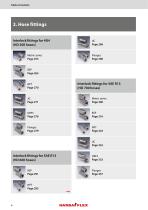
2. Hose fittings Interlock fittings for 4SH (HD 500 hoses) Metric series Page 253 Interlock fittings for SAE R15 (HD 700 hoses) Metric series Page 306 Interlock fittings for SAE R13 (HD 600 hoses)
Open the catalog to page 6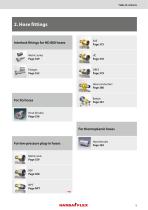
2. Hose fittings SAE Page 375 Interlock fittings for HD 800 hoses Metric series Page 349 Hose connectors Page 380 Hose ferrules Page 356 Hose ferrules Page 383 For low-pressure plug-in hoses Metric sreis Page 359
Open the catalog to page 7
2. Hose fittings For thermoplastic hoses (hose fittings for NY 300 hoses) For thermoplastic hoses (hose fittings for NY 2100 hoses) Metric series Page 388 Metric series Page 407 French series Page 405 Hose ferrules Page 411 Metric series Page 413
Open the catalog to page 8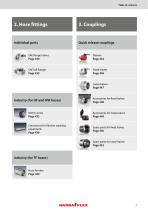
Individual parts Quick release couplings SAE flange halves Page 430 SAE full flanges Page 433 Fixed halves Page 446 Loose halves Page 447 Accessories for fixed halves Page 448 Metric series Page 435 Accessories for loose halves Page 449 Connectors for Kärcher washing equipment Page 438 Spare parts for fixed halves Page 450 Spare parts for loose halves Page 452 Hose ferrules Page 440
Open the catalog to page 9
3. Couplings For EDBRO Page 475 Pipe couplings Fixed halves Page 454 Loose halves Page 455 Accessories for fixed halves Page 456 Accessories for loose halves Page 458 Spare parts for fixed halves Page 460 Snap-tite series 75 Page 481 Spare parts for loose halves Page 462 Snap-tite series 78 Page 482 Accessories for fixed halves Page 503 Spare parts for fixed halves Page 524 Screw couplings (fixed halves) Standard couplings Page 465
Open the catalog to page 10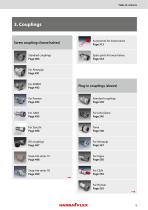
3. Couplings Accessories for loose halves Page 513 Screw couplings (loose halves) Standard couplings Page 484 Spare parts for loose halves Page 534 Plug-in couplings (sleeve) Standard couplings Page 539 For John Deere Page 545 Snap-tite series 75 Page 498 Snap-tite series 78 Page 499
Open the catalog to page 11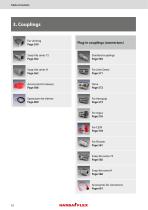
3. Couplings For Unimog Page 559 Plug-in couplings (connectors) Snap-tite series 72 Page 562 Standard couplings Page 565 Snap-tite series H Page 563 For John Deere Page 571 Accessories for sleeves Page 588 Spare parts for sleeves Page 609 Snap-tite series 72 Page 585 Snap-tite series H Page 586 Accessories for connectors Page 601
Open the catalog to page 12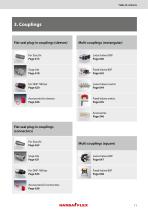
Flat seal plug-in couplings (sleeves) Multi couplings (rectangular) Loose halves BSP Page 640 Fixed halves BSP Page 642 Loose halves metric Page 644 Accessories for sleeves Page 636 Fixed halves metric Page 645 Flat seal plug-in couplings (connectors) For Stucchi Page 623 Multi couplings (square) Loose halves BSP Page 647 Fixed halves BSP Page 648 Accessories for connectors Page 638
Open the catalog to page 13
Measuring hoses Measuring hose fittings Hose ferrules Page 653 Metric series Page 654 Screw connections for Minimess Page 666 Plug-in connections for Minimess Page 669 Pressure gauge connections Page 672
Open the catalog to page 14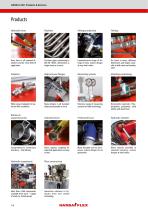
HANSA-FLEX Products & Services Hydraulic hoses Pipelines Fittings production Fittings Hose lines in all nominal di- Precision pipes conforming to Comprehensive range of fit- On hand in many different ameters and for every field of DIN EN 10305, deliverable as tings in stock, custom designs dimensions and shapes; avail- application single items or in series at very short notice able in both steel and stainless Adapters High pressure flanges Measuring systems Mounting technology Wide range of adapters for op- Many designs in all standard Extensive range of measuring Deliverable materials: Poly-...
Open the catalog to page 16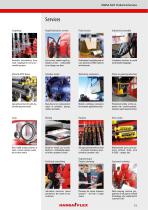
HANSA-FLEX Products & Services Available immediately from stock: couplings for every con- ceivable purpose Metal &PTFE hoses Special hose linesfor solid, liq- Rapid hydraulics service Full-service mobile rapid hy- draulics service - contactable Cylinder repair repair of cylinders, pumps, Fluid service care, provision of filter systems Workshop containers Mobile workshop containers for extreme application areas Industrial assembly Scheduled activities to avoid unscheduled stoppages Plant-in-plant production tomer's site - perfect synchro- nisation, rapid response times Seals Kitting Kanban Hose...
Open the catalog to page 17
Technical information Technical information
Open the catalog to page 18
Technical information SAFETY GUIDELINES AND INFORMATION ON THE ASSEMBLY, OPERATION, MAINTENANCE AND INSPECTION OF HANSA-FLEX HOSE LINES 1.1 Fundamental Guidelines for the Assembly of Hose Lines 1.2 Additional Information on the Assembly of Hose Lines 2.1 Commissioning and Intended Use of Hose Lines 2.2 Storage of Hose Lines 2.3 Additional Information on the Storage of Hose Lines 3.1 Inspection Intervals for Hose Lines 3.2 Inspection Criteria for Hose Lines 3.3 Repair and Painting of Hose Lines 3.4 Additional Information on the Maintenance of Hose Lines
Open the catalog to page 19All HANSA FLEX AG catalogs and technical brochures
 SKS ZUBS MULTI FL
1 Page
 SKS IR FS MULTI FL
1 Page
 SKS HL 2 MULTI R
1 Page
 SKM IR 2 MULTI Q
1 Page
 SKS IR 2 MULTI Q
1 Page
 MBA
MBA1 Page
 KBA
KBA1 Page
 KBO
KBO1 Page
 TF 200
1 Page
 TF 100
1 Page
 KP 200 S
1 Page
 KP 200 PRO (2SC)
1 Page
 KP 200 NO (2SC)
1 Page
 KP 200 RAIL
1 Page
 KP 200 (2SC)
1 Page
 HD 200 T (2SN)
1 Page
 HD 200 S (2SN)
1 Page
 HD 200 RM (2SN)
1 Page
 KP 200 RM
1 Page
 HD 200 (2SN)
1 Page
 KP 100 RAIL
1 Page
 KP 100 P
1 Page
 KPZ 200
1 Page
 KP 100 S (1SC)
1 Page
 KP 100 (1SC)
1 Page
 HD 100 T (1SN)
1 Page
 Connection Technology
1060 Pages
 Catalogue Sealing Technology
339 Pages
 Catalogue Metal Hoses
100 Pages
 Catalogue Hydraulic components
484 Pages
 Industrial Technology
568 Pages
 PR V1 (M)
1 Page
 SKM HL / SKM HS
2 Pages
 KAX
KAX1 Page
 AKM IM ME
1 Page
 OR 70° Shore EPDM
1 Page
 Pneumatic Catalogue
1156 Pages
 Hydraulic Component
143 Pages
 HD 100 (1SN)
1 Page
 Compact Catalogue
608 Pages
 PYRO WAS RT
1 Page
 KUEHLER
1 Page
 KUEHLER SBL
1 Page